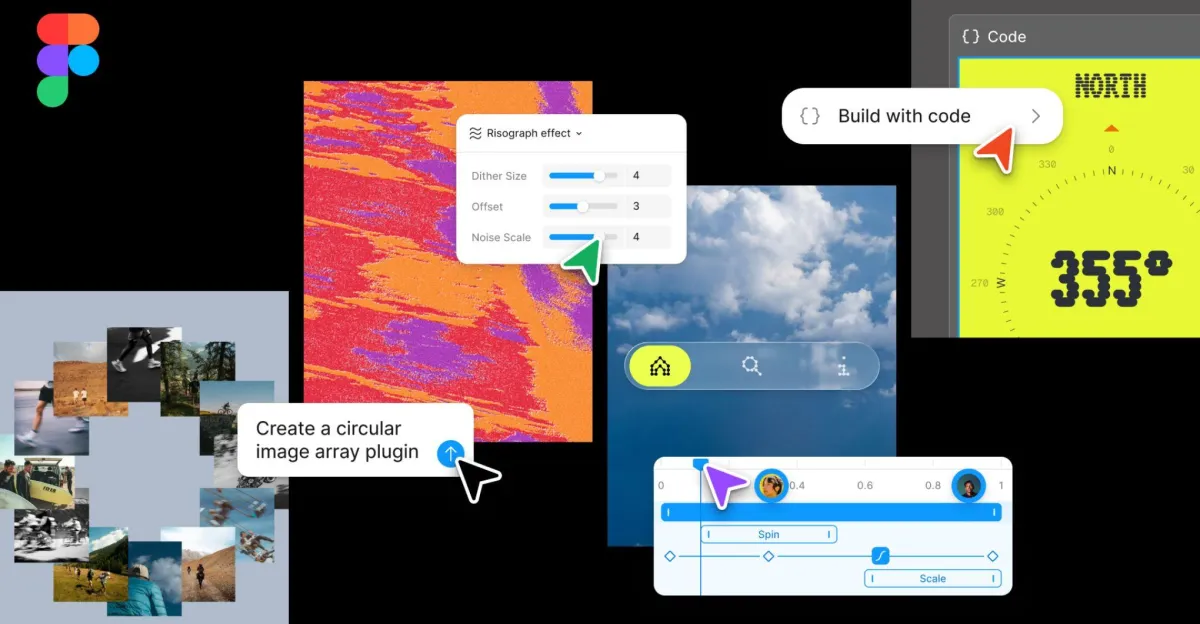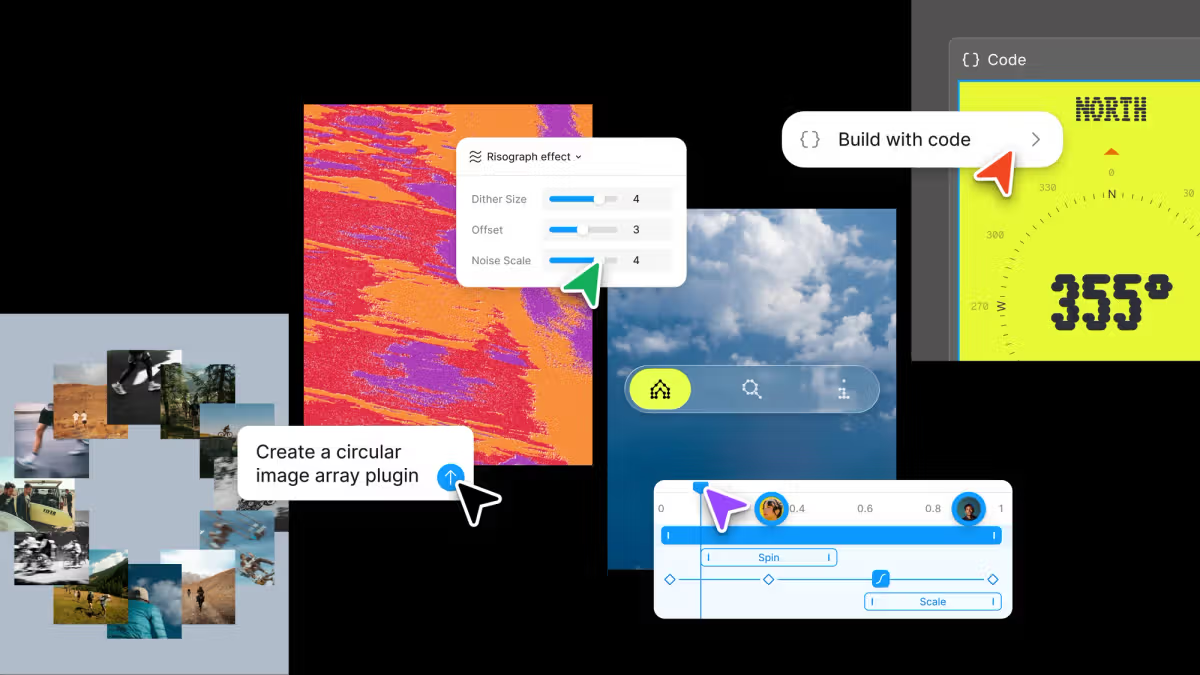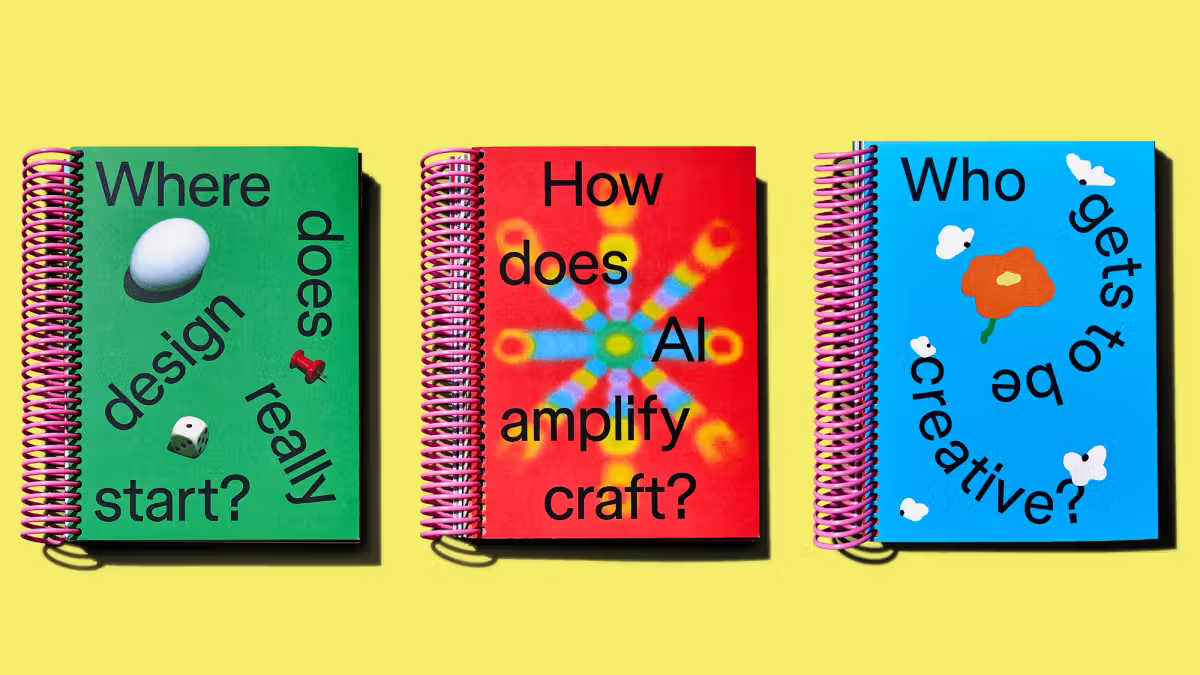
June 29, 2026New tools and materials make it easier to build anything and start anywhere. The question now is, where do you want to go?Where does design really start?How does AI amplify craft?Who gets to be creative?The print edition, which launched at Config 2026, was designed by graphic design studio No Ideas with imagery from Matija Medved, Pedro Sanches, Uta Eisenreich, and Espen Friberg.You can purchase a physical copy from the Figma Store.Every year we make a magazine for Config. The theme changes, the contributors change, the design changes, but the overarching brief stands: Make a beautiful printed artifact that says something about where design is right now.This year felt harder than usual. By the time anything goes to print, the version you wrote is already two releases behind. It's a dizzying pressure, but also freeing: What holds up, what doesn't go stale between the writing and the production, are the things that don't change. The instinct to understand what something is before explaining what it does. The patience and curiosity to see the potential of new tools and materials, even if you haven't quite figured out how they all knit together yet.We introduced some big new materials to the canvas this year. Motion, for one, opens up a whole new world for designers who have long looked at the discipline with envy and wonder. We talked to the motion designers on Figma's Brand Studio team about what it means to design with time—the mechanics that turn movement into meaning, and why the foundational principles matter more, not less, as the tools get easier to pick up.Similarly, code has always been a material in the design process, but it lived somewhere else. We explored what changes when it comes to the canvas, into the same multiplayer space where design is already happening.The throughline is more expressive power, more paths to play out your ideas.And that’s really who this magazine is for: the novice sitting with a big idea not quite knowing where to start. The practitioner who’s been at this for years but still gets the itch when a new capability comes along. Or the person who simply wants to ship a great design and get on with their day. There is something here for all of you.We made three covers this year, each carrying its own prompt, its own way into the same set of questions. Pick up whichever one finds you. Start there. But more importantly, keep going.What the design-to-code loop unlocksWith work moving more fluidly between code and canvas, workflows aren’t just changing—they’re converging. Figma Software Engineer Alex Kern and Design Director of AI Gui Seiz chat about what a more connected way of working makes possible.Read more →4 new ways to go from idea to product with AI toolsAI tools are changing how teams build products—from where they start to what carries through to production. Here’s what that shift looks like across four organizations, and how you can put their process into practice.Read more →Future statesWhat would it look like to close the gap between machine and human intelligence? Our community imagines how AI might bring about more human ways to interact with software, from interfaces that understand how you feel to ways to predict how your decisions will play out.Read more →What matters when anyone can buildIf AI can make anyone a product builder, the real edge is knowing what’s worth shipping. Figma Chief Product Officer Yuhki Yamashita explains why teams need to push past “good enough.”Read more →“Cooking” with constraintsIn both design and cooking, preparation determines the outcome. Designer Advocates Manager Greg Huntoon offers a prompt structure that turns AI from guesswork into a reliable design partner.Read more →How to design agentic tools for workAn agentic experience should keep the user focused on their goal, not on managing the AI. Here’s how the Gemini Enterprise team makes complex, multi-agent workflows feel simple, intuitive, and trustworthy.Read more →You never stop cultivating tasteHaving the right tools can only take you so far. To become a master of your craft, you need to hone a point of view. Figma Chief Design Officer Loredana Crisan reveals how she developed her own sense of taste, and the three qualities she looks for when she’s building a team.Read more →Principles in motionWhen you’re designing motion, you’re designing with time. Figma motion designers Chad Colby, Ben Hill, and Gilles Desmadrille explain the mechanics that turn movement into meaning.Read more →Speaking the language of colorFrom Coca-Cola red to Brat green, The Pantone Color Institute digs into the ways brands can use color to shape meaning and drive trends.Read more →Purchase a print copy of Start Anywhere in the Figma Store.Slide 1 of 8Amber Bravo is the Director of Story Studio at Figma. Previously, she's worked as a writer and editor at Google Design, Herman Miller, The FADER, and Dwell Magazine.Create and collaborate with FigmaGet started for free
Start Anywhere, a Magazine by Figma | Figma Blog
New tools and materials make it easier to build anything and start anywhere. The question now is, where do you want to go?
815 words~4 min read