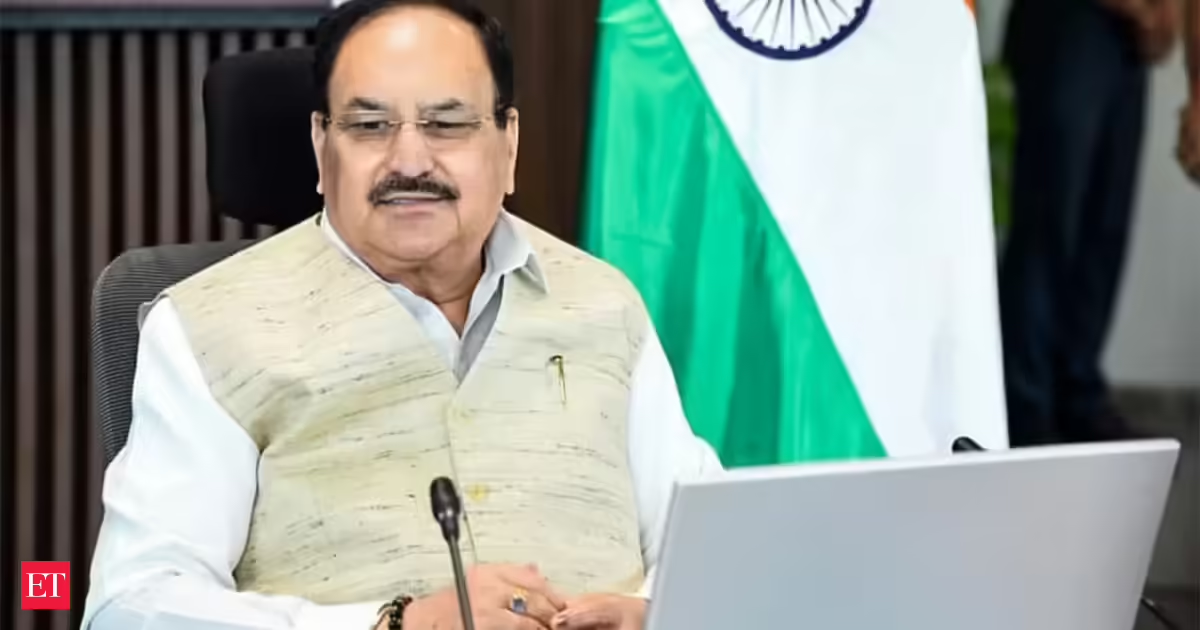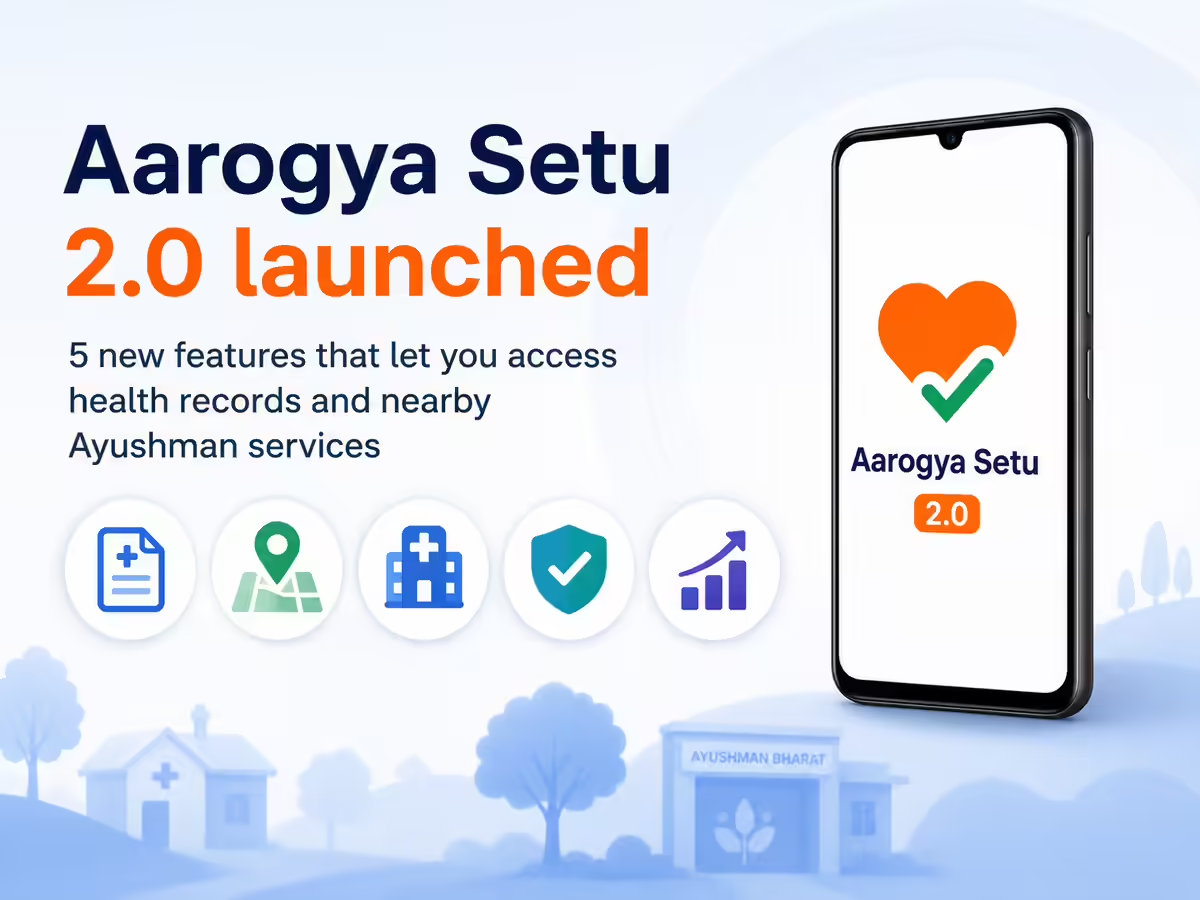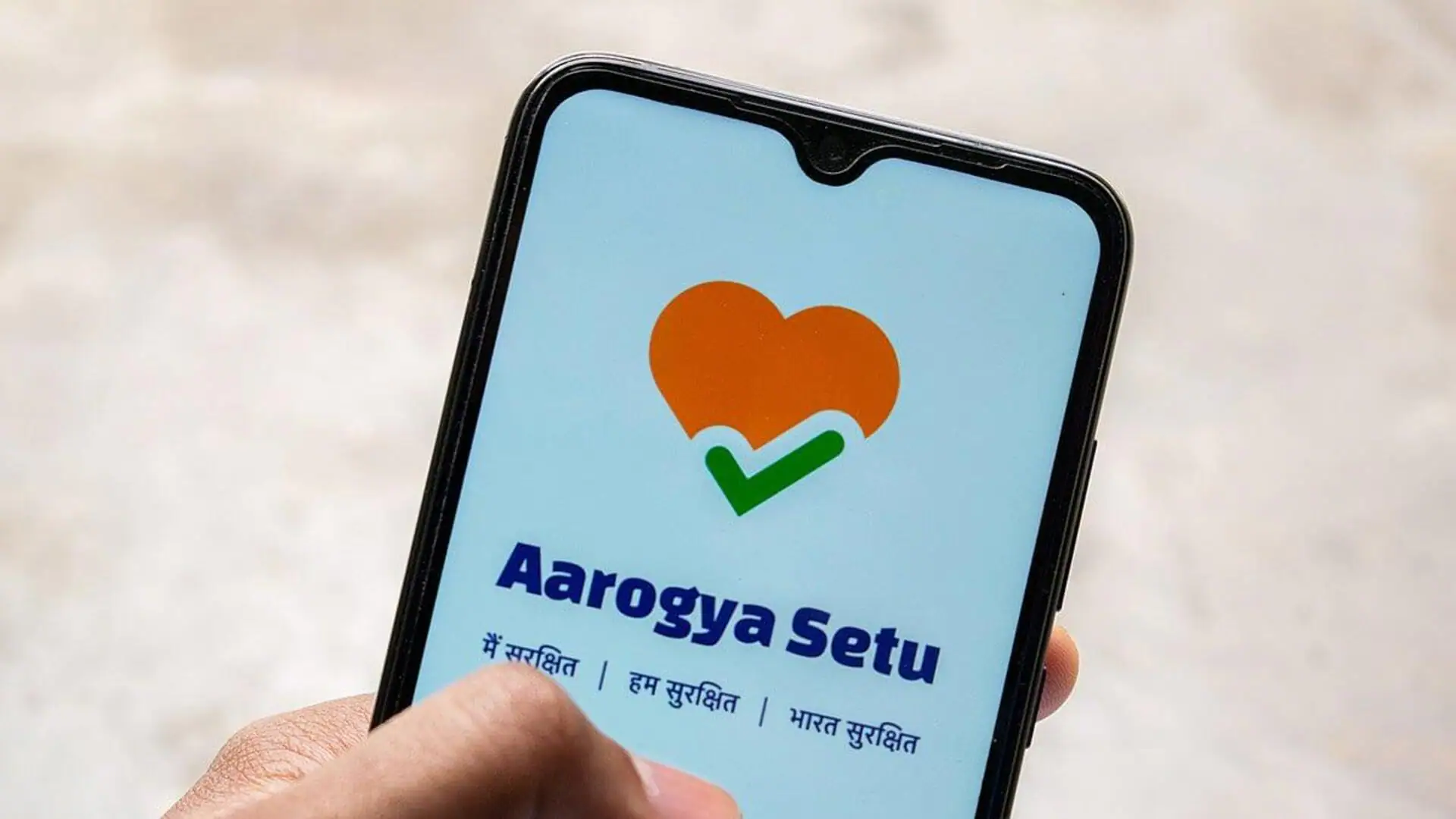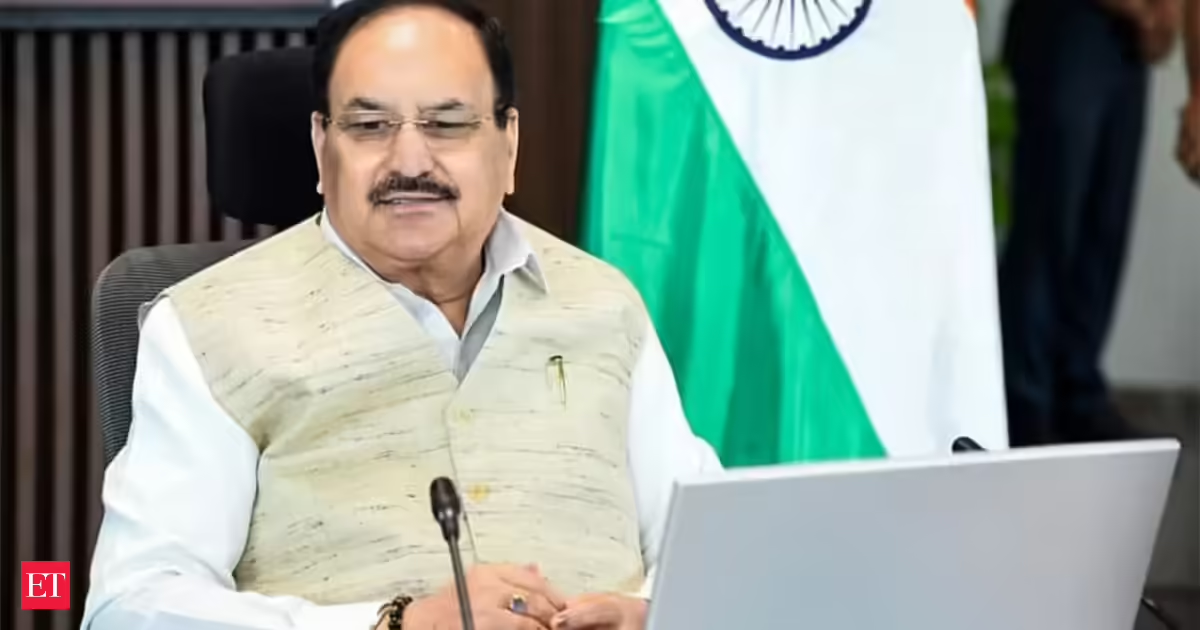
Union health minister JP Nadda on Monday launched several digital health initiatives, including a revamped Aarogya Setu app, originally built to track Covid-19, which will now function as a personal health record of Indians.Aarogya Setu 2.0 launched as personal health record app“In line with the vision of the Ayushman Bharat Digital Mission (ABDM), Aarogya Setu has now been comprehensively revamped to function as a Personal Health Record (PHR) and citizen-facing digital health application. With a captive user base of nearly 20 crore downloads, along with a steady inflow of new users, the application offers a unique opportunity to accelerate citizen adoption, mainstream digital health usage across geographies and position ABDM as a part of everyday healthcare interactions,” said health ministry in a statement.The revamped version of the application includes Access to ABDM-enabled services, including ABHA creation, health record management, and seamless digital registration.Digitisation of medical health records include lab reports, creation of personalised health dashboard using the medical history, and ability of users to monitor and manage their health seamlessly with integrated vitals, personalised reminders, goal tracking, and wearable-device syncing for steps, calories, heart rate, and glucose levels.The PM-JAY Wallet feature will show a clear overview of healthcare coverage, including total balance, amount used, and family-wise consumption.Among other features of the app, people can discover nearby healthcare facilities and view real-time blood unit availability for timely access to critical care and ambulance booking; manage medication and follow prescribed schedules that can be added from prescriptions or manually, with reminders set by time, frequency, and dosage; and will also allow users to search AB-PMJAY empanelled hospitals offering cashless treatment.The health minister also launched the Unified Health Interface—the Interoperable Network for Digital Health Services. The Unified Health Interface (UHI) is the service layer of ABDM, an open network with common technical standards that enables patients and healthcare providers to connect across different digital platforms, without being tied to any single application.“In India’s existing digital health ecosystem, both the patient and the provider must be on the same platform to interact. This limits providers to the demand on one application, and limits citizens to limited services and providers on a singular app. UHI resolves this by allowing any verified participant to discover and transact with any other, regardless of which app they use,” said health ministry.When a citizen uses a UHI-enabled app to search for a health service, the request is routed through the gateway to registered service providers, it added. The entire journey from discovery and booking to fulfillment is facilitated through a common language, irrespective of the platform used to seek or provide the service. The network uses ABDM building blocks—ABHA as the patient identifier, the Healthcare Professionals Registry (HPR) and Health Facility Registry (HFR) for provider verification, and the Health Information Exchange for consent-based data sharing.“Digitisation is no longer an option, it’s a necessity and we will see to it that health care in India is digitized to make it citizen-centric. If we want to be a developed country by 2047, we will have to be digital India,” said Nadda during the launch.The health minister also launched the drugs registry that was in works for a long time, to standardize medicine-related information across the health care ecosystem.“The same drug is often represented using different names and formats, leading to inconsistencies, duplication, data entry errors, and lack of interoperability. This creates challenges in clinical decision-making, e-prescriptions, supply chain management, and continuity of care. To address this gap, Union health minister has launched the Drug Registry as a unified and standardized digital platform for drug-related information. Conceptualized under the Ayushman Bharat Digital Mission, which serves as a single source of truth for medicines in India, enabling consistent identification, storage, exchange and usage of drug data across healthcare systems,” said the health ministry.ABDM is building a robust digital health ecosystem through four core registries: ABHA Registry (for individuals); Healthcare Professional Registry (for doctors etc); Health Facility Registry (for hospitals); and Drug Registry (for medicines).“Built on standardized terminology and aligned with global standards, the Drug Registry ensures accuracy, transparency, and seamless data exchange across healthcare systems… The registry connects healthcare providers, digital applications, and citizens to a verified and comprehensive drug database,” said the health ministry.
Aarogya Setu 2.0 launched as personal health record app
Union health minister JP Nadda launched revamped Aarogya Setu as a personal health record app and introduced a unified health interface to enhance digital health services. | India News
702 words~3 min read