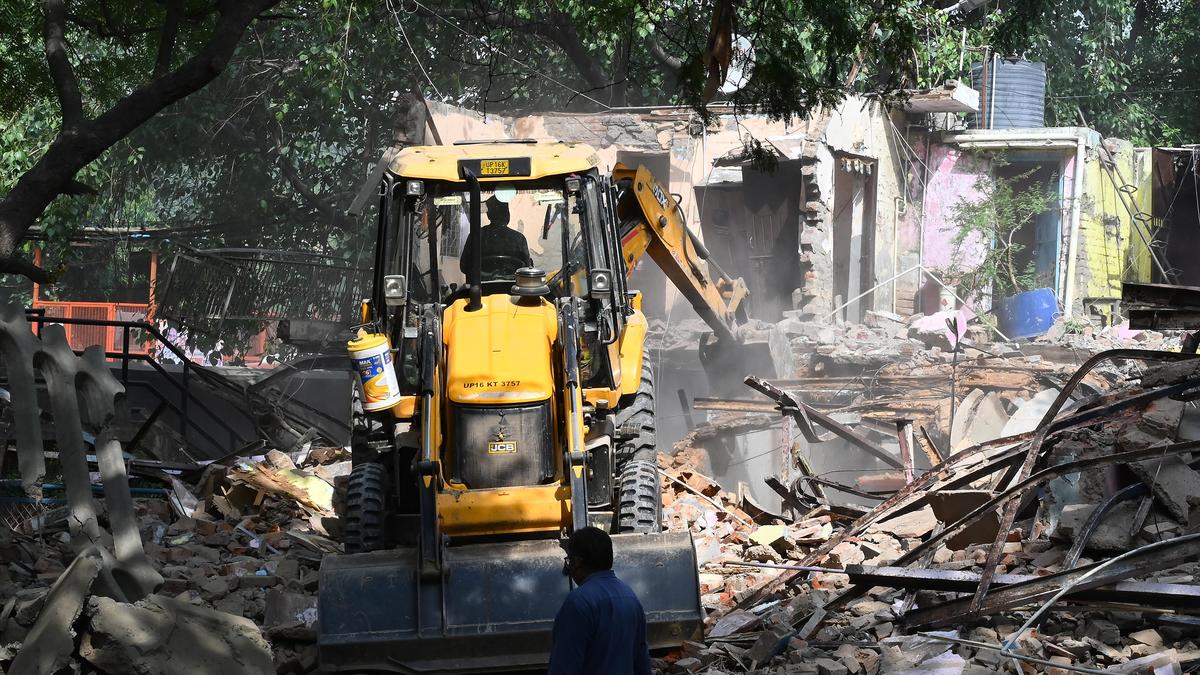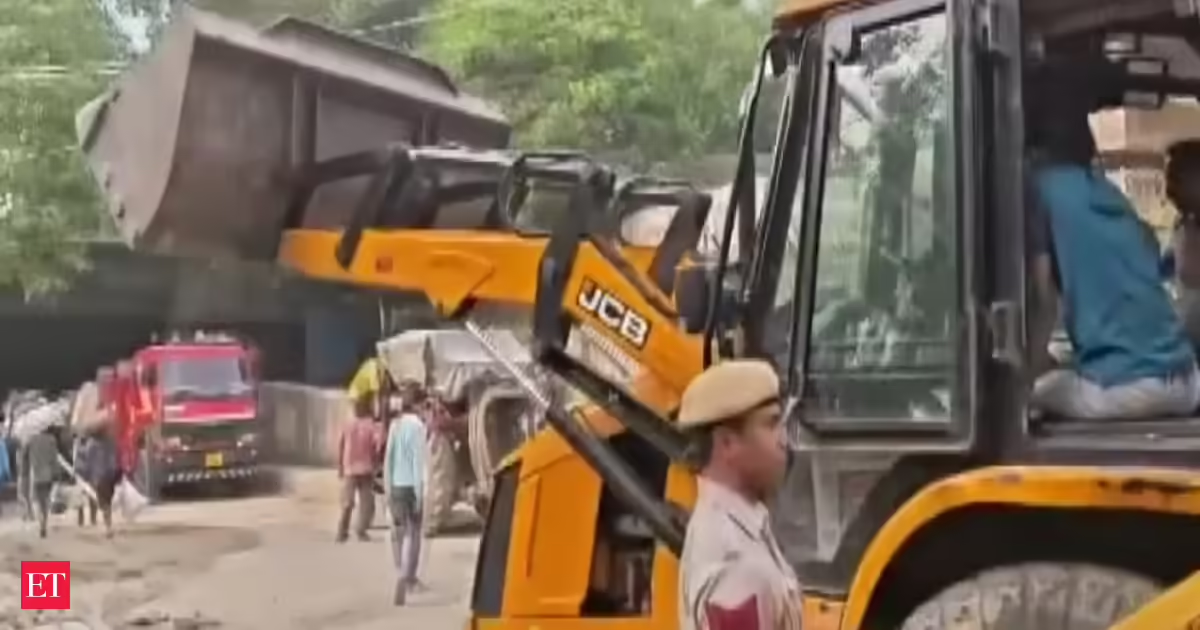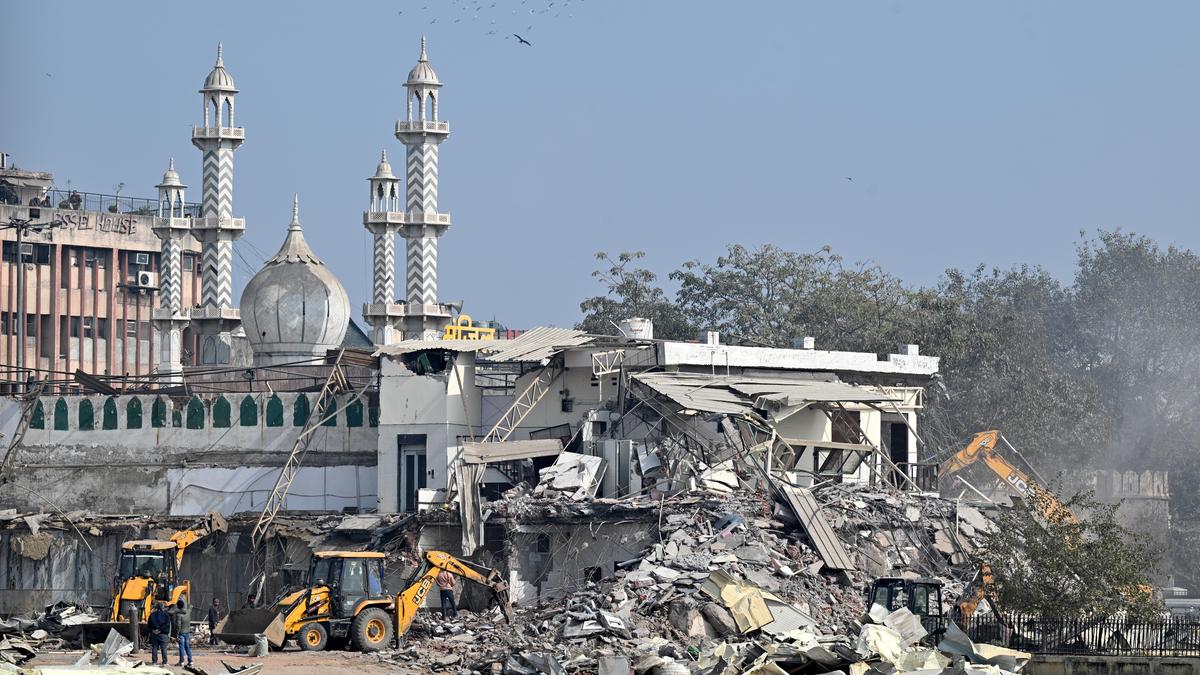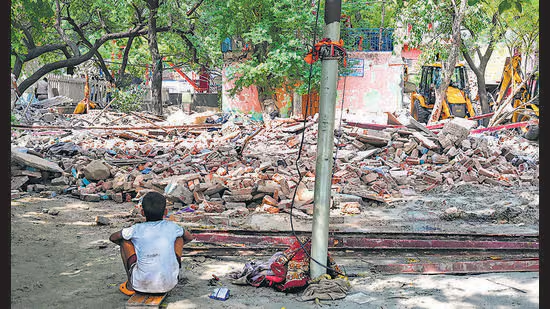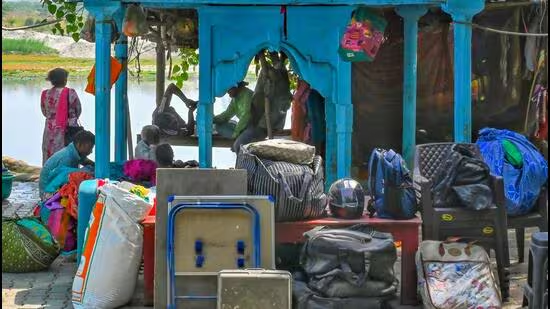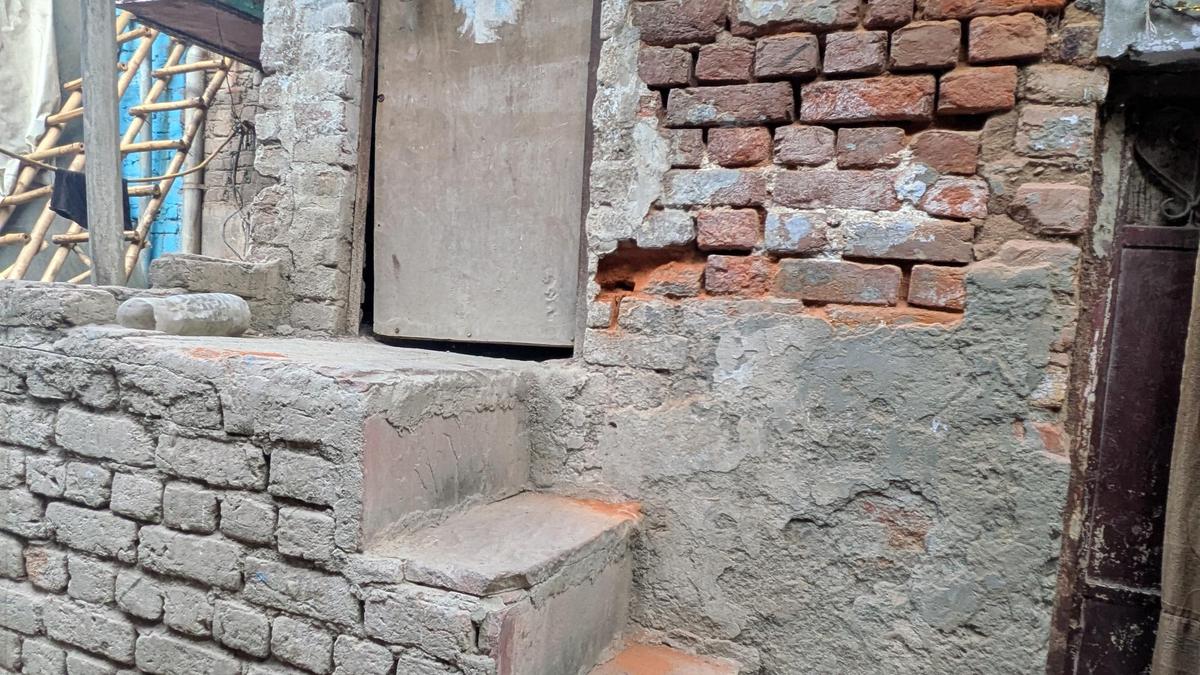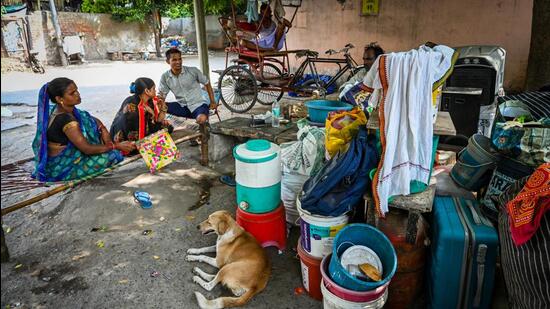
Days after the Delhi Development Authority (DDA) began demolishing illegal structures in Yamuna Bazar and declared it a protected area, the bustling settlement that existed there just a week ago has been reduced to silence, derailing the lives of several families.The drive began on June 25 after the Delhi Disaster Management Authority (DDMA) issued eviction notices to around 310 families in May, citing flooding risk. (RAJ K RAJ /HT PHOTO)The drive began on June 25 after the Delhi Disaster Management Authority (DDMA) issued eviction notices to around 310 families in May, citing flooding risk.Today, only a few historical structures, including several old temples, remain at the site.During a visit to Yamuna Bazaar on Monday, HT found that while most families have relocated to rented accommodations, some are forced to live on the streets as they struggle to find affordable housing.For 34-year-old Girija Shankar Gaurav and his family of five, a large roadside tree has become their only home. Gaurav, a cleaner, has been out of work for the past month following a bladder surgery. The family has been living beneath this tree with all their belongings for the past four days.He said, “We are a family of six, and landlords say that because our family is large, the rent will be around ₹8,000 to ₹10,000 a month. I had to stop working after my surgery, and my brother-in-law is currently the only earning member of the family. He earns around ₹15,000 a month as an auto rickshaw driver. How can anyone afford to pay ₹10,000 in rent with that income?”A few steps away, 25-year-old Seema Kumari sat on a jute mat, using a handheld fan while wiping sweat from her face in the sweltering heat. Kumari said “the government first made us homeless then asked us to move to shelter homes which do not guarantee safety.”“The government pasted a notice on the wall, asking us to move to any of the four shelter homes listed on it. But drug addicts live there. Can the government guarantee our safety and the safety of our belongings?,” said Kumari, who has been living on the street opposite the demolition site with her seven-member family.“All my life, I’ve lived in a home where we could lock our doors and feel secure. Now that we’re out on the streets, I’m struggling to sleep. Every night I try to sleep with the thought that anything can happen to us. But what will be worse than being homeless?,” she said.35-year-old Amarjeet Chauhan, who rented a room in Kashmere Gate after the demolition, said that apart from the high rent, the small accommodation is on the fourth floor. While it is manageable for him, he said that it was difficult for his father, who is in his late 60s, to climb the stairs.“My father and I run a roadside stall in Chandni Chowk. After pushing the cart and standing all day, all we want is a few hours of sleep. But that’s difficult in the matchbox-sized room we rent for ₹6,000 a month. Our family lives in a village in Uttar Pradesh, and our income is irregular—we earn between ₹12,000 and ₹15,000 a month. We also have to send money back home,” Chauhan said.Unlike the first day of the demolition drive, when the area was heavily guarded, only a handful of security personnel remained deployed at the site.
Demolition drive leaves Yamuna Bazar families homeless, some forced to live on streets
The DDA's demolition in Yamuna Bazar has left families homeless, struggling with high rents and unsafe conditions, as many now live on the streets. | Latest News Delhi
560 words~3 min read