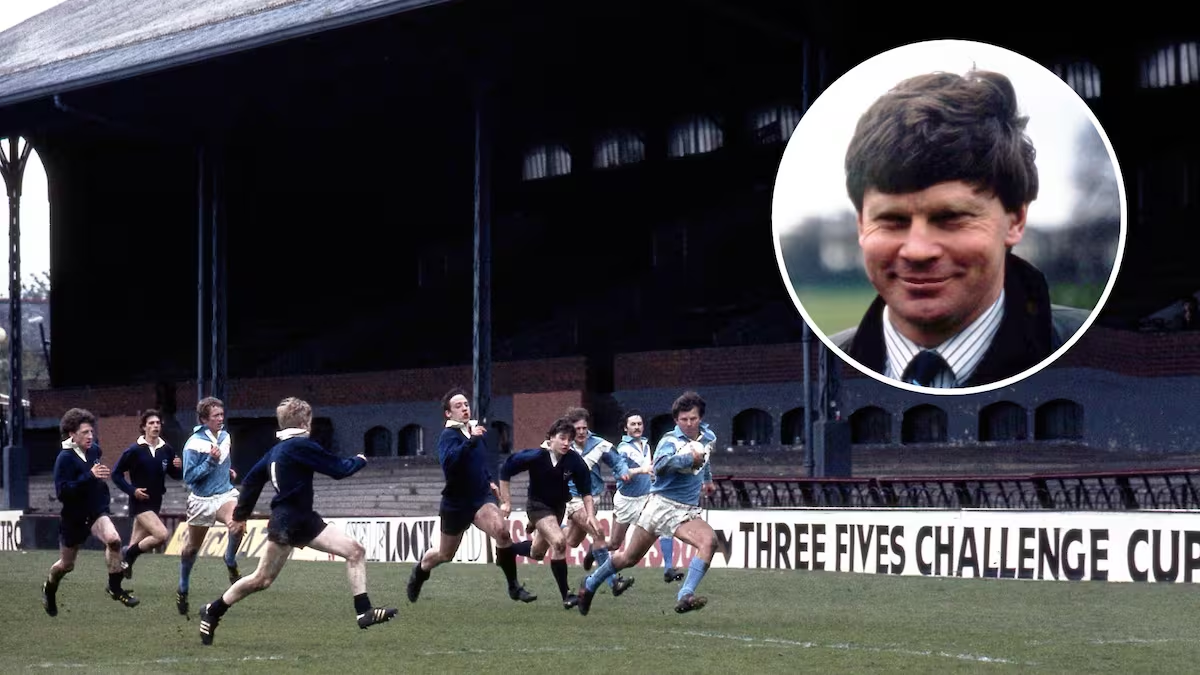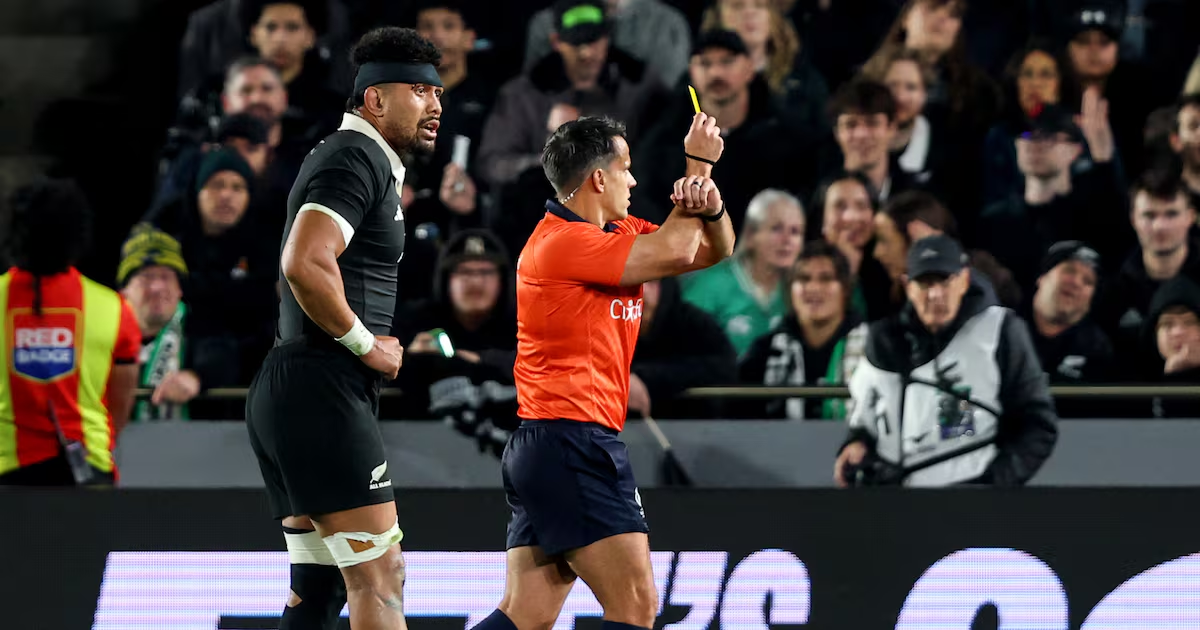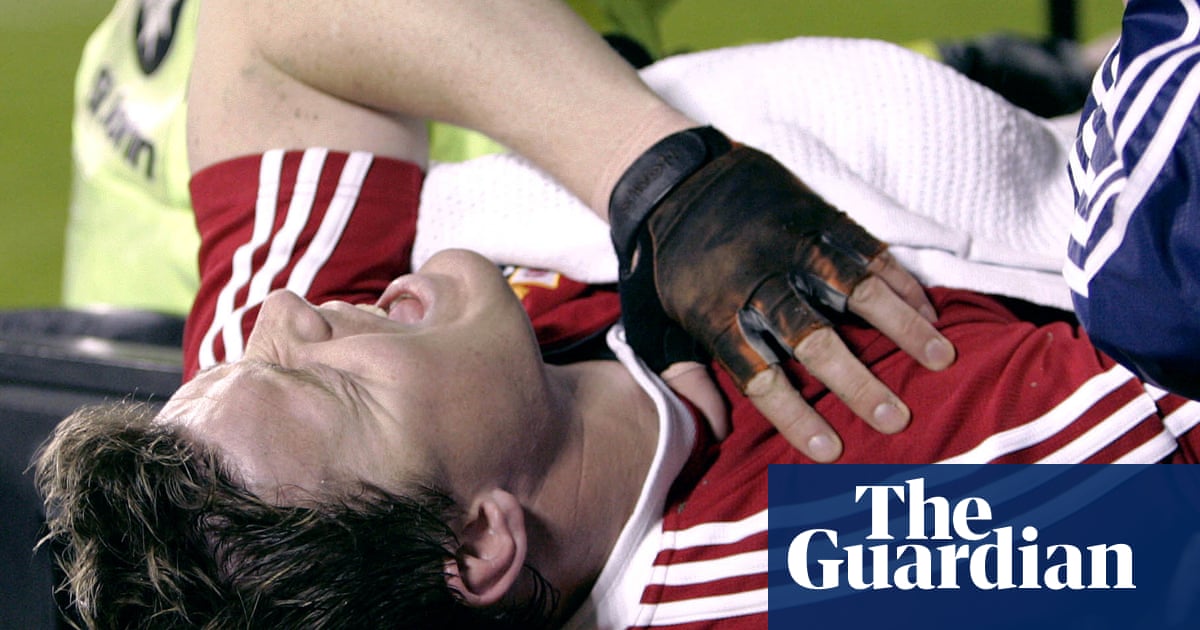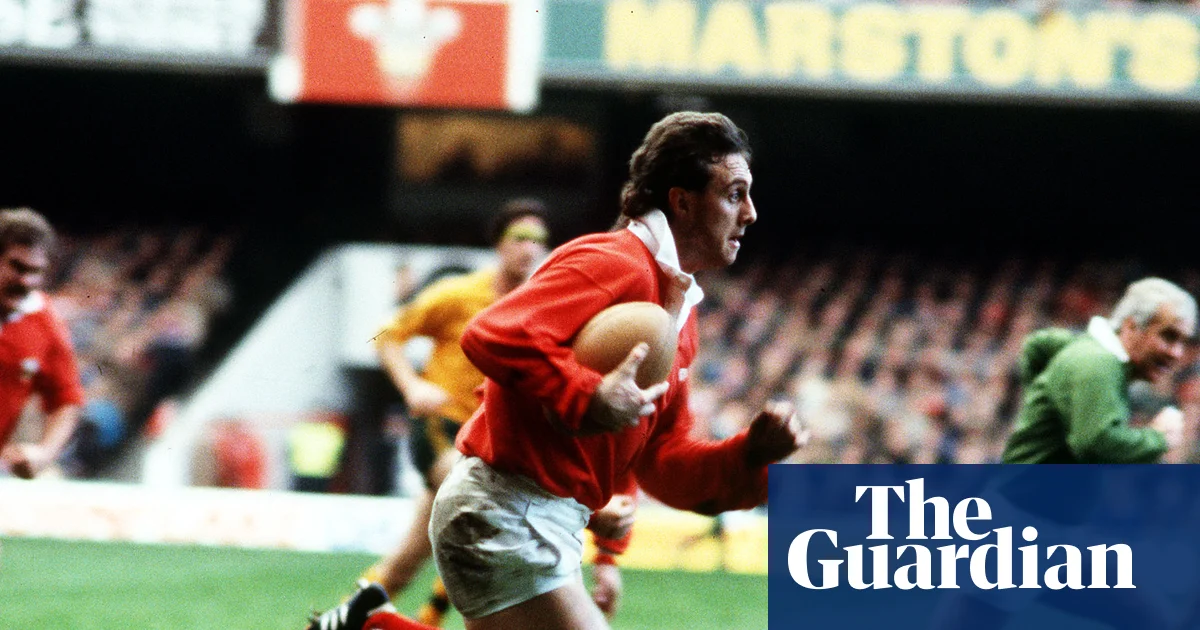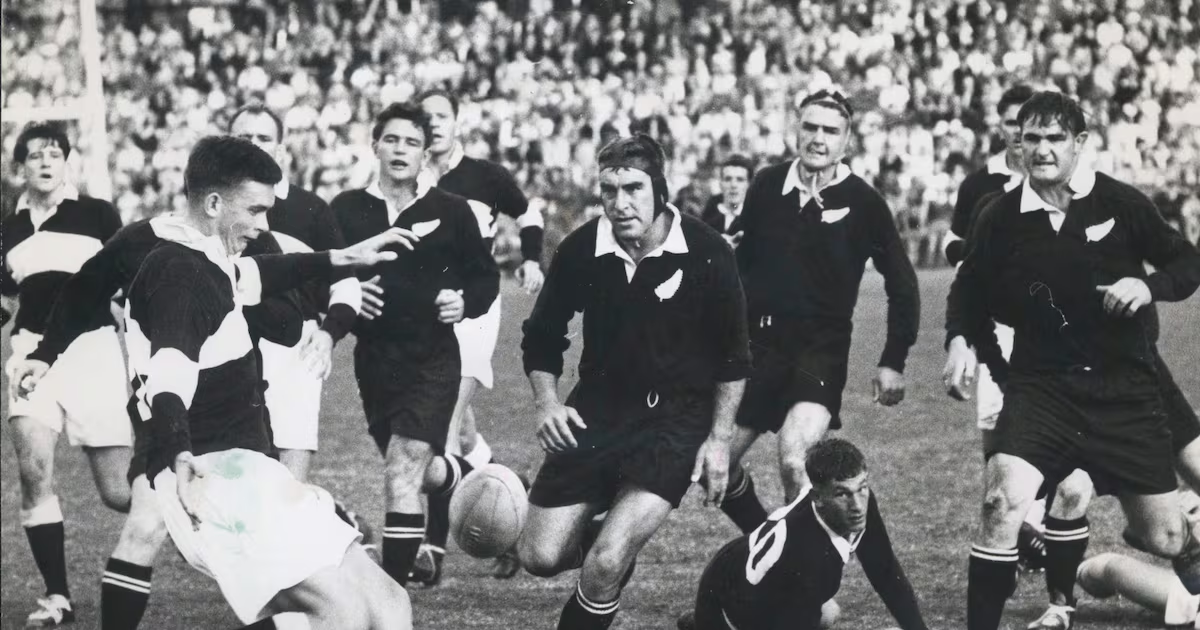
When is a kick not a kick, or a headbutt not a headbutt? It’s a topic which is bound to be vigorously argued wherever rugby debates are held.It’s coming up to 60 years since my former headmaster dismissed the famous New Zealander Colin Meads. It happened against Scotland during the All Blacks’ 1967 tour in which they played 17, won 16, drew one – with West Wales – and lost none. Meads, exiting a ruck, aimed a kick at the opposing outhalf, David Chisholm. It was the talk of St Conleth’s College for aeons.Our then-headmaster Kevin Kelleher was perhaps the best international referee of his generation and was appointed to a huge number of Five Nations and touring-team matches. Not given to much on-pitch chat, he was renowned for his accurate decision making. His uncanny sense of positioning always found him in the right place, despite never seeming to break into much more than a trot. His attitude to foul play was a determined policy of zero tolerance. Kelleher’s views were so well known that players generally behaved when he was about the place. Meads apart, he only found it necessary to send off a player on one other occasion throughout his illustrious career. As Meads trudged off into the history books, where Kelleher would join him, the uninjured Chisholm was largely forgotten.It wasn’t the most violent of kicks, but it was still a kick, plain and simple Meads’ dismissal was the first sending-off at international level since 1924, all of 43 years earlier. On that occasion, Welsh referee Albert Freethy dismissed another New Zealander, Cyril Brownlie, against England. So, it was bound to provoke uproar. Despite it not being the hardest of kicks by Meads, the dismissal could not be criticised, even though of course it was. Recent happenings reminded me of the event. I’ve listened to strong arguments that a red-carded headbutt wasn’t really that violent, there wasn’t really much force in it.Kicking and headbutting are in the egregious foul-play category, along with eye-gouging and some other pretty choice offences. These acts go against every value the game rightly prides itself on and needs for its long-term existence. They cannot be allowed to enter the culture of the sport. If we accept that premise, then the arguments that they come in varying degrees of seriousness have no validity whatsoever. These offences must be standalone, immediate red cards and should be viewed with the same zero tolerance demonstrated by Kelleher. An interesting aside is that Kelleher and Meads became good friends. The referee travelled to New Zealand many years later to present the player with the whistle he had used on that fateful day.Nowadays, coaches have quite an influence into the laws and how the game is officiated. In terms of on-pitch sanctions for foul play, the wisdom of allowing them to be involved is questionable. I say this because whenever foul-play trends have emerged, the coaches have nearly always – if unsurprisingly – taken a liberal approach.Ulster's Jared Payne tackles Alex Goode of Saracens in a 2014 Heineken Cup quarter-final. Photograph: Brian Little/Inpho/Presseye We can, for example, go back to 2014 and the quarter-final of the Heineken Cup. Ulster’s Jared Payne upended Alex Goode of Saracens, who was leaping high to catch the ball. Payne barely got off the ground and Goode was tipped over, knocked senseless when he landed and stretchered off. Of course, it was not deliberate, but it was highly dangerous. There was a significant cohort of coaches who insisted this type of event was merely a “rugby incident” and favoured no sanction. A similar line was taken following Bundee Aki’s red card in the 2019 World Cup against Samoa. Ireland were so convinced that it was deserving of no sanction that they flew a solicitor to Japan to appeal the player’s suspension. No chance, of course, and never mind the expense.Time alone will tell how dangerous hard shoulders to the head, similar to the three mentioned here last week, will be dealt with. I suspect that the southern hemisphere approach will prevail. So, it seems likely we will hear referees say “it meets the yellow card threshold” as they send it for review, where it will inevitably be upgraded. But if the referee can see immediately that dangerous play also meets the red card threshold, then why not just give it? Of course, we know the answer – spectacle comes first, player safety nowhere. Those who consider such offences to be straight red cards must stick to their guns, even if it causes a split in the game. Concussion and dementia have not conveniently gone away. Neither has the legally established duty of care which applies to all participants, including referees.It’s really quite a brave decision for those who vote for liberal leniency. If all of the above hasn’t been considered, they might well need to think again.
My old headmaster was right to send off famous All Black. Rugby’s values are far weaker now
It didn’t matter that Colin Meads’s kick was lacking in severity - the crime had been committed
814 words~4 min read