Introduction
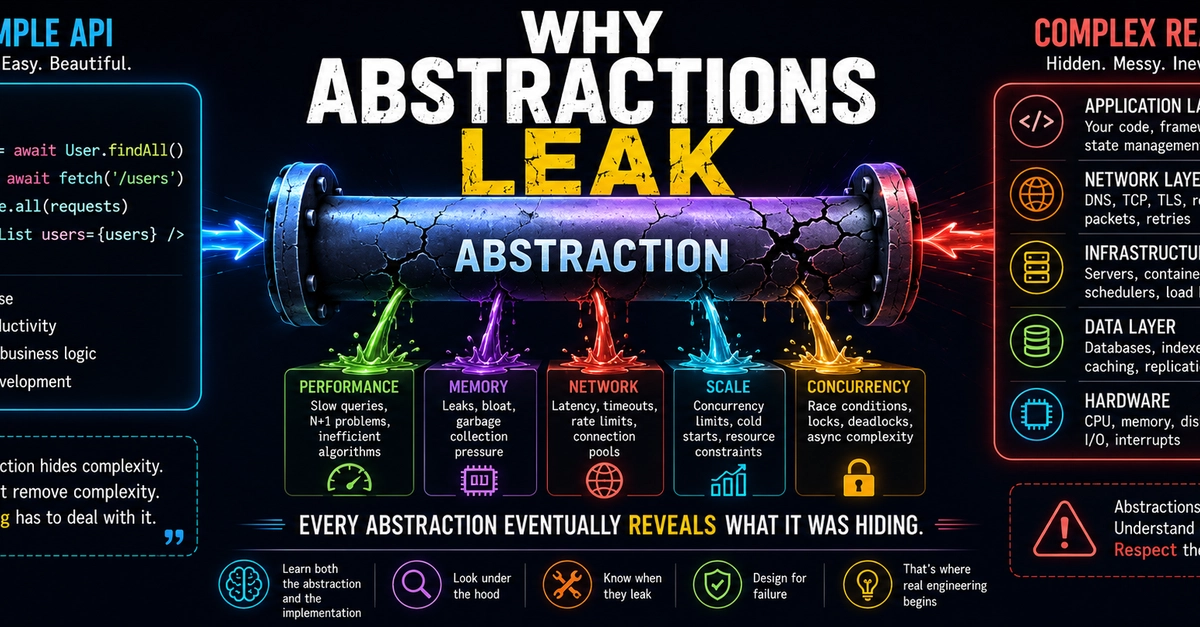
In the world of distributed systems, complexity is the beast we’re all trying to tame. Teams building platforms often fall into the trap of believing that hiding this complexity is the ultimate goal. The logic seems sound: if users don’t see the mess, they won’t be burdened by it. But this approach, while well-intentioned, often leads to the creation of illusions—systems that appear simple on the surface but are brittle and unpredictable beneath. These illusions don’t just fail to solve the problem; they exacerbate it, leading to increased cognitive load, unexpected failures, and long-term maintenance nightmares.
Consider a platform designed to abstract away the intricacies of distributed transactions. If the abstraction merely masks the complexity without addressing its root causes—such as inconsistent network latencies or partial failures—users will eventually encounter edge cases where the system behaves unpredictably. For example, a transaction might appear to succeed but fail silently due to a race condition in the underlying distributed lock mechanism. The illusion of simplicity breaks down when the system’s internal state deforms under pressure, leading to data inconsistencies or service outages.