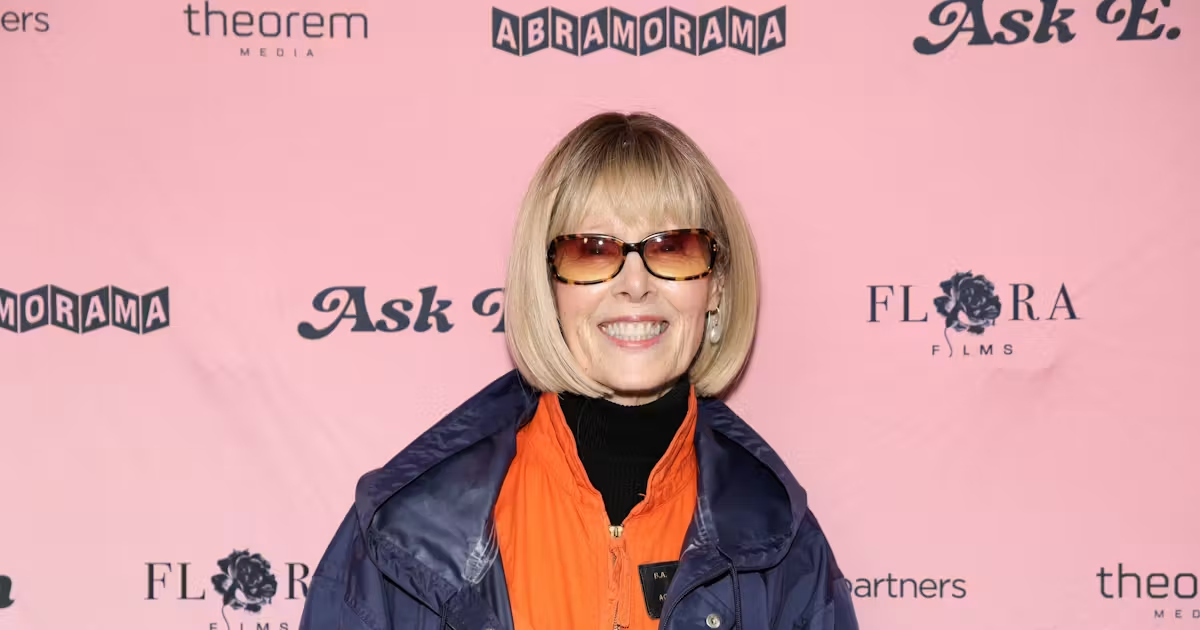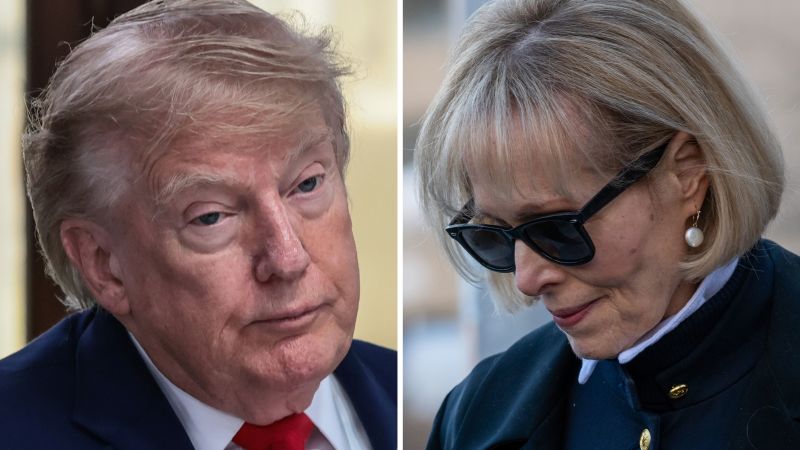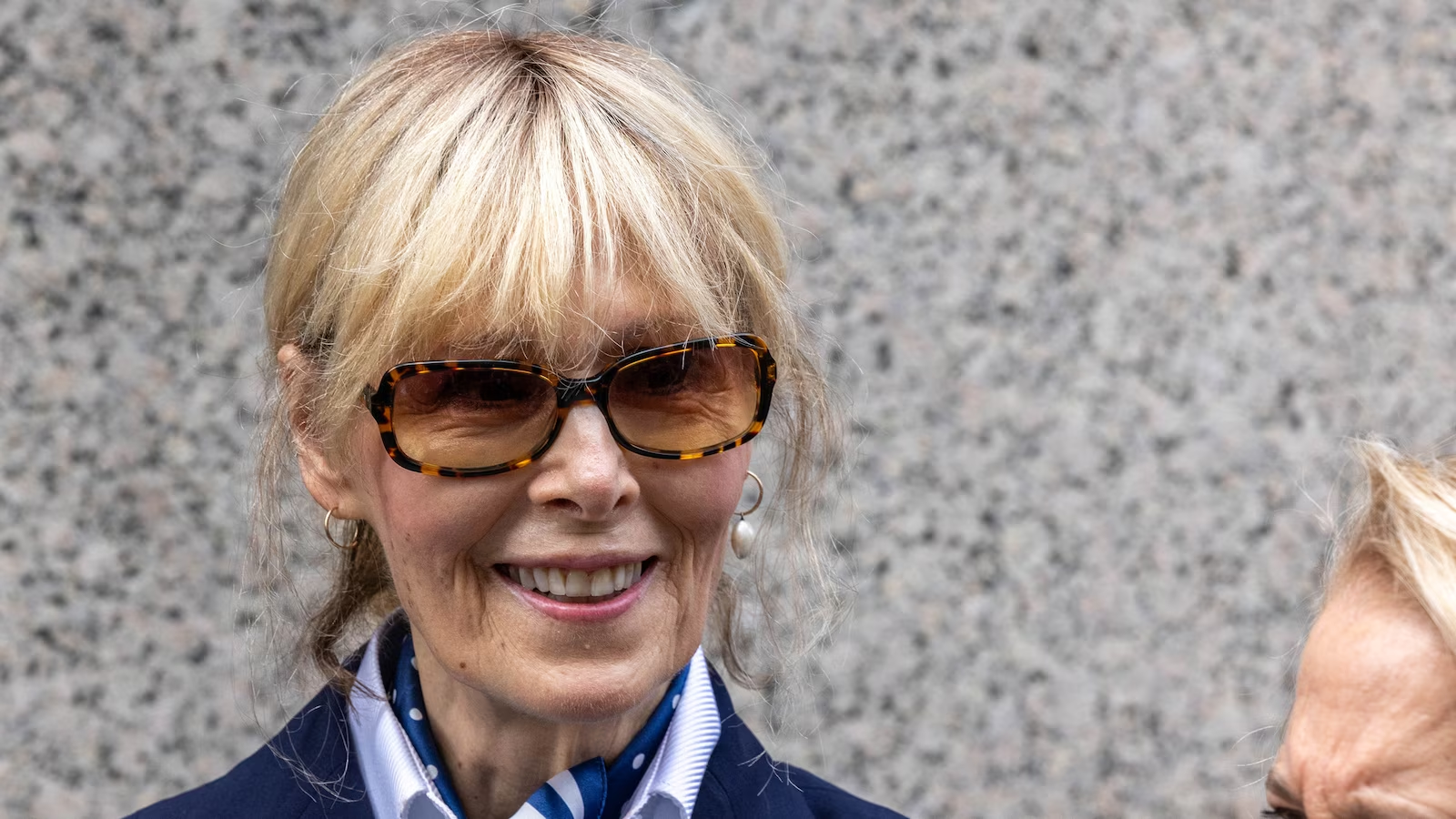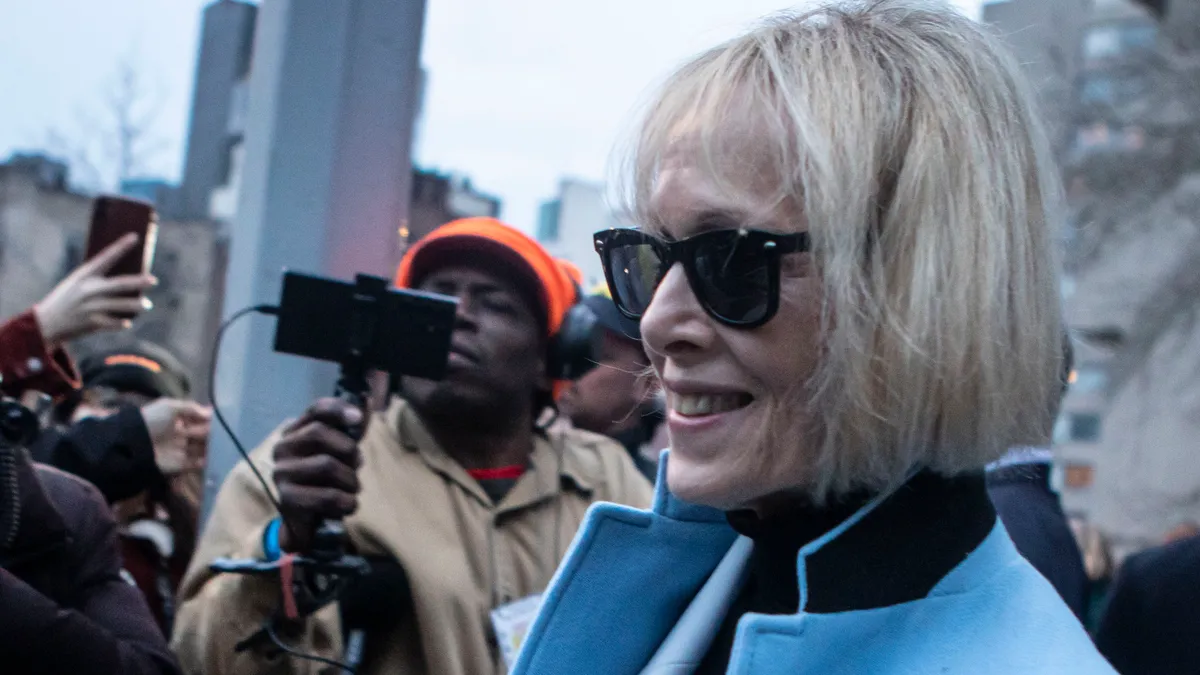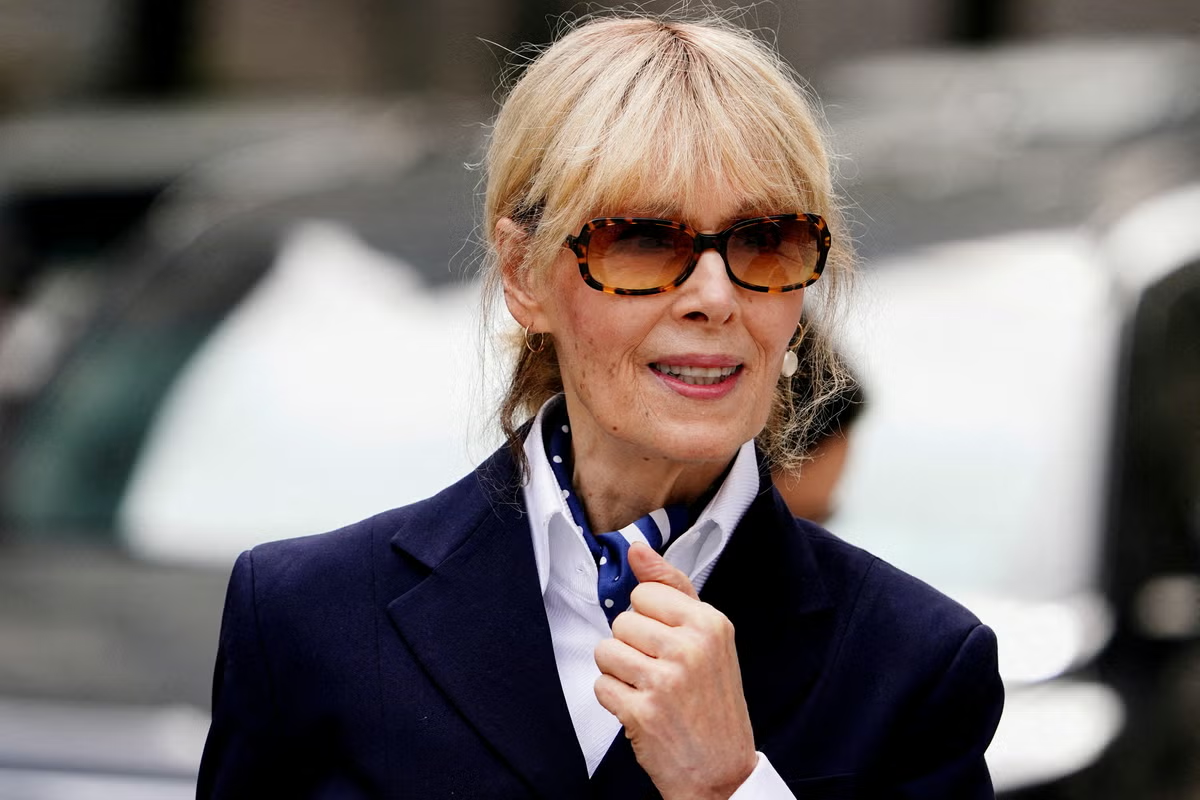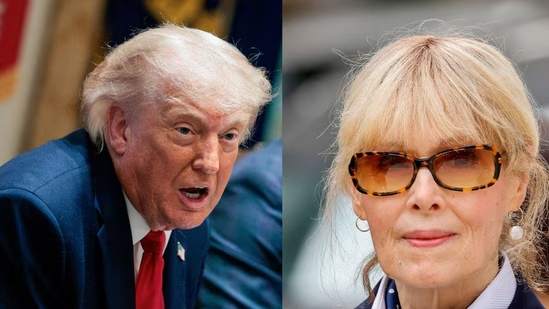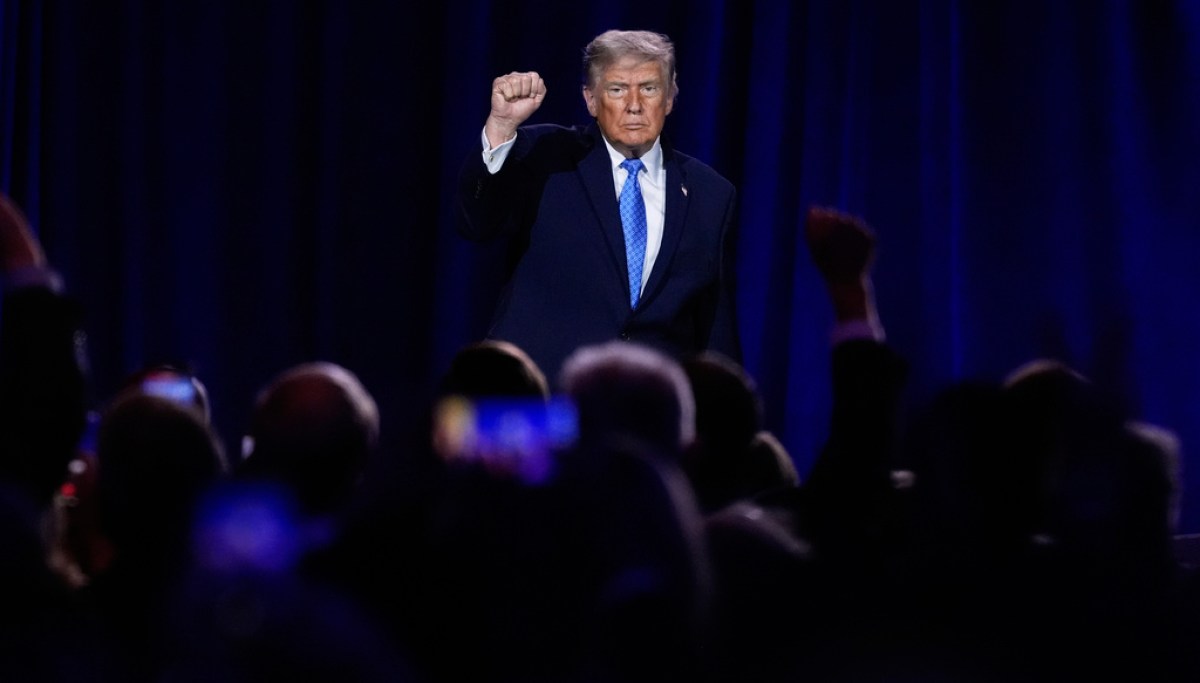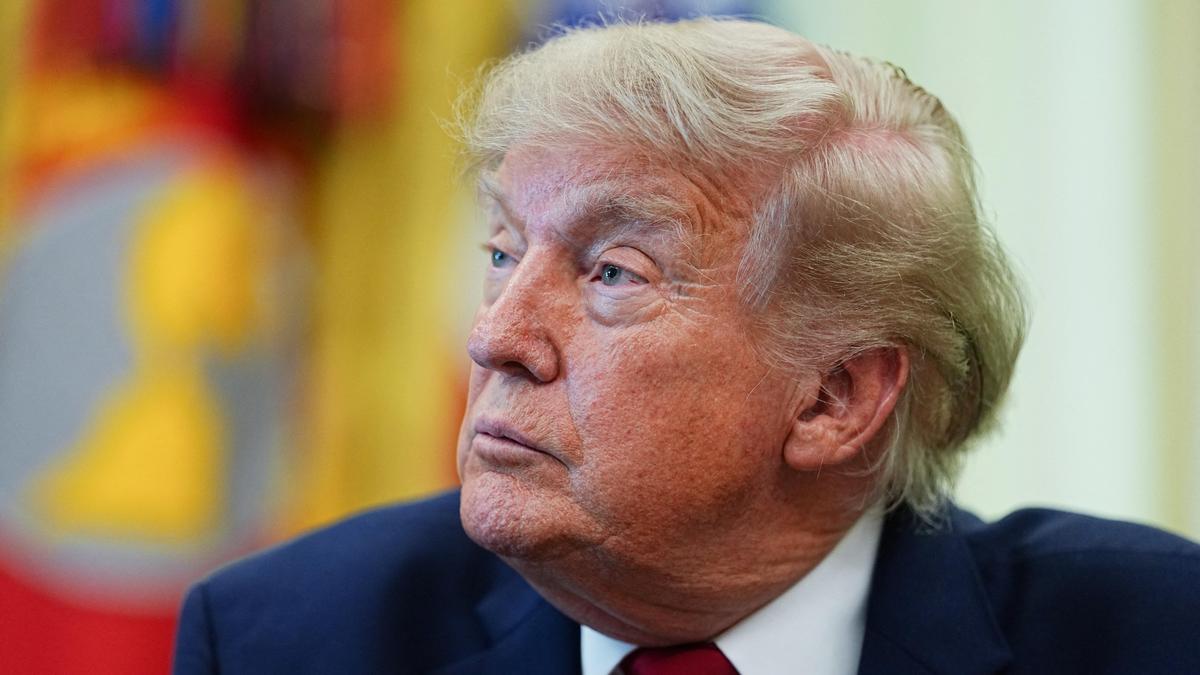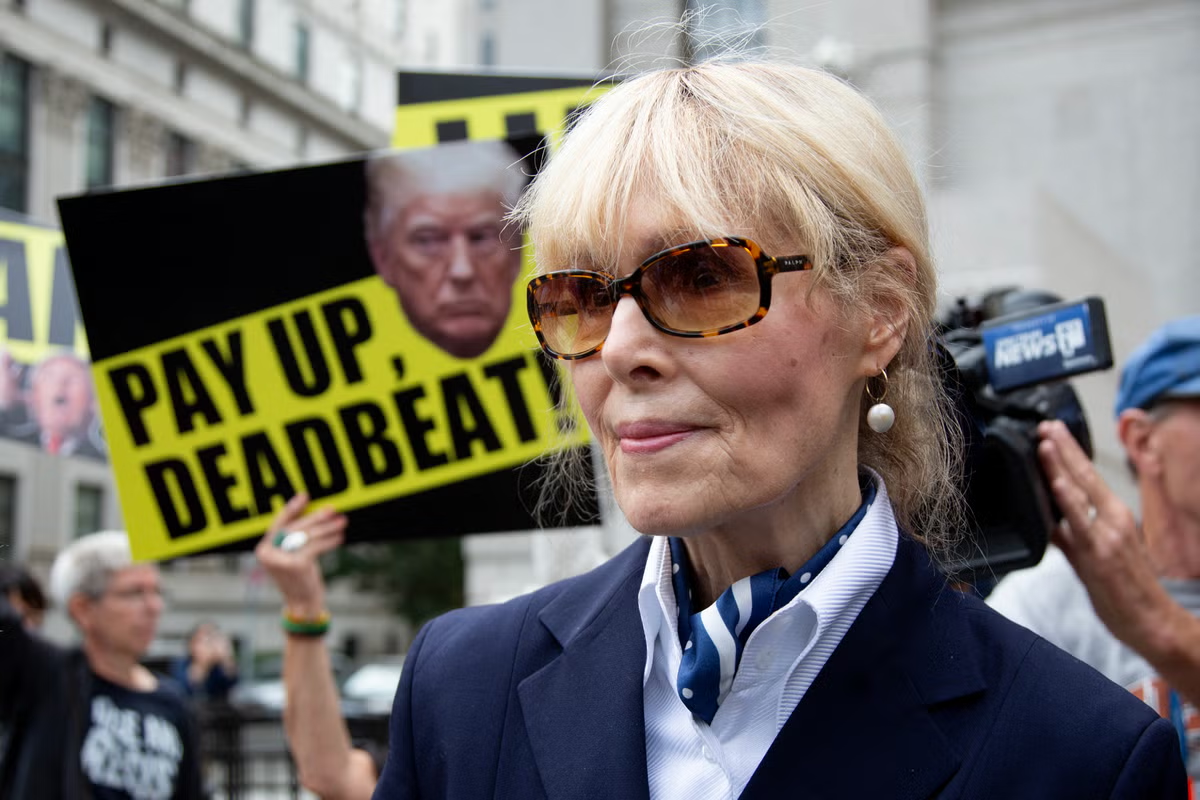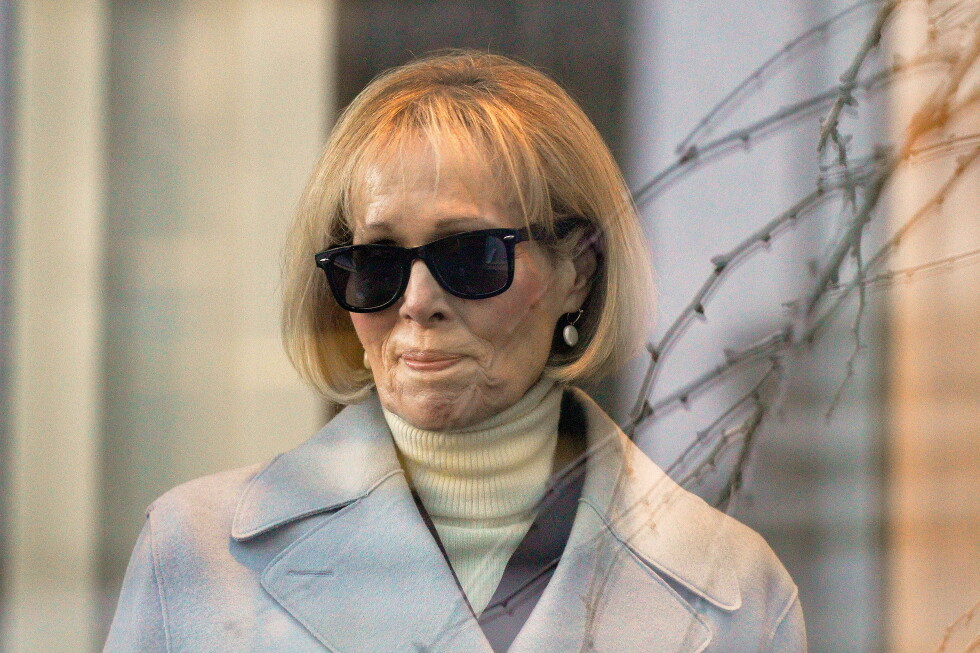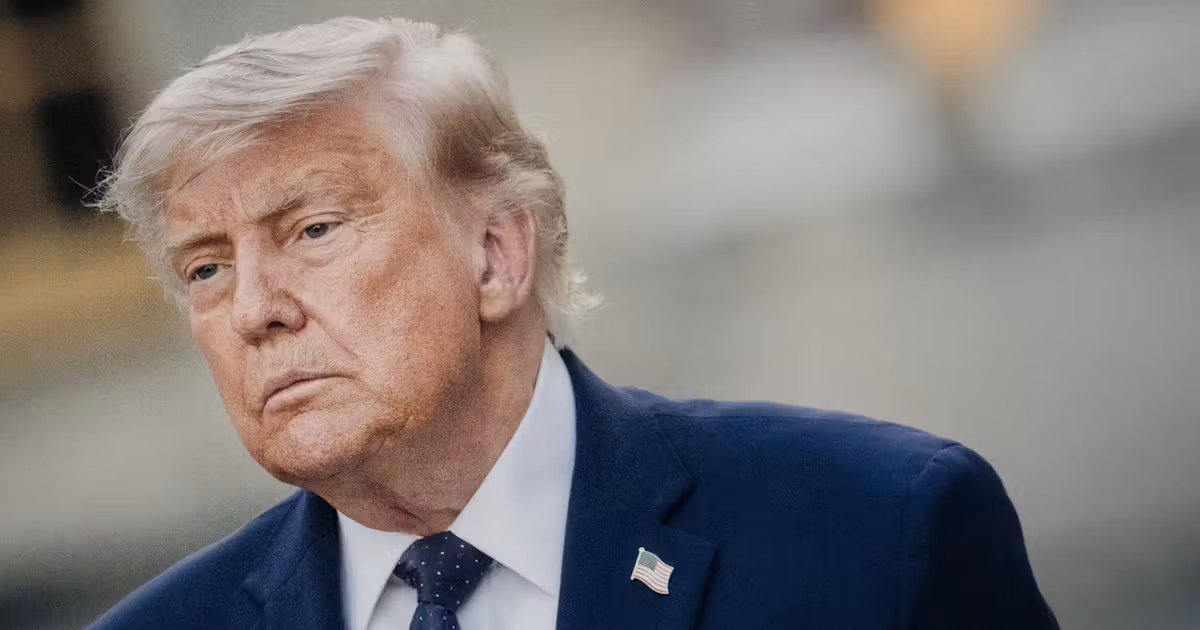
President Donald Trump crashed out Monday after the Supreme Court wouldn’t let him off the hook for the $5 million he owes E. Jean Carroll.In a tirade on Truth Social Monday, Trump lamented the Supreme Court’s decision to reject Trump’s appeal of a verdict finding him guilty of sexually abusing and then defaming Carroll.“Surprisingly, the Supreme Court declined to ‘review’ a Fake Case brought against me by a woman I never met (Decades old celebrity photo line, standing with her husband, does not count!),” Trump wrote.“This Case is really against the United States of America, and all it stands for, and should never be allowed to happen to another President, or Candidate to be!” Trump continued.Of course, the case has nothing to do with America, but about Trump’s specific actions. Carroll, a former writer, accused Trump of sexually assaulting her in 1996. When she spoke out publicly against him, he claimed the case was “a complete con job” and a “hoax and a lie.” In 2022, she sued him for both sexual abuse and defamation, seeking damages, and the jury agreed with Carroll that Trump was liable.Trump had appealed the decision, claiming the case was tainted by the inclusion of “highly inflammatory” evidence—including testimony from two other women who claimed Trump assaulted them, and the infamous Access Hollywood tape.Trump also railed against the state of New York for creating a temporary law that allowed adult sexual assault survivors in New York to file a civil case against an abuser, no matter when the assault took place, “in order to wrongfully ‘nab’” him.“It was tailormade, and this Injustice cannot be allowed to stand!” he wrote on Monday.Editor’s Pick: A new poll has revealed that Americans’ favorite politicians are also the ones that conservatives bellyache about the most.A Strength In Numbers/Verasight poll published Monday asked Americans to rate a dozen contemporary political figures on a scale of zero through 100, with the bottom of the scale representing “coldness” and the top of the scale representing “warmth.” The winners, by and large, were Democrats.Leading the popularity contest was former President Barack Obama, with an average rating of 54 on the reputation thermometer. Behind the forty-fourth president was Vermont Senator Bernie Sanders, New York City Mayor Zohran Mamdani, the Democratic Party at large, and former Transportation Secretary Pete Buttigieg, in that order.Georgia Senator Jon Ossoff and New York Representative Alexandria Ocasio-Cortez also polled high, earning a 42 and 41 rating, respectively.Two Democrats fell towards the bottom of the poll: House Minority Leader Hakeem Jeffries, who received a 36 rating, and Senate Minority Leader Chuck Schumer, who came in last in his party with a 30 rating.Republicans generally fared worse than Democrats. Among them, State Secretary Marco Rubio came in first with a rating of 41. Behind him was Vice President JD Vance and President Donald Trump, who each received an average rating of 38.Elon Musk, House Speaker Mike Johnson, and ex-Fox News star Tucker Carlson fared even worse than the team in the White House, scoring less than 36 across the board.Per our new polling out today, the most popular politicians in America are…Barack ObamaBernie Sanders Zohran MamdaniPete Buttigieg Jon Ossoff& Alexandria Ocasio-CortezTrump is tied with Elon Musk and Hakeem Jeffries, Schumer and Carlson in lasthttps://t.co/vGWqUvS0Pk pic.twitter.com/9Zmb1SHxki— G Elliott Morris (@gelliottmorris) June 29, 2026 The poll follows a pivotal moment for the burgeoning Democratic Socialists of America, which saw two of its New York–area candidates win big in state primaries last week: Darializa Avila Chevalier and Claire Valdez. Both of them, as well as the Mamdani-endorsed Brad Lander, beat out candidates endorsed by traditional Democratic leaders in Jeffries and Schumer. Their success underscored a new chapter in left-wing politics in the U.S., and illustrates that candidates tied to Democratic leadership have lost some of their sway with blue voters.Editor’s Pick: The Supreme Court ruled Monday that the Fourth Amendment protects an individual’s right to privacy when it comes to their phone location data.The justices ruled 6–3 to send a Virginia bank robbery case back to the lower courts for review in light of its decision. In 2019, Okello Chatrie was convicted of robbing a credit union after police saw him using his phone in the security camera footage of the bank. They then used a “geofence warrant,” which compels tech companies to provide law enforcement with data from all devices at a specific place and time, to identify Chatrie.Geofence warrants are regularly used, and let the government demand location data and records from anyone near a crime scene without needing to identify an individual target.Government lawyers argued that Chatrie did not have a “reasonable expectation” of privacy, since he had willingly shared his location with Google.But the Supreme Court rejected that argument. Justice Elena Kagan wrote the opinion for the majority, with conservative Justice Brett Kavanaugh and Chief Justice John Roberts joining the court’s liberals.“A cell-phone user is not to be viewed as sharing private information with third parties—which then can be freely passed on to the government—just by doing the ordinary things cell-phone users do,” Kagan wrote.Justice Sonia Sotomayor concurred, writing, “even short-term monitoring” of a person’s physical movements can provide “a wealth of detail about [his] familial, political, professional, religious, and sexual associations.”The ruling is a win for data privacy, and will make it harder for the federal government to access personal information stored in the cloud without getting a specific warrant.More on the Supreme Court this term:Supreme Court Justice Sonia Sotomayor slammed her conservative colleagues on Monday for making President Donald Trump more powerful than a king.The Supreme Court’s conservative majority scrapped Humphrey’s Executor v. United States—a high court precedent that allowed Congress to limit the president’s ability to fire officials at independent federal agencies—and allowed Trump to remove Rebecca Slaughter, a Democratic commissioner on the Federal Trade Commission.In a scathing dissent, joined by Justices Ketanji Brown Jackson and Elena Kagan, Sotomayor warned that Trump had just become more powerful than the English monarch, whose Parliament “often restricted the Crown’s ability to remove even high-level royal officers.”“The text of the Constitution, along with its history, the longstanding practices of the political branches, and the precedents of this Court, make clear that Congress may limit the causes for which the heads of Commissions like the FTC can be removed by the President,” Sotomayor wrote. “In holding otherwise, the Court gives the President a power unknown even to the English Crown against which the Founders revolted, elevating him above his once-coequal branches by transforming a duty to take care that the laws be faithfully executed into a license to act in defiance of those very laws.”Sotomayor argued that there was simply no way that the decision was constitutional because the country’s founding Framers had “‘never intended’ to give the President ‘the complete set of powers’ that the English Crown held, let alone more.”Editor’s Pick: America will reach a historic milestone at the end of this week as it celebrates its semiquincentennial, but the people that comprise this storied nation have reportedly never felt so detached from its identity.An AP-NORC poll published Monday (but conducted in April) found that American pride has dropped significantly over the last decade. Negativity surrounding the government has seeped into public perception of the core components of America’s story, such as its history, its foreign influence and impact, and the way the country’s democracy works.Pride in American democracy has dropped 14 percentage points since 2017, when it was measured at 42 percent. It is now at 28 percent.The survey also found that a majority of Americans are disillusioned with the American dream: They are not confident in their current financial situations, do not believe they can find a “good job” in the current market, do not believe they have the ability to purchase new homes if they want, and do not believe they’ll have enough money to retire when the day comes.A Gallup poll, also published Monday, found that just 33 percent of U.S. adults were “extremely proud” to be an American. That’s the lowest rating since the polling group began asking the question in 2001, when 55 percent of the nation’s adult population answered similarly.Another 20 percent of U.S. adults said they were “very proud” to be an American, indicating that just over half of the country feels a deep sense of pride in their national identity.The fall-off is represented most extremely among self-identified Democrats, of whom just 14 percent said they were “extremely proud” to be an American in 2026. Right behind them were registered independents, 28 percent of whom offered the same response. Independents, according to Gallup’s data, have experienced a steady decline in national pride since 2004.Meanwhile, 70 percent of Republicans said they were “extremely proud” to be an American when polled this year—a sharp uptick from when they were asked the question between 2020 and 2024.Editor’s Pick:
Trump Goes Berserk Over Supreme Court’s E. Jean Carroll Decision
He still has to pay Carroll $5 million.
1,473 words~7 min read