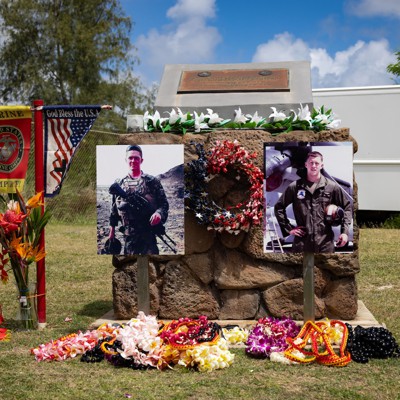
Leis at a memorial site during the commemoration ceremony for the 2015 fatal training accident at Marine Corps Training Area Bellows, Hawaii, May 17, 2025.
U.S. Marine Corps / Lance Cpl. Carlos Daniel Chavez-Flores
Pentagon data shows that deadly and costly military aircraft mishaps skyrocketed 55 percent over the past four years, alarming lawmakers, defense analysts, and aviation safety experts.The number of Class A mishaps—the deadliest and costliest category—per 100,000 flight hours rose from 1.3 in fiscal 2020 to 2.02 in fiscal 2024, according to data provided to Sen. Elizabeth Warren, D-Mass. Defense One reviewed the data, which Warren received in January after requesting it last year.“This loss of life due to mishaps poses an unacceptable risk to service members, their families, and military readiness,” Warren said in a Wednesday news release.Across 4,280 total mishaps between full budget years 2020 through 2023 and part of 2024, those incidents led to 90 deaths, just shy of 90 aircraft destroyed, and upwards of $9 billion in damages, the data showed.Warren’s office said the rise in deadly mishaps supports a push to include provisions in this year’s defense policy bill asking the Pentagon to share summaries of internal military safety reports for the last three years with Congress. Safety advocates and defense experts said the alarming trends are accompanied by declining transparency, increased operations, and stagnating budgets.Each service except the Navy saw the rate of Class A mishaps per 100,000 flight hours hit a four-year high in 2024. In the Marines, the rate nearly doubled from 1.33 to 3.91. The Army’s rate rose from 0.76 to 2.02; the Air Force’s edged up from 1.72 to 1.9; and the Navy’s went from 1.12 and 1.76 after peaking at 1.98 in 2022.A Pentagon official, responding to those figures being released by Warren’s office, said in an emailed statement that the Defense Department's safety oversight council regularly reviews incidents to “reduce safety risks” to the services."We underscore the importance of safety and readiness at every level of the Department, ensuring that we invest in and adopt leading safety practices and foster a strong culture of safety throughout the organization,” the official said.