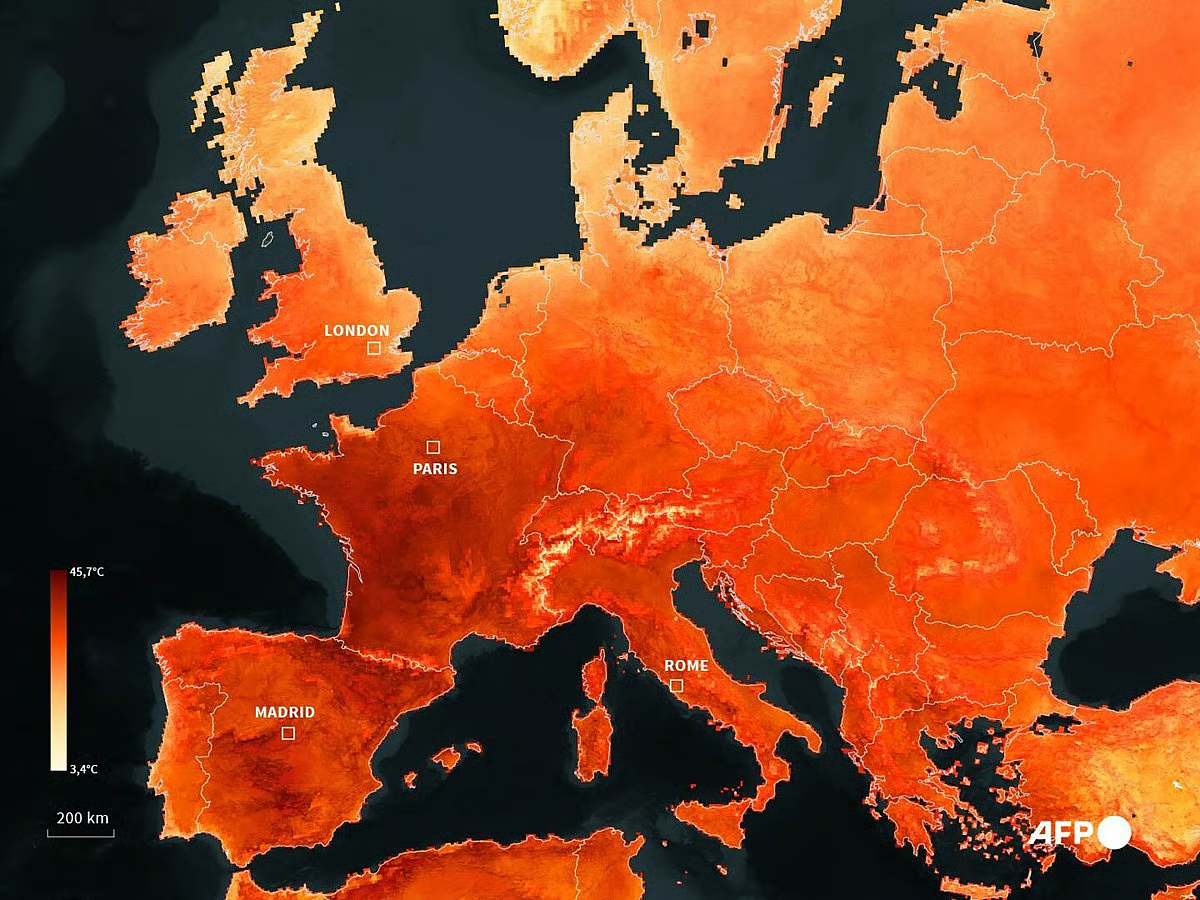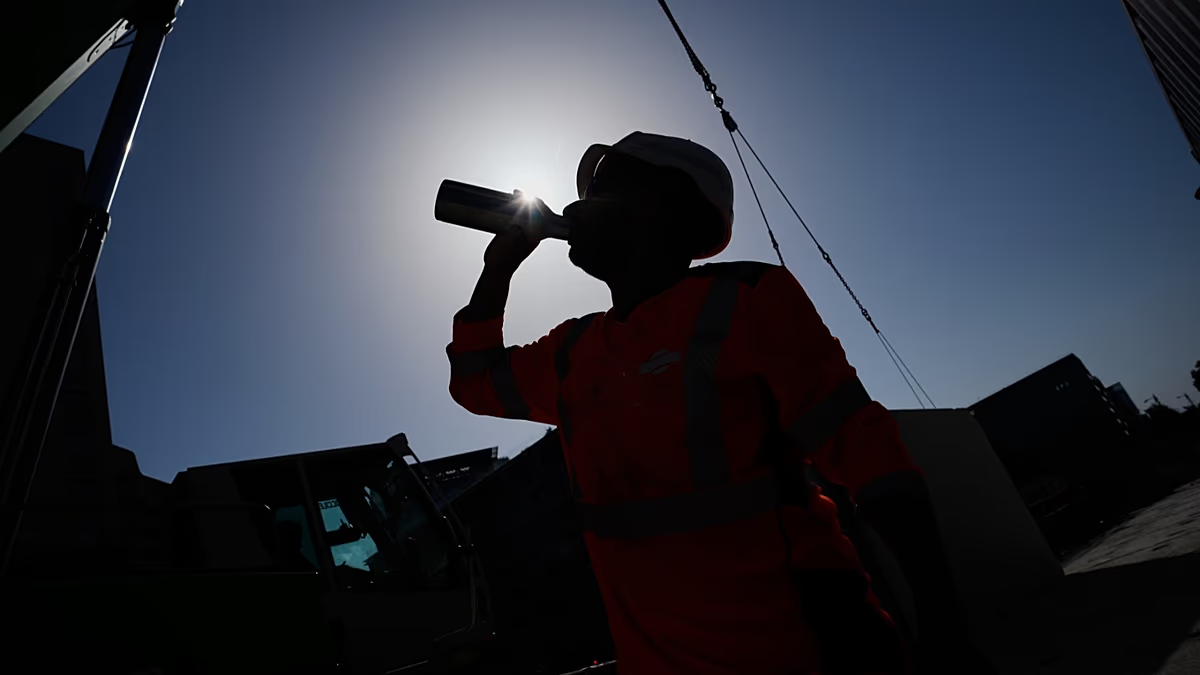
An elderly woman endures oppressive heat in a European city square, seeking shade as the sun beats down. Image Credit: TIL CreativesIt appears that Europe's recent heatwave is more than breaking temperature records for the season; a new scientific study shows that such a heatwave could not occur in the absence of anthropogenic climate change.Study finds a comparable 1976 European heatwave would have been 3.5°C cooler, while 45% of cities broke or neared heat stress records.According to the World Weather Attribution (WWA) project scientists, a similar heat wave in June 1976 would have been 3.5°C cooler during the daytime hours compared to the current situation, indicating how the climate in Europe has changed since then. Reportedly, during the latest heatwave, Europe experienced unusually hot weather, with some countries setting June temperature records.Scientists say climate change has fundamentally altered Europe's heatThe analysis, led by scientists from Imperial College London, KNMI, and other institutions in Europe, the UK, and the US, compared the current event with similar weather events in previous years. As a result, their findings were impressive. The weather system itself was not unusual. What has changed, the researchers say, is the climate in which the system operates.According to Theodore Keeping of Imperial College London, the June heatwave would have been virtually impossible without human-caused climate change, as temperatures have risen significantly over recent decades.Moreover, according to Phys.org, scientists found that a similar event that occurred during the infamous 2003 heatwave would be at least 2°C cooler.Almost half of Europe’s big cities experienced record-breaking heat stressThe study did not confine itself to temperature. Researchers also considered the Wet Bulb Globe Temperature (WBGT), a widely used measure of the combined effects of heat and humidity on the human body.Across roughly 850 cities in 30 European countries, nearly 45 percent either exceeded or were forecast to exceed their June heat-stress records between June 18 and June 29. Unlike regular temperatures, WBGT takes into account how hard it is for the body to cool itself by means of perspiration. High humidity makes it harder for the body to get rid of heat, raising the risk of heat stroke.It was noted that cities are especially vulnerable because of dense development, older buildings, and the urban heat island effect.Seeking shade in a European square, faces etched with discomfort from extreme heat and humidity. Image Credit: TIL CreativesEurope continues to warm at the fastest paceThe findings confirm the emerging pattern recognized by climatologists over the years. According to the World Meteorological Organization (WMO) and Copernicus Climate Change Service, Europe is warming faster than anywhere else in the world.According to the World Meteorological Organization, the Earth's average surface temperature is now about 1.4°C above pre-industrial levels, largely because of greenhouse gas emissions from burning fossil fuels. The increase in temperature can lead to frequent occurrences of heatwaves. Heatwaves similar to the ongoing situation have increased in frequency and intensity by tens to hundreds of times since 2003, as confirmed by WWA scientists.Heat is having its effect in EuropeThe study has come at a time when some European nations are struggling with the repercussions of the current heat wave.Some regions in Germany, Poland, Czechia, and Hungary have witnessed the breaking of temperature records, while other nations have issued health warnings, limiting outdoor work in addition to advising the vulnerable population to remain indoors during the hottest part of the day. In France, there has been the reporting of excess deaths due to the heat wave, but according to researchers, it usually takes some weeks to measure the full effects of heat on people's health.Scientific analysis suggests that adaptation measures alone are not enoughAlthough improved urban planning, cool infrastructure and heat action plans can reduce health risks, the researchers say adaptation alone has limits.The team of World Weather Attribution maintains that rapid emission reductions from fossil fuels are needed in order to bring future heat waves under control. Unless greenhouse gas emissions fall faster, temperatures like those seen this June could become more common in future summers.For a majority of scientists, recent European heatwaves are more an indicator of the reality than the distant future.
In 1976, a comparable European heatwave would have been 3.5°C cooler; June 2026's just broke records in 45% of 850 cities
It appears that Europe's recent heatwave is more than breaking temperature records for the season; a new scientific study shows that such a heatwave could not occur in the absence of anthropogenic climate change.
686 words~3 min read