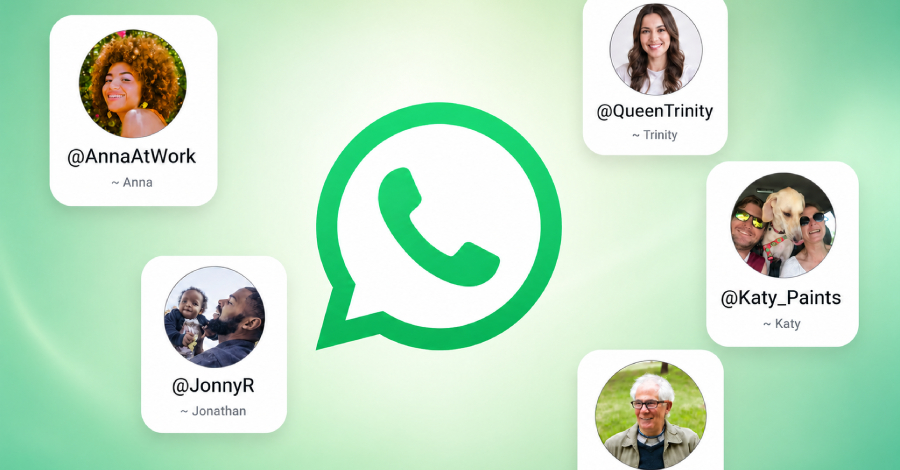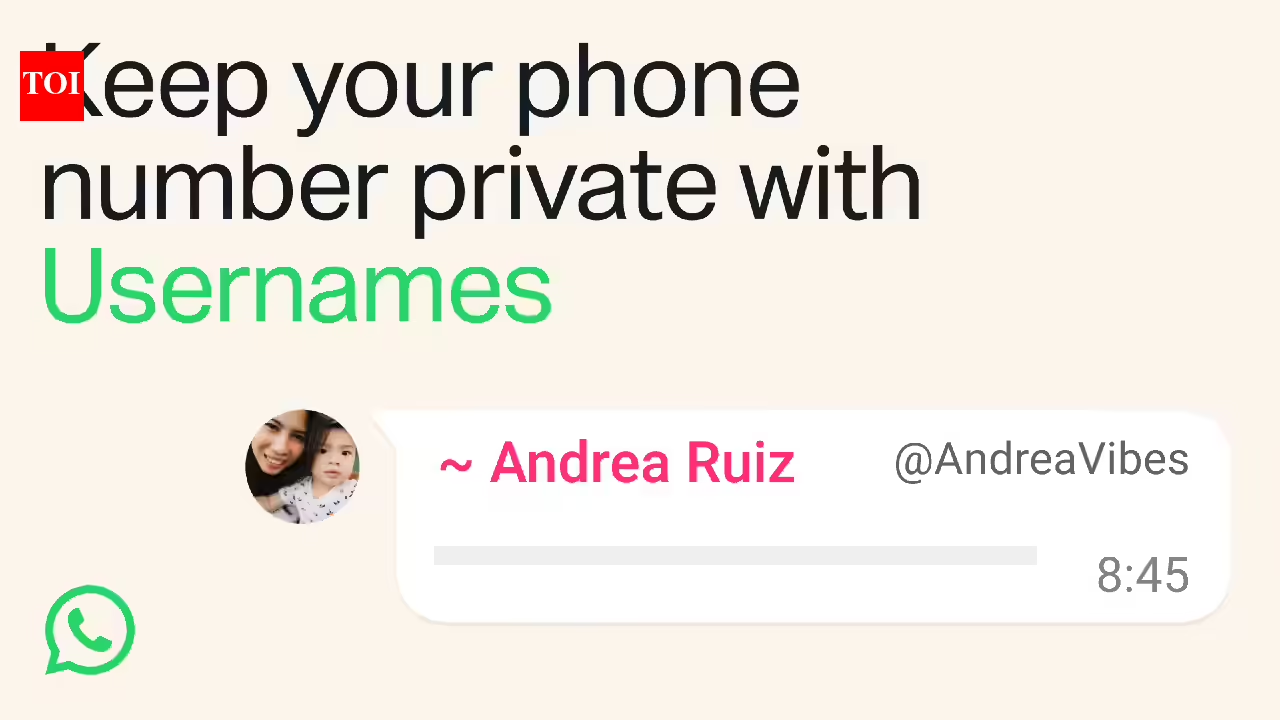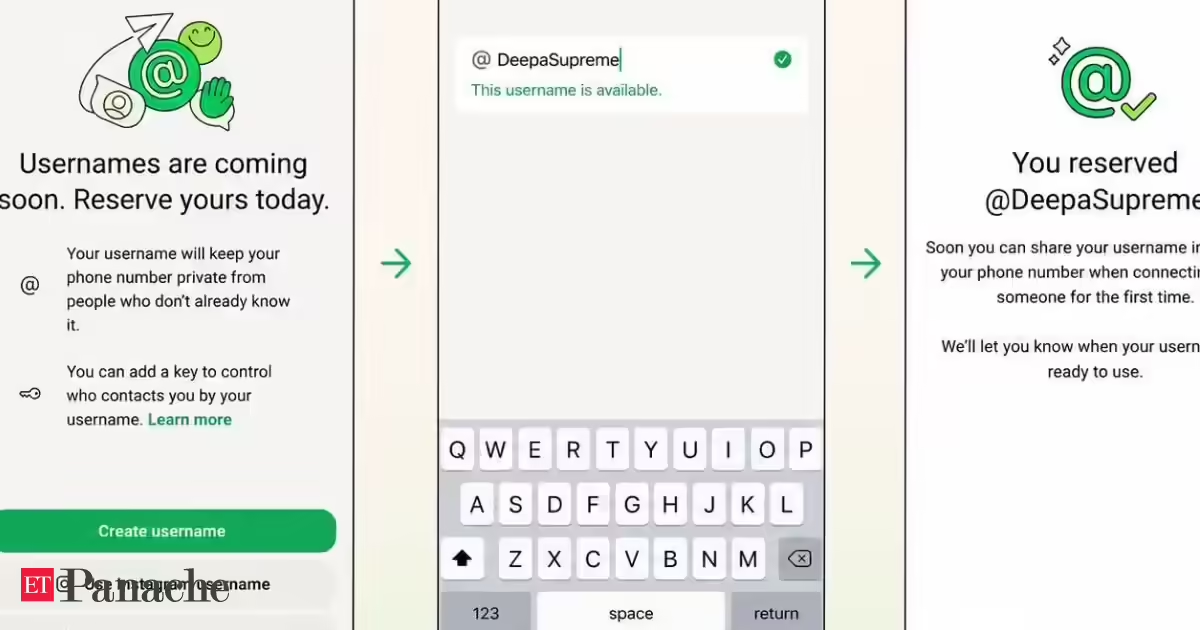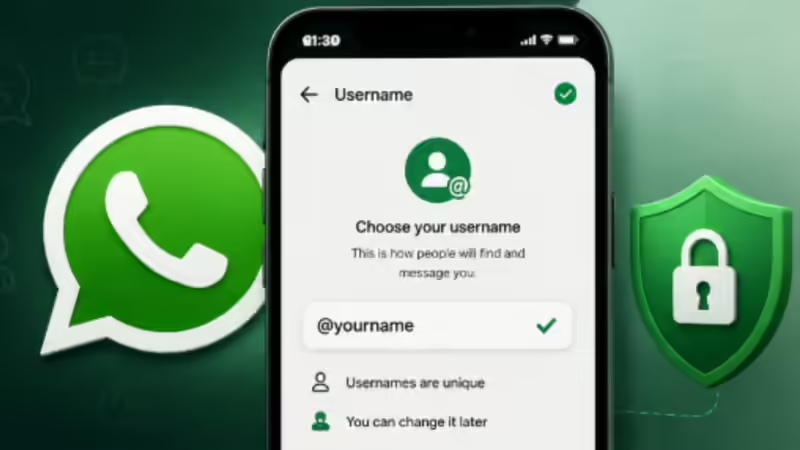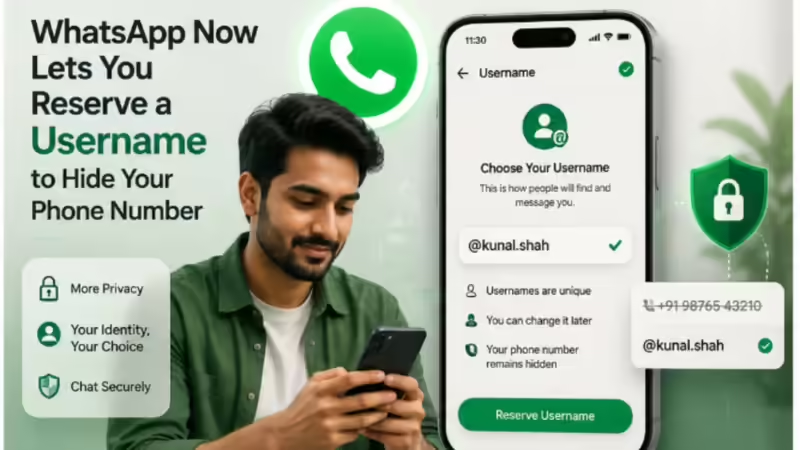
WhatsApp is opening global reservations for usernames from Monday, 29 June, letting people set a handle they can share instead of their phone number, with the feature arriving inside the app later in 2026. It is the messaging app's most consequential privacy change since it switched on end-to-end encryption, and it ends the rule that has defined WhatsApp since 2009: that to reach someone, you needed their digits.The framing in WhatsApp's own materials leans hard on the word privacy, and for once the framing mostly holds. A username on WhatsApp behaves unlike a social handle. There is no directory to browse, no suggestions, and no way to stumble across someone — a stranger needs your exact username to reach you, and even then you can demand a second secret before the message lands. That design is a near-copy of the model Signal shipped in 2024, which makes the real story less about tennis-style novelty and more about Meta, the most data-hungry company in messaging, borrowing the privacy playbook of the app built to resist it. The catch, as ever with Meta, sits in what the feature protects you from, and what it leaves wide open.What WhatsApp announcedThe headline is the reservation window. From 29 June, people can create and claim a username before the feature goes live in the app, with an in-app notification once reservations reach their account. WhatsApp is positioning the early claim as the moment to lock in something unique, which sets up a familiar land-grab: a username rush, where the desirable short handles vanish first.Two design choices define it. First, the privacy posture — no public directory and no suggestions, so a username works only when someone already knows it exactly. Second, a feature WhatsApp calls a username key: an optional secret that anyone messaging you for the first time through your username must supply before they can reach you, changeable whenever you like. In India, WhatsApp has built its campaign around the actor Aamir Khan, dramatising the everyday moments — meeting someone, wanting to stay in touch — where handing over a phone number feels like too much. The phone number itself stays, hidden in the background as the account's root, visible only to people who already have it saved.How it worksThe mechanics are simpler than the infrastructure behind them. You reserve a handle now and use it later, once the in-app feature ships. From that point, sharing your username replaces sharing your number: a new contact reaches you by the handle, and your digits stay invisible to them, as do theirs to you, until you each save the other's number. You can change the username inside the app whenever you want.The discovery model is the heart of it. With no directory and no suggestions, WhatsApp removes the ability to search for a person, which is exactly the point — the system refuses to help a stranger find you, so the username works only when you have chosen to share it. The username key adds a further gate on top. Set one, and a first-time sender needs both your handle and the key, which blunts the obvious risk that someone guesses or harvests a username and starts messaging. Reported beta builds suggest the handles will follow tight rules — a span of lowercase letters, numbers, full stops and underscores, with impersonation blocked and notable accounts verified — though the final format sits with WhatsApp to confirm at launch. Through all of it, the phone number remains mandatory at sign-up, the verified root the account is built on. It simply stops being the thing you hand to strangers.Why your phone number became a liabilityTo see why this matters, look at what a phone number has quietly become. It has grown far past a simple way to be called. It is a persistent identifier that follows you across services, links to your real identity, and, once shared, can rarely be taken back. Give it to a marketplace buyer, a dating match, a conference acquaintance or a tradesperson, and you have handed over a key to far more than a chat.The people who feel this most acutely make the clearest case. Journalists soliciting tips have long faced an ugly choice between publishing a private number, and the harassment that invites, or maintaining a second line. Activists organising in groups have been forced to expose their numbers to people they have yet to trust. For everyone else, the friction is milder but constant: the small hesitation before adding a stranger, the spam that follows a leaked number, the unease of a digit-based identity that doubles as a login for banking and payments. A username dissolves that hesitation. You can make a new connection, keep it as long as it stays useful, and walk away while keeping your real contact details to yourself. That is a genuine improvement, and it arrives for an audience measured in billions rather than the privacy-conscious few.Why WhatsApp Copies Signal Over TelegramThe comparison that matters is which rival WhatsApp chose to imitate, because messaging usernames come in two flavours, and they point in opposite directions.AppUsername modelPhone numberHow people find youDefault encryptionWhatsAppPrivate handle, no directory, plus an optional username keyHidden from new contacts, kept as the account rootExact username only, no searchEnd-to-end on message contentSignalPrivate handle, no directoryHidden by default, kept as the account rootExact username only, no searchEnd-to-end on content, minimal metadataTelegramPublic, social handleCan be hidden, kept as the rootPublic and searchable, used for channelsOnly in opt-in Secret ChatsInstagramPublic, social handleNot the identifierPublic, searchable directoryOptional on direct messagesiMessageNone, uses number, email or Apple IDThe identifier itselfThrough saved contactsEnd-to-end on contentSignal built the privacy version in 2024, and WhatsApp has followed it almost line for line. On Signal, there is no searchable directory of usernames, the handle exists only to start a chat, and once a request is accepted the username gives way to a profile name. WhatsApp's no-directory, exact-handle-required design is the same philosophy, aimed at a vastly larger crowd. The motivation was the same too: Signal's usernames were driven by activists and journalists who needed to connect while keeping a number private, and the result made Signal accounts even harder to subpoena, because the service simply holds less to hand over.Telegram represents the other path. Its usernames have existed since around 2014, but they are public handles built for discovery — searchable, used to run channels and large communities, even traded on a marketplace. That is closer to an Instagram handle than a privacy shield, and it is precisely the model WhatsApp has chosen to avoid. The distinction is the whole point of WhatsApp's framing: a handle nobody can search for is a privacy tool, while a handle anyone can find is a social one.WhatsApp's single addition tips it past Signal. The username key, the secret required for a first message, is a gate that Signal and Telegram both lack in the same form. Signal leans on message requests and number-privacy settings; Telegram on who-can-find-me toggles. A per-contact secret that a stranger must already possess is a meaningfully stronger lock on first contact, and the one place WhatsApp can fairly claim to lead.The catch: who you are really hiding fromHere is where the launch language needs unpicking. A username hides your phone number from other users. It leaves you entirely visible to Meta. WhatsApp's encryption protects the contents of your messages, yet Meta still sees the metadata around them — who you message, when, how often, from where — and a username leaves all of that intact. The privacy on offer guards against strangers and spammers, while the platform keeps its full view. For most people that is the privacy they actually want. It is worth being clear that it stops at Meta's door.That clarity also explains why a data-driven company ships a privacy feature at all. Three motives run together. The first is competitive: Signal and Telegram have used phone-number privacy to peel away the security-minded, and WhatsApp closing the gap removes a reason to leave. The second is engagement, the quiet engine of every Meta product — every bit of friction removed from making a new connection means more connections made, more messages sent, more time in the app. The third is commercial. Alongside personal usernames, WhatsApp has spent months preparing businesses for handle-based identity through a new business user ID, and a searchable business handle is a branding and discovery tool that feeds directly into the click-to-WhatsApp advertising Meta sells. The privacy feature for people and the growth feature for business arrive on the same rails.None of that makes the privacy hollow. It makes it precise. Usernames are a real shield against the specific harm of an exposed number, built by a company that benefits whether you value the shield or the convenience underneath it.There is a longer game beneath the launch, too. By loosening the phone number's grip as the one thing that identifies you, WhatsApp begins to decouple identity from the SIM card — and identity is the asset every platform wants to own. A handle that travels with you, rather than a number tied to a carrier and a country, is the kind of portable identity Meta can build on for years: across its apps, across devices, across the business messaging that increasingly drives its revenue. The phone number stays as the verified root, the proof you are real, while the handle becomes the face you show the world. That is a quietly significant shift in who controls your digital identity, and it is worth watching regardless of how the privacy headline reads today.What it means for IndiaNo market matters more here than India, WhatsApp's largest by far with more than 500 million users, which is why the Aamir Khan campaign launches there first. The phone number problem is sharper in India than almost anywhere. A number doubles as a UPI payment address and a near-universal login, the country fields one of the world's heaviest loads of spam and scam calls, and the routine act of sharing digits with a marketplace seller, a cab driver or a stranger carries real safety weight, particularly for women.Against that backdrop, a username that lets someone transact, coordinate or connect while keeping a number private addresses a daily Indian friction rather than an abstract one. It also lands as India's Digital Personal Data Protection regime pushes platforms toward data minimisation, giving the feature a regulatory tailwind. The reservation rush will be loudest in India simply because the user base is, and the squatting and impersonation risks — someone grabbing a brand or a public name early — will surface here first and hardest. WhatsApp's verification of notable accounts and its impersonation block will get their first real stress test in the country that uses the app most.The everyday scenarios make the value concrete, which is why the Aamir Khan campaign leans on them. Consider the second-hand sale arranged over a listing app, the tuition enquiry from a parent, the delivery coordinated with a courier, the match on a dating app moving to chat — each currently demands a number that the other side keeps forever. A username turns each into a connection you can sever cleanly. For women in particular, who shoulder a disproportionate share of harassment that begins the moment a number leaks, the ability to talk first and stay otherwise hidden is less a convenience than a safeguard. Spam follows the same logic in reverse: a number harvested once is sold and resold across telecaller lists, while a username protected by a key gives the harvesters far less to work with.What to watchThe immediate story is the reservation scramble and how WhatsApp polices it — whether the land-grab stays orderly or turns into a squatting free-for-all that the verification system has to untangle. The longer story is adoption. A privacy feature only protects the people who turn it on, and WhatsApp's history shows that defaults matter more than options. Watch whether the in-app rollout later in 2026 nudges usernames toward the mainstream or leaves them a setting the cautious few enable. Watch, too, whether the username key proves usable enough for ordinary people rather than a control only the security-minded ever touch. And the ripple extends past WhatsApp itself: when the app two billion people use normalises hiding a number, phone-number privacy shifts from a niche demand to a baseline expectation, the kind rivals must match and regulators can cite. Signal proved the idea; WhatsApp will decide whether it becomes the default texture of messaging or stays a setting most people leave alone. For now, the move reads as Meta quietly conceding that the privacy-first messaging crowd had the right idea all along, and deciding it would rather copy that idea than keep losing users to it.end of article
WhatsApp Now Lets You Reserve a Username to Hide Your Phone Number
WhatsApp is opening global username reservations from 29 June, its biggest privacy change in years. Strip away the launch language and it is Meta adopting Signal's playbook for two billion people — with one feature even Signal lacks.
2,129 words~10 min read