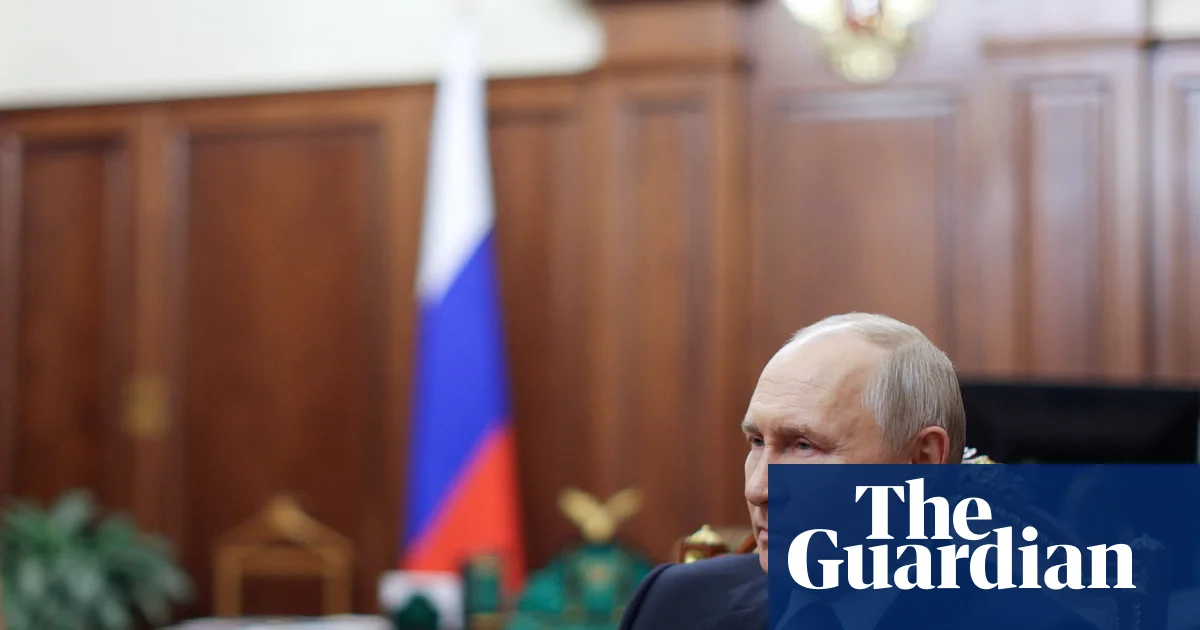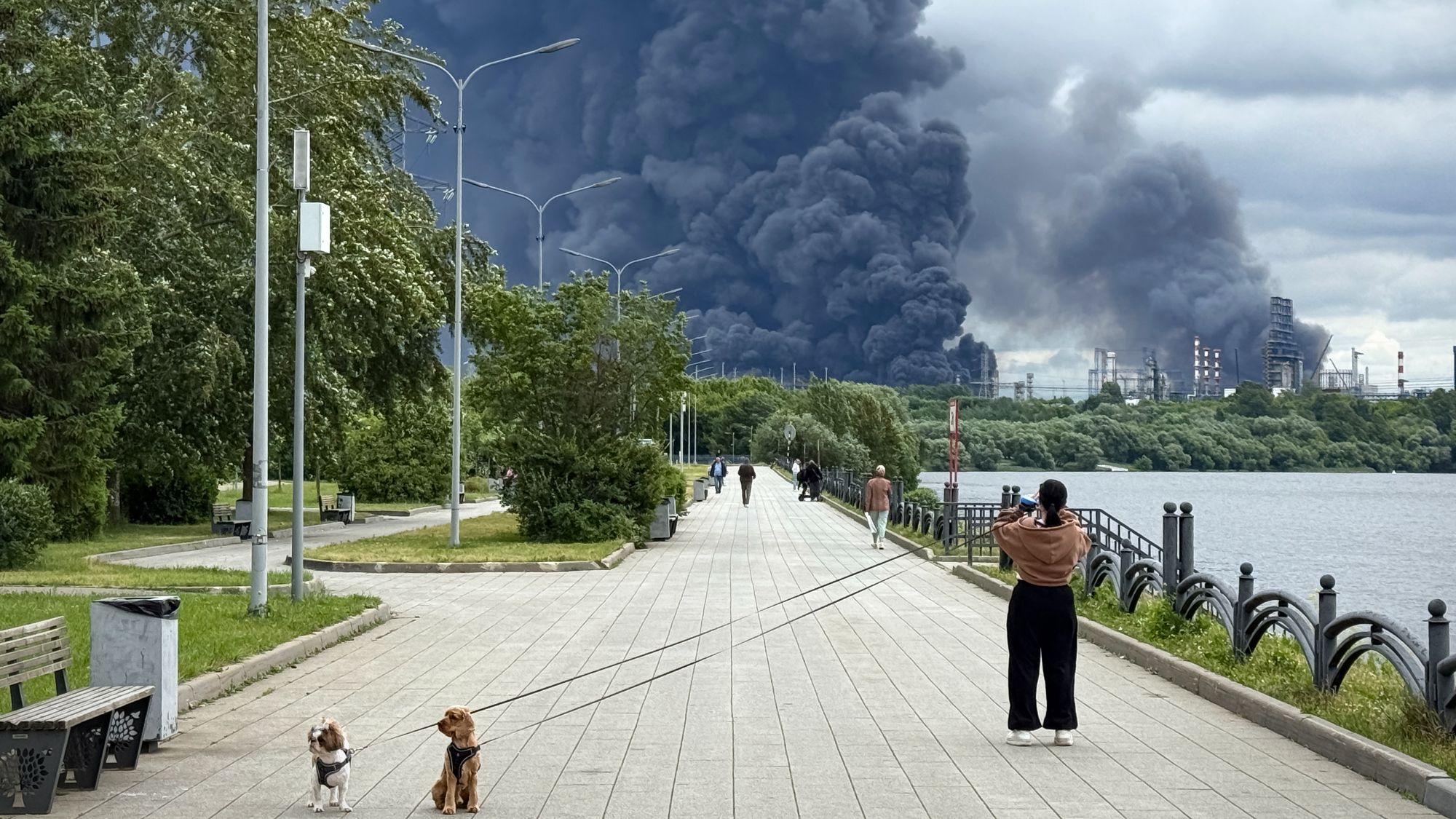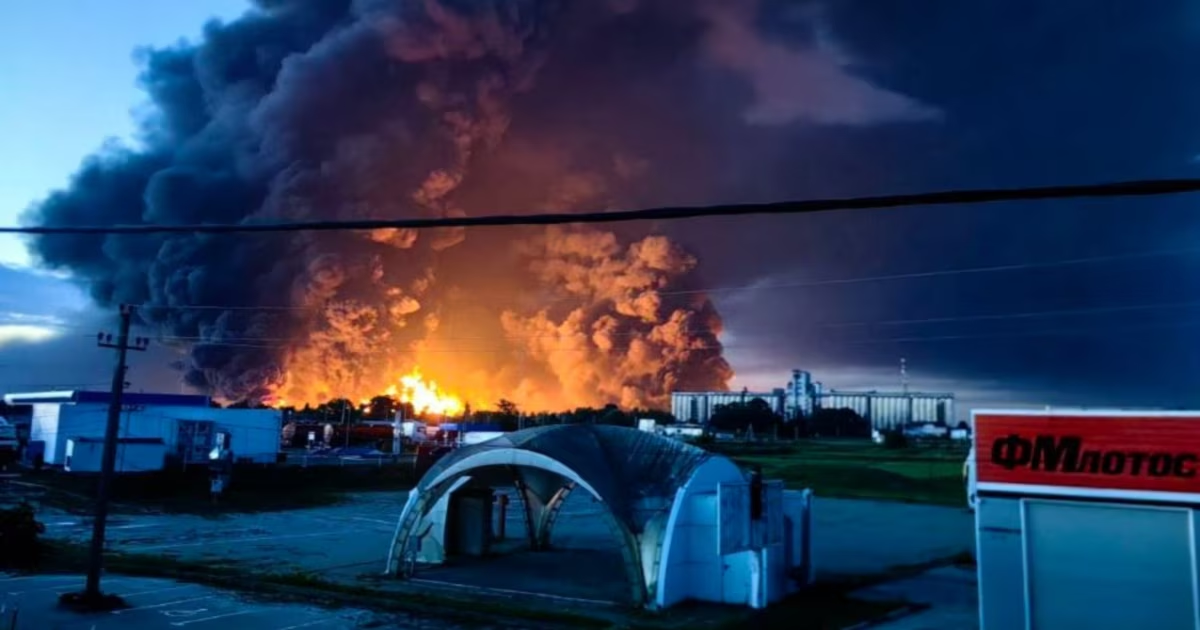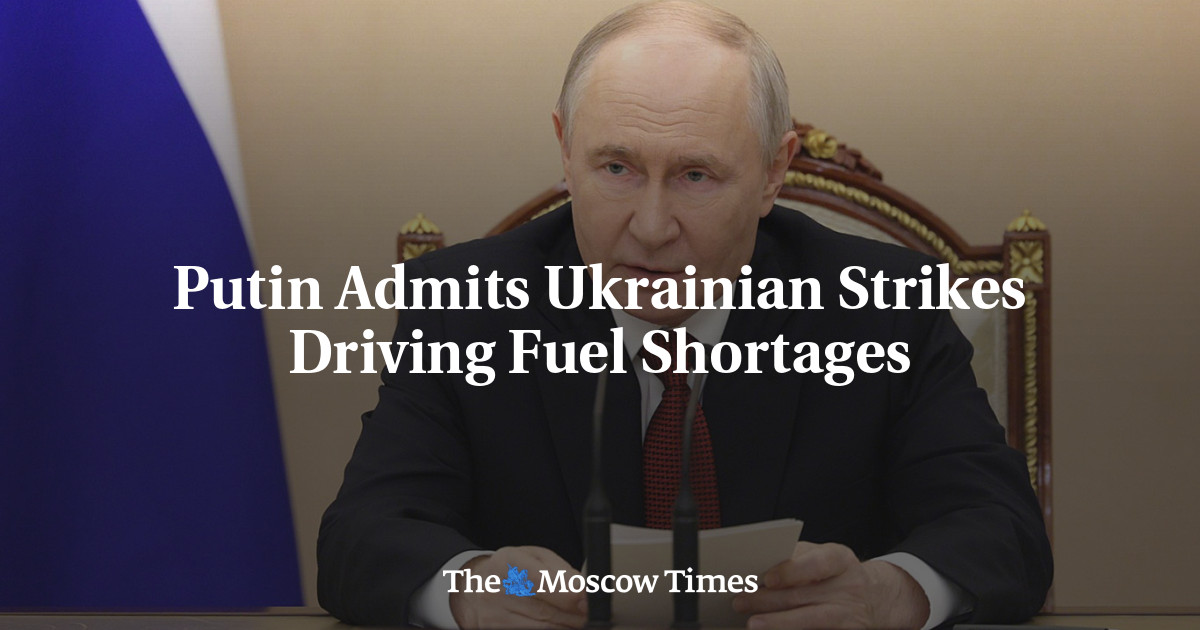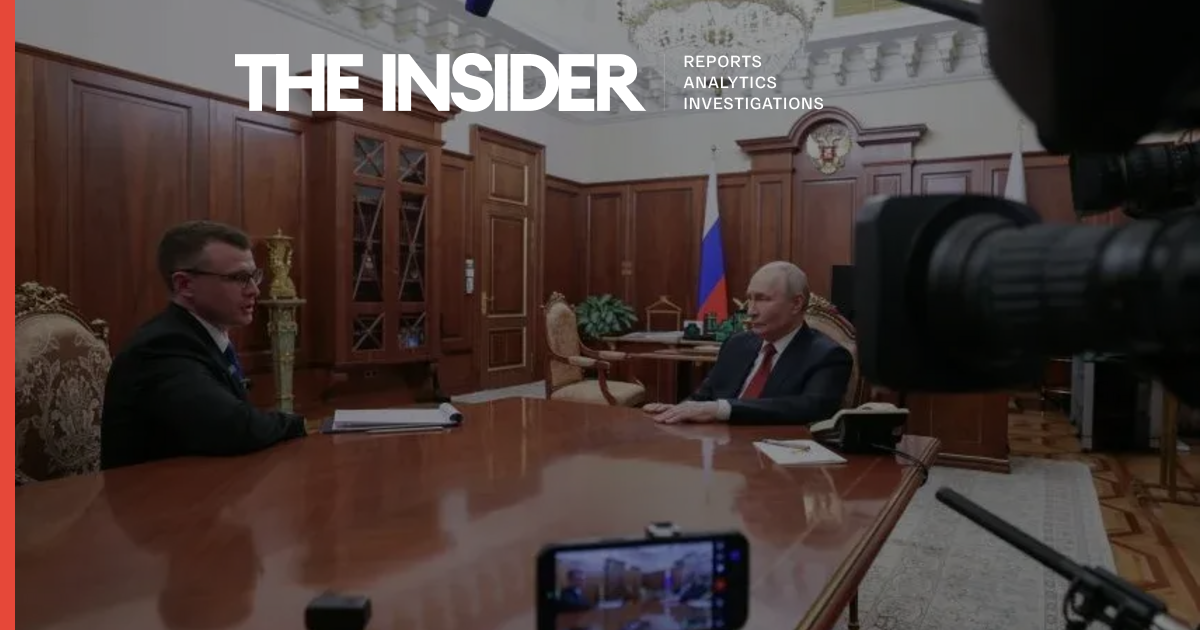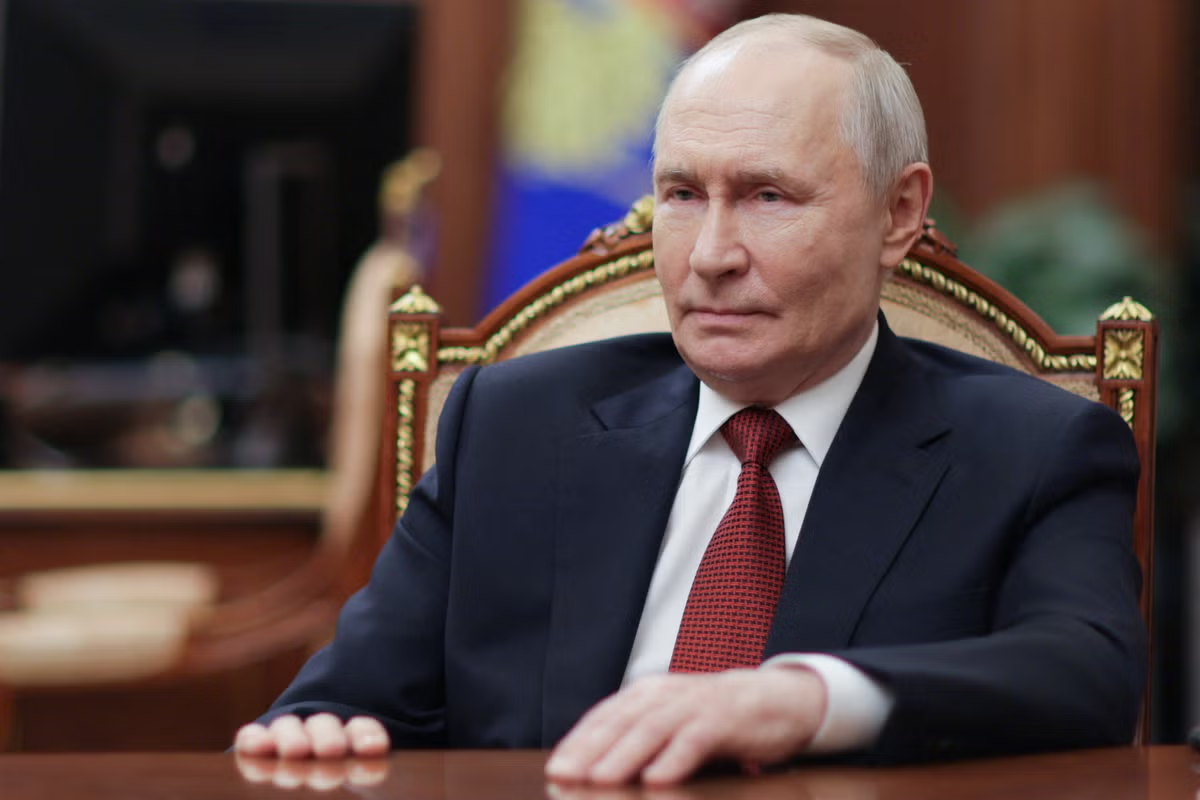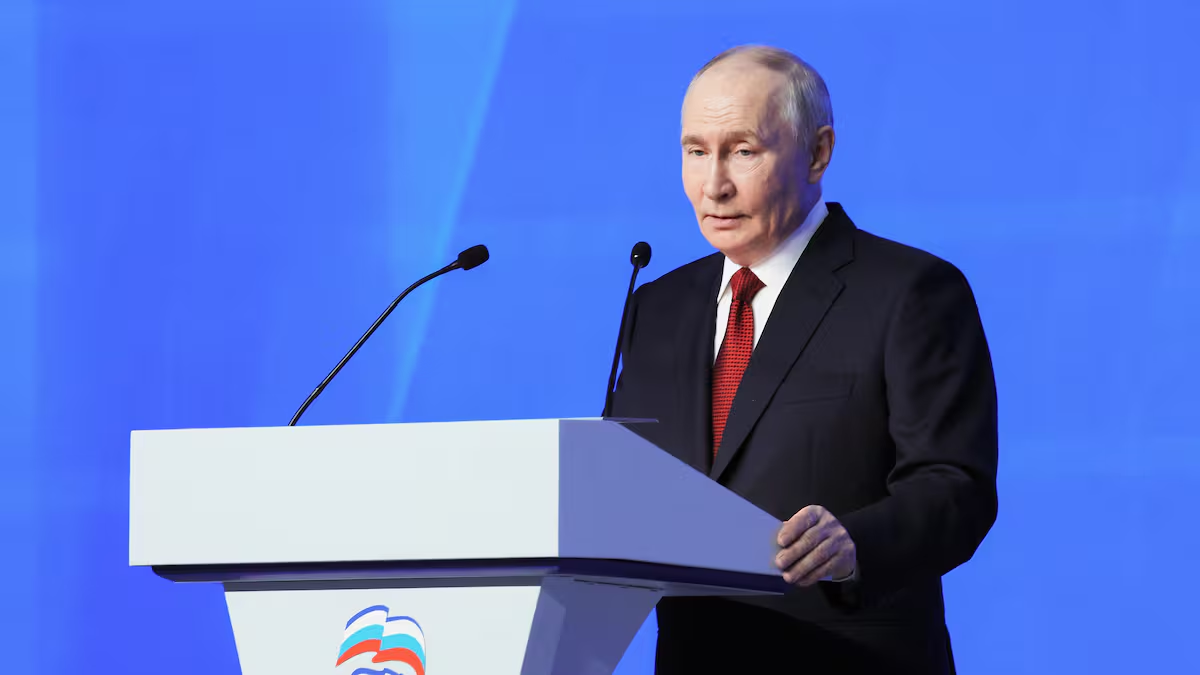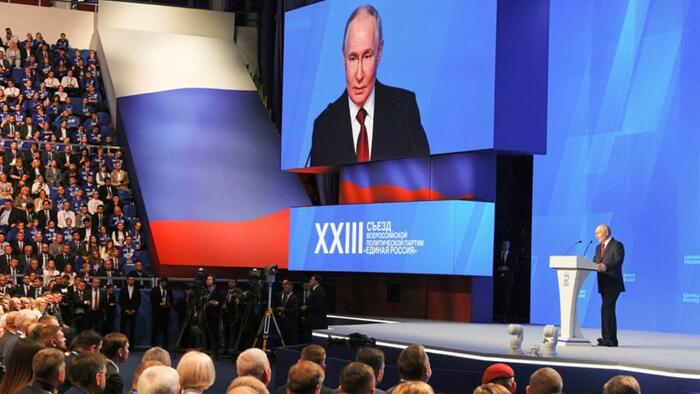
President Vladimir Putin made a rare admission over this past weekend, belatedly acknowledged Sunday that Russia is facing a "certain shortage" of fuel following weeks of ramped-up drone warfare coming out of Ukraine, which has chiefly targeted oil refineries and domestic supply facilities, including in the Moscow region."As for strikes against critical infrastructure in general, and energy infrastructure in particular, of course, these attacks on our infrastructure facilities create problems," Putin said in the new interview published by the Kremlin. "That's obvious.""Right now we're observing a certain shortage, but it's not critical," he added. He also made wide-ranging public remarks at a major summit of the ruling 'United Russia' party.AFP via Getty ImagesUkraine's Zelensky has made no secret of his plans to make life inside Russia as painful as possible, in order to put pressure on the Kremlin to end the war. By close of last week, the rare national fuel crisis inside Russia was outlined as follows:A fast-growing number of regional officials and gas station chains across Russia are restricting gasoline and diesel sales as Ukrainian drone attacks on oil refineries and supply networks take a mounting toll on supplies. Fuel rationing measures were in place in at least 56 Russian regions as of Thursday, according to open-source data analyzed by The Moscow Times. In dozens more regions, residents are complaining about fast-rising gasoline prices, closed filling stations and miles-long lines, while some local authorities and major retailers remain hesitant to enact rationing. “In some districts of our republic, there is no fuel at gas stations right now, so people go to [the capital] Kyzyl to refuel,” said a resident of Tyva, a southern Siberian republic roughly the size of Tunisia. Further, a state of emergency for all citizens was also declared in Crimea last week - with fuel only being provided to military and state entities at this point.Putin further acknowledged in his comments that small, slow-moving drones have proven a problem for Russia's anti-air defense systems, which were conventionally designed to intercept large fast projectiles like missiles or warplanes.This has been big on Russians' minds, as this month they beheld unprecedented scenes of massive smoke plumes overtaking Moscow's skyline, as a key refinery there burned. Still , the Russian leader sought to project strength, stating:Our retaliatory strikes deep inside Ukraine are far more powerful, more painful, and, frankly, more destructive, causing serious consequences for the "Kyiv regime."Putin:
'Problematic But Not Critical': Putin Concedes Fuel Shortages After Ukraine Strikes, Plays It Cool
"Of course, these attacks on our infrastructure facilities create problems... That's obvious."
748 words~3 min read