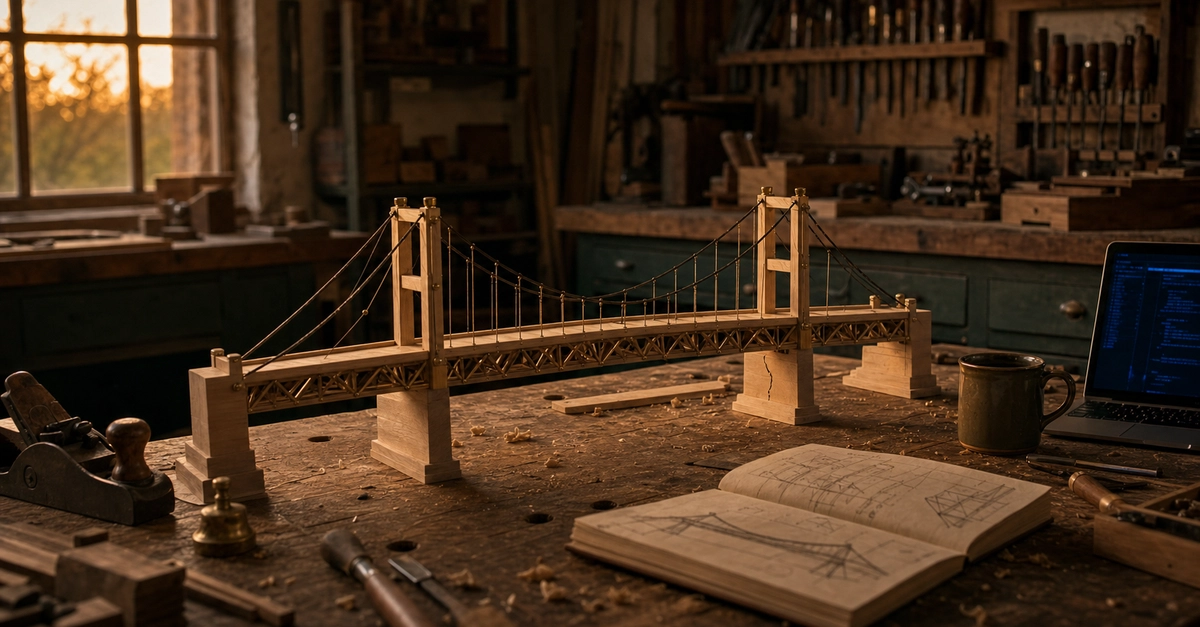
This is the fourth post in Craft & Code, a short Friday series about what carpentry can teach us about AI, skill and the future of software. Last week I worried about where the next generation's judgement will come from. This week, why we may not notice it is missing until it is too late.
My father built me shelves in an alcove when I was small, and I mentioned in the first post that they may still be there for eternity. The other side of that story is the one every household knows: the shelf that is not quite right. The one that sags under a row of books, or sits a degree off true so that anything round rolls gently to one end. You do not need to be a carpenter to see it. A bad joint, a door that will not close, a shelf that dips — the material tells on the maker, immediately and to everyone.
That is the comforting version of the analogy, and the one I expected to write: carpentry is honest about its failures because they are visible, while software can look polished and be rotten underneath. A wonky shelf looks wonky; bad software looks finished. It is a tidy line, and there is real truth in it.
But it is only half the truth, and the more interesting half should worry us — because the moment you go up from a shelf to a serious piece of engineering, the comfort falls away completely.