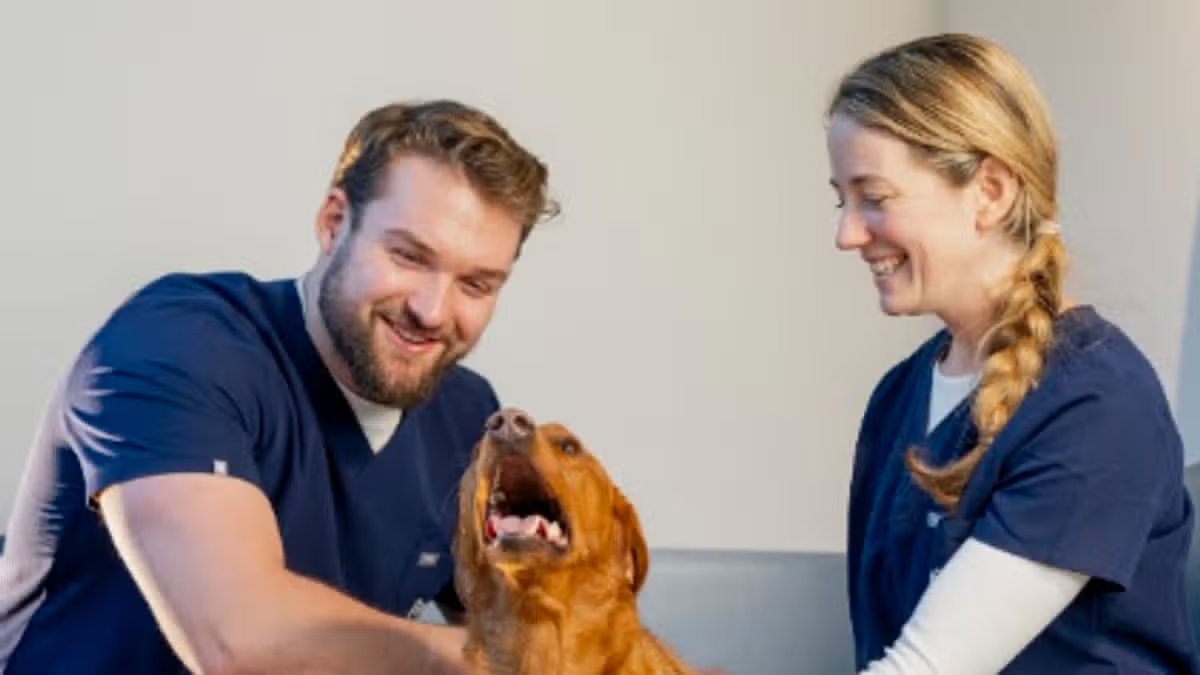
Four vets have shared the dog breed that they'd never personally own after being asked the question by a dog lover - and three of them all had the exact same answer15:18, 29 Jun 2026If you're considering getting a dog but aren't quite sure which breed suits you best, it might be worth hearing what four vets have to say about the breeds they would "never" own themselves.Vets spend a great deal of time with a wide variety of animals, but as dogs are by far the most popular pet in the UK, they're well-versed in dealing with all manner of breeds. Most vets are animal lovers themselves and may even keep pets at home, and the dog breeds they choose can reveal a great deal about what certain breeds are like to live with.Not every dog is suited to every household. If you live in a flat or a smaller property, owning a large dog or a breed that demands plenty of outdoor time may simply not be practical. Equally, if you work long hours and have limited time for walks, opting for an energetic breed isn't advisable, as it'll make life difficult for both you and your four-legged companion.However, when it comes to breeds that vets consistently advise against, there is one that stands head and shoulders above the rest. In a video posted on Instagram, Bryce Francois, co-CEO of The BK Pets, put the question to four separate vets, asking which dog breed they wouldn't own themselves, and three of them came up with the same answer.So which breed did the vets say they would never own?Three out of the four vets admitted they would never own a French Bulldog themselves.While these dogs have become incredibly fashionable and are often considered "cute" due to their compact size and flattened faces, they're plagued by serious health complications that can cause suffering for the animal and leave owners facing eye-watering veterinary costs.Content cannot be displayed without consentDoctor Rachel Siu, a vet at Carrollton West Pet Hospital in Dallas, Texas, said: "They can be extremely cute, fun, and good-natured pets, but they are notorious for being one of the most unhealthy dog breeds. Due to their short snouts, they have one of the highest rates of Brachycephalic Obstructive Airway Syndrome, or BOAS."Although their snorts and wheezes may sound cute on the surface, it's a sign that they're unable to breathe comfortably, and this even leads to a high risk of heat stroke. They're now one of the most common breeds with spinal and joint deformities."The remaining vets in the clip shared Rachel's concerns. Doctor Juan Sebastion Orujela, an emergency vet at the London Regional Veterinary Emergency and Referral Hospital in Ontario, Canada, explained that while he would "pretty much own any breed", he couldn't recommend "intentionally purchasing" a brachycephalic breed - which includes French Bulldogs.Vet Dr Cat Henstridge, based in the UK, admitted there are frequently "loads" of breeds that vets wouldn't consider owning, having witnessed every manner of health issue imaginable. However, she revealed there are a couple of dog breeds she would "never really choose to own", including "anything with a flat face".She said: "Unless it was a significant rescue situation, I couldn't possibly deliberately go out and buy one of those dogs because of the suffering of the breeds, and I don't want to contribute to that in any way."The second is a Malinois, because they are insane. I like having a life as well as a dog, and I think if you own a breed like that, you have a dog that is your life."Dr Brianna Tobin, meanwhile, highlighted an entirely different breed. The emergency vet, who works at the Alta Vista Speciality & Emergency Veterinary Centre in Ontario, Canada, said she would never own any kind of hound.She explained: "They have the best energy, and they're so sweet, but I cannot deal with the howling. I'm sorry to all the Beagle parents out there and other hounds, but I just can't deal with the howling. I'm a Golden Retriever kind of person."Article continues belowBefore getting a dog, always ensure you've thoroughly researched the breed you're interested in, carefully checking that your home environment is well-suited to it. Wherever possible, always look at rehoming a dog rather than purchasing one.
Four vets share dog breed they'd never own - and three all name the same breed
Four vets have shared the dog breed that they'd never personally own after being asked the question by a dog lover - and three of them all had the exact same answer
714 words~3 min read