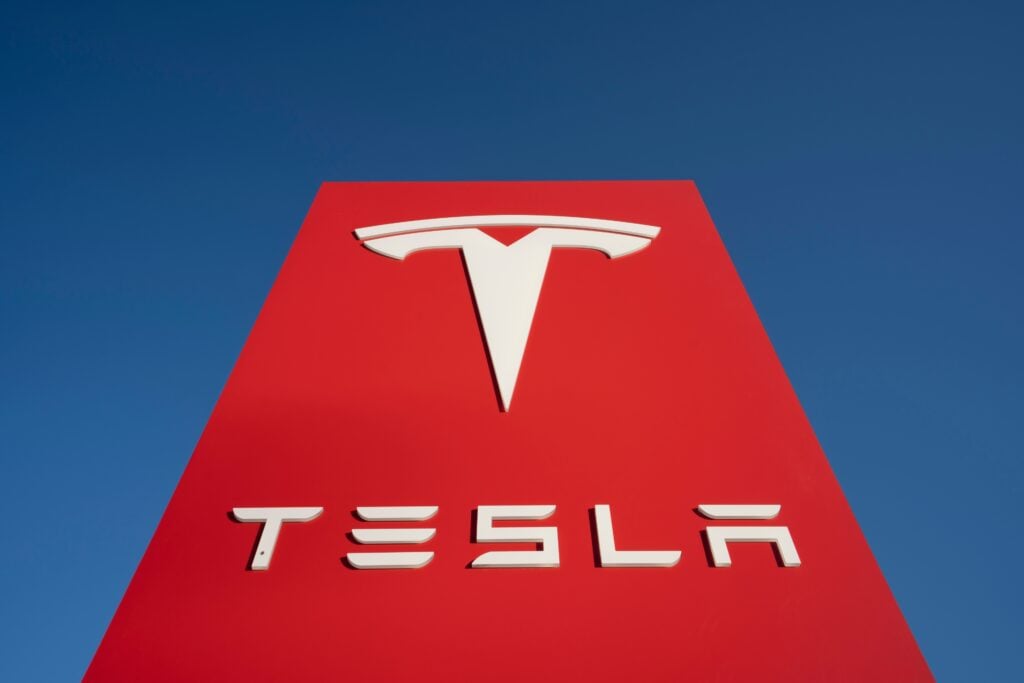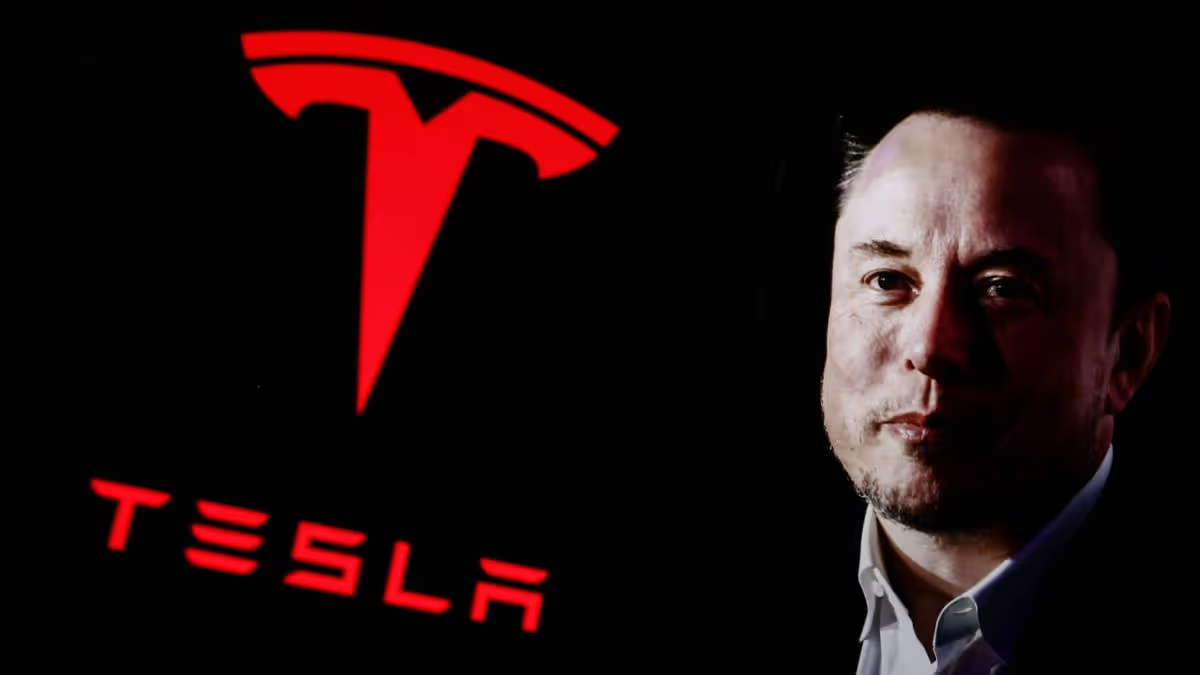
Tesla's distinctive logo isn't just a stylised 'T' – it actually represents something rather clever. So, have you ever noticed the hidden meaning behind the design that's synonymous with Elon Musk?Katie-Ann Gupwell13:28, 29 Jun 2026Elon Musk's automotive brand, Tesla, is a familiar name – yet the significance of the company's logo remains somewhat of an enigma.People have thrown around a lot of wild theories about the Tesla logo over the years, comparing it to everything from a pickaxe to an IUD to a cat’s nose (a joke Musk actually played along with on social media). However, these comparisons aren't actually accurate.Despite seeing the logo countless times over the years, there are people who are only just coming to this realisation. Interest was piqued on Reddit when one person asked: "Other than the obvious 'T', what does the Tesla logo represent? I've heard it resembles a particular part of the engine?".The letter T is obviously a reference to the name, but it's also believed to have additional meaning. The badge features a modern, streamlined version of the letter T, designed to reflect the cross-section of an electric motor.One person theorised: "The most plausible theory that I read was that it's part of a cross-section of an induction motor."Meanwhile, a second said: "It's fascinating to me how many plausible answers there are here. Whether it looks like a piece from an induction motor, or a power line, or a battery in an electrical schematic, or evokes the Model T, or is like Serbian axes, or even bears resemblance to Mr Tesla's face, it's clear that the logo is a great piece of design - regardless of whether it was intentional or not."History of the Tesla logoThe logo was designed in 2004 by RO Studio, a New Jersey-based creative agency that also designed the SpaceX logo. It has only undergone one major change in its history.Originally, the "T" was encased in a silver, metallic shield. This was a deliberate choice by the designers to mimic legacy automotive badges (like Porsche or Lamborghini) and project a sense of safety, reliability, and luxury to consumers who were highly sceptical of electric vehicles at the time.However, the logo was given a minimalist rebrand in 2017. When Tesla dropped "Motors" from its name in 2017, it also ditched the shield.The logo was simplified into a standalone "T," usually displayed in an energetic red, sleek silver, or stark black. This cleaner, flatter design perfectly matched modern digital design trends and the brand's pivot from a traditional carmaker to a futuristic technology innovator.The rise of TeslaIt is widely assumed that Elon Musk founded Tesla, but that is not the case. The company was officially incorporated as Tesla Motors on July 1, 2003, by two engineers and entrepreneurs: Martin Eberhard and Marc Tarpenning. They named the company after Nikola Tesla, the famous 19th-century inventor and pioneer of alternating current (AC) electricity.Elon Musk joined shortly after in February 2004, leading the company's initial Series A funding round with a massive investment. He became Chairman of the Board and eventually took over as CEO in 2008.Tesla’s core strategy was always to build expensive, low-volume vehicles first to fund the development of affordable, high-volume cars later. Its first motor was a high-performance luxury sports car. It was built to prove a point: electric vehicles (EVs) did not have to be slow, heavy, or boring.Tesla then began deliveries of its flagship sedan, the Model S, in 2012. It became the world's most valuable automaker by market cap eight years later. By 2017, Tesla had acquired SolarCity and heavily expanded into battery energy storage with products like the Powerwall.Article continues belowTo reflect that it was no longer just an automaker but a clean energy and technology company, it officially dropped "Motors" from its name, becoming Tesla, Inc. Then in 2023, the futuristic, stainless-steel Cybertruck entered production.For the full year 2025, Tesla generated $94.83 billion in revenue. As of June 2026, Tesla's market cap hovers around $1.41 trillion. It comfortably maintains its position as the world's most valuable automaker by a wide margin, trading more like a high-growth tech stock than a traditional legacy car manufacturer.
People are only just discovering meaning hidden inside Elon Musk's Tesla logo
Tesla's distinctive logo isn't just a stylised 'T' – it actually represents something rather clever. So, have you ever noticed the hidden meaning behind the design that's synonymous with Elon Musk?
690 words~3 min read