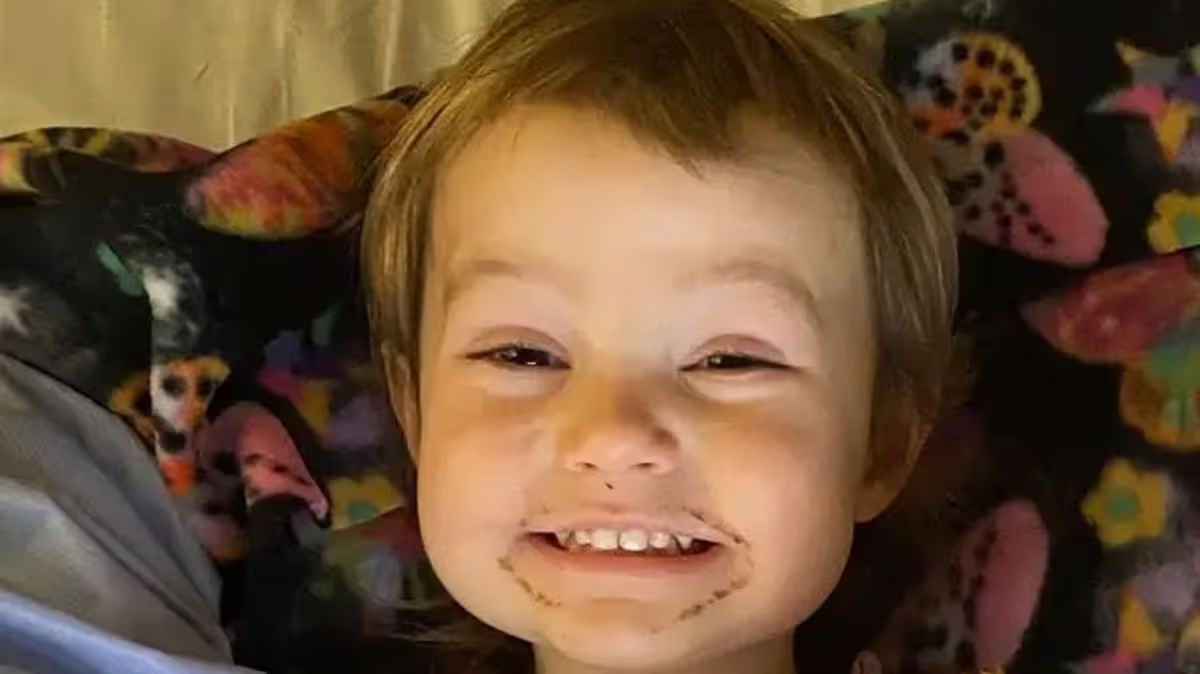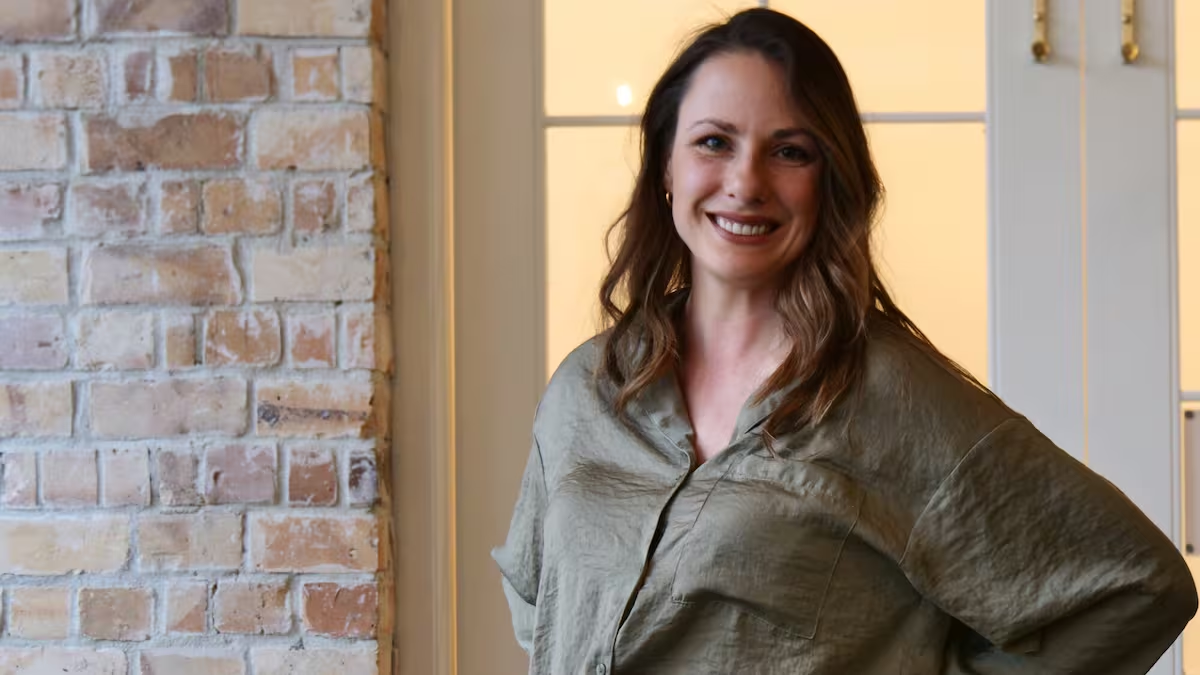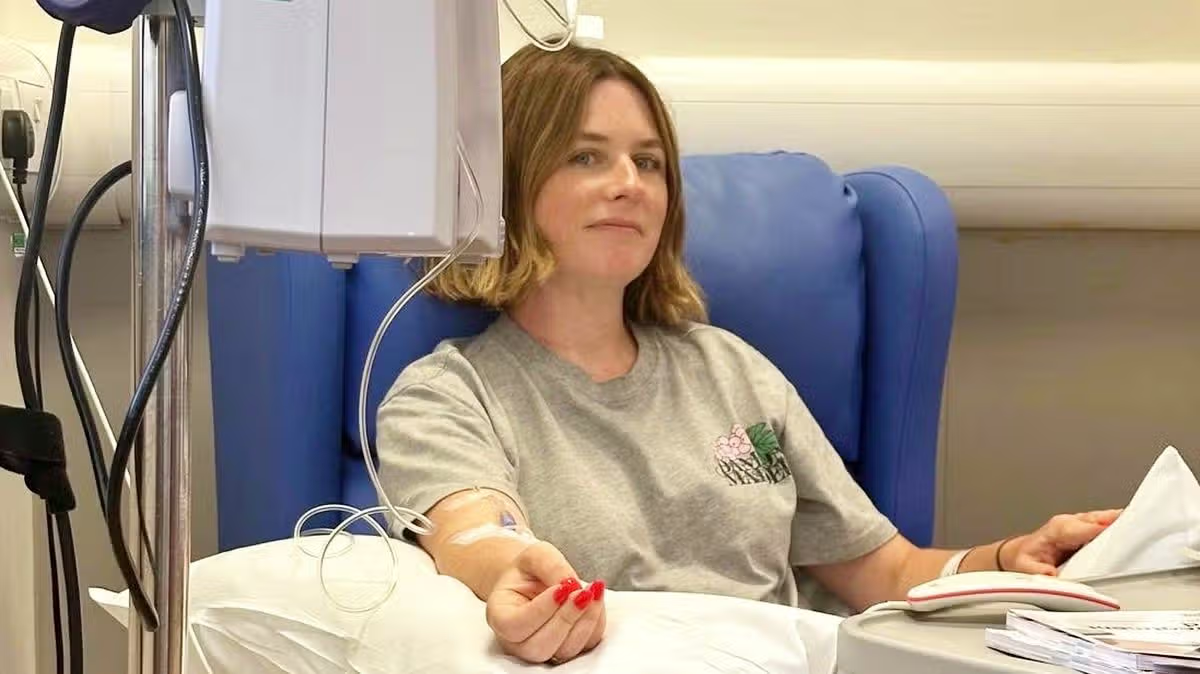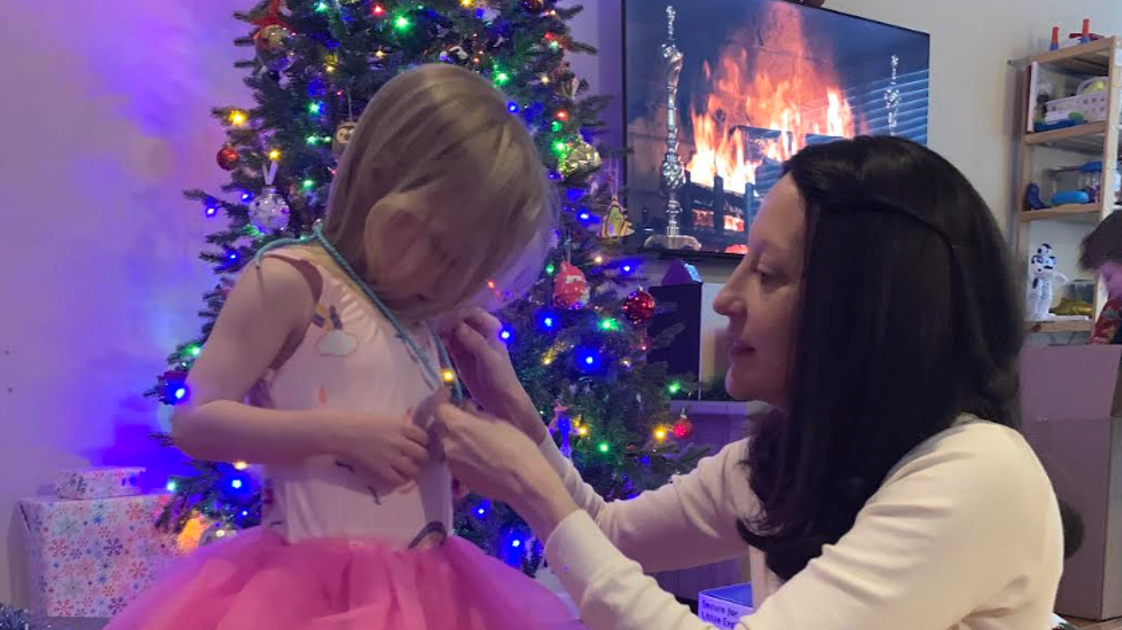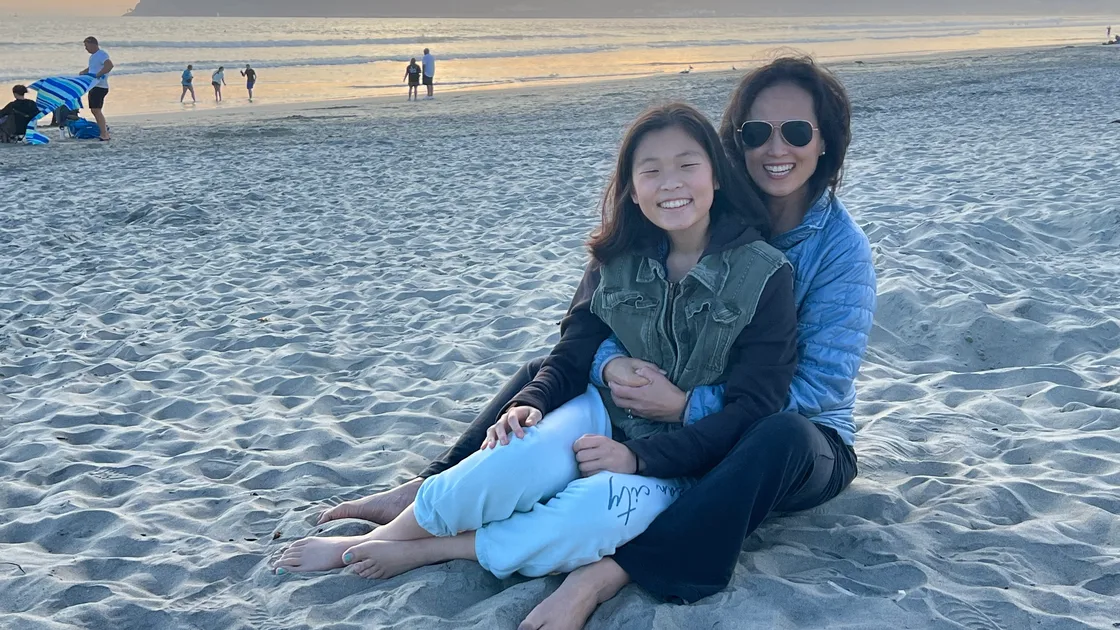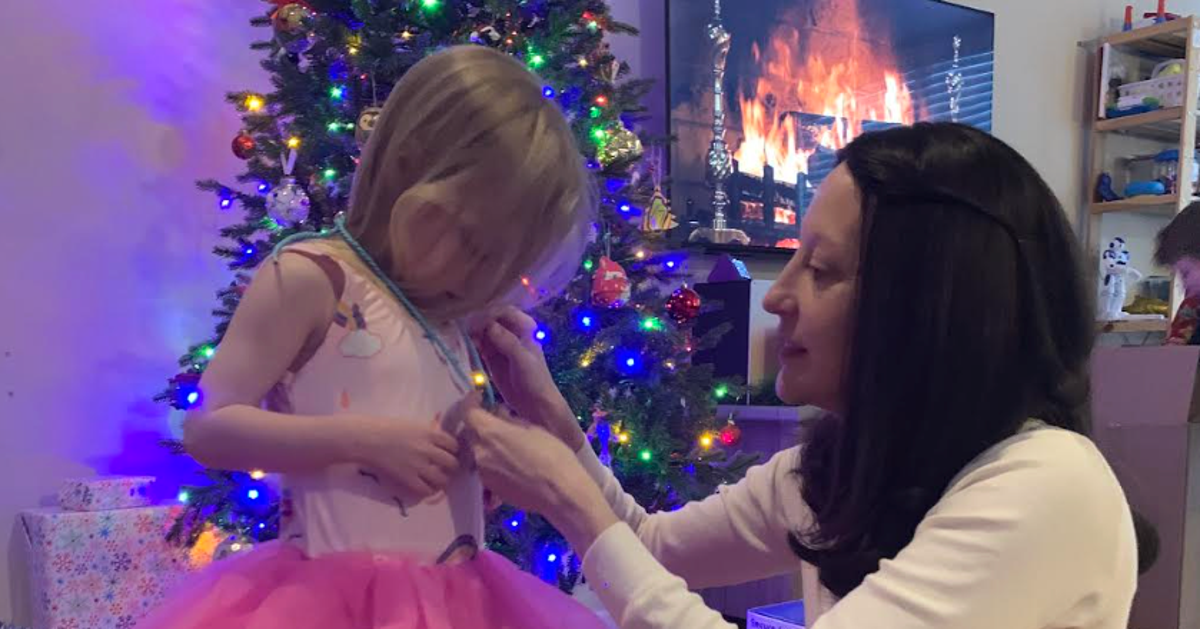
It’s mid-October 2025, and I’m home with my boys, 8 and 5, and my 3-year-old daughter. It’s not yet Halloween, but I feel disguised as someone else. My face is tomato red, inflamed and covered in a severe rash — a side effect of my breast cancer treatment.My daughter looks up at me; her big blue eyes filled with concern. It physically hurts to smile at her, but it would be more painful for me not to. Her little voice rings out, “Mommy, I want to kiss your boo-boos.” I’m stunned. My face looks so dreadful that I had resorted to wearing a surgical mask outside of the house.Setting my surprise aside, I kneel to her height. She purposefully takes my flaming face in her small hands, pulling me close. Her soft lips meet my rough, red chin. She pulls back, smiling expectantly.“Does it feel better, Mommy?”I’m telling the truth when I match her grin and nod, emotional tears in my eyes. She’d just shown me that love is the purest form of beauty. The author walking her children into school on their first day.Courtesy of Lauren Joy DollWhen I was diagnosed with breast cancer in early September, we waited to tell the kids anything. Between the first week of school, a barrage of doctor’s appointments and tests, and my mental health matching my physical, all we could do was try to keep normalcy for them. Once we got through the initial whirlwind, we met with a social worker at the hospital who helped us construct a kid-friendly conversation. I was anxious, but ready to have this weight off my shoulders.Life had gotten so heavy so fast. On a Tuesday night, we gathered in the living room with ice pops. I curled up next to my husband, my hand instinctively reached for his back, and as we planned, he did the talking.“We want to share something with you,” he said. “Mommy recently found a bump under her arm. She went to the doctor, and they know exactly how to make it better. She’s going to be taking a really strong medicine to make it go away. We just want to let you know because she might feel extra tired or not feel well after the medicine.”Only our oldest son spoke.“Why are you telling us this?” he plainly asked, seemingly completely reassured that everything was going to be fine. Our middle son and daughter seemed to feel the same, evidenced by nothing other than their happy slurp ups of ice pop juice.I found myself staring at my daughter — my baby. She was in daycare only part-time, so she was at home with me the most. I wondered sadly how she would manage the changes to her Mommy, but I knew I would do everything I could to continue showing up as the Mommy she loves.My cancer treatment, notorious for causing physical changes, began a few days later.My initial treatment plan included infusions — chemotherapy and other targeted medications — every three weeks for 18 weeks. I scheduled them for Fridays because I was told side effects usually start about three days post-treatment, which meant that I would probably feel well enough over the weekend. I wanted the kids to be in school when I was at my sickest.The author at her first chemotherapy treatment.Courtesy of Lauren Joy DollAs expected, Monday and Tuesday were always the most brutal, but it was usually at least five days of steady fatigue, nausea and stomach issues, among other side effects, like mouth sores and neuropathy, that would come and go. While my physical strength decreased, I grew a new mental muscle that enabled me to mostly hide how I was feeling from the kids.At first, there were few changes to my appearance. I lost a little weight. My eyes gave away a newfound tiredness. It wasn’t until about 10 days after my first treatment that there was a truly noticeable change — the severe face rash, which was also all over my back and scalp. I explained to my questioning kids that it was caused by the strong medicine and reassured them that it would go away. Luckily, antibiotics, a steady stream of topical creams, and, of course, my daughter’s kisses, helped it heal.My hair started to fall out next. I religiously scalp-cooled — a process in which the scalp is cooled with a cooling cap before, during, and after chemotherapy treatment to try to prevent or reduce hair loss — at every treatment, but knew the success rate varied. A few weeks after my first cycle of chemo, nests of long, dark hair came out with every hair comb. I hid them under paper towels in my bathroom garbage because I didn’t want anyone to see them, and because I was also afraid of seeing what I’d lost again.The author running a half-marathon nine days after her first chemotherapy treatment, and her daughter giving her a high five on the course.Courtesy of Lauren Joy DollFollowing my second cycle of chemo, after an uncomfortable cold hair wash in the shower, two large bald spots appeared on the top of my head. It was time to get a wig. My best friend had already researched places to buy them, and when she received my panicked text message, she set up the consultation while I stared at someone else in the bathroom mirror.In the meantime, I had to confront the this new reality with my daughter, who loved to comb and play with my hair. I covered the bald spots with various head coverings and told her Mommy had boo-boos on her head. I said she would have to wait to touch my hair until they were better. She wanted to kiss these too. I bowed down.“Does it feel better, Mommy?” she asked again, after. Of course it did.When the wig came in, I wore it home from the salon. I introduced it to my kids as extensions – extra hair to make my normal hair look bigger and healthier. My daughter told me I was beautiful.The author wearing her wig on Christmas morning, celebrating with her daughter.Courtesy of Lauren Joy DollI lost my eyebrows sometime after the fourth treatment cycle, but my daughter never raised her own. She continued to tell me I was beautiful — more than she ever had.I mused to my husband about what an intuitive child she was. Every day, she would grab my face, put her nose to mine, and tell me she loved my face, my hair, my eyes, and my heart. She’d end this ritual with a kiss to my heart and tell me it was sparkly, and pink and purple, like her own. I’d squeeze her tightly, thank her, and tell her how good she made me feel. The ease with which she accepted my physical changes —and still found me beautiful — truly colored my heart.Still, I experienced more changes. I grew more fatigued with each treatment, and persistent bags lived under my hollowed eyes. The highest wave of exhaustion would hit around 7 p.m., the start of my daughter’s bedtime routine. My husband took over reading all the bedtime stories while I lay on the floor next to them, listening but often dozing. Giggling that Mommy was falling asleep, my daughter would bring me pillows from her bed and curl up next to me to listen to her stories.My husband started a new ritual of having the children put me to sleep after story time. I’d melt into my bed, and my daughter would happily whisper, “Goodnight, Mommy,” and turn off the light. I’d gratefully close my eyes, but always sneak a peek of her beaming as the door gently shut. She not only put me to bed, but she also put to bed any fears I had about her love changing.My love for my daughter, in the form of my smile, laugh, words and affection, was beautiful to her. So, I was beautiful to her, no matter the boo-boo.As adults, we don’t kiss each other’s boo-boos, but when we recognize and reflect love as the purest form of beauty, I think it’s like what my daughter did — a kiss to the heart.For now, literal kisses to any part of my chest have to wait, as I’m recovering from my double mastectomy surgery. It’s the biggest physical change — and loss — so far, and yet all I can think about is what I’ve gained.At the top of the list is a lesson on love from my daughter — a real-time representation of the mother-daughter bond, and a new perspective on parenting.I learned that a young child’s instinct is to love the person, regardless of the physical — something we adults often forget. My daughter taught me to look deeper, soul-level, in all of my relationships — current and future ones. This experience changed my first instinct on how to define beauty. From here on out, it’ll always be led by love. The author recovering from her double mastectomy, and her daughter giving her a gentle hug.Courtesy of Lauren Joy DollParenting through all of this has been scary, exhausting and traumatic, which should be easy to understand. But it has also felt brave, effortless and healing. Brave because going through the chaos of cancer required full-bodied courage, from my reassuring smiles to my confident answers to my children’s questions, to willing my tired body to do school drop-offs, pick-ups, and everything in between. It felt brave to show up with strength in any way that I could.It’s felt effortless because the love I feel for my children is effortless, and it was magnified by the thought of it being taken away if I was taken away. Even with the physical hardships, there was a newfound feeling of ease associated with my parenting. Loving them and being there for them felt like the easiest thing in the world, alongside going through what felt like the hardest thing in the world.Finally, as I literally heal from the effects of my cancer, it has felt healing to parent as a new version of myself — softer, stronger and more present. I always believe we can grow as parents and people, and this version of motherhood, and myself, feels like a wholeness cancer can’t ever destroy.I’ve been a cancer patient for over half a year, and the care I’ve received from my medical team saved, and changed, my life. I’m grateful for everything they’ve done for me and my family. However, the “care” I’ve received from my family — and the love my daughter has doled out simply because it’s what her soul tells her to do — has changed my life, too. Lauren Joy Doll began freelance writing after her breast cancer diagnosis in September 2025, and her first essay was featured in Newsweek. She’s a communications professional working for a New York City-based nonprofit that organizes the TCS New York City Marathon. Lauren is a lifelong runner and found a love for adult gymnastics at age 40. She resides in central New Jersey with her husband, Keith, and three young children.Do you have a compelling personal story you’d like to see published on HuffPost? Find out what we’re looking for here and send us a pitch at pitch@huffpost.com.
When My 3-Year-Old Saw Me After I Had Chemotherapy, Her Response Left Me Stunned
"This experience changed my first instinct on how to define beauty."
1,882 words~9 min read