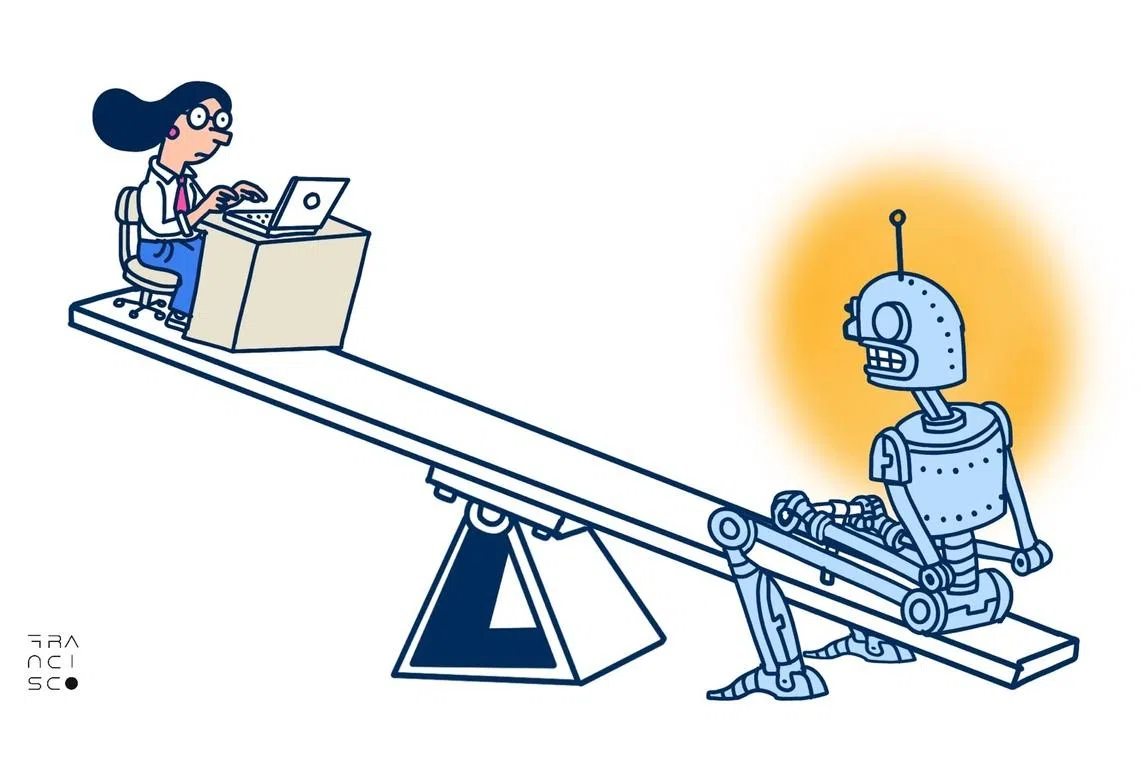
Many professionals are experiencing "career vertigo" as AI, economic uncertainty and changing workplace expectations reshape the future of work.gettyYou got a strong education, built a successful career and did everything you were told would lead to job security. Yet lately, you wonder whether your skills will still matter in five years or whether AI will change your industry faster than you can keep up. That feeling has a name—career vertigo.The uncertainty is showing up in the data. According to the American Psychological Association's 2025 Work in America survey, 54% of U.S. workers say job insecurity significantly affects their stress levels. A recent Pew Research Center survey also found that only 6% of workers believe AI will create more job opportunities for them in the long run, while 32% think it will lead to fewer opportunities.Career vertigo is the disorienting feeling that the ground beneath your professional life is shifting faster than you can adapt. It's not burnout, a midlife crisis or a lack of ambition. It’s the challenge of finding your footing in a world of work that is evolving in real time.What Is Career Vertigo?Career vertigo is the disorienting feeling that the assumptions and strategies that once guided your professional life no longer provide the same sense of stability or direction. It is the sense that the ground beneath you is shifting as artificial intelligence, economic uncertainty, layoffs and changing workplace expectations reshape what it means to build a secure and fulfilling future.Unlike burnout, which is rooted in exhaustion and chronic stress, career vertigo is rooted in uncertainty about the future and your place within it. Research on career transitions and professional identity published in the Annual Review of Organizational Psychology and Organizational Behavior notes that major career changes often involve shifts in how people see themselves at work. Many professionals aren’t just asking what their next job should be. They're also questioning which skills, relationships and strategies will help them thrive in a world where the old rules no longer seem to apply.MORE FOR YOUWhy More Professionals Are Experiencing Career VertigoCareer vertigo is being driven by several forces converging at once: AI disruption, layoffs, economic uncertainty and the decline of predictable career paths. The same APA survey found that 44% of workers worry an economic downturn could cause them to lose their jobs within the next year. Together, these forces are challenging many of the assumptions that once defined career success and security.Careers are also becoming more nonlinear. The Annual Review research notes that modern careers are increasingly self-directed and involve multiple transitions over a lifetime. That shift can leave professionals with fewer clear road maps for deciding what skills to develop, when to pivot and how to define success.How Career Vertigo Shows Up In Everyday LifeCareer vertigo doesn't always look like a dramatic career crisis. In many cases, it shows up as a persistent sense of uncertainty about the future and a feeling that you're constantly trying to keep pace with changing expectations. You may be experiencing career vertigo if you:Wonder whether your skills will still be relevant in five or 10 years.Feel pressure to constantly reinvent yourself just to stay relevant.Question whether workplace loyalty still leads to greater security.Worry about falling behind on AI or emerging technologies.Look successful on paper but feel increasingly uncertain about what's next.These feelings don’t necessarily mean you're in the wrong job or that you've made poor career choices. Rather, they reflect the reality that many of the assumptions that shaped previous generations no longer apply in the same way. Recognizing career vertigo for what it is can help you focus less on trying to predict the future and more on developing the flexibility needed to navigate it.How To Adapt To The New Rules Of WorkCareer vertigo becomes easier to navigate when you stop trying to predict every change. Instead, focus on strengthening the things you can control, including your skills, relationships, visibility and sense of direction.Focus On Adaptability Instead Of PredictabilityInstead of trying to anticipate every technological shift or economic change, focus on developing expertise that transfers across roles, industries and business cycles. Professionals who embrace continuous learning and remain open to new opportunities are often better positioned to navigate uncertainty than those who rely on a single career path or employer.Build Career Assets Outside Your EmployerYour professional network, reputation and expertise are long-term assets that belong to you, not your company. Maintaining industry relationships, updating your LinkedIn profile and keeping track of your accomplishments can create a stronger sense of job security regardless of what happens in your current role.Learn Enough About AI To Stay RelevantYou don't need to become an AI expert overnight. The Pew survey found that 63% of workers don’t use AI much or at all in their jobs, suggesting that most workers are still figuring out how these tools fit into their jobs rather than already being experts. Focus on understanding how the technology affects your industry and identify ways it can help you work more effectively rather than viewing it solely as a threat.Separate Your Identity From Your Job TitleWork is an important part of many people's identities, but it shouldn't define their entire sense of self. Building interests, relationships and sources of meaning outside of work can make career transitions less destabilizing and provide a stronger foundation when professional circumstances change.Define Success On Your Own TermsThe traditional markers of success—staying with one company for decades or following a linear path to the top—no longer reflect how many careers unfold today. Success may mean greater flexibility, meaningful work, continuous growth or the ability to adapt to new opportunities as they emerge.Finding Stability In A World That Keeps ChangingCareer vertigo isn't a sign that you're failing or falling behind. In many cases, it's a rational response to a workplace that is evolving faster than the traditional rules of success. When AI, economic uncertainty and changing career paths converge, it's natural to question what comes next and whether the strategies that worked in the past will still work in the future. The good news is that adapting to the new rules of work doesn't require reinventing yourself every few years or mastering every emerging technology. It requires something more sustainable: building transferable skills, investing in relationships, staying curious and defining success on your own terms. The future of work may be uncertain, but finding your footing starts with recognizing that resilience—not predictability—is the new foundation of career security.If you're tired of generic career advice and want practical insights on navigating layoffs, toxic bosses, job searches, career transitions and AI's impact on work, subscribe to my free newsletter, Corporate Escape Artist. Join more than 10,000 professionals receiving weekly career insights and strategies.
Career Vertigo: How To Adapt To The New Rules Of Work
Career vertigo is leaving many professionals feeling uncertain about the future of work. Learn how to adapt to changing career rules and regain a sense of direction.
1,114 words~5 min read