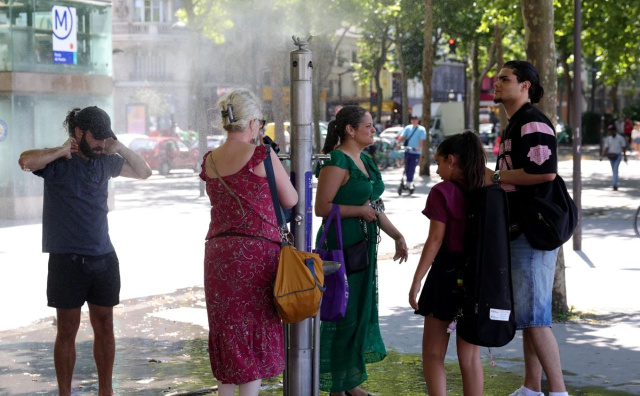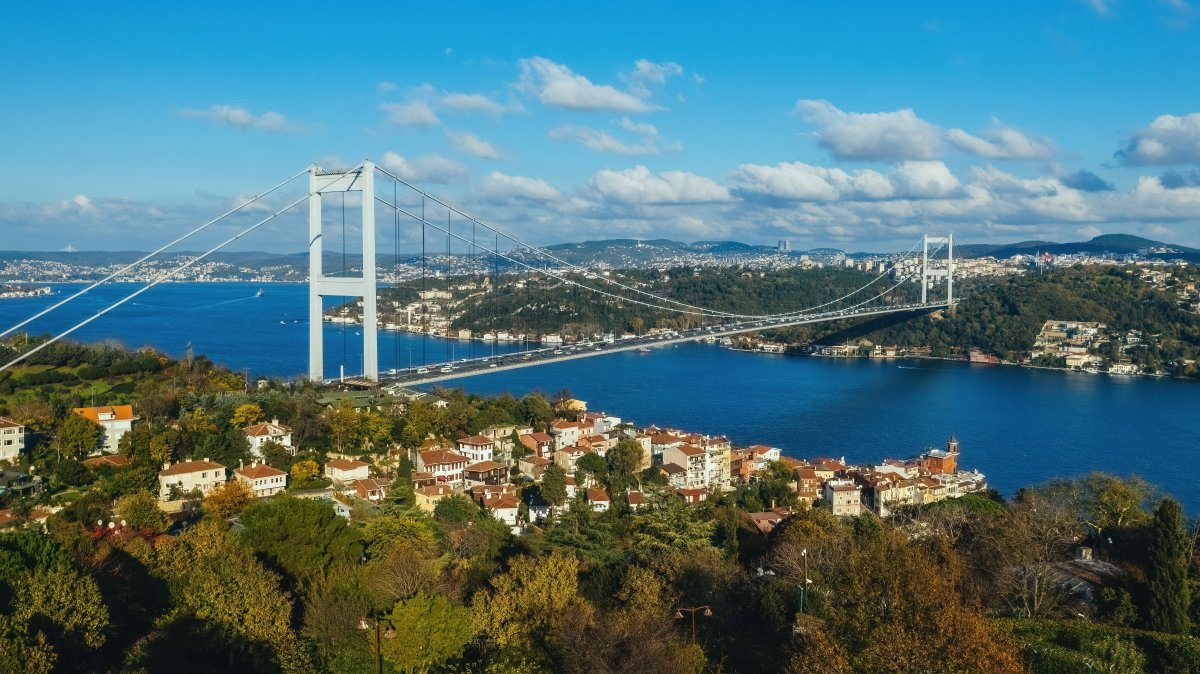
A joint study conducted by researchers from two Turkish universities and a U.S. institution has found that heat waves have increased significantly across Istanbul, Ankara and Izmir, western Türkiye, over the past century, while cold spells have become less frequent, highlighting the growing impact of climate change on Türkiye's largest metropolitan areas.
Scientists from Istanbul Technical University (ITU), Samsun University (SAMU) and the University of Missouri analyzed long-term meteorological records from 15 weather stations located across the country's 3 largest cities. The study examined daily maximum and minimum temperature observations collected between 1926 and 2024, with some stations providing nearly 100 years of continuous data.
The findings showed that heat waves increased at 11 of the 15 stations at statistically significant levels, while none recorded a significant decline. All 5 stations in Istanbul experienced a marked rise in heat wave frequency, with some of the strongest increases observed at Sarıyer and Şile.
In Ankara, the most notable increase occurred in Polatlı, followed by Nallıhan and Esenboğa Airport. In Izmir, Selçuk and Bergama recorded the sharpest increases, while an upward trend was also observed in Ödemiş, although it did not reach statistical significance.