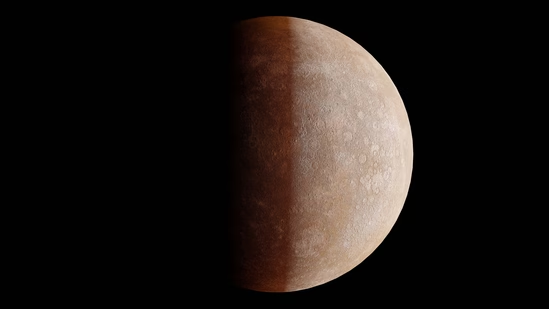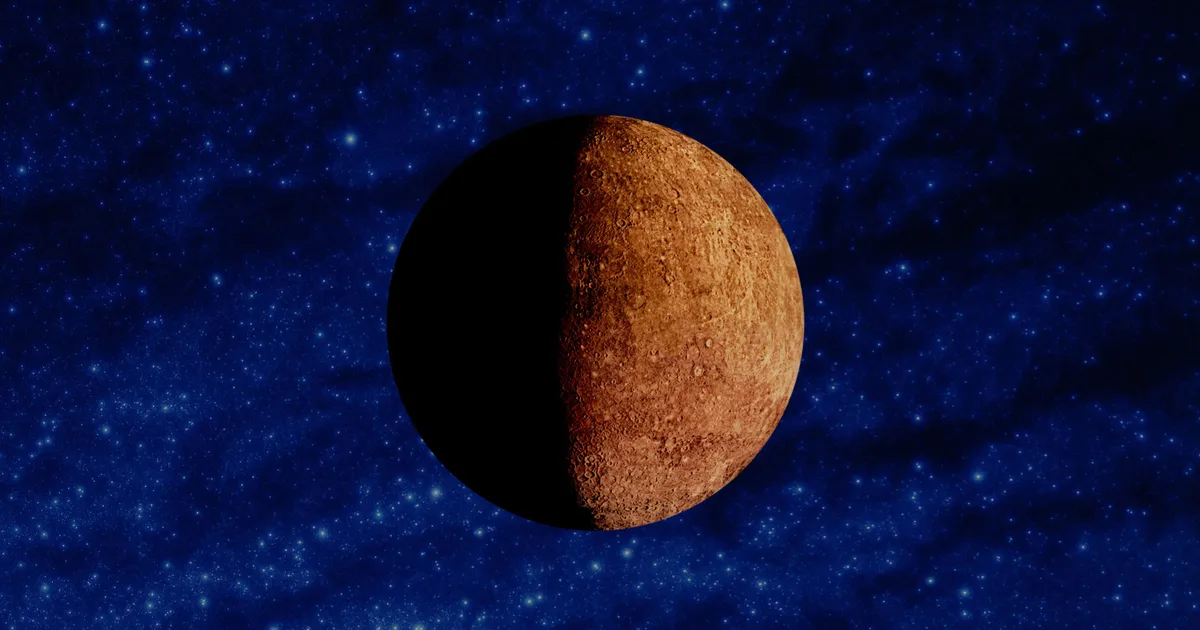
If you’re having one of those days when nothing seems to go according to plan, we have good news: You can blame Mercury retrograde, which is happening Monday, June 29, through Thursday, July 23, 2026. Now, some might argue there is no good reason to believe that Mercury, the planet closest to the sun, actually impacts individual human behavior here on Earth. And yet! Mercury retrograde remains a persuasive astrological concept for the rest of us. Here’s what astrologers say it means, and when to look out for it in the year ahead.
First, let’s make sure we get this part right: Sometimes people mistakenly refer to this concept as “Mercury in retrograde,” which bothers the more die-hard astrology enthusiasts. Retrograde is an adjective that means backward, and you wouldn’t say “Mercury in backward,” would you? No.
Mercury retrograde therefore refers to a period of time in which the planet Mercury appears to — but doesn’t actually — move backward. This is an optical illusion, first noticed and described by astronomers. All planets in the solar system move in the same direction around the sun, but because Mercury’s orbit is shorter than ours (88 days versus our 365), it “laps” the Earth a few times a year, and when it does so, it appears to reverse course. The same thing happens with Venus when it laps us, and with the outer planets when Earth laps them — but it’s Mercury we’re worried about here.