In March 2026, Sokratis Anagnostopoulos, PhD student at LHTC, successfully defended his PhD thesis "Efficient Data-Driven and Physics-Informed Machine Learning for Cardiovascular Modeling", supervised by Prof. Nikolaos Stergiopulos.AbstractArguably, one of the biggest scientific breakthroughs of our time is the realization that solutions to physical problems, previously thought to be hard or unattainable via first-principles derivations, can now be expressed by harnessing information hidden in raw data. Exploiting recent advancements in computational hardware, machine learning (ML) is leading the race of solving highly complex problems in weather forecasting, protein folding and natural language processing, utilizing vast amounts of available historical information. At the same time, ML coupled with physics-informed approaches, aims to minimize data requirements and integrate any already known governing laws of the system at hand.Inspired by this compromise between numerical simulations and neural network optimization, this thesis explores the capabilities of pure data-driven and physics-informed techniques, against traditional discrete methods, with a focus on inverse cardiovascular applications. In more detail, we first develop a neural network surrogate for real-time personalized hemodynamic prediction based on a clinically grounded virtual dataset of simulations produced by our 1-D cardiovascular solver. The trained model demonstrates its computational efficiency in producing generalized parametric studies, guiding numerical simulations within physiological bounds, and yielding rapid clinical noninvasive predictions, which could be further improved by more specialized clinical data on the fly.However, as clinical datasets may often be sparse or noisy, we then shift our focus to Physics-Informed Neural Networks (PINNs), a novel method of training deep neural networks to respect governing laws and boundary conditions, while incorporating real-world measurements, with the ultimate objective of circumventing the need for data-hungry neural models. Although PINNs have shown great promise in solving simple inverse problems, they often lack stability guarantees and rely on empirical fine-tuning techniques, as increased problem complexity leads to non-convex optimization. Therefore, our second objective is to investigate the learning dynamics of PINNs by treating neural gradients as information signals, and understand the conditions under which fast and stable convergence is feasible. Through various simulation cases, we show that homogeneous residuals have a decisive impact in creating informative gradients, which lead to a stable convergence regime of the optimizer.Finally, we revisit the cardiovascular system and develop an end-to-end inverse PINN solver, able to resolve the full blood flow fields of arterial networks from minimal noninvasive pressure measurements. Compared to other PINN or numerical inverse implementations, our framework achieves 10x faster patient-specific solutions and trains within minutes, without the need of large in silico datasets. Moreover, the model can infer clinically relevant information about the cardiac output and aortic blood pressure, tested against numerical and clinical datasets. Together these results strongly indicate that physics-informed ML, while still in its early stages of development, has significant potential in its future iterations to compete in the race of optimal data exploitation.
Congratulations Dr Sokratis Anagnostopoulos
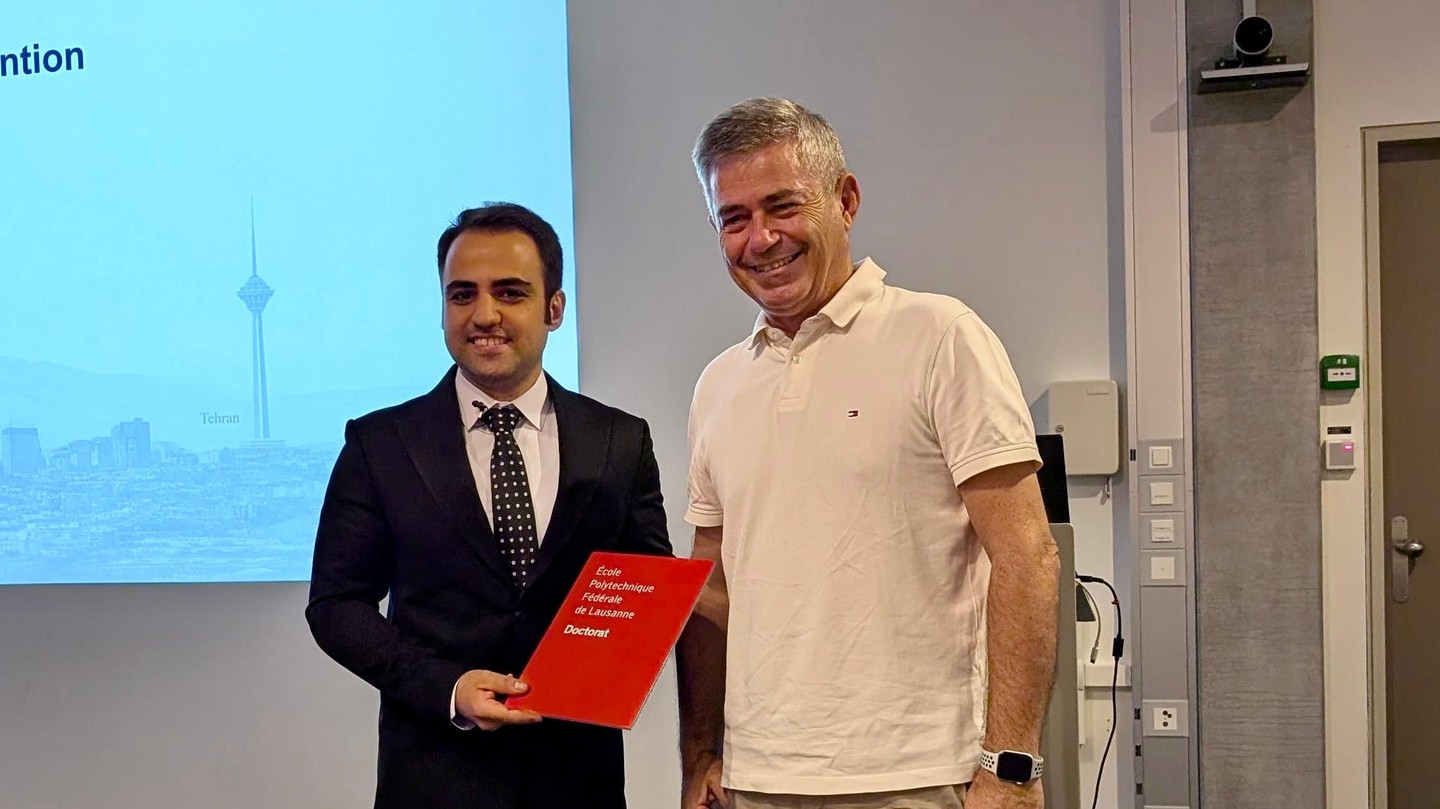
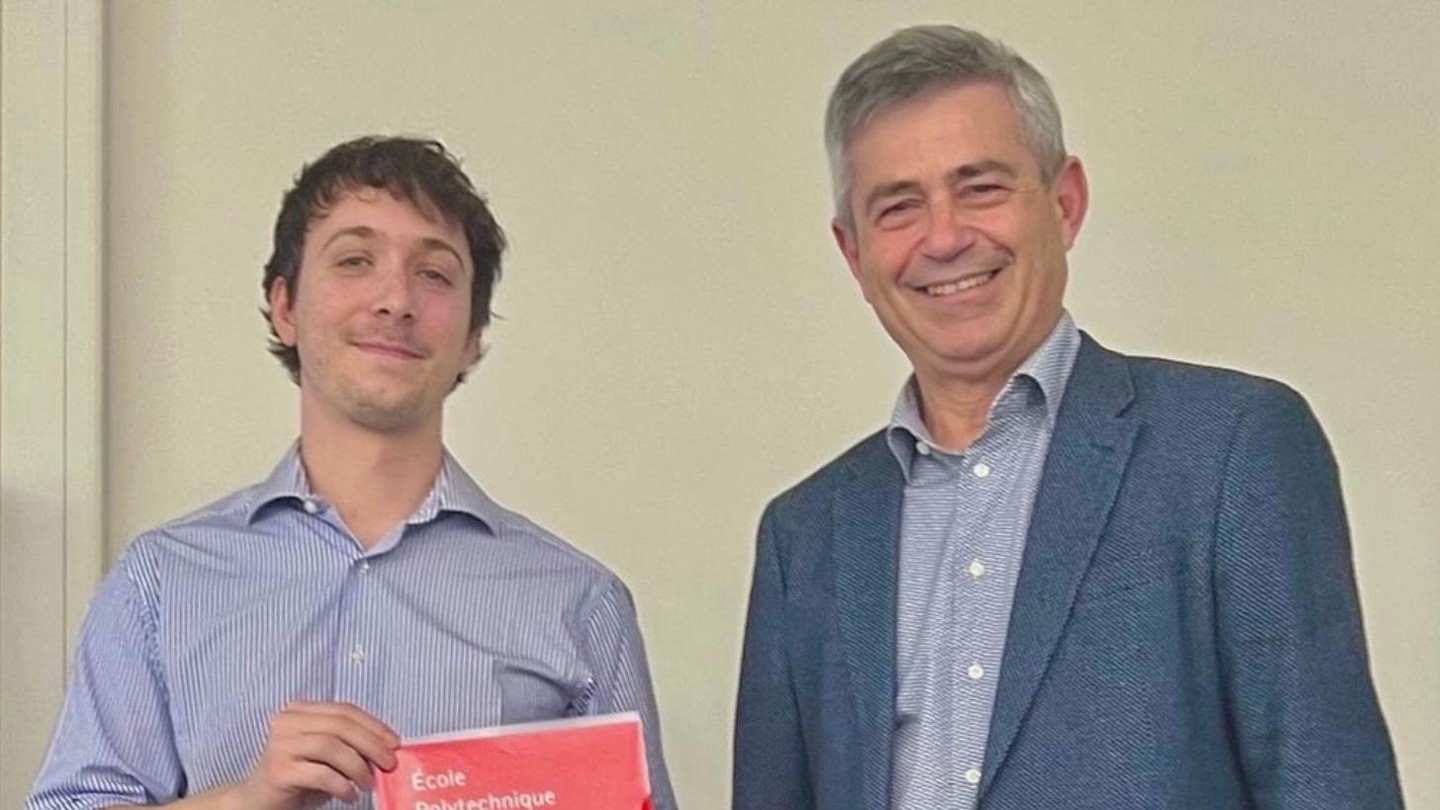
In March 2026, Sokratis Anagnostopoulos, PhD student at LHTC, successfully defended his PhD thesis "Efficient Data-Driven and Physics-Informed Machine Learning for Cardiovascular Modeling", supervised by Prof. Nikolaos Stergiopulos.
472 words~2 min read