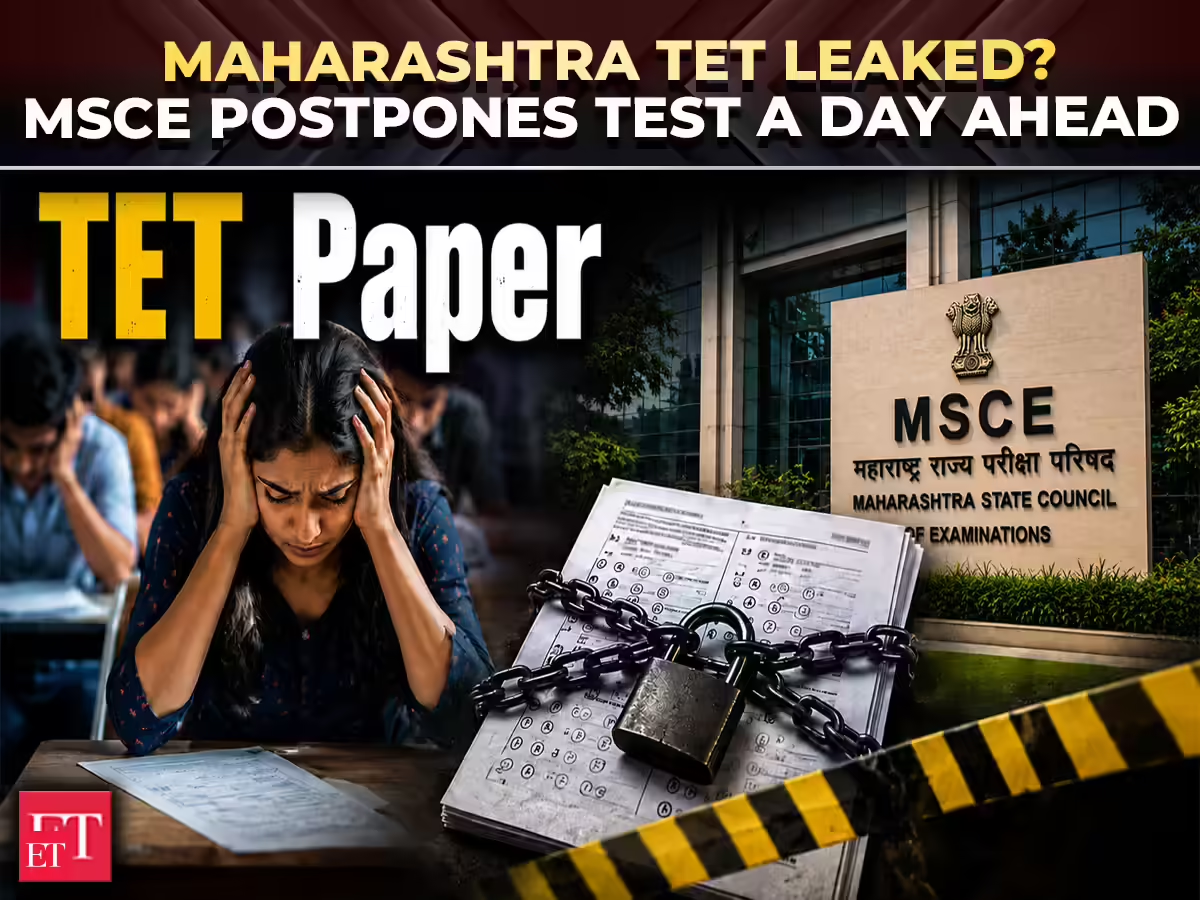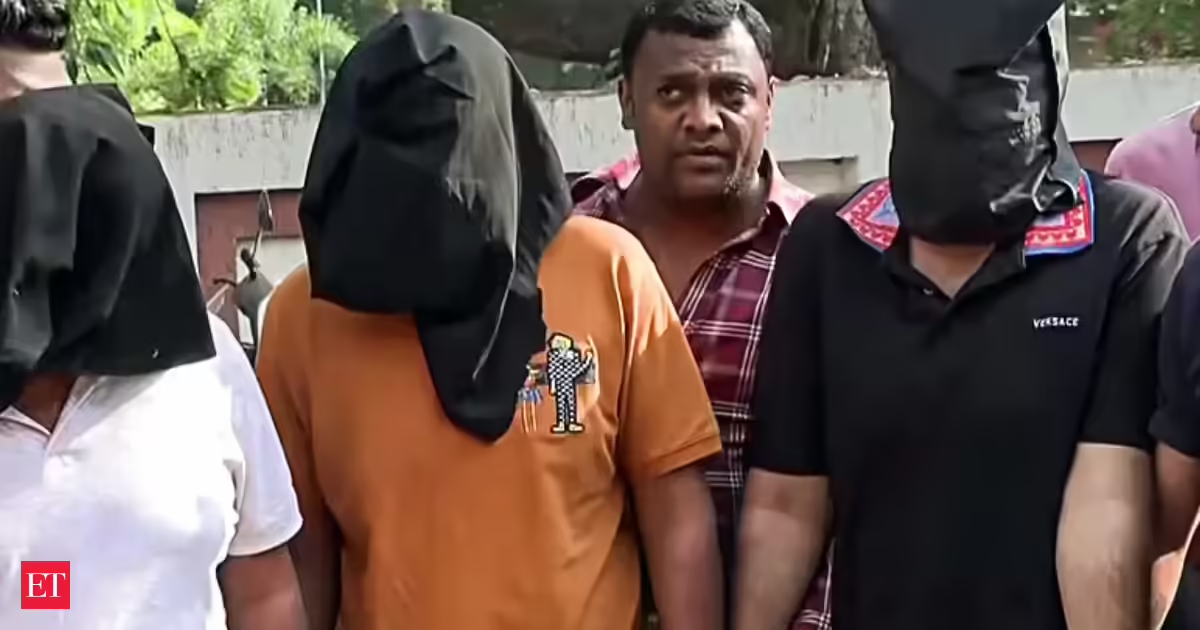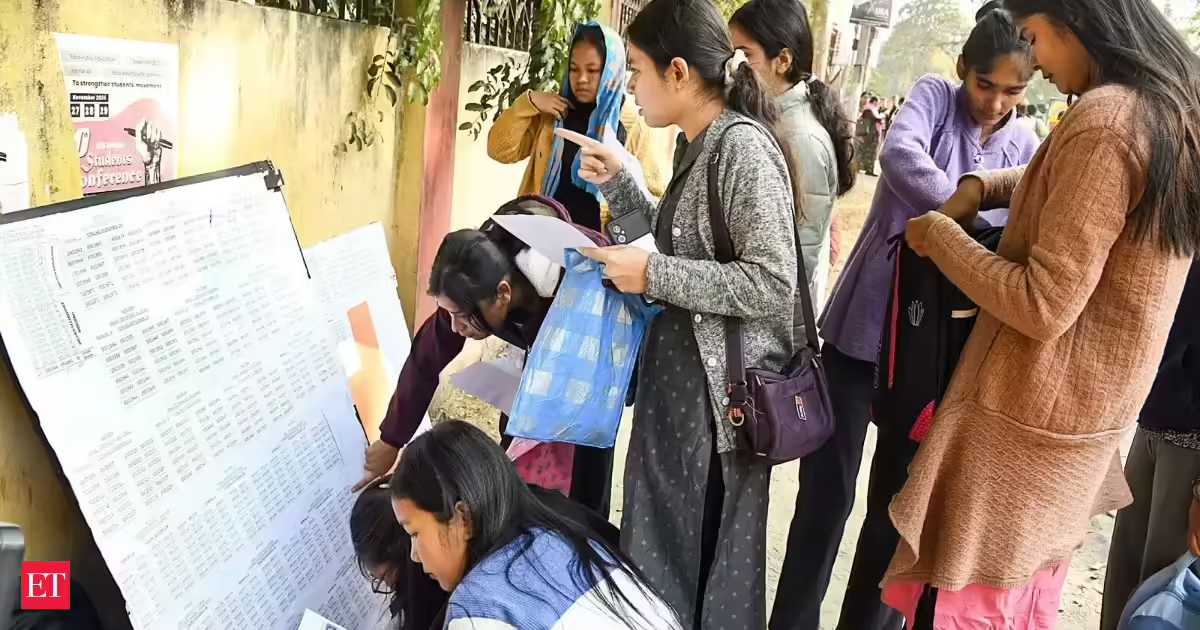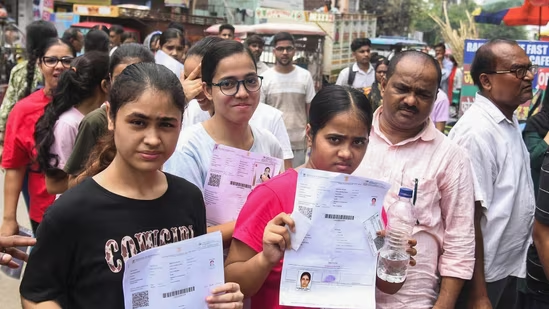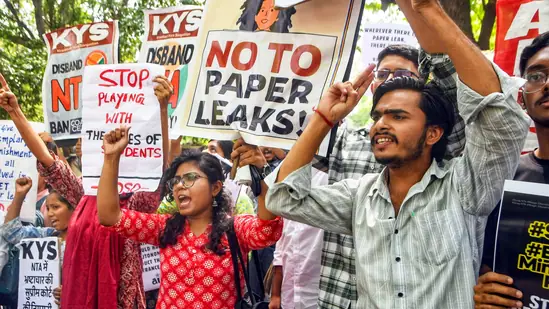
Last Saturday, hours before the Maharashtra Teacher Eligibility Test was scheduled to begin, the police in Thane’s Bhiwandi area got a tip about a question paper being sold. They raided a spot in Kongaon and detained three men. By Sunday morning, the exam meant for over six lakh candidates across more than 1,000 centres had been postponed indefinitely, a Special Investigation Team had been formed, and the search for an interstate racket was underway. Among the recoveries from one accused: four sets of leaked papers, cheques worth roughly ₹46 lakh, and oddly, a press identity card and a political party ID, both still being verified for any link to the conspiracy.It is, by now, a familiar script. The Maharashtra TET leak lands barely weeks after the NEET-UG 2026 fiasco, where 2.27 million aspirants sat for the medical entrance exam on May 3, only for it to be scrapped nine days later when investigators found a leaked guess paper had overlapped with dozens of the actual questions. That breach wasn’t a local leak from one coaching centre; it was traced to the question bank itself, implicating people inside the system, including a subject expert hired by the National Testing Agency and a school headmistress accused of memorising and circulating physics questions. A re-exam followed, accompanied by a temporary government block on Telegram to stem misinformation, itself a sign of how fragile public trust in the process had become. It echoed 2024, when a similar NEET leak triggered nationwide protests, court battles and reported student suicides.Lay these episodes side by side and a pattern emerges. First, leaks rarely come from a single rogue point. They tend to expose a chain, printing presses, translation vendors, exam-body insiders, coaching networks, that was assumed to be secure but wasn’t. Second, the people implicated are often insiders with legitimate access: subject experts, teachers, even officials, not just outside hackers. Third, the financial trail is usually substantial, suggesting organised commercial rackets rather than isolated leaks for personal favour. Fourth, the response is almost always reactive. It often leads to postponement, SIT, arrests, sometimes a re-exam, followed by promises of “additional security measures” that the next leak proves were not enough. Maharashtra’s exam board had reportedly tightened security after the NEET controversy but it made no difference.A fifth pattern is perhaps the most telling: none of this is happening in a legal vacuum anymore. Parliament passed the Public Examinations (Prevention of Unfair Means) Act in 2024 specifically to deter this kind of crime, prescribing five to ten years in prison and a minimum fine of ₹1 crore for organised paper-leak rackets. Yet the law has done little to break the cycle, Maharashtra TET is the latest exhibit. That gap between legislation and outcome suggests the problem isn’t primarily an absence of deterrent law, but weak enforcement at the chokepoints, printing, transport, storage, where papers actually change hands.What gets lost in the arrest counts and FIR numbers is the human cost, the years quietly eaten up while a young person waits a government job that may or may not still be advertised by the time it’s filled. Ahsan Ahmed, an aspirant based in Srinagar, says people have come to treat delay itself as routine, “A post is advertised one year, its exam held the next after several paper leaks, and then result takes another year, says Mr. Ahmed. That delay, Mr. Ahmed adds, takes a toll well beyond lost time. Peer and social pressure compound the uncertainty, especially in a small place like Kashmir, where a government job is seen as the only stable option. Aspirants end up caught in between, unwilling to take a part-time job and risk becoming a “liability on parents,” yet unable to commit fully to preparation either, with no clarity on when the next exam will even be announced.The broader conclusion isn’t simply that India’s exam infrastructure is leaky, plenty of countries have isolated breaches. It is that India has built an entire employment and admissions pipeline, from recruitment notification to result, that depends on the integrity of a system riddled with the same vulnerabilities at every link: printing, transmission, insiders, courts, and now, even a deterrent law that hasn’t yet deterred. Each new leak isn’t an aberration but what an over-stretched, under-audited, litigation-entangled examination apparatus produces almost by default, and it is young aspirants like Mr. Ahmed, not the institutions, who absorb the cost. Published - June 29, 2026 04:15 pm IST
From NEET to TET: The same cracks keep showing
Examine the persistent issues of exam leaks in India, highlighting the impact on aspiring candidates and systemic vulnerabilities.
739 words~3 min read