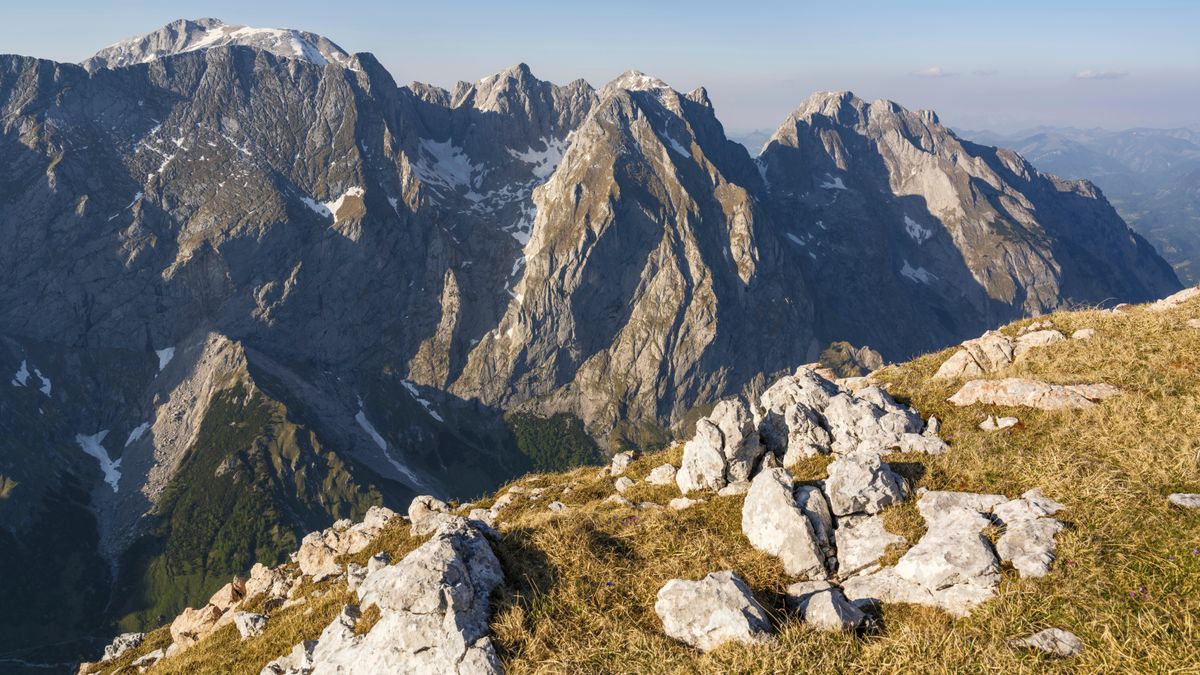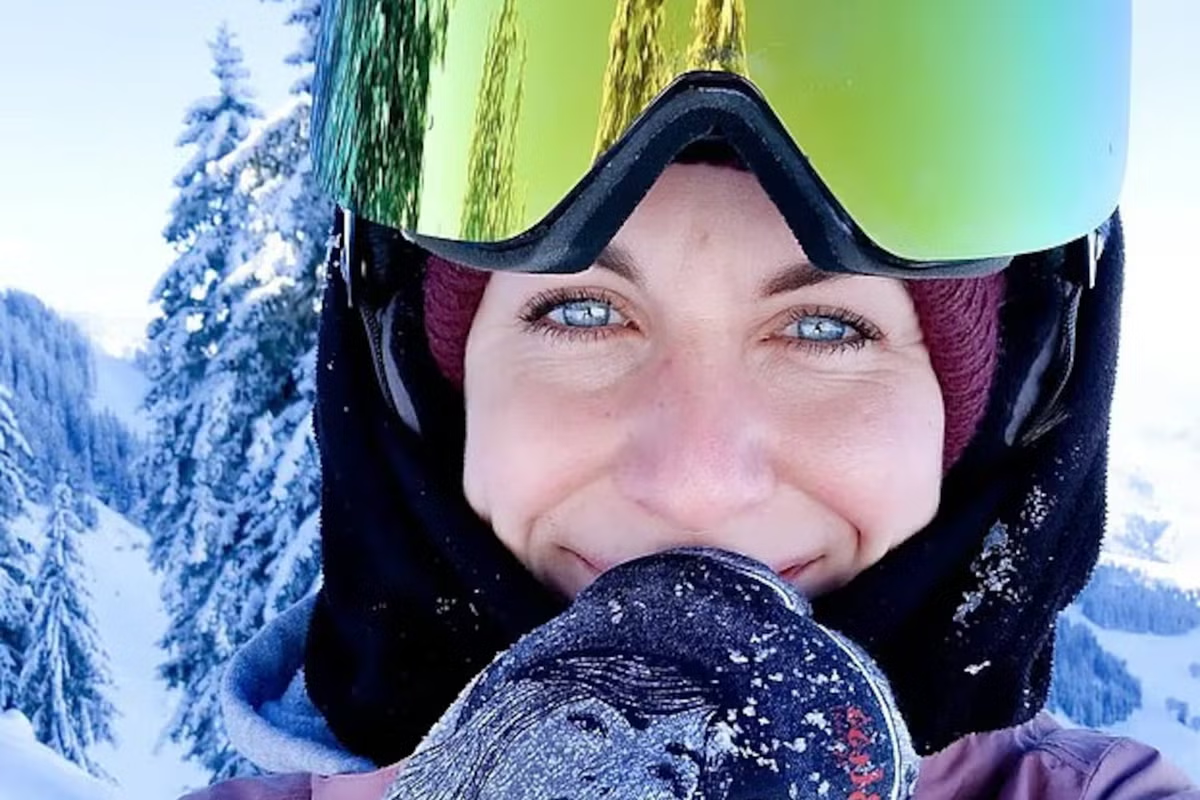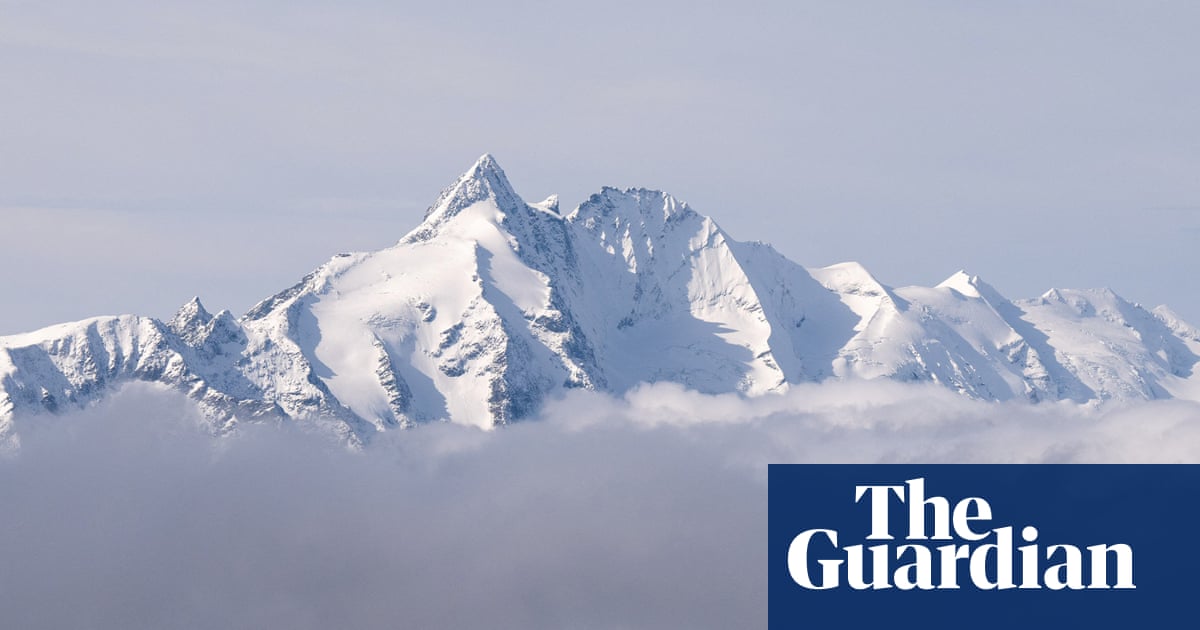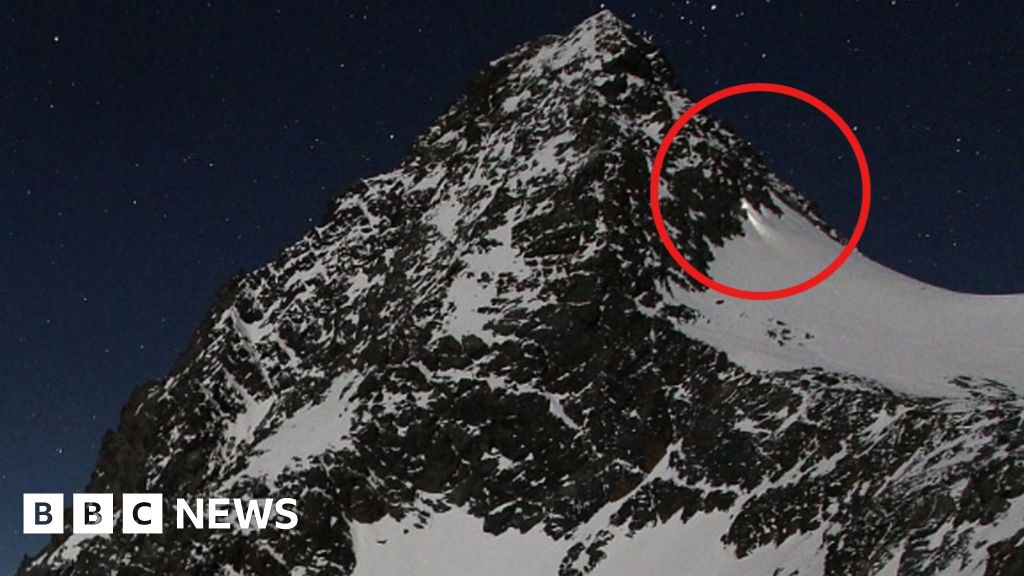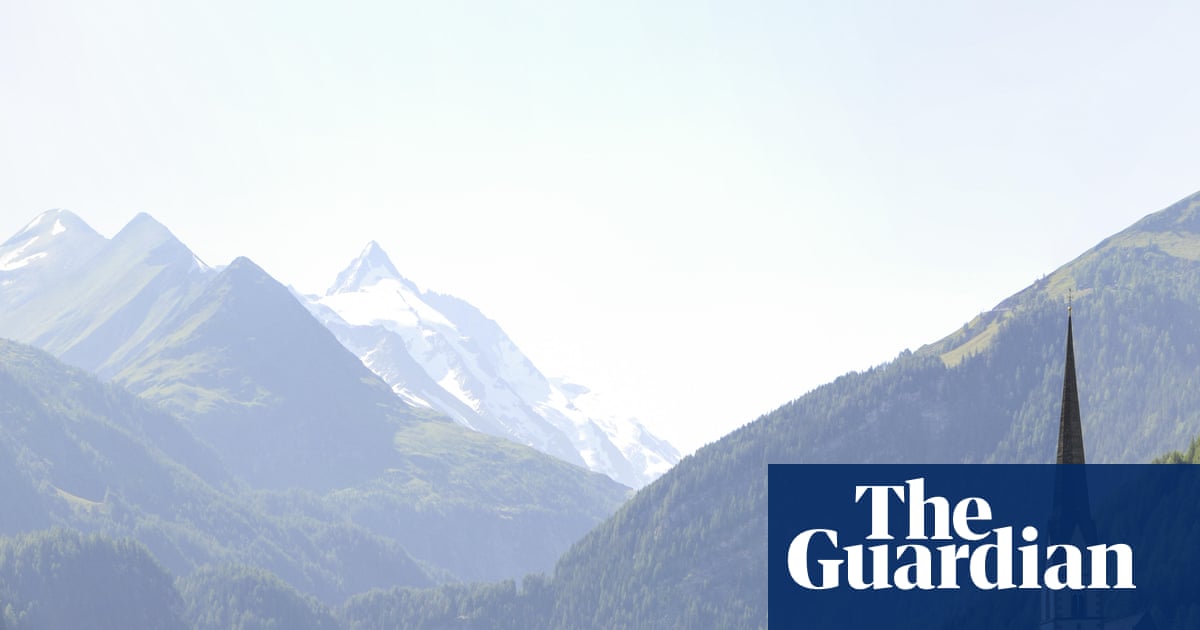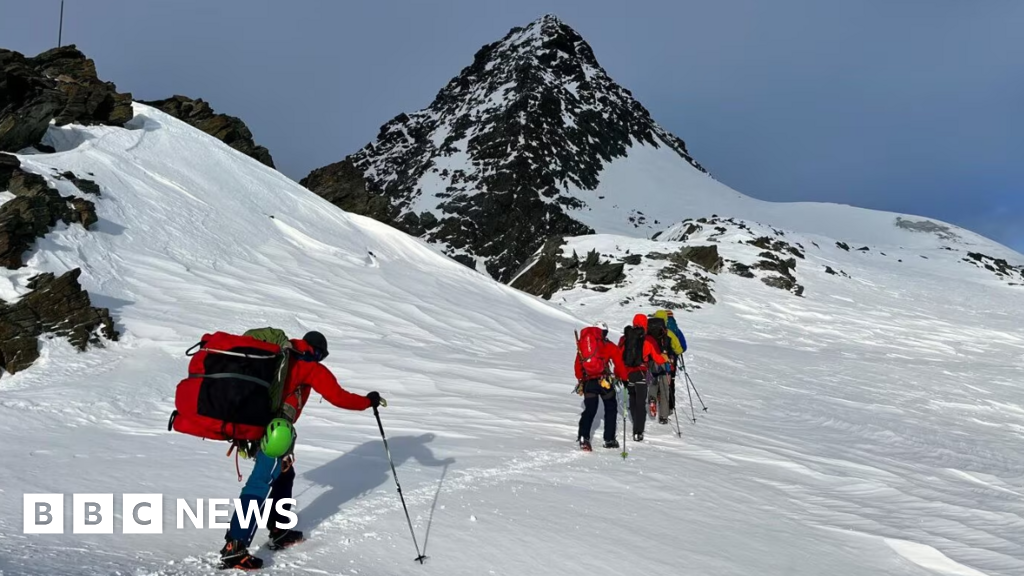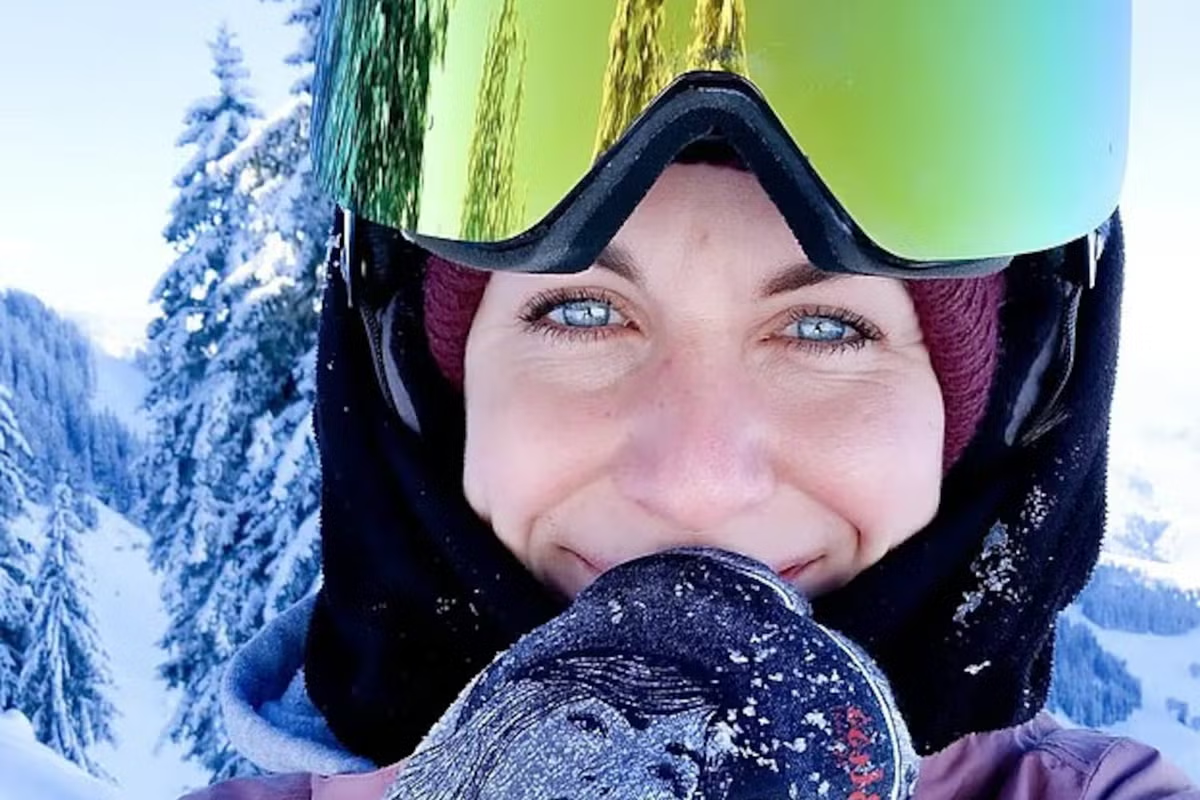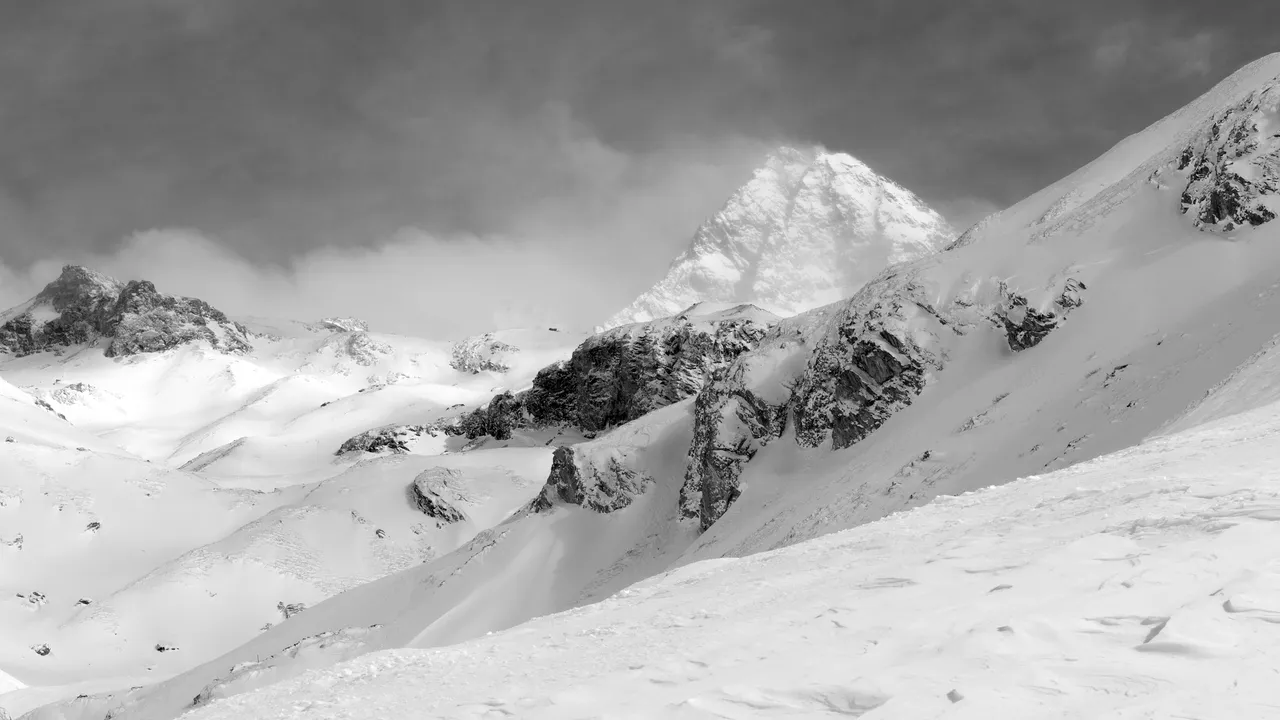
The judge, Norbert Hofer, was a specialist. At the Innsbruck Regional Court, in western Austria, he oversaw a jurisdiction designated for mountain, avalanche, climbing, cable-car, and ski accidents. Cases handled by this department rarely draw much public attention, but the trial of Thomas Plamberger, in February, was different. He was charged with homicide by gross negligence in the death of his girlfriend, Kerstin Gurtner, during an attempt to climb Grossglockner, Austria’s tallest mountain. On a chilly Thursday morning, the wood-panelled room of Hofer’s court was packed with citizens and a motley press corps.Word had spread that the judge wanted to run the trial in a single day. There would be no jury. A verdict and, if necessary, a sentence would be delivered by the judge alone. The stage layout was, to an American eye, oddly simple. There was a raised desk, for the judge, with an alcove behind it. Two rows of chairs flanked the forecourt. A small table and a chair, for witnesses, faced the judge’s desk.The judge was a gawky fiftysomething gent in a short-sleeved white shirt and a beige tie, keeping up a conversation with a co-worker as he pulled on his black robe. He had a small mouth, a sharp gaze, and an old-fashioned boy’s haircut. Hofer was an alpinist himself and a mountain-rescue volunteer. He led groups of young people on summer hikes. None of his associations would bias him in any way, he assured us: “I consider myself capable of making decisions with one hundred per cent objectivity.”The case against Plamberger was nearly unprecedented. Hundreds of unfortunates—hikers, climbers, skiers, snowboarders—die in the Austrian Alps each year, but these fatalities rarely result in criminal charges. Gurtner, thirty-three, had frozen to death a few dozen yards from the Grossglockner summit after Plamberger, then thirty-six, parted ways with her at around 2 a.m. on a winter night. The press coverage in Austria and Germany had been relatively decorous. Reports rarely even gave the climbers’ first names. The world press was less restrained; the Post, the Daily Mail, the Hindustan Times, and many others ran screaming headlines, accompanied by photographs of the climbers purloined from social media. One showed Thomas on a mountaintop, swinging shirtless from a summit cross at the moment of conquest. Another showed Kerstin on a ski slope. Her glove half hid an enormous smile, and her eyes, bright blue, seemed to swallow the world. The image was everywhere in the commentary online, but it wasn’t shown in the courtroom. Judge Hofer announced that he would not be influenced by the “unbelievable media coverage” that the case had received.Behind the judge’s chair hung a massive crest of an eagle with wings spread, its fierce beak turned stage right. On either side were large monitors, showing the heavy granite pyramid of Grossglockner on a bluebird day. A posse quietly crossed to a set of chairs on the judge’s left: the defendant and his supporters, mostly men. His lawyer, Kurt Jelinek, was a familiar figure—his vast round face was often in the papers. But which of the younger men was Plamberger? Anyone following the case had seen his visage online. But, in the photos, he generally wore reflecting glacier goggles and a climbing helmet. All that showed was dark scruff and a vulpine grin.A small, brown-haired man made his way to the table in the forecourt. He wore a blue sports coat, a white shirt, no tie. What happened to the swashbuckling mountaineer whose image had been plastered across the internet? This fellow seemed—not timid, perhaps, but certainly mousy. His back was to the crowd. Austrian law did not oblige him to promise to tell the truth, the whole truth, and nothing but the truth.“How are you?” the judge asked.“Good.” I thought I saw Plamberger put two thumbs up.The judge, solicitous, told the defendant that he could take breaks whenever he needed them.The prosecutor, Johann Frischman, laid out, in a reedy voice, the criminal complaint. It alleged that Plamberger, acting as “the responsible guide,” had made nine serious mistakes during the ascent, then left Gurtner alone, “unprotected, exhausted, hypothermic, and disoriented.” He summited, made his way down to a warming hut on the other side of the mountain, and phoned rescuers from there at about 3:30 a.m. When the rescue crew got to the peak, later that morning, they found Gurtner dead.Jelinek, who had far more presence and passion than the prosecutor, rejected this story. Gurtner was a strong alpine athlete, he said. She and his client had planned their climbs together as equals. Her death was a “tragic accident.” She had collapsed on the mountain and urged her boyfriend to go for help. Plamberger, devastated by Gurtner’s death, had been “already punished,” because a “prejudgment has taken place in the media,” Jelinek said. Now an innocent man was facing the possibility of three years in prison.As the judge’s attention turned toward the defendant’s table, Plamberger made a preëmptive declaration. “I am infinitely sorry for what happened and how it happened,” he said. “I loved Kerstin.”Austrians venerate the Grossglockner. As you enter the main terminal at Salzburg Airport, a large photograph of an idealized “Glockner” hoves into view. Above a green valley, the mountain, steel-gray, looms at otherworldly scale. Wide snowfields surround serrated ridges, and a towering peak jabs the sky. It was first climbed in 1800, and a monument called the Emperor’s Cross went up to mark the summit in 1880. In recent times, the mountain has developed some modern oddities. The whole south side—where most people climb—has surprisingly good cellphone reception. You’re in the wilderness, but you can text your friends or, if you’re in trouble, call for rescue. Grossglockner also has twenty-four-hour “mountain cams,” which people can follow on their laptops from home. There’s not much to see at night, other than fantastically bright stars in an extra-dark sky and an occasional set of headlamps: climbing parties descending late. Climbing Grossglockner has become hugely popular, with an estimated nine thousand people making the ascent each year. The main complaint you see online is that the summit is too crowded.Austrians, it seems fair to say, venerate all their mountains, which cover two-thirds of the country. Alpine culture sometimes feels like a national religion. The Austrian Alpine Club bills itself as the country’s largest youth organization, with more than seven hundred thousand members—close to a tenth of the population—assiduously steered toward skiing, hiking, camping, climbing. Competence and bravery can be assumed. So can the provision of mutual aid.“On vacation, we switch from everyday problems to vacation problems.”Cartoon by David SipressThe Austrian Alps are fantastically photogenic, and the principals in the Plamberger trial had left a detailed record of their time in the mountains on social media. For investigators and for others following the trial, Instagram was a crucial source of information. Austrian privacy laws discourage journalists from asking probing questions, but a quick-witted reporter in Salzburg had retrieved years of Plamberger’s posts, presumably before lawyers could tell him to lock his accounts.Kerstin Gurtner’s account is still up. Scrolling backward through it, you see music festivals, friends, booze jokes from her party days, trips to Italy, Portugal, Greece. But mainly there is an intense romance with the outdoors: lakes, valleys with toylike villages, distant snowy peaks. During the pandemic, she seems to spend every day hiking or trail running. She is not focussed on bagging peaks, though she ends up bagging a few, including a hike in the Glockner range up what she calls her “first 3,000er”—a summit higher than three thousand metres. She quotes Sir Martin Conway, a storied British mountaineer: “Each fresh peak ascended teaches something.”Of course, Instagram is performative. Her Facebook is more workaday. She’s looking for an apartment for a cousin, or trying to find a techie to help run live streams for an events company called brandmood. According to her mother, an eating disorder has begun to plague her, but there are no hints of it, unless you look closely at her shoulders in certain pics. She lives for a time in the ski-resort town of Kitzbühel, a sort of oom-pah Aspen. Then she moves home to Salzburg, goes to work as a project manager for an events hub. She begins trail running more competitively and volunteers to help organize races. The longer races are brutally hard, but Kerstin loves helping other runners pursue their personal bests.In 2024, her social media changes. She starts climbing more serious mountains, doing more technical pitches, and nearly every post includes shots of her in a white helmet. Thomas is teaching her to climb. He leads, she follows, on belay from above. It’s her “beginner’s course in Alpine climbing,” she writes in March.The two had encountered each other, a friend of Kerstin’s told me, at a trail-running event called the Hochkönigman, near Maria Alm, a village in the gentle mountains southwest of Salzburg. (Thomas told the judge that they met online.) Kerstin had lived in Maria Alm for several years in her twenties, working for the local tourism office, helping to promote the region’s hiking trails and ski resorts. She ran in the Hochkönigman in 2024, placing second among women in the downhill. Thomas first shows up on her Instagram page that February, in an exultant post from a ski area. “Days like these could last forever,” she writes. The images are of snow-heavy trees, a chairlift overhead, and Kerstin grinning with ski goggles lifted. Thomas comments with three lovestruck emojis, and Kerstin replies with two. Somebody has a new boyfriend.In the coming months, Kerstin posts photos from the Drachenwand—the “Dragon Wall,” overlooking a mountain lake—accompanied by a remix of Nina Simone’s “Feeling Good.” She reaches the summit cross on Hoher Dachstein, a snowy but not difficult climb. After completing a nineteen-pitch sport climb on Trisselwand, she admits to being “a bit proud.” Thomas weighs in: “Super-strong performance for a first proper multi-rope-length tour.”Over and over, Kerstin thanks Thomas. Her friend from the trail-running world told me that she was happy, perhaps the happiest he had seen her, with her “new friend.” They did two more big climbs in the fall, including one on the south wall of the Dachstein, which they summited after dark. Kerstin is ecstatic. “A thousand metres of pure climbing bliss,” she posts. “I never would have thought that, after just six months of alpine climbing, I’d be able to climb this entire face.”The route required endurance, and Kerstin had that. Thomas seemed to have everything else—ropes, gear, mountain knowledge, and decades of experience on far harder routes. He had climbed Mont Blanc, the Matterhorn (twice), eleven forbidding Swiss peaks in nine days. Just after ascending the south wall of the Dachstein with Kerstin, he and two friends climbed Grossglockner the hard way, on what Thomas called “the wild side”—the north face, which gets very little traffic. They ascended three different routes, including the Pallavicini Couloir, a steep line of snow and ice with significant risks of avalanche and rockfall.In his Instagram posts, he rhapsodizes, too, but in a different key. He is justifiably proud of his speed and strength. He won a half-marathon in Salzburg and broke the speed record for a frightening round trip along an exposed ridge in Switzerland that crosses four peaks, all more than four thousand metres tall. He collects mottoes like a younger man: “Better a tiger for a day than a sheep for a thousand days.” His hashtags are #passion and #nevergiveup and #summitclimber. Not long before he and Kerstin began dating, he wrote, “What I want is an intense life, and for that, I’m willing to take certain risks. Because if it’s too late, the question will surely come up: why didn’t I even try?”Grossglockner’s summit is twelve thousand four hundred and sixty feet above sea level, and there’s nearly always snow and ice in the upper reaches. The elevation gain from the parking lot to the peak is more than six thousand feet. Technically, it’s a relatively easy climb. Still, twenty-nine people have died up there in the past two decades, often from falls. Local rescue crews and their helicopters are kept busy.The recommended approach for first-timers is to hire a guide and take two days, spending a night at either of two warming huts while acclimating to the elevation. On the second day, weather permitting, you can make an early run to the summit and descend to a hotel called Lucknerhaus before nightfall. In the summer, the huts are staffed and the meals are famously hearty. In winter, they’re closed, but a few warming rooms—unheated spaces where you can shelter from the wind—remain open.For less experienced climbers, a guide can be important, for both safety and peace of mind, but it’s not a requirement. Nor is a permit, or filing plans with rangers. Thomas, of course, was not inexperienced. And Grossglockner was his mountain. During the trial, he said that he had climbed it “fourteen or fifteen times.” Based on social media, that looked to be an underestimate.Thomas said that he and Kerstin left the parking lot at 6:45 a.m. on January 18, 2025. A couple of other parties left around the same time. Several left later. It was a mild day for January, heading into the thirties, with light wind and blue sky. The good weather, plus the fact that it was a Saturday, could account for the traffic. It’s a nearly seven-mile hike to a warming hut known as the Stüdlhütte, which is near the base of the mountain proper. The trail starts in a glade, crosses a bridge over a creek, then emerges into alpine pasture and scree surrounded by high peaks. At the head of the valley, above a set of glaciers being shrunk by climate change, is Grossglockner.The couple fell in with a climber who was going their way. He later appeared in court and said that Thomas and Kerstin were travelling “at a completely normal pace,” although she was trailing behind. She was using a splitboard to make the initial trek across the snowy fields. A splitboard is a kind of snowboard that can be broken into two skis for climbing on snow. It is heavier than touring skis, like the ones Thomas had, and markedly slower on the uphill. But it can be snapped back together and used as a snowboard for descents. For Kerstin, who loved snowboarding, the extra effort was apparently worth it.The climber who accompanied them said that Thomas “kept a close eye on her,” sometimes calling back, “Are you O.K.?” The two men went ahead, and “chatted a bit about the mountain world,” the other climber said. They exchanged ideas. “It was an interesting and a pleasant conversation,” he said. At the Stüdlhütte, he went right, Kerstin and Thomas left.In the witness chair, Thomas said that he and Kerstin had planned to complete their outing in one day, reaching the summit at 9 p.m. A group of mountaineers sitting in front of me glanced at one another. Summiting Grossglockner at 9 p.m. in midwinter was apparently not done. It meant that the Plamberger party would arrive at the peak after more than fourteen hours of climbing, and still have to descend the whole mountain in the dark. Temperatures would likely be far below freezing.But Thomas and Kerstin were not planning to take what’s known as the Normal Route. When they turned left at the Stüdlhütte, they were committing to a much more difficult ascent, a steep, rocky ridge known as the Stüdlgrat. The Stüdlgrat is a beautiful route, with sweeping views and a striking silhouette: nineteen hundred feet of jagged granite blocks, running all the way to the peak. Unlike the Normal Route, it has a number of sections of technical climbing. It can be faster. From the Stüdlhütte, the estimated time to the peak is three to five hours. But that’s in summer, and it assumes that people can manage complex running belays: moving roped together through a constantly changing series of iron rings, stakes, and rock outcroppings. In winter, the Stüdlgrat is full of ice and snow, burying much of the fixed gear.It was by far the most dangerous climb that Kerstin had ever attempted. Did she know that? All we know is that she trusted Thomas. I suspect, though, that she was keenly aware of his hard-core mountain adventures with his hard-core friends and saw going up the Stüdlgrat in winter as a way for her to cross into that world—to join him where he really lived.Mountaineers typically study a route and break it down into timed segments: we must reach this spot by this time, or we’ll have problems later. You always have a Plan B to follow if, for whatever reason, you don’t hit those marks. Turning around is a popular Plan B. It was roughly 10 a.m. when Thomas and Kerstin left the hut behind. They would have skied along the edge of the Teischnitzkees glacier for an hour or so, then switched to boots and crampons and started up the ridge.The Stüdlgrat gets enough traffic in warmer weather that the authorities have planted a prominent yellow sign at a flat spot known as the Breakfast Place. The sign says, in German and in English, “If it took you more than 3 hours to get here, turn back! Your life depends on it.” The warning meant three hours from the Stüdlhütte. It had taken Kerstin and Thomas nearly five hours. In court, Thomas said that they had heavy backpacks. He was not asked why their packs were heavy. He later said that they had no food other than a couple of bags of gummy bears and that he carried little emergency gear. The wind had picked up suddenly. The temperature was dropping.During my visit to Austria, I drove up to the Lucknerhaus hotel. At the head of the valley stood the mighty Grossglockner. The weather was clear, the snow fresh and deep. The seductive serenity of the Alps on a sunny day suffused the scene. I heard voices and laughter from farther up the valley. Two men emerged from the trees, gliding on skis down a straight path that they had probably made themselves on the way up. They were middle-aged, not built like athletes. One was in a multicolored sweater, with a ski hat and no backpack. They had clearly legged it up the mountain some distance—half a mile or half a dozen—then turned and skied down, their efforts more than rewarded. They laughed like little boys as they stepped out of their bindings.When Thomas told the judge that he and Kerstin were planning to summit at 9 p.m., did he really mean that they planned to spend ten hours just on the Stüdlgrat? Doing what? One of my theories about the last day of Kerstin’s life was that she thought she was going snowboarding. There seemed to be no other way to account for her carrying her splitboard up the mountain. On the day I visited, it looked possible to board down all the way from the upper warming hut, at Adlersruhe, if you took the Normal Route. But Thomas and Kerstin didn’t take that route. Was there any plan that could include summiting via the Stüdlgrat and then descending in daylight? It would be dark before six at that time of year. There are élite mountaineers who, starting very early, might manage it. But Kerstin was still a beginner, and their summit goal was 9 p.m. Boarding down in the dark would be too dangerous, especially for someone not familiar with the mountain or the glaciers they would be crossing. Thomas knew all this. From the evidence, Kerstin did not.We have no idea, really, what happened between Kerstin and Thomas on the Stüdlgrat. We know that hours passed. We know that the sun went down and that their headlamps became visible on webcams at 6:10 p.m. At that point, they had passed a large vertical feature known as the Pulpit but were still hundreds of feet below the summit. We know that Kerstin was trying to climb icy rock in soft snowboard boots, with ill-fitting crampons borrowed from Thomas. Her feet likely slipped many times trying to find a hold, especially after dark. Such slips are exhausting. Each one sends a bolt of panic through the body as it scrambles to regain purchase. We know that, according to Thomas, they had rope problems—a stuck rope, and a pendulum fall by Kerstin. A pendulum fall occurs when a climber loses her hold on the mountain too far to the side of the next fixed point of rope above. It causes a sudden swing that can be terrifying and painful. Crampons sometimes make it worse, catching on rock features. Kerstin had suffered minor injuries, to her hand, her ribs, or perhaps her hip—no one in the courtroom cared to get it straight. Thomas told the judge that she lost a glove, and he loaned her an extra he had. The mountain cams show that their headlamps inched upward till about 8 p.m. Then, for the next two hours, they seemed to gain no altitude.The weather, meanwhile, kept getting worse. Climbing parties on the Normal Route had turned back earlier in the day. Up on the Stüdlgrat, the wind rose to some forty-five miles an hour, and with the wind chill the temperature felt well below zero. It’s possible that Thomas and Kerstin stopped because she was injured. But failing to keep moving in such brutal cold is the worst possible strategy—the fast lane to hypothermia.A couple of hours after dark, a climber descending past the Stüdlgrat saw lights on the ridge and heard voices. He shouted but got no reply. Concerned, he called the Alpine Police, who dispatched a rescue helicopter from Salzburg. The helicopter reached the Stüdlgrat shortly after 10:40 p.m. It hovered, rocking in the wind, above the two figures on the exposed ridge. It made six separate passes, looking for the universal distress signal: two arms held up in a V. The climbers never even looked up. This was strange. Plamberger said that he did not react to the helicopter because they were not in a state of emergency. But there is also an arm signal for needing no help, which tells rescuers that, if they’re looking for a party in trouble, they should look elsewhere on the mountain. Instead, Thomas and Kerstin started moving again. My guess is that Thomas was furious. He was proud of his climbing, fiercely proud. He had, to our knowledge, never been rescued in his life.The funeral parlor in Salzburg where Kerstin’s memorial service was held—with an invitation for mourners signed by both Kerstin’s family and Thomas—created an online page for condolences. Those poured in, from loved ones and strangers, but the comments had to be watched closely for denunciations of Thomas. The funeral parlor added a plea at the top of the page, in bold: “We ask you to refrain from accusations and assumptions!”On social media, people did not refrain. There was talk of femicide: “She trusted him AND he abandoned her. Cruelty thy name is men.” Conversation swirled around the phenomenon of the “alpine divorce”—the hike from which only the man returns. Every woman seemed to have a story of being left behind: by the hot-shot boyfriend trying to impress his Facebook buddies, or by the aggrieved husband trying to outrun middle age. The consensus among women was, Make sure you have the car keys.“Sixty years ago, a cow first jumped over the moon. Now we are on track to do it again.”Cartoon by Tyson ColeCommenters who believed that Thomas was a killer called for “justice for Kerstin” and “justice for her family.” The complication was that her family didn’t believe Thomas was guilty. For more than a year after Kerstin’s death, her parents, Gertraud and Helmut Gurtner, had kept silent, making no public statements. Then, just two weeks before the trial, Gertraud spoke with Die Zeit, a German weekly, and let fly. “It makes me angry that Kerstin is being portrayed as a silly little girl who let herself be dragged up the mountain,” she said. The truth was, Kerstin trained hard, and she and Thomas made their decisions together. Kerstin was a serious trail runner: “She once ran down the Untersberg, our local mountain, in just thirty-eight minutes.” She was a good skier who loved to be in the mountains. “The death of my daughter was the result of a tragic chain of unfortunate circumstances,” Gertraud said. “I don’t want to blame my daughter’s boyfriend for that.” The pursuit of Thomas in the media and online had become a “witch hunt.”The Gurtners were called to testify in court. Jelinek, Plamberger’s attorney, suggested that their refusal to blame Thomas showed “true human greatness.” It also aligned, of course, with his defense. Many observers were shocked by the Gurtners’ support for Thomas, but it didn’t seem strange to me. Whatever the facts of the case, the parents would prefer to believe that their daughter had died pursuing an ambitious dream, and that her boyfriend had loved her.As Gertraud took the witness chair, Hofer apologized for calling her in. “Unfortunately, we have no choice,” he said. Gertraud had not been in the courtroom for any of the previous testimony. She was small, brown-haired, not dressed for a special occasion. She did not glance at the public benches.The judge was gentle and solicitous with her, as he had been with Thomas. They had both lost a loved one.Hofer reviewed a list of mountains that Kerstin had climbed. He noted that it contained no “classic mixed winter tours,” which means climbing on rock and ice. “Can you help me here?”“I don’t know any, no. I suppose she wasn’t experienced there.” Kerstin hadn’t climbed in winter before.Gertraud said that Kerstin had first mentioned climbing Grossglockner in December, 2024. Had they discussed the difficulty of the Stüdlgrat? They had not. Did they consider the difference between soft boots and mountain boots? No.The judge asked gently if Kerstin’s strength ever suddenly failed her. “No,” Gertraud said. “Kerstin was a biter”—feisty and tough. “She never gave up.”“Does she go to death consciously?” he asked. His question doesn’t translate well, but it meant something like, Would Kerstin have pushed herself until she dropped? Gertraud seemed unfazed. “Let me put it this way,” she said. “She wouldn’t have been taken up anywhere against her will. I told her, ‘You can always stop. In an emergency, you make the emergency call.’ ”The prosecutor had no questions for Gertraud, but Jelinek did. Why had she spoken to Die Zeit? The “media frenzy” had upset her, she said, and she hoped to reclaim some control. She had also spoken expansively with the reporter about Kerstin’s childhood, her love of the mountains, her independence. “Kerstin was very curious, even as a small child,” she said. “If I told her, ‘Watch out, there’s a mean fox living back there in the woods, we’re not going there,’ she would go there to take a look.” She said that she was dealing with her grief partly by skiing in Maria Alm, where she and Kerstin had once skied together. And, of course, she opposed the vilification of Thomas. “It’s easy to be a hero from the comfort of your living room,” she said.The trial was being debated in many forums in the mountaineering world. Some people worried that a guilty verdict would have a broad impact on the sport. Climbers who rope up together learn from one another, with no strict hierarchy. Now recreational climbers might start to think twice about going out with friends. A science writer at the London Times, Tom Whipple, objected to “making a moral liability a legal one; the fixed ropes of the law bolting themselves to our last cliff face of personal responsibility.” Whipple argued that climbing itself was an act of rampant negligence: risk for no rational purpose. Another climber in the U.K. wrote that “the foundation of climbing and mountaineering is trust—you have to trust yourself and others—and criminalizing these decisions would also be the death of trust.”I talked to an experienced mountaineer in his climbing shop in Innsbruck. He told me about first ascents that he and his wife had put up in the Indian Himalayas. He climbed safely with her, but before he was married, he said, he was a wild man. He even attempted Freerider, the monster route in Yosemite that Alex Honnold later climbed without ropes in “Free Solo.” It was a miracle that he had survived his own foolish youth. No, he had not been actively following the Plamberger case. But, as a mountaineer, he disliked the courts’ getting involved in accidents. “People always want a culprit when something bad happens,” he said. In a place like Austria, the mountains were the only zone of true freedom and self-reliance. Austria is, at least in the towns and cities, the most neurotically orderly place I’ve ever been.Climbers die at a frightening rate, but the deaths are almost always ascribed to errors and accidents. A disproportionate number of fatalities occur during rappelling. Rappelling is not difficult. You mainly need to remember to have a knot tied at the end of the rope. When someone dies, investigations tend to conclude that someone made a mistake—or that no one made a mistake.Kerstin’s death seemed different, though. A well-known mountain guide told me that he and his colleagues had been discussing the case for nearly a year, and that there were simply too many mistakes for it to be called an accident. Certified guides face stricter expectations than other climbers. It is the guide’s job to judge not just mountain conditions but also the clients’ strength and abilities.In court, Plamberger denied that he was any kind of guide. He described himself, instead, as a “hobby mountaineer,” who had trained himself by watching videos. (He had also climbed with his father, an experienced mountaineer, something he did not mention.) He and Kerstin planned their climbs together, he said: “I wasn’t in charge—I had no authority to give instructions, no power, no superiority.”Thomas seems to admire the early alpine first ascenders, at least online. But his relationship with the modern outdoor industry feels vexed. On an Instagram post where a Matterhorn guide advertised his services, Thomas wrote tauntingly, “Why would I book something like that? I’ll climb it myself.” In 2023, when a skier named Eva Walkner posted about a tremendous day with a film crew on a mountain called Hoher Göll, Thomas commented appreciatively, then asked why her party hadn’t gone higher up the face. The footage attached to the post makes it obvious why not: there were massive snow cornices near the top, and the avalanche danger was already considerable where they stopped. What’s not obvious is whether Thomas knew that Eva Walkner is a two-time Freeride World Champion. Her profile has spectacular clips of her flying off terrifying cliffs and skiing out unfazed. Two years later, when Thomas’s name was in the news, Walkner came back to the post and answered his question: “Why did we turn around just before the summit? Because turning back when conditions become too dangerous is what distinguishes good and experienced alpinists.”Elsewhere on Instagram, you can see that Thomas enjoyed taking people up Grossglockner. In the summer of 2022, he climbed it with a young woman named Denise. He was in the foreground of one of her summit pics, and she raved about him in an Instagram post, calling him den besten Bergführer—the best mountain guide. In 2023, he did it again, via the Stüdlgrat, with another woman, who also happened to be named Kerstin.An accomplished local climber, younger than Thomas, told me that she had declined his invitation to climb together. She and her friends had been wary of him for years. “He was the person who was always ready to tell you what you were doing wrong, kind of an egotistical person,” she said. “He roped up with people who were less experienced, people who trusted him.” But, she said, “he pushed through some tours the wrong way. It was only a matter of time.”Late in the trial, a surprise witness came striding into the courtroom. Her name was Andrea Bergner, and she was clearly not happy to be there. She was tall, slim, dark-haired, stylishly dressed in a gray jacket and a matching skirt. Early thirties. She took the witness chair and answered the judge’s greeting in a loud voice that said, unmistakably, Let’s get this over with. Thomas, whose closed expression had not changed for hours, suddenly looked alarmed.“I was with the defendant—we briefly had a relationship,” Bergner said. “We also did joint tours.” She meant climbing mountains together. “The leadership was always my ex-boyfriend.” Some of the tours she could not have managed without him: “I had a certain amount of mountain experience, but he was more experienced.”“Did he take good care of you on tours?” the judge asked, in a distant way. Not solicitous now.“He always took good care of me during the tours,” she said. “But when things got tough, that wasn’t always the case. I was sometimes afraid. In those situations, he tended to get grumpy.” He would tell her, “Don’t be such a baby.”The judge knew why Andrea had been called. She and Thomas had climbed Grossglockner in 2023. “The mood was bad,” she said. “I was at the end of my strength. I was dizzy, my headlamp was out. I cried and screamed. I signalled to him, too. Then, suddenly, he was gone—he’d gone ahead.” It was the middle of the night, she said, and she was “all alone.”She managed to get down off the mountain, but she never went on another tour with the defendant. Her friends advised her to go to the police. “I didn’t do that,” she said.The prosecutor asked, “Was this one incident when he left you alone the end of the relationship?” No, she said. They broke up later, “for various reasons.”The defense had no questions. Andrea stalked out, slamming the door behind her.I Googled her afterward. Her Instagram has more than sixty-two thousand followers. Her feed is stuffed with photos of her biking, skiing, climbing, working out, often in outfits from Skinfit, from which her followers can get ten per cent off. She is, in a word, an influencer. Her brand is fearless, fierce. On her page is a slide show of seven ascents of Grossglockner that she made, including one on the daunting northwest ridge. Take that, Plamberger.At 5:22 p.m., when Thomas and Kerstin were still fairly low on the Stüdlgrat, she had dialled “149.” 140 is the 911 of the Austrian Alps. It seems as if Kerstin tried to make an emergency call as the sun went down, fluffing the last number with frozen fingers or a puffy glove. Thomas, asked about the call during the trial, said that he knew nothing about it at the time. If she made the call in secret, communications between the pair must not have been good. Had Thomas got angry because Kerstin wasn’t keeping up, as he allegedly had with his ex?They apparently started moving again only when the helicopter arrived. Thomas said that Kerstin denied having called the mountain rescue. “She also stressed that she was fine.” They kept going, slowly approaching the summit. At one point, he said, “Kerstin shouted something up to me four to five times, but I didn’t understand it.” That suggested that he was far ahead, and perhaps didn’t care to be any closer. Climbing alone, he likely could have summited before nightfall and got down off the mountain. But he was not alone, and it is a long-standing practice among climbers for stronger partners to carefully monitor less strong ones, adjusting the pace and objectives to keep them safe.Cartoon by Roz ChastJelinek issued a statement during the police investigation. It said, inter alia, that, after the helicopter’s visit, Kerstin had “suddenly showed increasing signs of exhaustion,” which was “completely surprising and objectively unforeseeable” for his client. But that’s not how exhaustion typically works during a seventeen-hour climb in frigid weather. Weakness, frostbite, and the early stages of hypothermia are obvious long before a reasonably fit person collapses. Jelinek also criticized the response time of the Alpine Police—a strategic mistake. In Austria, mountain rescuers are heroic figures beyond reproach.At 12:35 a.m., Thomas made a phone call. It is not clear whether he was near Kerstin. There were no headlamps visible on the mountain at that point. He had been contacted by an Alpine Police officer identified in court as Mathias A., who had fielded the earlier emergency call that sent the helicopter to the Stüdlgrat. He had identified Thomas from the license plates on the only car still parked in the Lucknerhaus lot, then left a series of messages on his phone. Now Thomas was calling back. Mathias asked why they had not acknowledged the helicopter. Because everything was fine, Thomas told him. What about now? “We don’t need anything here, it’s all right,” he said, according to Mathias. After the call, Mathias was worried. He messaged Thomas, “Do you need help???” No reply. He texted again and again, but Thomas had silenced his phone. In court, he said he was trying to save battery.What happened to Kerstin as they approached the summit of Grossglockner? The mountain cams showed a blob of headlamp light near the summit at midnight, above the last rocky section on the Stüdlgrat. The terrain changes there. It’s a snowy trudge, steep at first, to the Empire Cross. At that hour, the cams snapped photos every thirty minutes. In the image from twelve-thirty, there were no headlamps visible. The judge had a note in his file, saying that after Kerstin’s alleged collapse she “could only move on all fours.”Thomas did not confirm or deny that. He said, “It was a completely exceptional situation for both of us.” And: “It was bitterly cold. We wanted to have tea, but it was all frozen.”It’s not that difficult to prepare for serious cold. When Kerstin started doing more mountain hiking, back in 2020, her mother asked her to get a bivouac bag—a lightweight emergency sleeping bag that is standard gear for mountaineers. She agreed, and also got aluminum rescue blankets and a first-aid kit. Thomas said in court that he knew Kerstin had a bivouac bag. She also had a rescue blanket and hand warmers. He himself did not have a bivouac bag, though. “I don’t own one,” he said.This was a weird confession. The bags weigh very little, can be bought for less than twenty euros, and save lives regularly. Pairs of hikers often carry double bivvies, as they’re known, to share warmth. Thomas surely knew the risks of exposure in the alpine. Was it just some mountain-man obtuseness—that he believed he would never be in an emergency he couldn’t handle? I asked Nicola Werdenigg, who was among the first women to become certified winter-climbing guides in Austria, what she thought. “These are not mountaineers,” she said, sadly.The judge said that he couldn’t understand why, when Thomas phoned Mathias at twelve-thirty-five, he did not tell him that there was an emergency. Thomas said that, during the call, he didn’t know that Kerstin was unable to go on. This was a flat contradiction of something he’d said earlier—that he’d told Mathias that she urgently needed help.The judge asked why Thomas didn’t call Mathias back when he noticed that Kerstin couldn’t move: “That would have been the most basic piece of information. You should know that as a mountaineer.”“I thought I had set the rescue chain in motion with this call.”Why didn’t Thomas unpack the bivouac bag from her backpack, the thermal blanket? His explanation was that he’d forgotten in the stress of the moment: “I didn’t even think about the bivouac bag.” He added, “I don’t know why she didn’t say anything to me about it.” So the oversight was her fault. She was hypothermic, but she should have said something.Thomas testified that, sometime around 2 a.m., “I agreed with her that I would go get help. Because we knew that we wouldn’t make it through the entire night up there. I lay down beside her, and she then screamed loudly, ‘Go! Now! Go!’ She saved my life with that.”The judge seemed to have reached the end of his patience with Thomas. He pulled up a photograph of Kerstin as the rescue crew had found her. She was not curled in a ball against the wind, as one might expect. She was braced against a near-vertical gray rock on a steep part of the mountain, with her back unnaturally arched and her face pointed at the sky, eyes open. Her feet dangled, her boots untied. There was certainly no room to lie down beside her there. Her gloves were gone. Her heavy pack was still on her back. She was a vision of agony.Thomas had said that he “secured” Kerstin before leaving her. In climbing, one secures oneself or a partner to the mountain in order to free one’s hands for other tasks. But he had told the rescue crew that he had left her on an area of gently sloping snow, in view of the summit cross. This was nowhere near that snowy area. She was in a fall zone, tied tight to the rock from behind.“How could she get into such a position when she couldn’t move anymore?” the judge asked. “I find it difficult to reconcile your version of events with the images I have before me.”Thomas sat in silence. His expression had not changed.The judge speculated about how Kerstin might have reached this perilous spot if Thomas had secured her near the summit: she could have untied herself, put her backpack on, climbed down, then fallen. But, he suggested, perhaps there was a better explanation. He invited Thomas to offer one. Thomas said nothing. Jelinek hastily asked for a ten-minute break, and the judge granted it.When the proceedings resumed, Thomas faced the judge and delivered a statement, seemingly rehearsed: “I understand you and the scenario you’re considering, but I didn’t leave Kerstin behind at that point. I want to make that very clear.”He may have meant that Kerstin had ordered him to go ahead, or that he had not left her behind in his heart, or perhaps he was sticking to his story about leaving her somewhere else. In any event, the judge let it go. When Jelinek asked his client about Kerstin’s condition when he last saw her, he said, “She was completely finished. . . . I thought I was in a fake movie.”On the Lucknerhaus mountain cam, headlamps reappeared at 1:30 a.m. below the summit—by the looks of it, just where Kerstin was found. At 2:30 A.M., Thomas can be seen descending on the Normal Route. There is no light at Kerstin’s resting spot. Thomas said that he had a difficult descent. He threw up, twice. But his headlamp moved swiftly across rocks and ice, and by about 3 a.m. he was speeding down the slope, presumably on skis.The Alpine Police were still trying to reach him, but his phone remained silenced, filling up with missed calls and messages. Sometime after three, he reached a high-altitude warming hut, the Archduke-Johann-Hütte*,*{: .small} and phoned Mathias A. again. There was initially some confusion, Mathias testified: “I thought at first that everything was fine. But then he told me that he left his girlfriend on the Glockner.” Mathias immediately went into rescue mode, assembling a crew. Apparently, he asked Thomas to return to Kerstin’s position, but Thomas said no, he needed to rest.The rescue helicopter battled with the wind and had to drop the crew on a snowfield nearly two thousand feet below the summit. They trudged up with their equipment and reached Kerstin at 10 a.m. Members of the crew testified that her body was not where Thomas had said it would be. Mathias, who had assisted with the morning rescue, mentioned bloodstains above where they found her. The judge asked if it looked like Kerstin had fallen down the slope. “No, not really,” Mathias said. But these were not forensic scientists. They were there to recover a body, and it was a difficult operation—slippery, windy, very cold, across a narrow ridge. They got her into a red rescue coffin, then rappelled with it hundreds of metres down to the helicopter.Meanwhile, Thomas had got a helicopter ride off the mountain. A police officer from the town of Lienz questioned him and found that he was “rather taciturn . . . but he was able to answer clearly.” Thomas said that his girlfriend had struggled on the Stüdlgrat. She was less experienced. He was the leader. Had he protected her with a bivouac bag? “He couldn’t answer that,” the inspector told the court. Why had he been in the warming hut and not lying in a bivouac bag with his girlfriend? “That didn’t quite add up for me.”The next day, Thomas phoned the police to ask if they had by chance found his GoPro on the mountain. They had not. That seemed like a tacky inquiry, but it’s possible that Thomas was relieved by the answer. He often wore the GoPro on his climbing helmet, to film while in the mountains. That footage might have answered many questions about the hours they’d spent on the Stüdlgrat—what was said where, whether the two of them were arguing or even speaking.Big, fat snowflakes had started falling in the afternoon, past the high courtroom windows. The valleys and peaks around Innsbruck were already on high avalanche alert. Now it was dark. The judge retired to make his decision. There was, first, the question of guilt, and then, if necessary, sentencing.Grossly negligent homicide, under the Austrian criminal code, means that someone has caused a death by acting “in an unusual and conspicuously negligent manner.” Nothing about intent—intent pertains to murder in its several degrees. The judge had to weigh this charge against everything he had heard.“Wait . . . what did you want again?”Cartoon by Adam Douglas ThompsonI pictured him also fretting about being branded a Nestbeschmutzer—a “nest fouler”—if his decision was seen to besmirch the image of mountaineering. That was the term widely used against social critics, artists, novelists—anyone in Austria who dared to be too critical of the country after the Second World War.In truth, Hofer betrayed no world-historical timidity. Only, perhaps, a constitutional aversion to thinking ill of mountaineers. In a 2020 journal article, he’d written, “Culpable conduct can be intentional or negligent. Since intentional conduct . . . plays virtually no role in alpine accidents, the focus is on examining whether negligent conduct led to the accident.”There were many disturbing parts of Kerstin’s story left unpursued. The autopsy had yielded an official cause of death: hypothermia. There were signs of a viral infection, and she had taken ibuprofen. But nothing was said about her injuries, even though Thomas had mentioned them. Mathias had described bloodstains. Whose? From what wound? Why had Thomas and Kerstin taken the Stüdlgrat? That was a central question, never asked. Where were their headlamps after midnight? Extreme cold drains batteries, but at least one headlamp was back on at 1:30 a.m. How did Kerstin end up where she was found? Did Thomas lead her there or find her there? Why on earth was she still wearing her backpack?The prosecutor and the judge may have left all these questions alone because they knew that they had enough to convict for grossly negligent homicide. This case was already out in new territory. It didn’t need to flail on any further.Another question: Would Thomas have been prosecuted if his deceased partner had been a man, with all other details the same? That was hard to picture. But Kerstin was, as her mother said, not a fool. She was physically and mentally strong. She made it to the top of Grossglockner, if not quite to the cross, in a raging winter storm, with bad boots, a heavy bag, no real food, not much experience, possibly an injury, and very probably a cold and angry boyfriend.At one point, while being pressed by the judge, Thomas claimed that he took off Kerstin’s backpack and urged her to sit on it. I didn’t believe him. He’d done nothing else to make her comfortable. And if the backpack were beneath her she would have been sitting on her bivouac bag, emergency blanket, and hand warmers, which could have saved her life. All they would have had to do was reach inside the pack.It’s possible that, as the judge suggested, Kerstin set off blindly in the dark, making her way as far as the rocks where she was found. People dying of hypothermia suffer extreme confusion and sometimes feel a painful rush of blood to their extremities, causing them to shed clothes before they fall into a coma, their organs fail, and their heart stops. But someone was lucid enough to tie the knot that secured her to the mountain. That photograph showed no evidence of any effort to save her. Instead, she was thrust up into the killing wind.The judge came back with a verdict: guilty.He explained at some length. He was discounting a number of the mountaineering errors (starting too late, not carrying sufficient emergency gear), because they were not inherently responsible for Kerstin’s death. He praised Plamberger’s abilities—“You are an excellent alpinist”—and spoke sympathetically of the torments inflicted on him and his family by social media. “I don’t see you as a murderer,” he said. “I see you as someone who, as a last resort, tried to call for help and stand by his girlfriend.” Thomas had been unable to put Kerstin in a safe position because she was unable to proceed. He had gone ahead to Adlersruhe “not to save yourself” but to find help. There just wasn’t any.This all sounded promising for the defense—and would weigh in Thomas’s favor when it came to sentencing. His guilt stemmed from the fact that, despite his excellence, “you are obviously someone who is struggling to make the switch from your own skills to another’s.” He did not recognize the exhaustion of his partner when he should have. None of the climbing he had done with her before should have made him think she could go up the Stüdlgrat in winter. He let her climb with inadequate equipment. He did not turn back at the Breakfast Place. “Had you acted differently, I strongly assume that your partner would have survived,” the judge said. The requirements for a finding of gross negligence were fulfilled “due to the cumulative circumstances.” There was also Kerstin’s “contributory negligence”—she could have made an emergency call herself.For sentencing, the mitigating factors included Thomas’s “clean record and previously orderly life style.” The loss of his loved one was also taken into account. The judge gave him a five-month suspended sentence—likely no jail time, in other words—and a fine of nine thousand six hundred euros. The verdict, Hofer said, almost apologetically, “was the decision of a single judge at the Regional Court. That doesn’t mean it’s right.” Thomas had the option to appeal.Thomas frowned and looked at Jelinek. They would appeal.It was nearly midnight. Thomas had to get back to Salzburg for his shift the next day. He was a cook at a retirement home there.Peter Habeler, who is Austria’s greatest living mountaineer—he summited Everest without oxygen along with Reinhold Messner, among many other accomplishments—was interviewed for a public-television documentary about the tragedy on Grossglockner. Habeler is in his eighties, still tanned and climbing. He had trenchant things to say about poor judgment and, when a question came about Thomas leaving Kerstin on the mountain, his gaze hardened and he switched to strongly accented English. “That is a no go,” he said, twice. Never mind what the courts said. Thomas had broken a basic code of the mountains.The argument went on after the trial. Back home, I couldn’t shake the Instagram habit. I looked at Andrea Bergner’s page and understood why she had been so angry in court. This burst of publicity was all wrong for her—she was cast as a victim, which was so off brand. The day after the trial, she was already up in the deep powder west of Innsbruck, looking like a million bucks. Some of her commenters knew about her ex-boyfriend. Under a series of shots of her on a scary ice climb, a follower wrote, “Glad Plamberger didnt kill u as well.”Thomas couldn’t shake the habit, either. I stumbled on a Facebook post from before the trial, when his accounts were supposed to be closed. He had free-soloed the Aschenbrenner, he announced. That’s a steep route, much of it usually solid ice, on the north face of Grossglockner. It was “a brilliant climb,” he wrote. Most of the photos were selfies. The pirate king of the Eastern Alps was still out there, killing it with his vulpine grin. The soundtrack was “All Eyez on Me,” by Tupac Shakur—pure id, unstoppable, a lady’s man, not fazed by courts or prison. “Live the life of a thug n—— / Until the day I die / Live my life as a boss playa / All eyez on me.” So that was the music playing in the brain of the mousy defendant. And he was right. He got away with it.Two weeks after Plamberger’s conviction, a young woman named Hannah posted a photo of herself on the summit of Grossglockner in morning sunshine. She wore stiff green touring boots and crampons with spikes like black daggers. Thomas applauded her achievement. This was still his mountain, and he liked to let women know it. ♦
Did a Climber Leave His Girlfriend to Die at the Top of a Mountain?
An Austrian court pieces together the mysterious circumstances of a couple’s disastrous hike.
8,965 words~41 min read