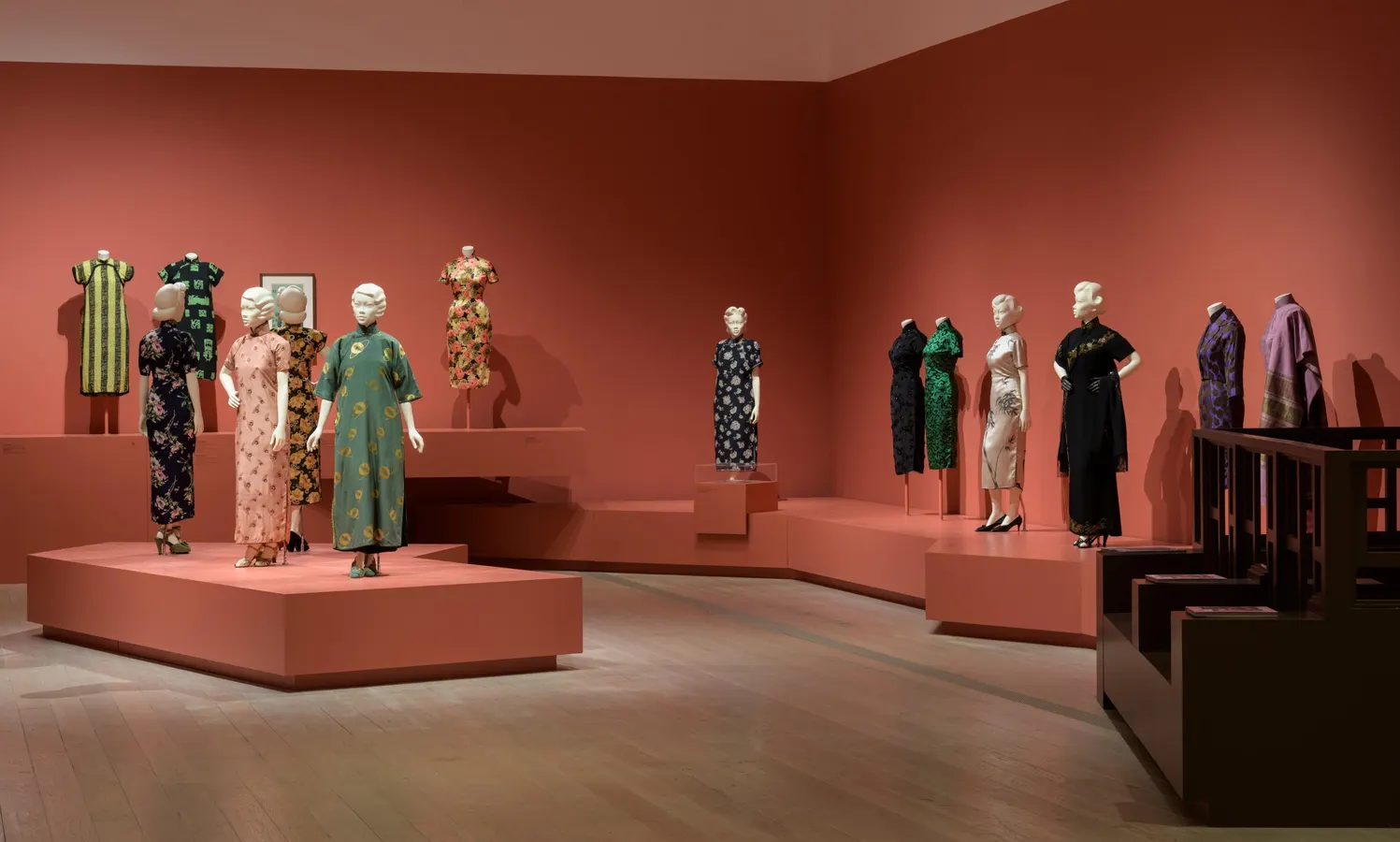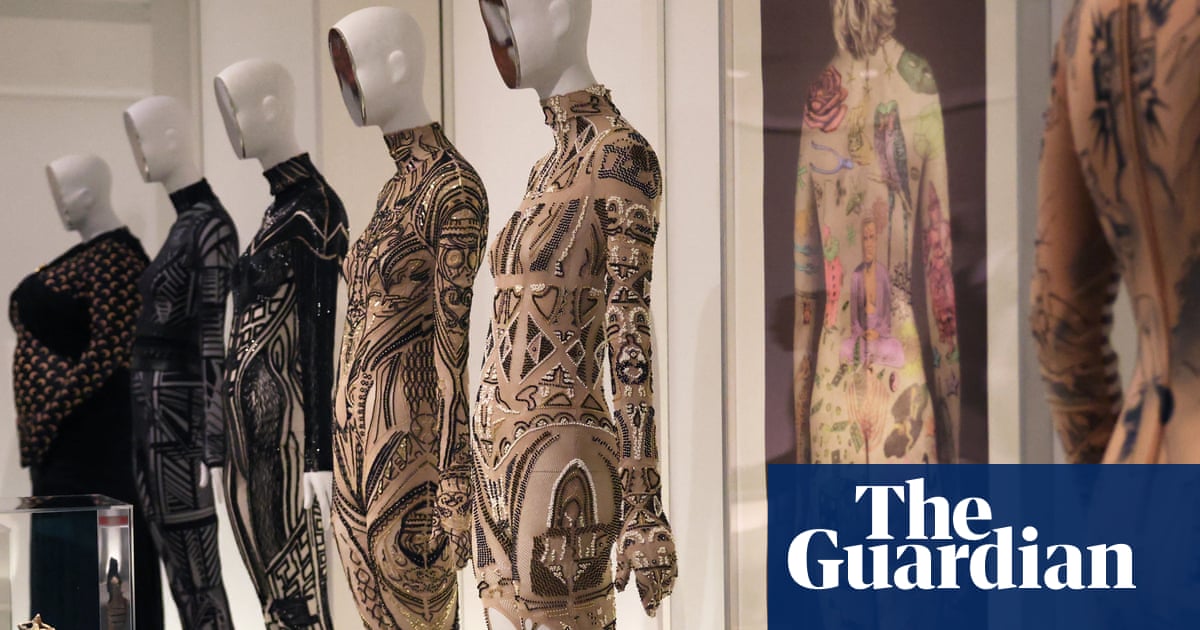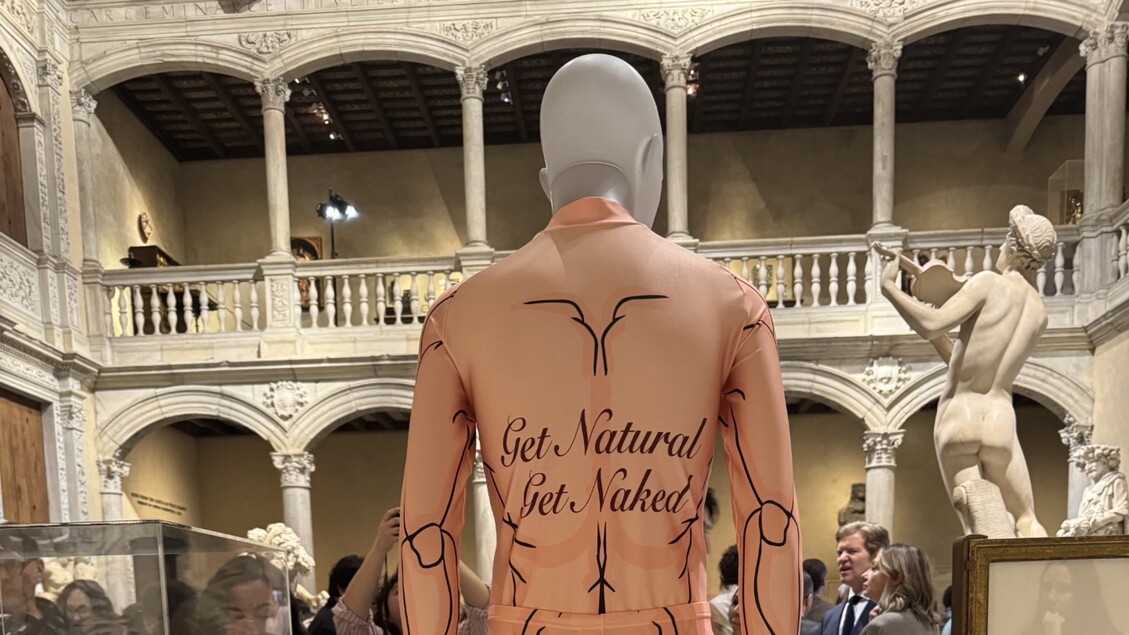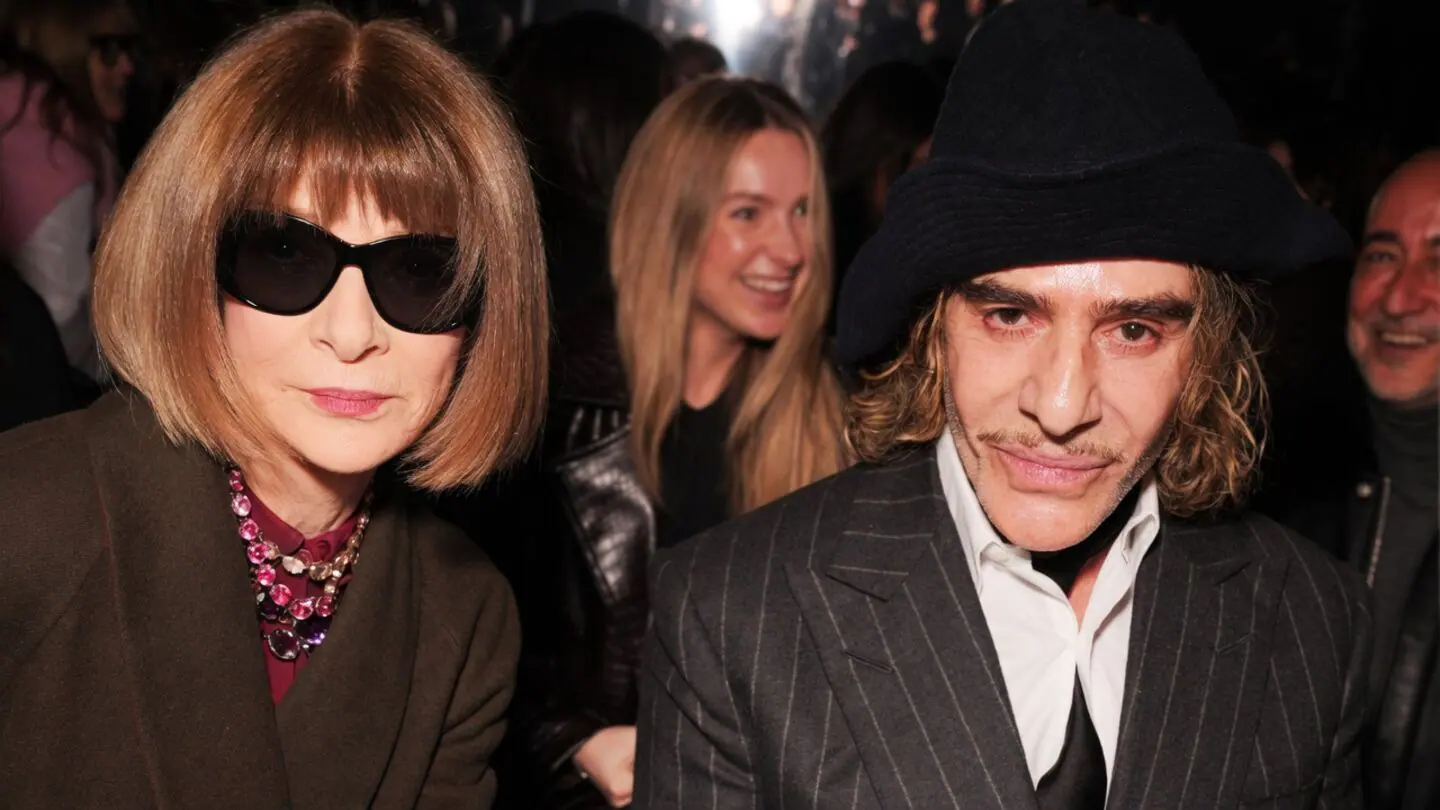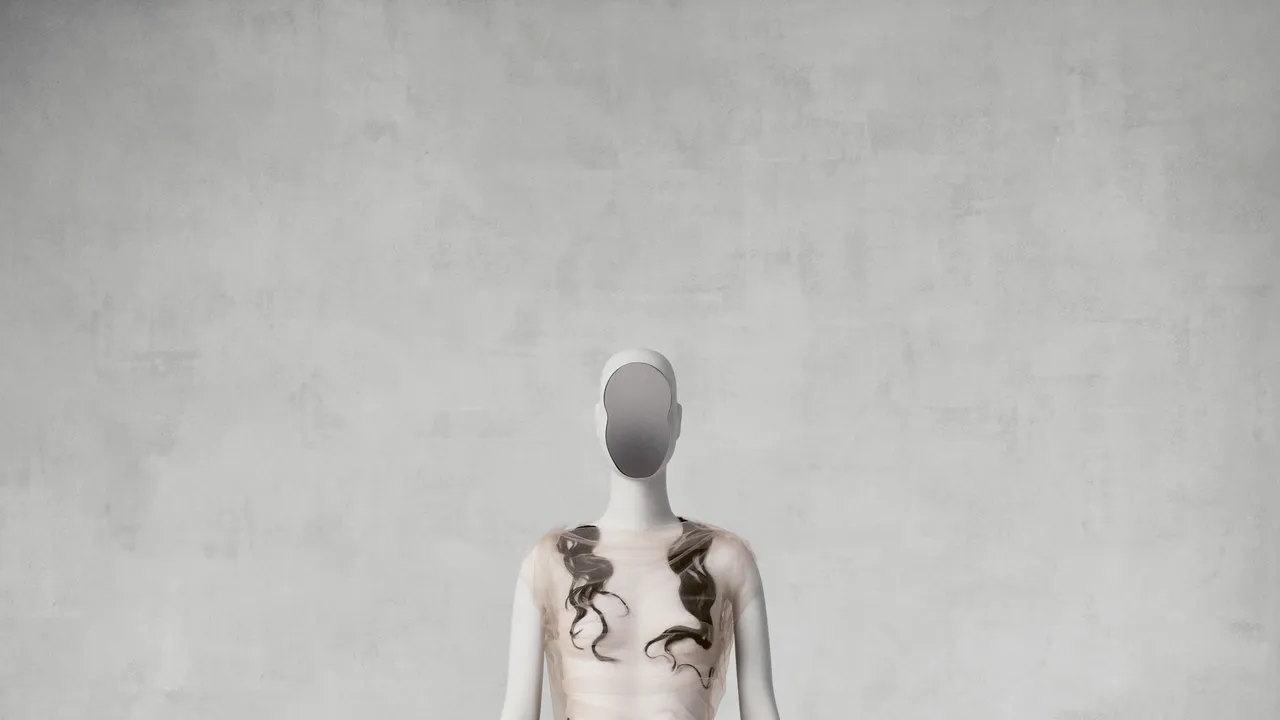
The title of “Costume Art,” a sprawling, stuffed-to-the-seams exhibition at the Metropolitan Museum of Art (running now through January, 2027), offers little clue as to what lies inside, other than, of course, clothing and art—or is it clothing that is art? There is no snappy subtitle to explain the show to the masses, as with previous exhibitions at the Costume Institute, such as “Heavenly Bodies: Fashion and the Catholic Imagination” and “PUNK: Chaos to Couture.” Nor is there a marquee name to lure in the crowds, as with “Alexander McQueen: Savage Beauty” and “Charles James: Beyond Fashion.” This lack of bombast is actually a power move. Those past shows, glorious as they were to behold, sound, in retrospect, too eager to entice. “Costume Art,” by contrast, is an exhibition whose creators are confident that it will be seen, if not because of what it contains then simply because of where it is. The show marks the début of the institute’s brand-new Condé M. Nast Galleries, a nearly twelve-thousand-square-foot, five-room space situated just off the Met’s central Great Hall—a prime slice of real estate formerly inhabited by a gargantuan gift shop.The galleries (which are named for the founder of this magazine’s parent company) took three years to complete, but they represent more than eight decades of jockeying for legitimacy within the larger institution. The Costume Institute’s main dedicated galleries previously languished in the basement, and the department is responsible for raising most of its own budget each year, a task accomplished in large part by its annual fund-raiser, the starry Met Gala. Under the leadership of the curator Andrew Bolton—and with the patronage of Anna Wintour, the global editorial director of Vogue, who has used her influence to expand the department’s power—the institute has become a major force within the museum and a recognizable brand outside it. Of the ten most visited exhibitions in the Met’s history, five were put on by the Costume Institute. In 2018, “Heavenly Bodies” became the most attended Met show of all time. Now, as Bolton writes in the catalogue for “Costume Art,” the new galleries “situate fashion within the spatial and symbolic epicenter of the Museum.”So why does “Costume Art,” ostensibly a victory lap, feel so defensive? The show may as well be called “Costume Is Art,” insomuch as it argues insistently that fashion, long derided as frivolous and decorative, can hold its own against any other art form—and, moreover, that the entire history of art can and should be viewed through the lens of clothing. Bolton makes this case by focussing on what he calls “the dressed body,” which he identifies as a central theme in every collection at the Met. Throughout the building, after all, you’ll find bodies “draped, wrapped, tailored, armored, incised, painted, ornamented, and otherwise fashioned,” Bolton writes. (Even when a body is naked, he notes, it is still cloaked in “physical and cultural ideals.”) As evidence of this ubiquity, he has paired each of the roughly two hundred garments in the show with a thematically resonant work of art from another Met department. The fashion exhibition doubles as a museum tour in miniature.It begins, cleverly, with a section called “Naked and Nude Body.” In an act of pure showmanship, Bolton has placed mannequins clothed in fleshlike skintight garments in a tall glass vitrine visible to museumgoers heading toward the medieval wing—a seductive preview that may help lure them away from Arms and Armor. Bolton also establishes a format that continues through much of the exhibition: a line of mannequins standing high above their paired art works, signifying, in unsubtle terms, that, here, fashion is meant to dominate the discourse. An arresting sheer dress by the young Turkish British designer Dilara Fındıkoğlu—which uses snaking tendrils of synthetic hair to cover the wearer’s genitals, à la Botticelli’s Venus—towers over an eighteenth-century bronze Venus. A Pierre Cardin ensemble from 1967, featuring a dress with holes cut out to expose the breasts, looms atop a Flemish bust of Minerva preparing for battle in breast-baring armor. Bolton calls this technique of physically elevating the garments “pedestalizing.” Ironically, though, the gesture has the effect of undermining the clothes: the art works sit comfortably just below eye level, whereas the visitor has to crane her neck to take in the fashion designs above.A Thom Browne dress features a skeleton made of tiny beads.Photograph by Paul Westlake / Courtesy Metropolitan Museum of ArtSome of the pairings can be quite on the nose. In the “Classical Body” section, a golden Issey Miyake breastplate and bodice, molded to the curvature of the chest, is paired with a golden Etruscan cuirass. A row of Grecian-inspired draped gowns is paired with a row of Grecian urns featuring berobed ancients. These couplings are so literal that they seem to undercut Bolton’s thesis, suggesting that fashion raids art history rather than illuminating it anew. The following section, “Abstract Body,” does a more persuasive job highlighting fashion’s innovations, showing an array of corsets, panniers, and hoop skirts that designers used to manipulate the body into unnatural forms. Looking at a nineteenth-century corset that cinched the wearer’s waist into the circumference of a paper-towel roll, I felt, for the first time during the show, conscious of being in my own body (which squirmed at the thought of such sartorial constraints). The collection of elaborately engineered bustles and crinolines certainly advances the idea that clothing, even at its most punishing, can be a form of living sculpture. I felt a similar jolt in the “Reclaimed Body” section, which focusses on more avant-garde modifications, such as Rei Kawakubo’s bulbous creations with Comme des Garçons, three of which are paired with abstract sculptures that echo the garments’ austere curves. Each of the sculptures—by Max Weber, Henry Moore, and Jean Arp—was created prior to Kawakubo’s fashion experiments, but one gets a disorienting sense that, rather than Kawakubo reaching backward for touchstones, the sculptors were somehow anticipating her singular inventions.Most of the mannequins have mirrored faces, a flourish that, according to the catalogue, is meant to create “a moment of communal visibility,” though the heads are tilted at awkward angles that discourage selfie snapping. Eighteen unique mannequins were created for the show, modelled off real and imagined people whose bodies don’t conform to conventional fashion-world ideals. The “Corpulent Body” section features a mannequin, cast from the body of the French model and singer Yseult, looking formidable in a scaled-up Dior “Bar” suit. “Disabled Body” includes a mannequin cast from the activist Sinéad Burke, who has dwarfism, wearing a Burberry trenchcoat that’s been cut short; it’s accessorized, winningly, with a hat made from one of the coat’s lopped-off sleeves. (Why, one wonders, couldn’t there have been such mannequins in “Classical Body”? Were no designers inspired by Greek statuary with belly rolls?) “Pregnant Body” displays a Gucci dress, by Alessandro Michele, with a pair of beaded fallopian tubes across the belly—a design that is meant as a nod to women’s rights but risks reducing the wearer to a walking reproductive system. I preferred a long gown made by the Greek designer Dimitra Petsa using her signature “wet look” technique, so that its mesh fabric clings like seaweed to the mannequin’s pregnant form.A Vetements ensemble from the show’s “Aging Body” section.Photograph by Paul Westlake / Courtesy Metropolitan Museum of ArtThe back half of the exhibit is smaller and more intimate, and it finally brings the clothing down off the pedestals, to ground level. “Costume Art” has no clear foot-traffic pattern. I learned only later that I was supposed to end at “Epidermal Body” (showcasing garments that mimic the look of skin), rather than at “Mortal Body,” which seemed like a more natural conclusion. Regardless, the latter portion of the show was by far the more affecting, not only because of its visceral themes—including tattoos, blood, and aging—but also because it offered a chance to admire exquisite garments up close. There’s a crimson Yohji Yamamoto dress made of silk crêpe de Chine, painstakingly manipulated into folds; a Yuima Nakazato piece that looks like bloody entrails dripping down the body; a Daniel Roseberry creation for Schiaparelli embellished with buttons in the style of Victorian mourning jewelry; and a Thom Browne dress featuring a pearly skeleton, made of seed-size beads, emerging out of the garment’s black surface like a spectre.Such pieces are undeniably art works—precious, impractical, one of a kind. The most attention-grabbing look in the show, though, might be one in “Aging Body”: a ready-to-wear Vetements ensemble featuring an absurdly oversized gray hoodie emblazoned with the message “I’M RETIRED (This is as dressed up as I get).” I watched as visitor after visitor snapped a photo of the sweatshirt, and I overheard more than one mumble about wanting to buy one. (They can do so, online, for seven hundred and eighty dollars.) This is presumably what “Costume Art” is fighting against—the idea that fashion exhibitions are, in essence, a vaunted form of window-shopping. And yet, as I watched people smile and laugh upon spotting the hoodie, I wondered what was so wrong with that idea. People love to fantasize about clothes, to imagine what their own bodies might feel like encased in finery or outfitted in some outré style. This, more than anything, is the impulse that has made the Costume Institute a hit. Is fashion art? Of course it is. But the clothes—the clothes are the thing. ♦
The Met’s “Costume Art” Makes a Case for Fashion
From its new galleries off the museum’s Great Hall, the Costume Institute seeks to put clothing at the center of art history.
1,563 words~7 min read