Modern web development often pushes teams toward separation. A product may have a separate backend, a separate frontend, a separate API layer, separate routing, separate deployment pipelines, and sometimes even separate teams responsible for different parts of the system.
That kind of architecture can be the right decision for large platforms, mobile-first products, public APIs, distributed systems, or products that need several independent clients. But not every web application needs that level of separation from the beginning.
For many SaaS platforms, CRM systems, booking platforms, dashboards, client portals, admin panels, internal tools, and MVPs, a fully separated frontend and backend can create more complexity than the product actually needs. More layers often mean more decisions, more coordination, more duplicated logic, and more places where things can break.
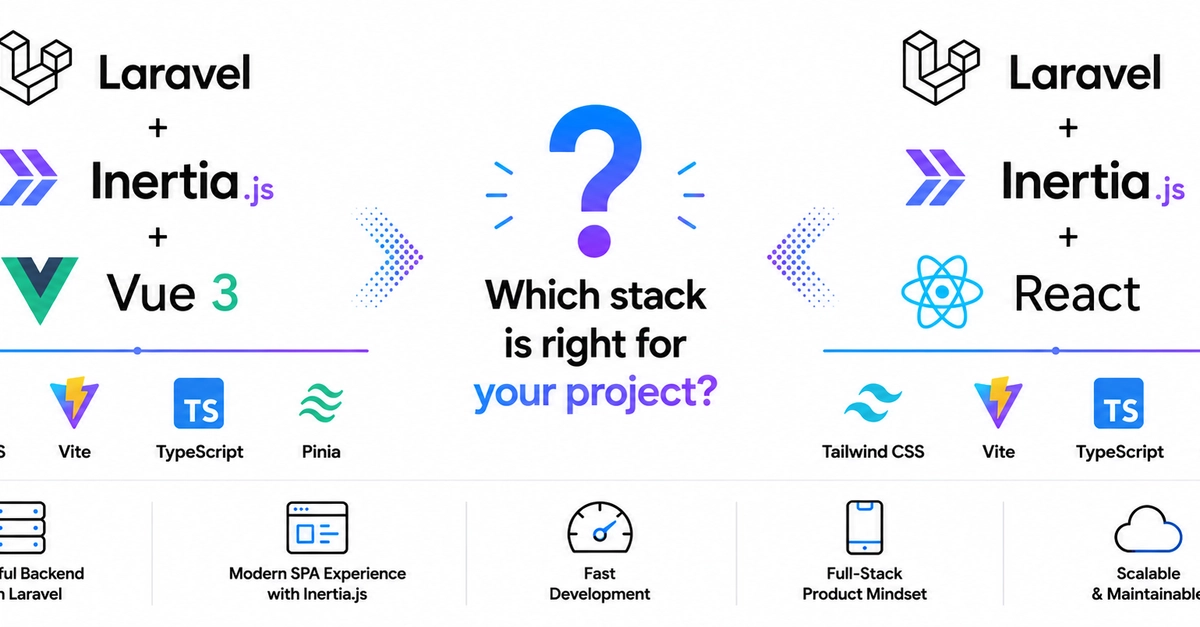
This is where Laravel + Inertia.js becomes a very practical product engineering option.
Inertia allows teams to build modern, SPA-like interfaces while keeping Laravel at the center of the application. Laravel still owns routing, controllers, validation, authentication, authorization, database logic, business rules, permissions, and server-side decisions. Vue or React powers the interface layer that users interact with every day.