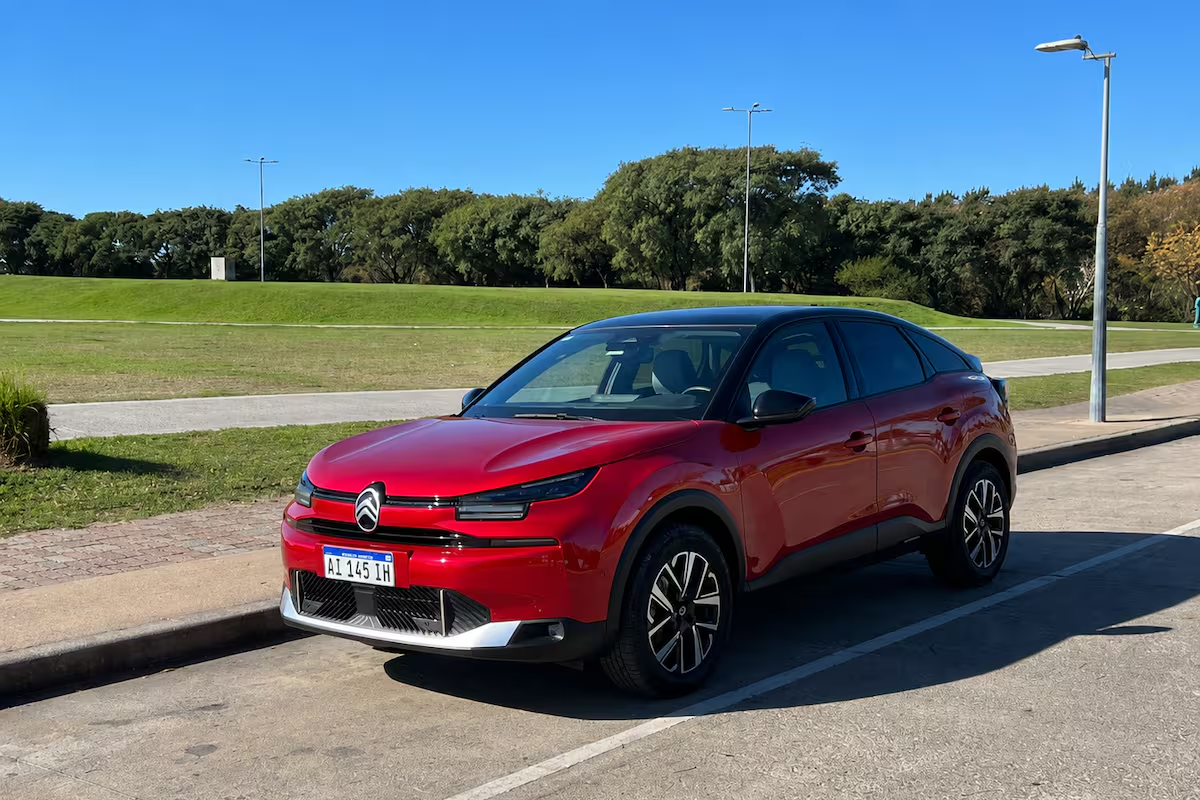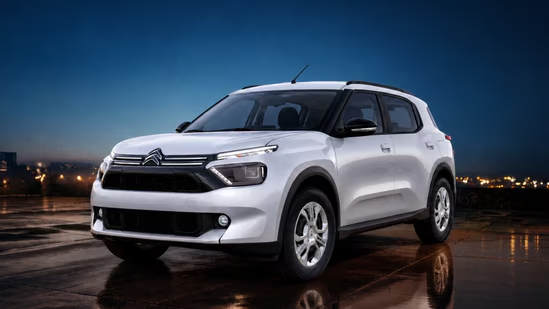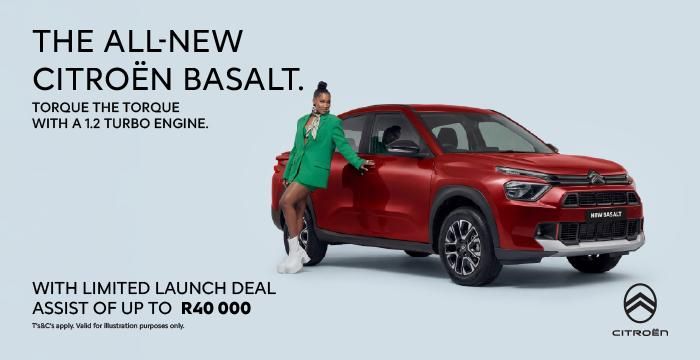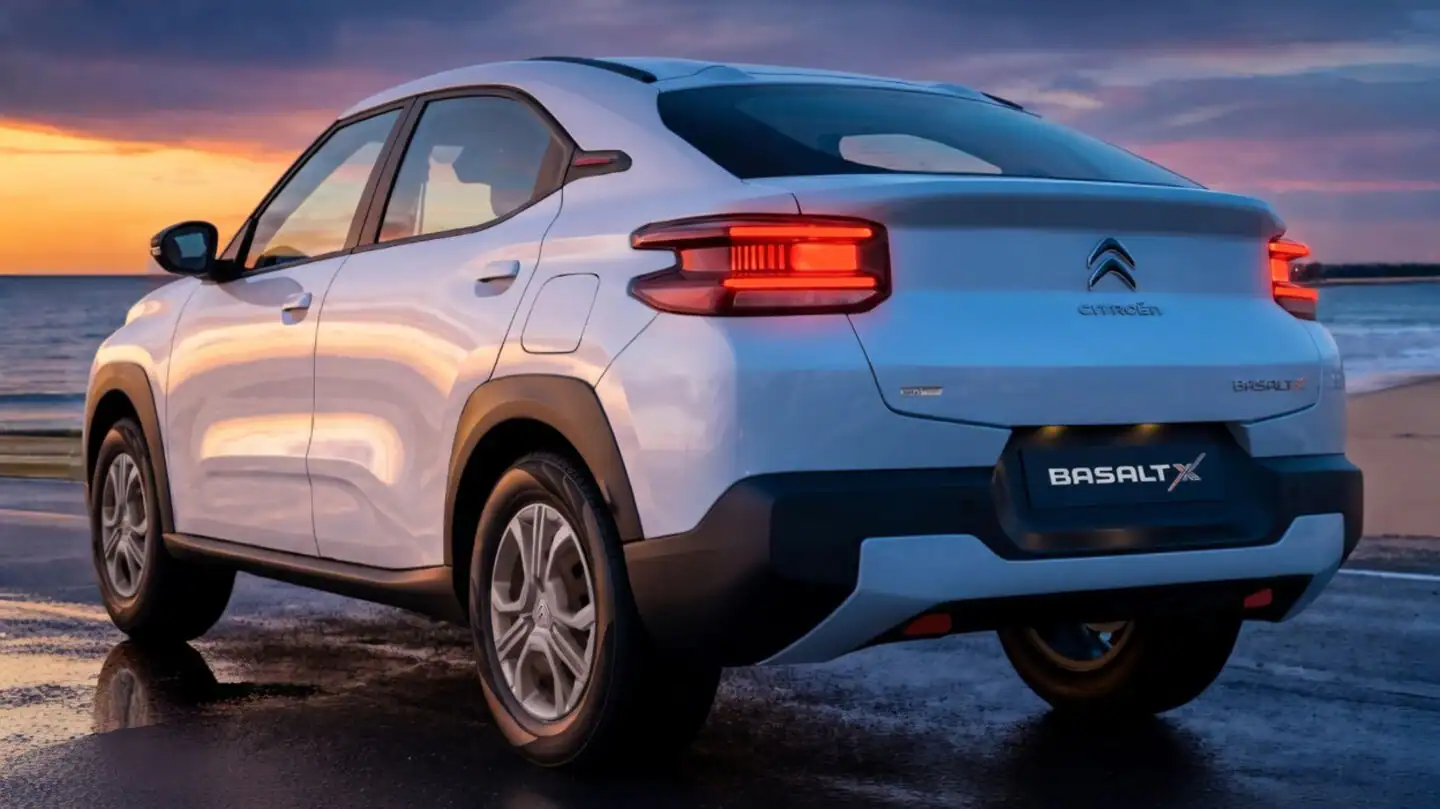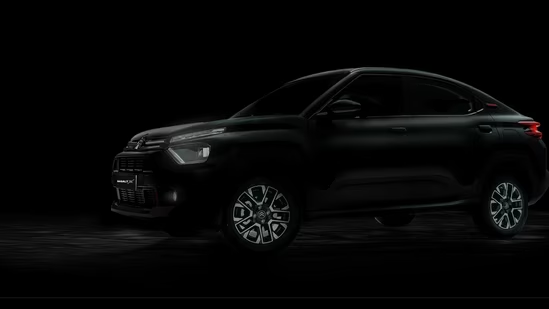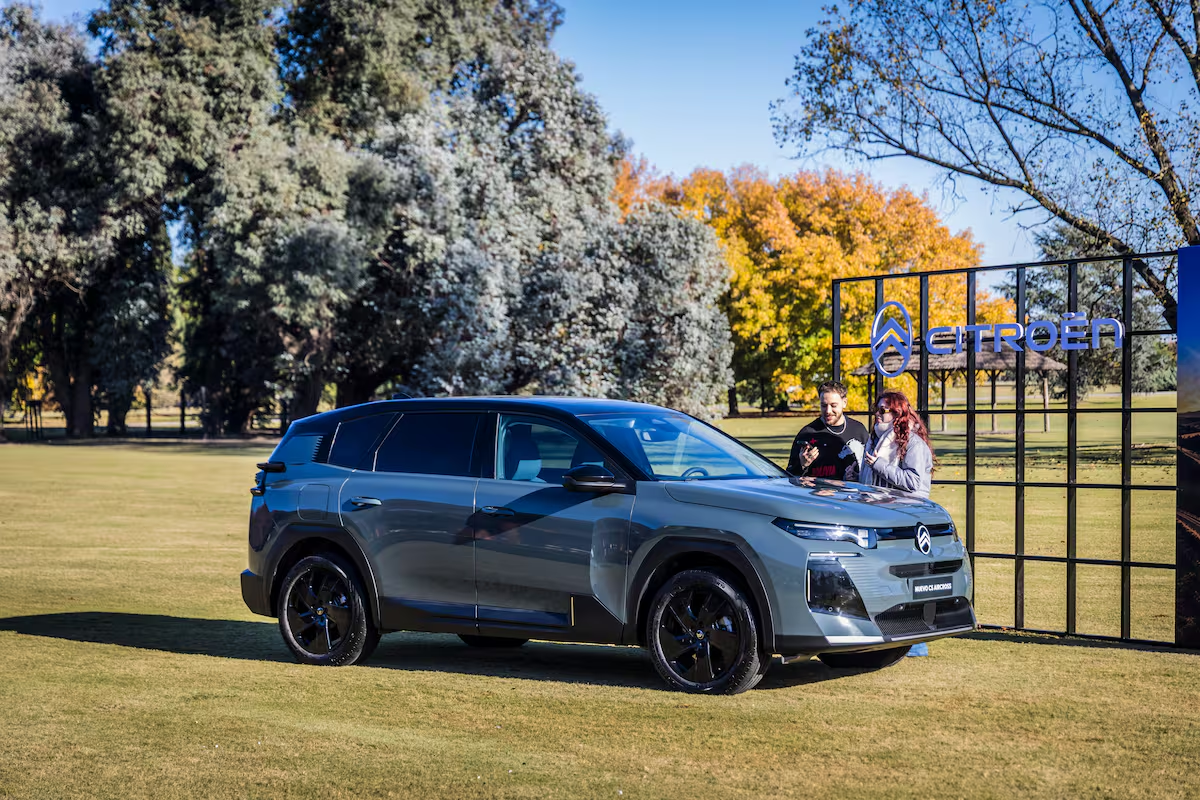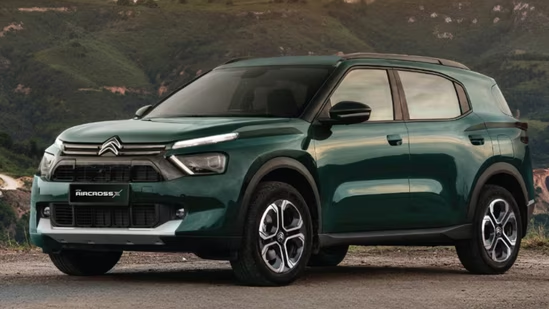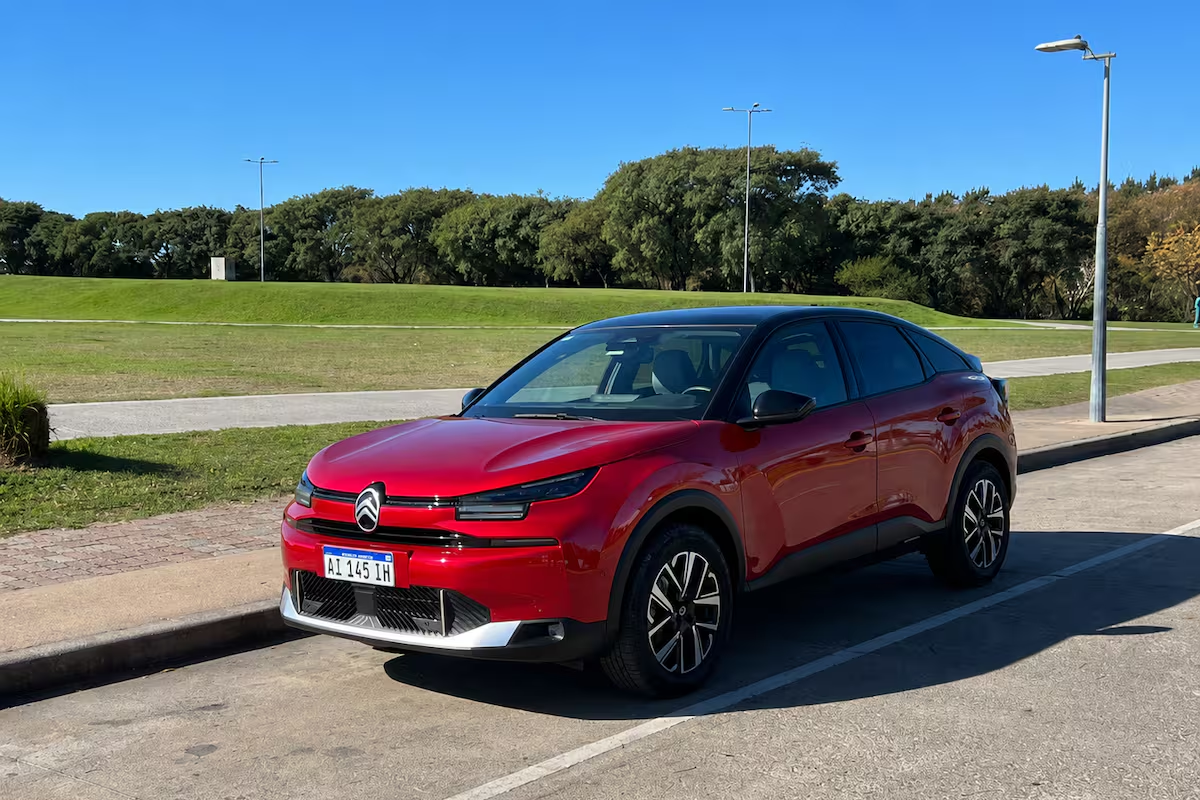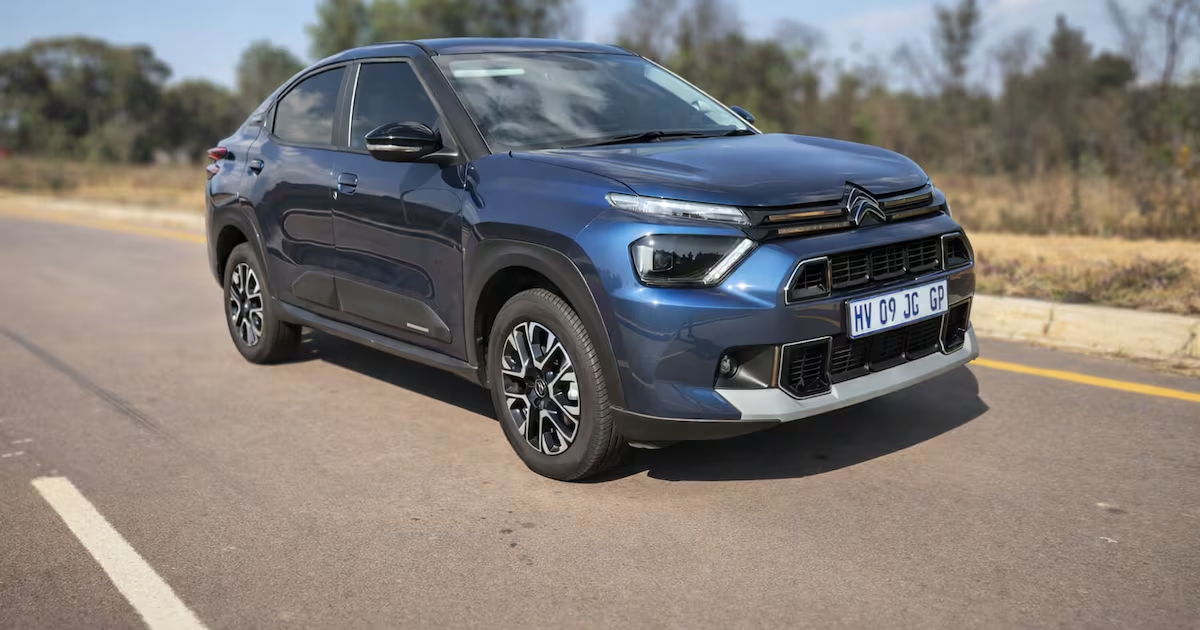
The new Citroëns available in South Africa are different beasts to the ones local buyers became used to in previous years.Along with their Gallic charm and theatrical styling, Europe-built cars from the French brand earned a reputation for premium finishes and correspondingly premium prices. Unfortunately the latter made Citroën a niche player and it eventually pulled out of the country in 2016 due to disappointing sales.The brand was relaunched here in 2019 with a revitalised three-model lineup consisting of the C3 hatchback, C3 Aircross and C5 Aircross, but again to a relatively disinterested audience. In 2024 Citroën, now under Stellantis ownership, pivoted to affordable models sourced from India instead of Europe, and sales started taking off.Launched in March, the Basalt SUV-coupé is the latest product of that strategy. It competes in the fiercely contested sub-R400,000 crossover segment and is offered in two guises: the entry-level 1.2T Plus at R354,900 and the better-equipped 1.2T Max at R369,900, putting it up against a growing field of India- and China-built rivals.There are highs and lows to Citroën’s volume-chasing shift. On the plus side, the eye-catching Basalt has the brand’s trademark avant-garde design, highlighted by a coupe-like roofline, quirky detailing and a heavily stylized front end with Citroën’s signature split-headlight LED design.It is styling that strays from the standard B-segment crossover aesthetic and retains the French brand’s individuality.Beneath the playful wrapping, however, lies a car that has clearly been engineered to a price, and it feels that way in places.In cabin quality, the Basalt displays its budget-oriented focus with hard interior plastics instead of richer-feeling soft-touch surfaces. The cloth-covered seats are cushy but I was unable to find a comfortable driving position as the steering wheel adjusts only for height, not reach. The driver’s seat doesn’t adjust low enough and I felt like I was sitting too high.There are splashes of colour to liven up the cabin. (DENIS DROPPA) What it lacks in high-end ambience, the Basalt cabin makes up for in colourful touches that will appeal to its target young buyers, with red stripes livening up the dashboard and the seats.Practicality is also a strong point with a roomy rear seat that will comfortably accommodate two to three adults. The large 470l boot includes a full-size spare wheel and takes a good stack of luggage, expanding to a capacious load area that swallowed a mountain bike when the single-piece rear backrest was folded down.The cabin follows the modern template of digitisation with tablet-like screens for the infotainment and instrument panel, and bundled with user-friendly phone connection via wireless Android Auto and Apple CarPlay.Instead of being bundled into the infotainment screen, there are separate buttons for the climate control system to help reduce driving distraction, and there are front and rear USB charging points. The back seat gets its own adjustable air vents. The car automatically unlocks and locks when you approach and walk away, so the smart key can stay in your pocket.In all, it’s an impressively high level of spec for the price.Powering both Basalt models is a pleasantly eager three-cylinder 1.2l petrol turbo engine, driving the front wheels via a six-speed automatic transmission. The 1.2 turbo engine is reasonably perky. (DENIS DROPPA) The little Citroën scoots around suburbia with enough enthusiasm to make it feel livelier than its modest outputs suggest. There’s enough shove off the line, healthy mid-range torque and it comfortably maintains the national speed limit on the open road.Gearshifts are sufficiently smooth and quick enough that I didn’t feel the need to use the transmission’s manual override. The engine has a typical three-cylinder thrum and the car’s overall refinement is segment appropriate.The tester averaged 7.8l /100km, a lot higher than the factory-claimed 6.3, though much of the driving was in stop-start urban conditions.The Basalt’s ride is choppy in the typical small-car way without being too uncomfortable. The car tackles cratered city streets well enough and it feels quite solid, without any rattles or squeaks. Though slightly top-heavier than a hatchback, this crossover delivers neat and predictable handling. It fulfills its role well as an agile city car, and its small size, with the help of a parking camera, make it a cinch to park.VerdictCitroen’s downgrade into the value-oriented ranks lowered the brand’s market positioning but the strategy is paying off in terms of market share. For first-time car buyers and bargain seekers, the India-built Basalt is a likeable package for the price, and delivers good family practicality and reasonably plucky performance while retaining the marque’s styling flair.Citroen Basalt vs key rivalsChery Tiggo Cross 1.5T Million Edition, 108kW/210Nm - R359,900 4,351mm;Citroen Basalt 1.2T Max auto, 81kW/205Nm - R369,900 4,352mm;Suzuki Fronx 1.5 GLX auto, 77kW/138Nm - R372,900 3,995mm;Haval Jolion 1.5T City Plus,105kW/210Nm - R373,950 4,472mm;Toyota Starlet Cross 1.5 XR auto, 77kW/138Nm - R383,800 3,995mm;Tata Curvv 1.2T Creative, 88kW/170Nm - R419,900 4,308mm;Kia Sonet 1.0T EX 88kW/172Nm - R436,995 4,110mm;Suzuki Grand Vitara 1.5 GLX auto, 77kW/138Nm - R453,900 4,345mm;VW Taigo 1.0 TSI Life, 85kW/200Nm - R514,500 4,266mm.Business Day
REVIEW | Citroën Basalt delivers more than its price tag suggests
India-built crossover swaps premium ambitions for value, but retains enough Citroën character
826 words~4 min read