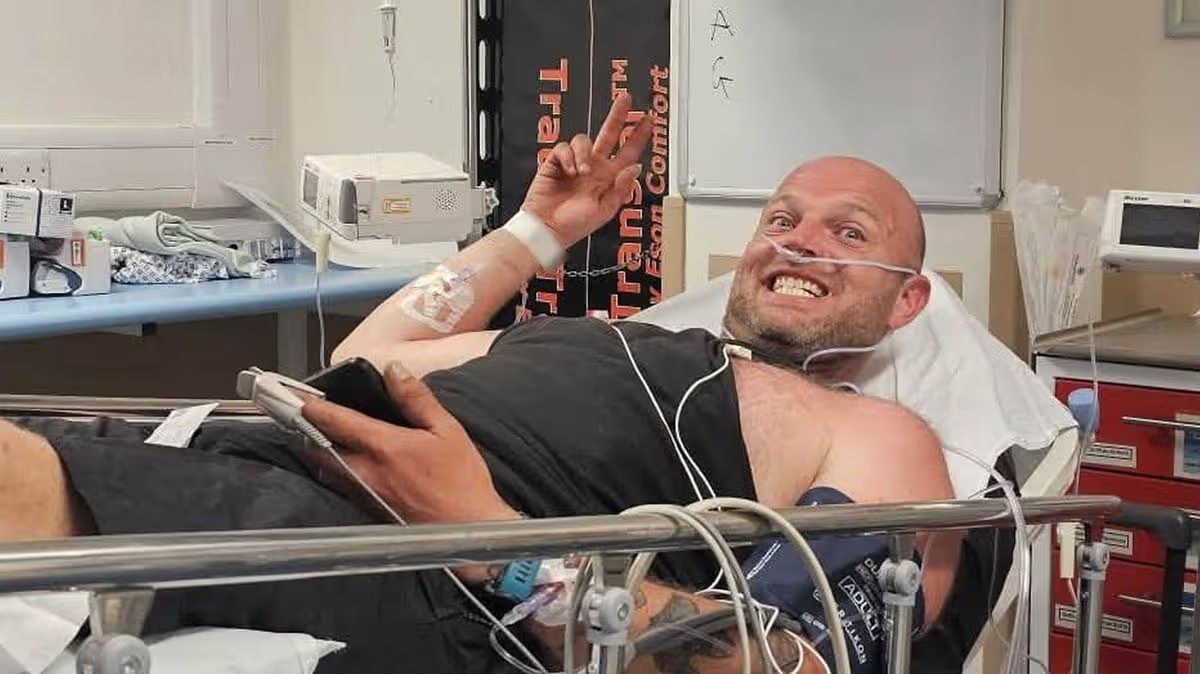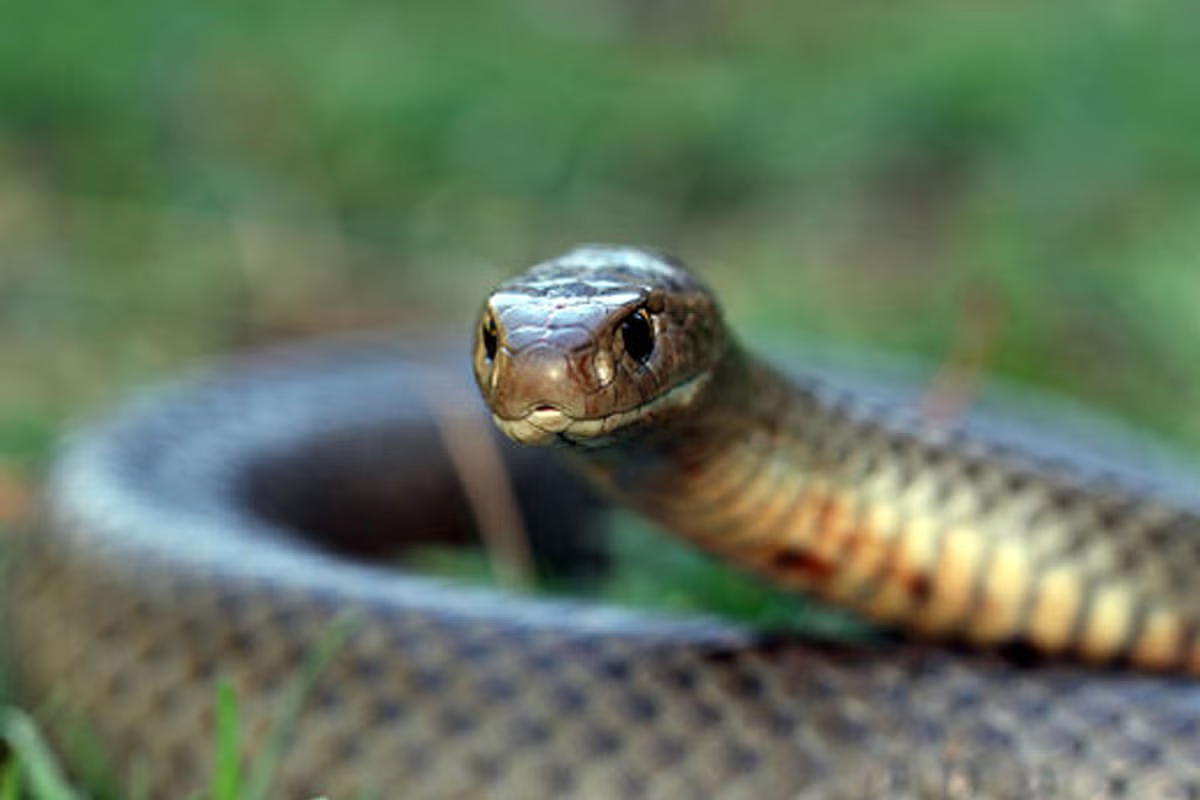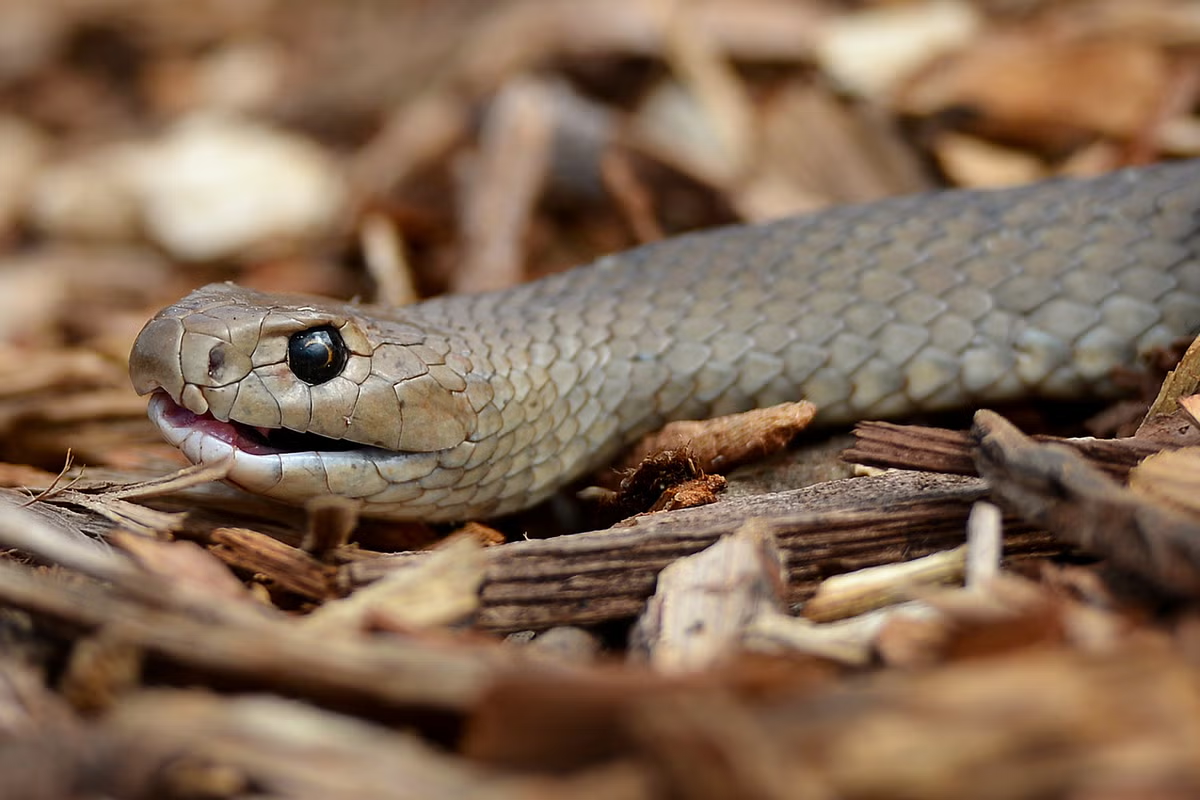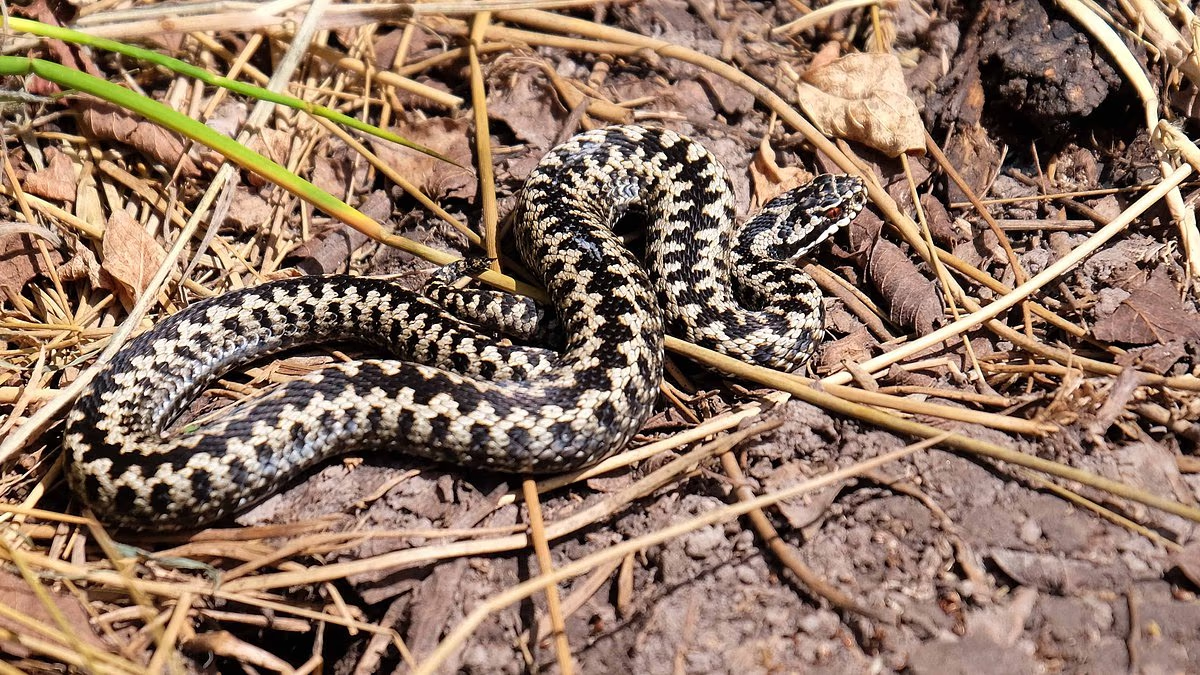
A dad's relaxing day of paddleboarding turned into a nightmare when he was bitten by the UK's only venomous snake - and left unable to walk with an 'elephant leg'.Zak Brown was paddleboarding with a friend at Cavenham Heath National Nature Reserve in Suffolk last month when he decided to park up for a break.The 39-year-old stepped onto the verge when he inadvertently trampled on an adder lurking in the grass.Within seconds of standing on the bank, the business owner felt a sharp stabbing sensation on his left ankle and looked down to see a snake hanging from his heel.The dad-of-two soon noticed his foot had begun to swell and decided to make the two-hour paddle back to the car to seek medical treatment.Mr Brown says the pain was so 'unbearable' he was left unable to walk, and the snake's fast-acting venom left his leg swollen and looking like an 'elephant'.After heading to hospital, he was given an injection of anti-venom and remained overnight for observation.Doctors remarked that the dad was lucky the adder was just a juvenile, as the effects of venom from an adult snake may have been more serious. The common European adder, also known as the common European viper, is Britain’s only venomous snake (stock image)A dad's relaxing day of paddleboarding turned into a nightmare when he was bitten by the UK's only venomous snake and ended up in hospital. Mr Brown says the pain was so 'unbearable' he was left unable to walk, and the snake's fast-acting venom left his leg swollen and looking like an 'elephant'The common European adder, also known as the common European viper, is Britain’s only venomous snake.It is found across England, Scotland and Wales, mainly in heathlands, commons and woodland, and reaches lengths of up to one metre.An adder bite is very painful and can make you quite ill, but it is rarely fatal to healthy adults. The last lethal bite in the UK occurred in June 1975, when a five-year-old boy was bitten in Perthshire, Scotland.Mr Brown, who lives in St Ives, Cambridgeshire, admits he now constantly checks the grass around him for snakes after ending up in hospital.He said: ‘Me and my mate took the Friday off because it was going to be a 30-degree day so we planned a day out.‘It had been ages since we'd been out on the river paddleboarding and kayaking. We set off and were cruising down the river nicely when we decided to stop for a little break.‘As I climbed off my paddleboard, I walked up the grass verge and within seconds of standing there I just felt this bang on the back of my left ankle.‘I jumped up because of the pain and saw this snake hanging from my ankle. It was a juvenile snake around half a metre. I was lucky it wasn't a full adult adder.’The business owner felt a sharp stabbing sensation on his left ankle and looked down to see a snake hanging from his heel. he pain was 'instant', he said. Within half an hour of the bite, his ankle had started to swell up Mr Brown, who lives in St Ives, Cambridgeshire, admits he now constantly checks the grass around him for snakes after ending up in hospital Adders: The UK's only venomous snake The adder is the only venomous snake native to the UK. Although its bite can be painful, it is rarely life-threatening to healthy adults.Most adders have a dark zigzag stripe running down their backs. Males are usually grey with a black zigzag, while females are often brown with a darker brown zigzag.Adders are commonly found on heathland, woodland edges, sand dunes, moorland, and rough grassland where they can bask in the sun to warm up.Adders usually move away if disturbed. They are most likely to bite only if they feel threatened or are accidentally stepped on or handled.Unlike many reptiles, adders do not lay eggs. Females give birth to between about 3 and 20 live young, usually in late summer.Adders are protected under UK law, making it illegal to intentionally kill or injure them. Their populations have declined in some areas because of habitat loss, disturbance, and persecution. He described the pain as ‘instant’ and ‘burning’.The pair decided to make the two-hour paddle back to the car to have Mr Brown’s ankle examined. But within half an hour, it had started to swell up around his ankle.‘The pain was spreading up my leg,’ he said. ‘I thought I might have to phone the air ambulance.‘I couldn't even stand on my leg - I just fell straight over. My whole foot and calf was swollen like an elephant. The pain was unbearable.’After arriving at Addenbrooke's Hospital in Cambridge, Mr Brown says his whole leg had swollen due to the snake venom.Doctors promptly injected him with an anti-venom treatment before he was discharged the following day.‘The doctors said if the snake was a full-grown adult, it could've been a different story and I was lucky in that sense,’ Mr Brown said.‘I couldn't get anything back on my foot for four or five days because of the swelling. Now I'm non-stop cautious of snakes, constantly looking around the grass checking because I don't want it to happen again.’ Zak Brown was paddleboarding with a friend at Cavenham Heath National Nature Reserve in Suffolk on last month when he decided to park up for a break and was bittenExperts have previously warned that adders in the UK could become extinct in 15-20 years.Nick Milton, who has written a book on adders, said there are only 260 sites with the snakes left in the UK.He told Radio 4’s Today Programme that because many habitats have fewer than ten adders, the risk that the snake could be wiped out in the next two decades is high.Mr Milton said one of the greatest threats to adders is pheasants, which are able to kill the reptiles.ARE HUMANS BORN WITH A FEAR OF SNAKES AND SPIDERS?Researchers at MPI CBS in Leipzig, Germany and the Uppsala University in Sweden conducted a study which found that even in infants, a stress reaction happens when they see a spider or snake. They found that this happens as young as six months-old, when infants are still very immobile and have not had much opportunity to learn that these animals can be dangerous.'When we showed pictures of a snake or a spider to the babies instead of a flower or a fish of the same size and color, they reacted with significantly bigger pupils,' says Stefanie Hoehl, lead investigator of the underlying study and neuroscientist at MPI CBS and the University of Vienna.'In constant light conditions this change in size of the pupils is an important signal for the activation of the noradrenergic system in the brain, which is responsible for stress reactions.'Accordingly, even the youngest babies seem to be stressed by these groups of animals.'The researchers concluded that the fear of snakes and spiders is of evolutionary origin, and similarly to primates or snakes, mechanisms in our brains allow us to identify objects and to react to them very quickly.
Dad left in 'unbearable pain' after adder bite in Suffolk
A dad's relaxing day of paddleboarding turned into a nightmare when he was bitten by the UK's only venomous snake - and left unable to walk with an 'elephant leg'.
1,186 words~5 min read