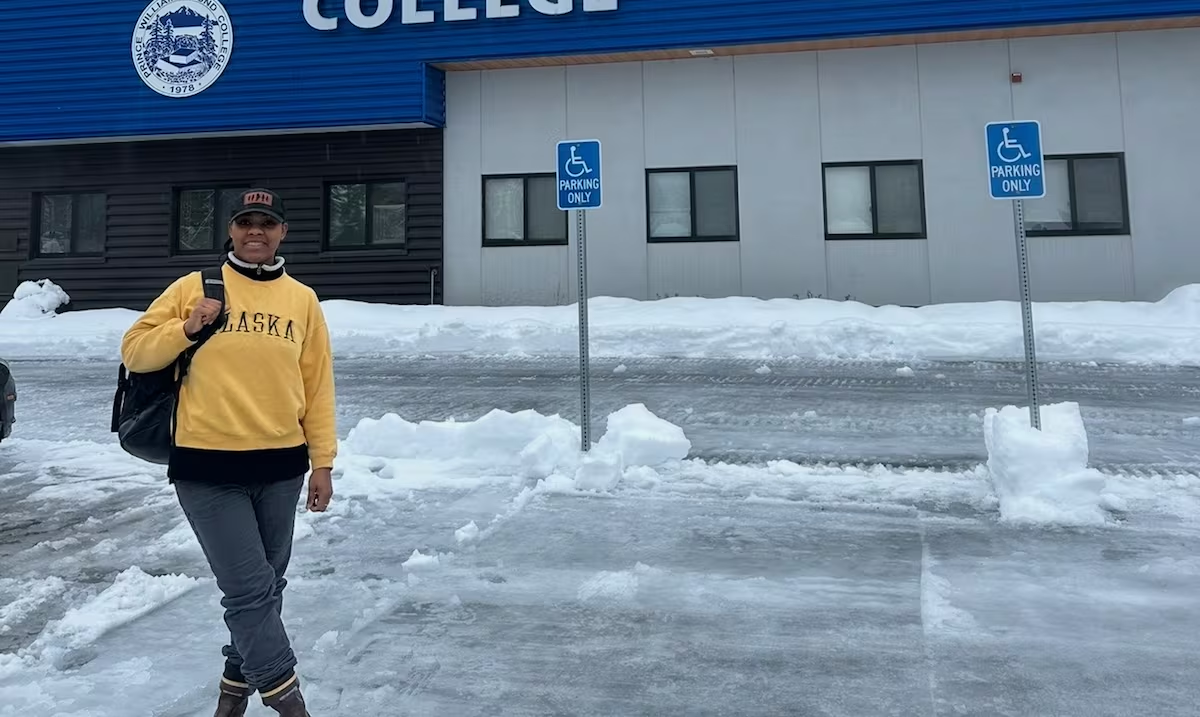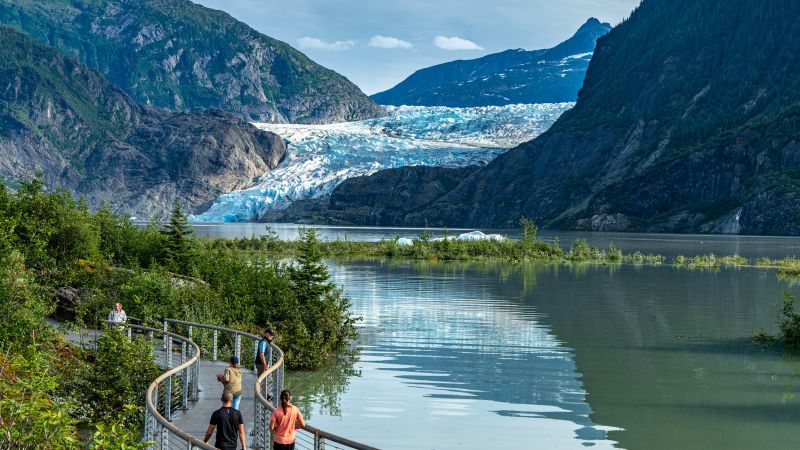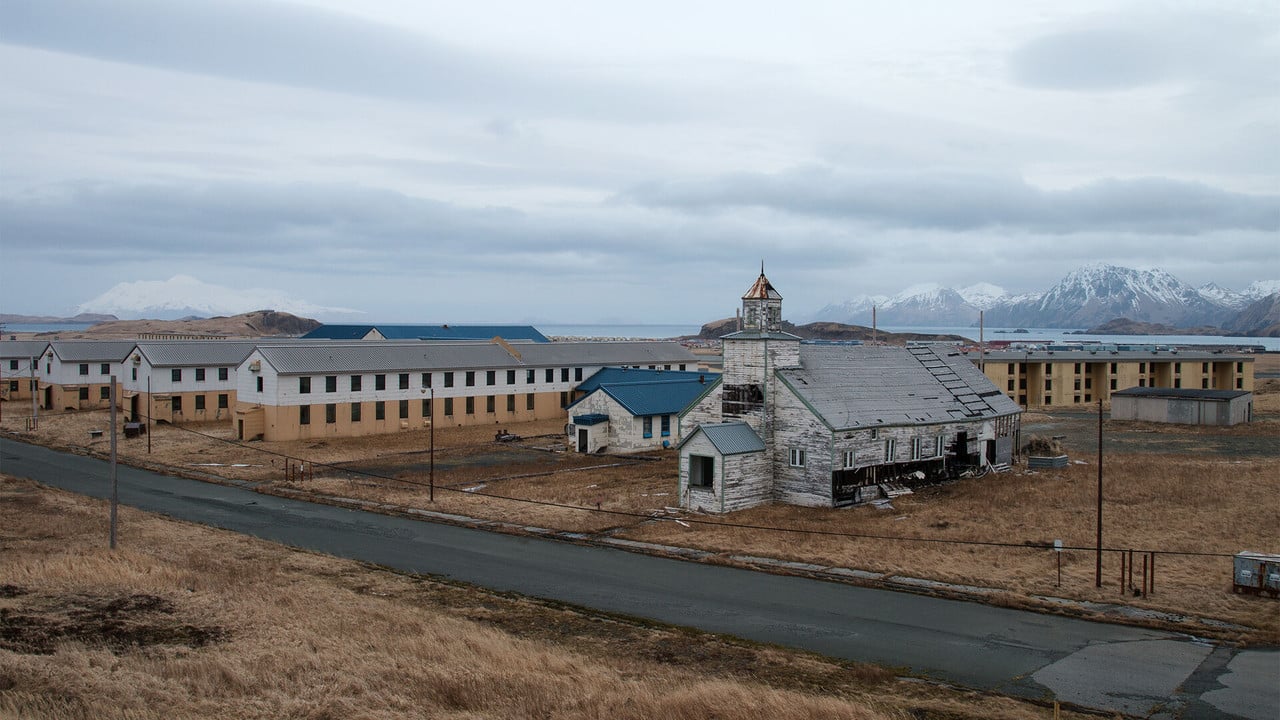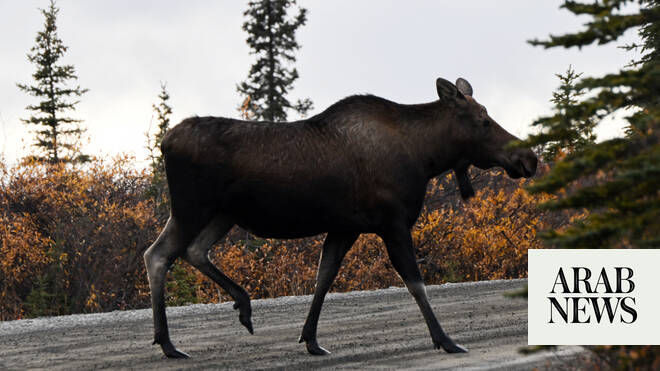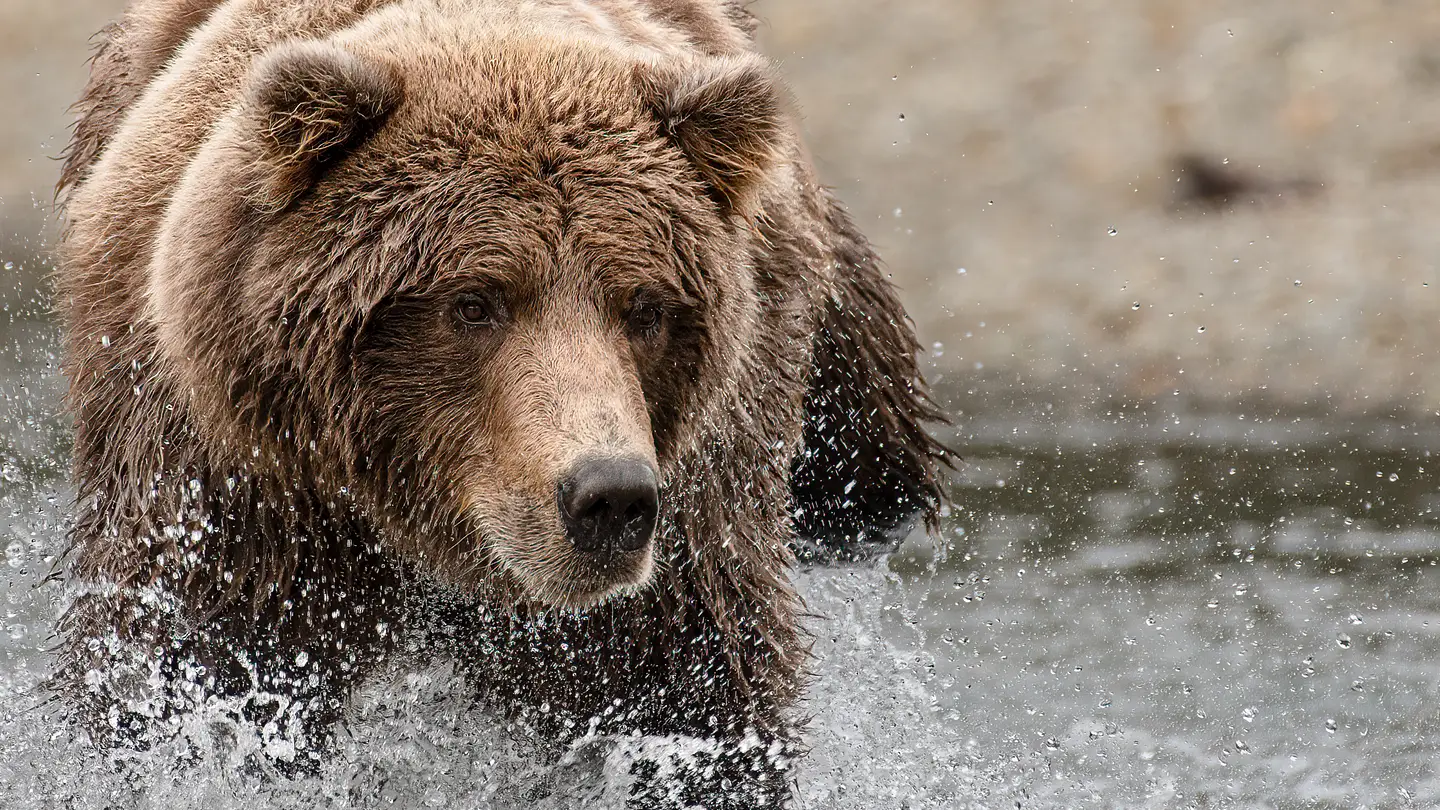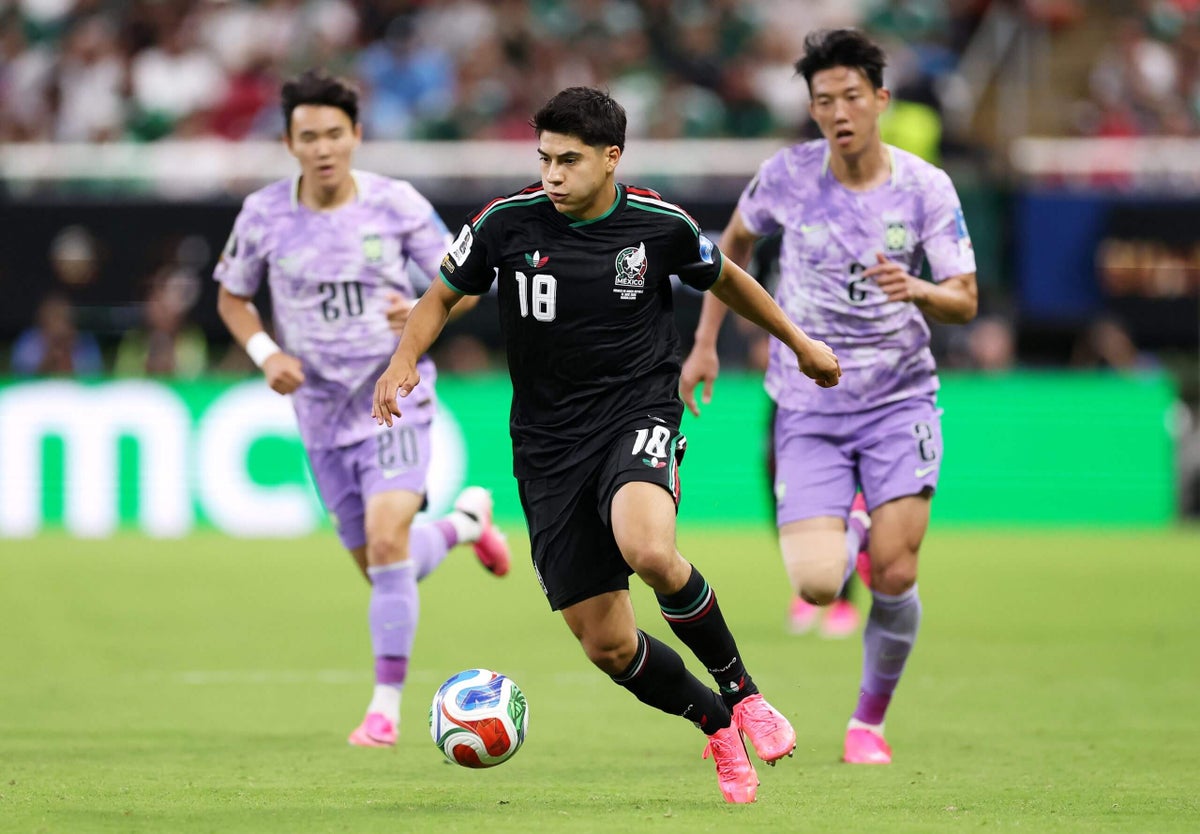
The taxi driver taking me to Kincaid Park asks whether I have bear mace. “Really?” I wonder inwardly, before he proceeds with solid advice, telling me not to run if I spot one because they’ll chase and probably maul me to death.As I start to imagine the headline: “Bear Eats Sports Reporter in Alaska”, the driver comes at me with more information: “Moose are a bigger problem because they are more grumpy. Do you own a gun licence?”The park, sitting just behind Anchorage’s Ted Stevens Airport, looks out at Fire Island and Cook Inlet, the bay which Captain James Cook misjudged as he searched unsuccessfully for Alaska’s Northwest Passage in 1778.Today, if you pack your bag properly and find your way past the animals that might tear you apart, you’ll discover Anchorage’s only civic football pitches, which everyone locally tells me are in pretty bad shape because of their exposure to the elements.Alaska is an outpost in both geographical and soccer terms (Simon Hughes/The Athletic)John Oliver, the state director for youth soccer in Alaska, has a photograph in his possession of the challenges posed by the weather in this part of the United States. During winter in 1993, he and his friends shovelled out snow so deep that on the touchline, the ice was higher than some of the players who kept bashing into it.Most of Alaska, you might forget, is closer to far eastern Russia than any other part of the country it belongs to and the nearest host city at the FIFA World Cup is actually in British Columbia, Canada — nearly 3,500km separates Anchorage from Vancouver, a three-hour flight away.Alaska feels like it is on the edge of everything, an unsullied land on the ragged margins of society, where vast silence reins (unless you are being chased by bear or moose). It possesses the freezing summits of North America’s highest mountain range, rivers that are big and fast, and mosquitoes that will eat you alive.“The wilderness has a grip on American imagination,” wrote the author Jon Krakauer. Yet it is for that reason Alaska does not have a grip on American sport: the state does not have a professional sports team of any kind nor, accordingly, a stadium that could host a 2026 World Cup match. Only a few sportspeople have made it out, forging successful careers elsewhere, unless you count ice hockey.There are exceptions though: an Alaskan is involved at the World Cup. Obed Vargas, who was born in Anchorage, is playing for Mexico. So far he has appeared as a 70th-minute substitute in their second group fixture, a 1-0 victory over South Korea, and he came on in the 63rd minute for their 3-0 win over Czech Republic. Mexico will play Ecuador in Mexico City in the round of 32 on Tuesday (2am on Wednesday in the UK).Earlier this year, Vargas moved from Major League Soccer’s Seattle Sounders to Atletico Madrid after an industrious performance against the La Liga giants at the FIFA Club World Cup last summer.“Diego Simeone (Atletico’s famously demanding Argentine coach) doesn’t strike me as an easy guy to impress,” says Scott Hickox, the former executive director at Vargas’ old club in Alaska, Cook Inlet SC. “I guess it shows you what Obed is made of.”Hickox travelled with his son and Vargas’ father, Obed Snr, to watch the 20-year-old in Guadalajara, albeit without knowing whether he’d feature at all against South Korea. It was only his seventh cap for Mexico after switching from the USMT set-up in 2024, having represented the country of his birth at under-20 and under-23 levels.Hickox understands why Vargas made the decision. “You’ve gotta appreciate the family,” Hickox twangs. “Obed is where he is because of his ability but that comes from his passion for soccer. He spent his childhood watching Liga MX games on the television because his dad was a soccer player, who came to Anchorage without speaking much English and worked at a cannery. But he was obsessed with soccer and because of that obsession, Obed got the support he needed from his parents to push on.“One of the biggest obstacles in any Alaskan soccer player’s career is a family’s willingness to take that risk, to invest the time, money and energy to help a kid follow their dream,” Hickox concludes. “It can get really expensive when you’re from Alaska because you have to travel and you have to be out of state if you are going to reach the highest level. When the costs start going up, families sometimes lose interest but hey, it’s understandable because the odds are stacked against you.”Scott Hickox is invested in the development of Alaskan soccer (Simon Hughes/The Athletic)Hickox is sitting in the passenger seat of Oliver’s pick-up truck while we wait for the doors of an Anchorage sports bar to open at 11am, showing France’s opening World Cup fixture with Senegal. The timing is another reminder of Alaska’s detachment — New York City is four hours ahead and London, nine.Hickox says Vargas has two sisters and a brother and each of them are playing football at a relatively high level, with one of the sisters close to joining a Mexican club. Obed Snr worked “two or three jobs at a time” to pay for coaching but what separated his children, particularly Obed Jnr, was his appetite to practise by himself. “That kid was at the park with cones, doing his own thing; he was always trying to get his friends to play. He was watching, living, eating, breathing the game from the moment he could understand.”
Why Alaska is American soccer’s final frontier
Alaska is a soccer outpost – The Athletic went there to speak to the people trying to change that
2,359 words~11 min read