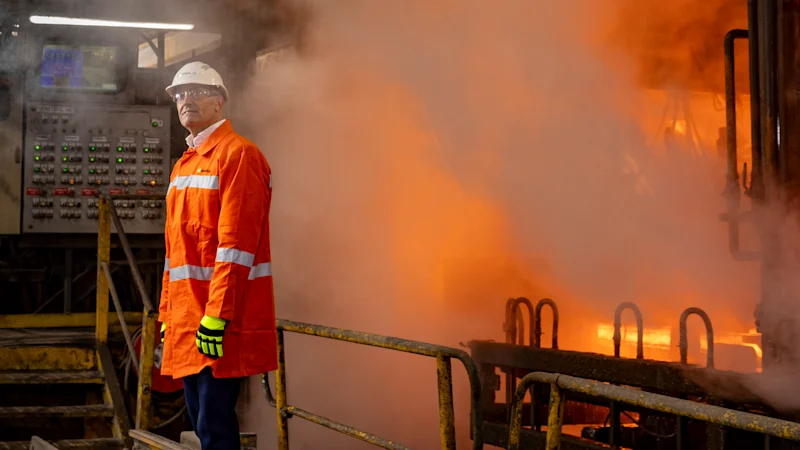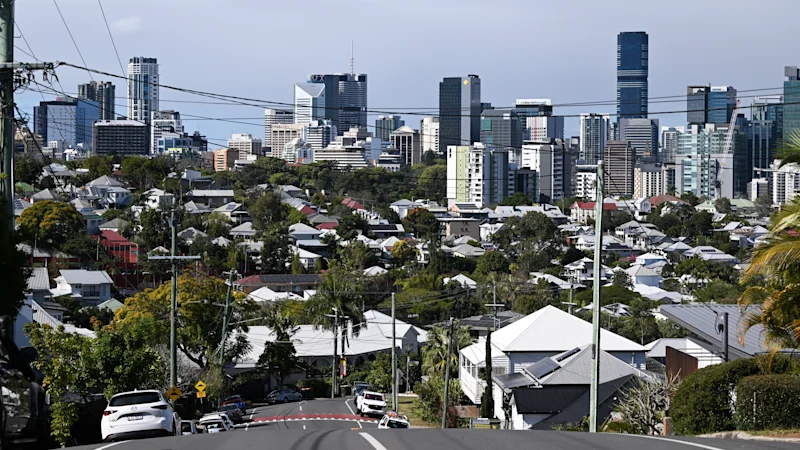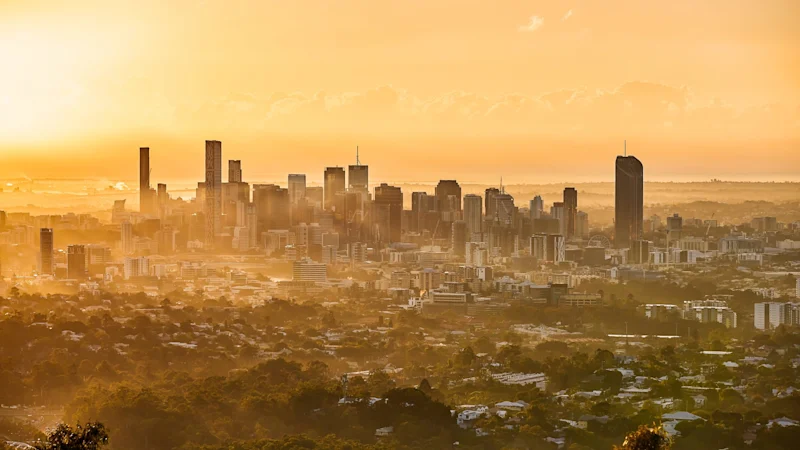
Advanced manufacturing is growing faster in Brisbane than anywhere else in Australia. In Queensland, manufacturing income has risen by 26% over the past three years, driven by more than $700m in private investment over the past 12 months – more than in any other Australian state, according to the 2025 State of the City Report, produced by the Brisbane Economic Development Agency (BEDA) and Deloitte.Before Alter Steel settled on Brisbane to build its $860m, low-emissions steel mill, it also looked at other states.
A major factor that attracted Alter Steel to Brisbane was that the city would enable the business to locate scrap processing, steelmaking, downstream processing and end-market demand within the same industrial corridor, something uncommon in Australia, says Alter Steel’s chief executive officer, Paul Zuckerman.
The project builds on Alter Steel’s existing reinforcing steel businesses, which form Australia’s second-largest reinforcing steel processing and distribution network, creating a direct link between recycled scrap and construction sites across Australia.
The Brisbane suburb of Pinkenba offered industrial land on the north side of the Brisbane River, about 10km from the city centre, critical services including power, gas, water and oxygen supply, proximity to port and rail infrastructure, and access to Brisbane’s pool of skilled workers, Zuckerman says. Alter Steel also got support from government to build Australia’s first low-carbon reinforcing steel mill.“We searched interstate for where to put this mill, and after that long search, the best place to put this mill, absolutely, is in Queensland and, absolutely, in Brisbane,” Zuckerman says.Founded in 2024, Alter Steel is a subsidiary of the Western Australia-based Westview Group, a diversified business that owns building materials manufacturers all over Australia.Early in the evaluation process, Alter Steel formed a relationship with BEDA. Since late 2023, BEDA has worked closely with Alter Steel’s project team to help progress key development requirements and strengthen the project’s pathway to delivery, the agency says.BEDA played a leading role supporting the project with site identification and due diligence, facilitating connections with government and industry stakeholders, and leveraging strategic networks to support commercial partnerships, materials and funding discussions.“They’ve been so supportive, right from the beginning of the project,” Zuckerman says.“I think they’re great at connecting businesses with the rest of the infrastructure in Queensland, and really just opened doors for us.”BEDA has also played a coordinating role in connecting the project with potential financial partners and investors, reinforcing Brisbane and south-east Queensland’s position as an attractive destination for large-scale advanced manufacturing and sustainable industrial investment.The agency sat in on discussions with Alter Steel, learning about the steel industry, steelmaking and supply chains along the way. “When problems come up, they’ve been able to help us find the right people and help resolve those problems,” Zuckerman says.The new mill will sit on a 23-hectare site. Construction will start towards the end of 2026, with the first steel scheduled to be made in late 2028.1uC4Dta-P8EWzEuAdHW8tRAJPcwViMAF-69aL75LagxgA series of parallax images depicting Alter Steel plant in BrisbaneIt will take 550,000 tonnes of scrap steel a year from the nearby Sims Metal plant and transform it into around half a million tonnes of reinforcing steel products for use in construction, much of it in the Brisbane region, Zuckerman says.Importantly, he adds, it will be low-emissions steel.Traditional integrated blast furnace steel mills burn coking coal to produce the intense heat needed to transform iron concentrate into steel. Alter Steel will use an electric arc furnace (EAF) instead, a technology that has existed for more than a century but which has been modernised to use less power.“This mill uses a lot less energy because we are preheating the scrap before we charge it into the furnace,” Zuckerman says. “The furnace with modern technology is so efficient it can reduce the amount of electricity we use and minimises the time we consume electricity to produce a tonne of steel.” The process also uses renewable energy sources, such as wind and solar power, instead of coal- or gas-fired energy, he says.The results are expected to be striking. Making a tonne of steel in a traditional blast furnace produces about 2.8 tonnes of embodied carbon, Zuckerman says, while older-style EAFs produce about 1.3 tonnes of embodied carbon per tonne of steel. Alter Steel’s EAF technology will produce steel with about 300kg of embodied carbon per tonne, he says.“It is a massive reduction in embodied carbon.”The market for low-emissions building products is growing, with developers wanting to reduce the carbon emissions of their projects so they can market them as more sustainable, and governments supportive of greener building.A key factor in the selection of the Pinkenba site was the proximity to the Sims Metal plant and the Port of Brisbane, but Zuckerman says the whole ecosystem is important.“You do need that infrastructure; you want port and rail access to be able to have options, and both bringing in material and shipping material back out,” he says. “We need to find and attract good people, and Brisbane has a large labour pool for us to be able to do that.”Once up and running, the steel mill will employ about 230 workers, including maintenance people, operators and freight logistics staff, Zuckerman says. “We think Brisbane has a good catchment area to attract those skills. And then [Alter Steel will] provide the specialised training required to operate the plant.”For investment and expansion opportunities visit Choose Brisbane.