Engineering leaders have spent the past year trying to get their teams to adopt AI coding tools as quickly as possible. Now, a new set of questions has taken over: how do you measure whether any of it is worth the money, and how do you stop agents from running unchecked on production systems?
Developer tooling company Warp, an open agentic development environment built from the terminal up, thinks the answer isn't picking a single agent and standardising on it — it's giving teams a way to run several at once, compare them, and govern all of them from a single control plane.
As Tessl wrote back in February, orchestration has emerged as a discipline in its own right — a dedicated layer of tooling for coordinating, supervising and directing multiple agents running in parallel. Back in February, Warp launched Oz as a cloud platform for running and managing coding agents at scale.
Now, Warp is taking things a step further. In May, the company expanded Oz into what it's calling the first multi-harness control plane — meaning teams can now run Claude Code, Codex and Warp Agent simultaneously through a single interface, rather than committing to any one of them.
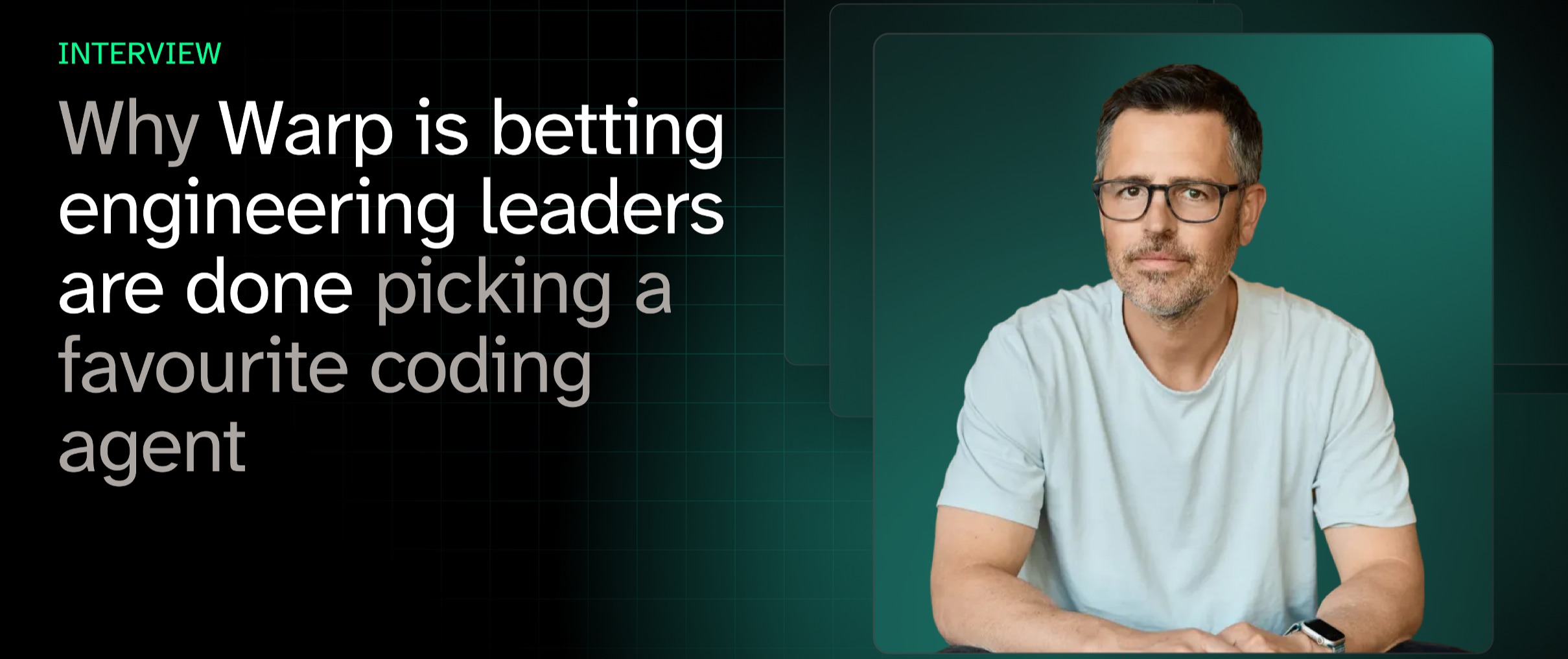
Tessl caught up with Warp CEO Zach Lloyd to discuss how engineering leaders are thinking about agent fleets, what the harness layer actually changes, and where the lines between autonomy and human oversight are really being drawn.