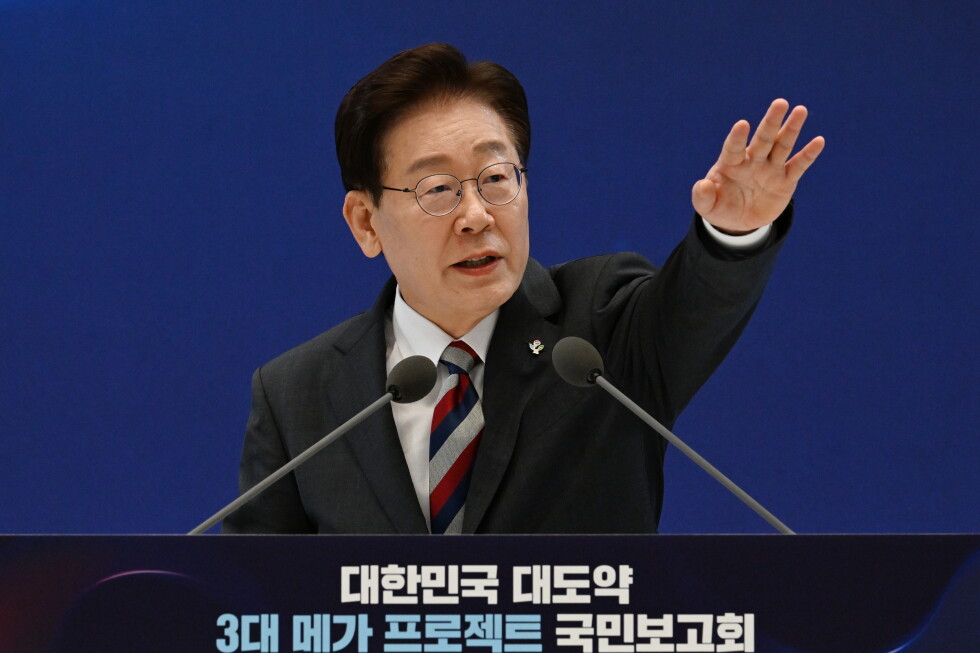
SEOUL – South Korea is set to unveil an ambitious plan aimed at cementing its status as a technological powerhouse, with companies led by Samsung Electronics and SK Hynix expected to announce a decade of large-scale investments in memory chips, data centres and robotics.Samsung Group and SK Group are poised to announce as much as 2,000 trillion won (S$1.7 trillion) in fresh investments over a ten year period, the Korea Economic Daily reported, without giving details of its sources. The two groups will present the plans at the presidential office on June 29, the newspaper added.The scale of Korean tech spending underscores the government’s urgent desire to maintain the nation’s lead in memory chips crucial for AI, while ensuring longer-term national security. The envisioned sum - to be led mainly by Samsung Electronics and SK Hynix - begins to approach the eye-watering amounts budgeted by hyperscalers such as Microsoft as well as neighbour China, which is drafting its own five-year, US$295 billion (S$382 billion) investment blueprint.South Korea has emerged as one of the biggest beneficiaries of the global AI boom, but concerns have been growing that the benefits have not been shared evenly across the country. It comes as President Lee Jae Myung’s approval rating has fallen to its lowest level since he took office a year ago, according to a Gallup Korea poll that pointed to growing disapproval of Lee’s handling of the economy, the weak won and housing policy.Samsung and SK Hynix - the world’s two biggest memory makers - plan to build four to five semiconductor plants in the Gwangju area, in the country’s southwest, the Korea Economic Daily said. Samsung intends to also build chip packaging plants in South Chungcheong province while SK Hynix will expand NAND plants in North Chungcheong province, the newspaper said.Shares of both Samsung Electronics and SK Hynix fell more than 5 per cent on June 29. While AI’s voracious demand for memory chips have pushed up the two chipmakers’ shares, questions persist about the sustainability of profits as competition heats up.Lee’s office has called the initiative “Three Mega Projects for the Big Stride Forward.” Officials from the industry, science, climate and land ministries are scheduled to outline the government’s policy measures during a 2pm event. Samsung Electronics executive chairman Jay Y. Lee and SK Group chairman Chey Tae-won are slated to attend.The reported 10-year capital spending plan is roughly in line with what CLSA estimates global hyperscalers to spend in 2027 alone. For 2026, Samsung has announced plans to spend over US$70 billion. Taiwan Semiconductor Manufacturing Co. (TSMC) is set to spend about US$56 billion. Lee seeks to direct strategic investment outside Seoul to foster new growth engines and high-paying jobs in the regional economy. “The history of South Korea’s development is one of dazzling achievements and, at the same time, a process of accumulating severe imbalances and discrimination,” Lee said in a post on X on June 28. “Now is the time for everyone to cooperate and pool their wisdom on a grand scale to achieve the national survival goals of easing the concentration in the capital region and promoting balanced national development.”Governments around the world are pouring unprecedented support for their domestic chip industries, citing national security concerns. The US has committed tens of billions of dollars through the CHIPS and Science Act to expand semiconductor manufacturing, while China has continued to pour state-backed funding into building a self-sufficient chip ecosystem amid escalating technology restrictions. Japan has also dramatically increased subsidies to revive its semiconductor sector, supporting investments by domestic companies and foreign manufacturers including TSMC.Citigroup said in a note that the massive investment led by the Korean government should boost growth of the country’s semiconductor supply chain, including its chip gear sector. The company is bullish on Korean chipmaking equipment names, helped by “the promising AI demand outlook and accelerated green-field capacity expansion plans,” it said. BLOOMBERG
Samsung, SK Hynix ready decade of mega spending to sustain South Korea’s AI lead
Chip giants poised to announce as much as 2,000 trillion won (S$1.7 trillion) in fresh investments over a ten year period. Read more at straitstimes.com. Read more at straitstimes.com.
TL;DRAI
Samsung and SK Hynix will invest $1.7 trillion over 10 years in memory chips and semiconductor fabs to sustain South Korea's AI leadership. For tech leaders, this signals stable NAND supply amid US-China-Korea competition, but compressed chip margins as geopolitical reshoring accelerates.
649 words~3 min read