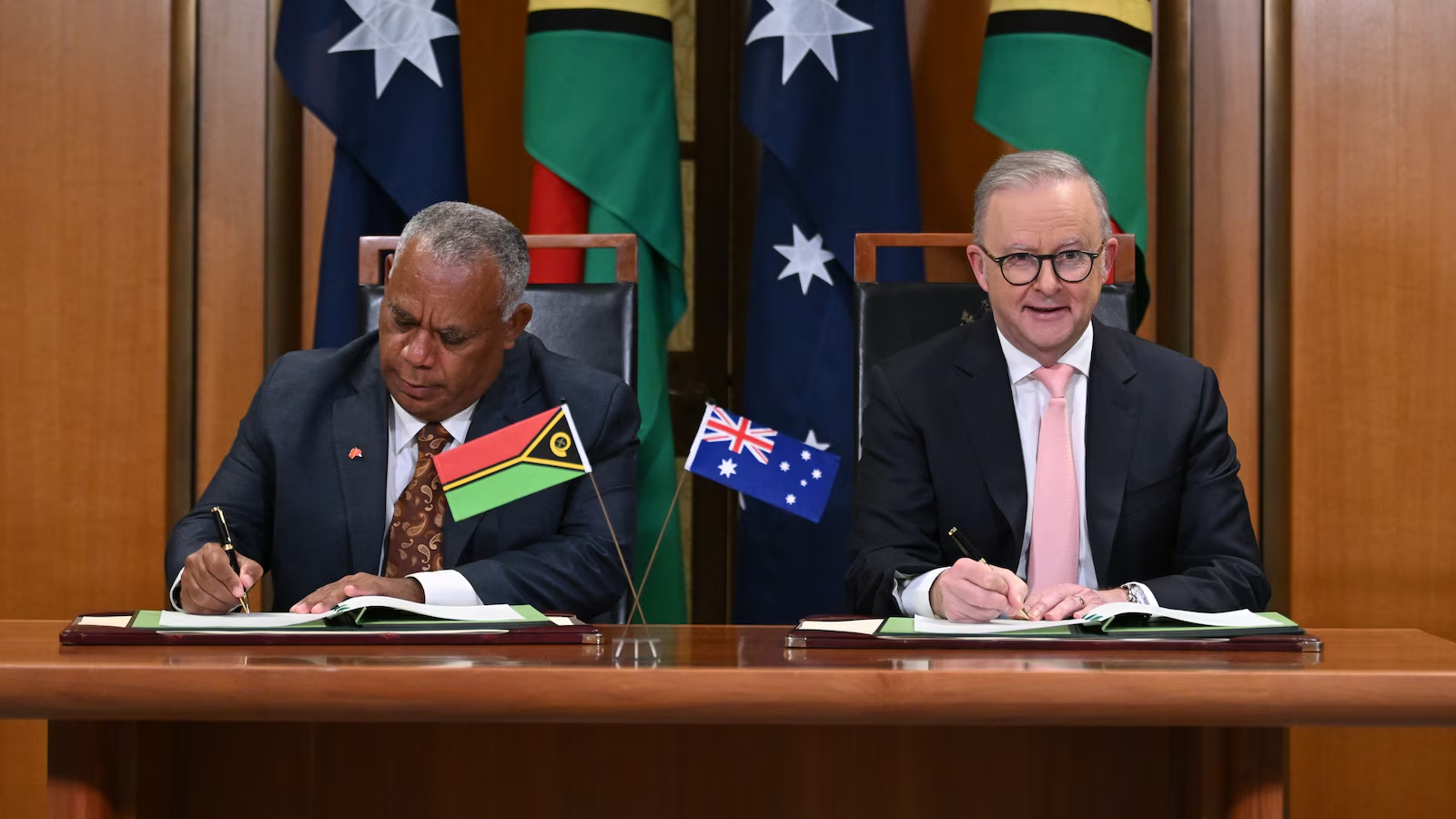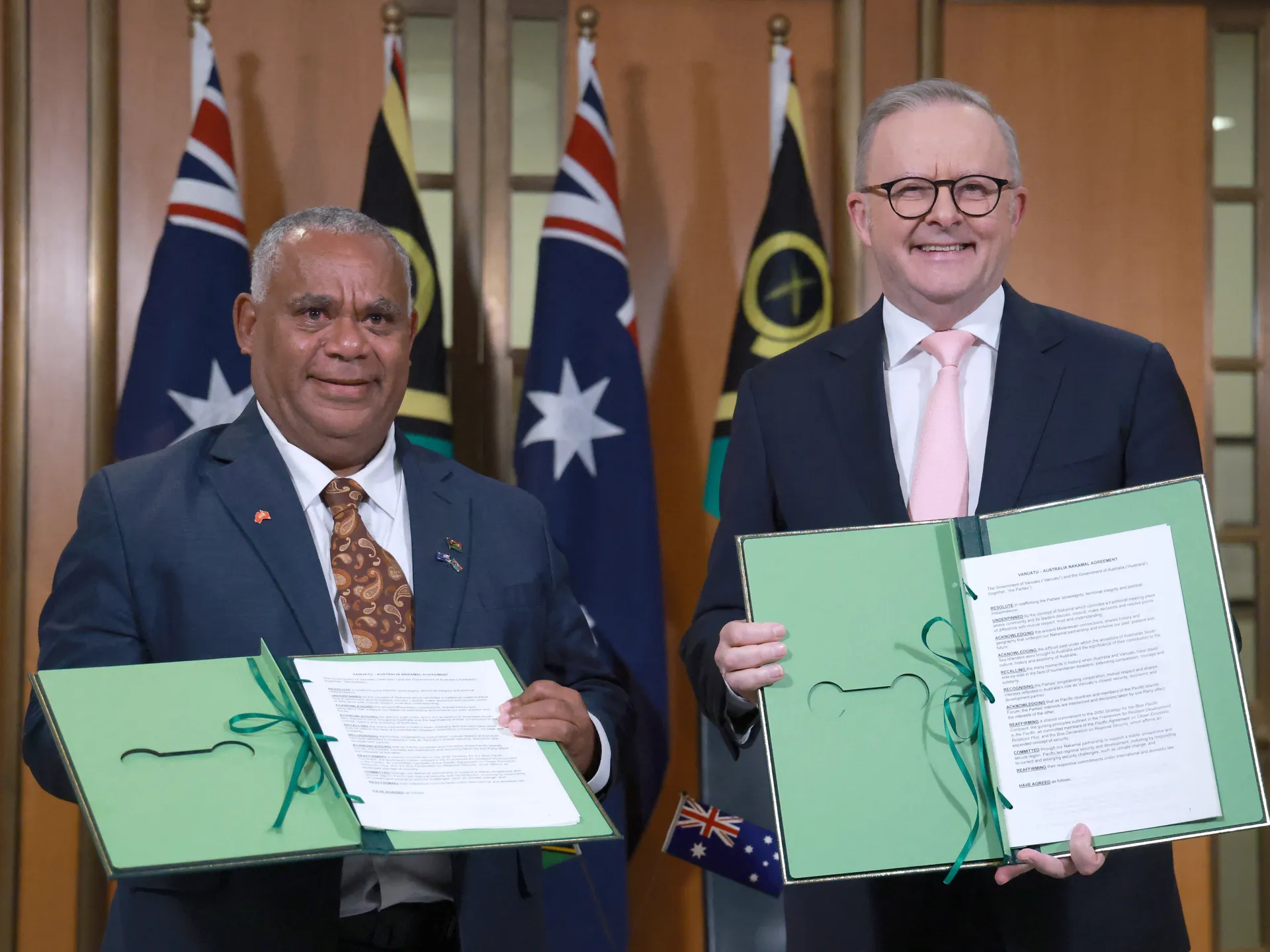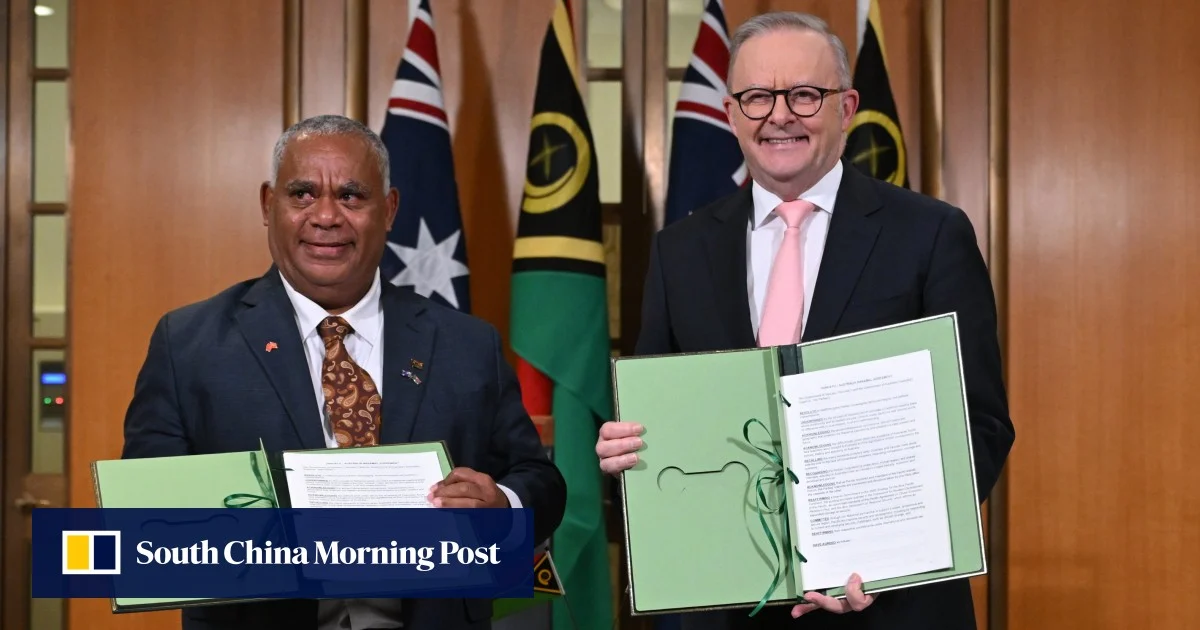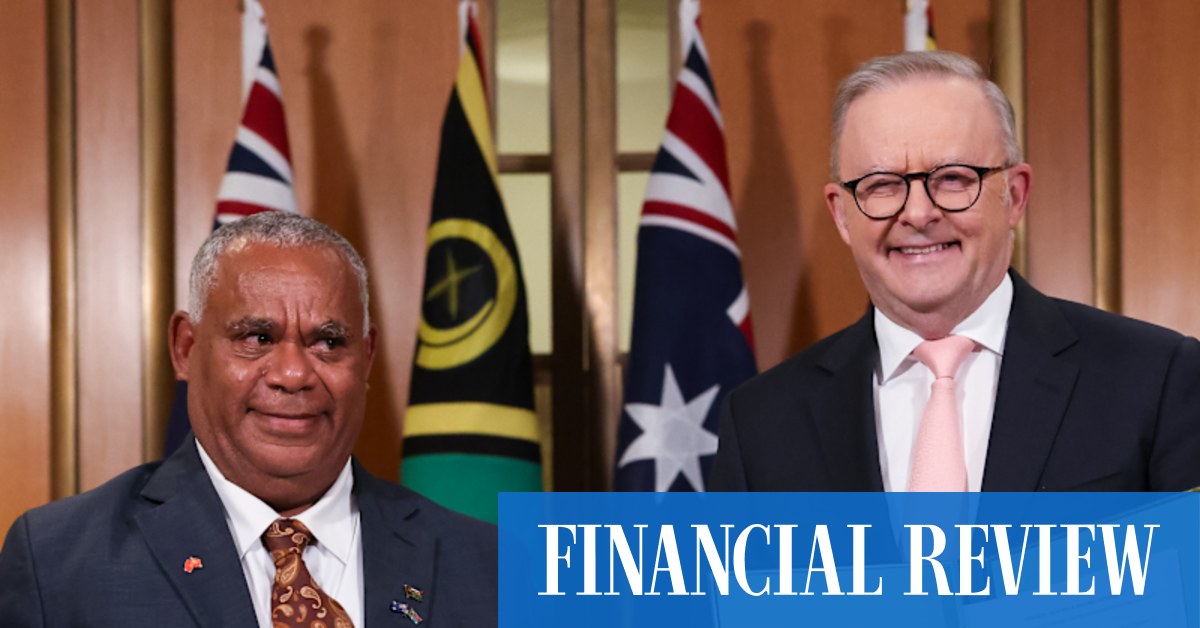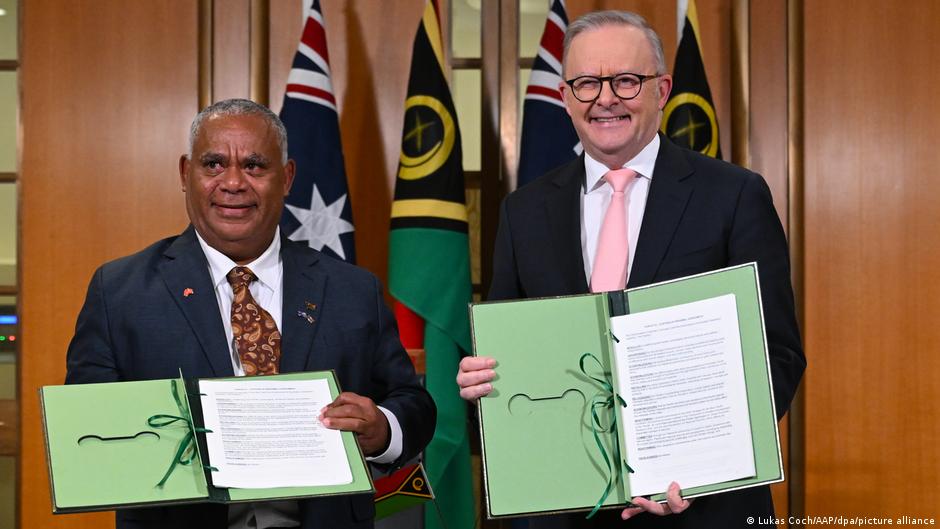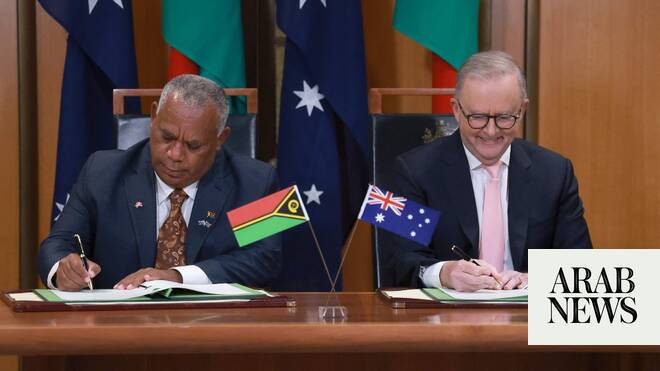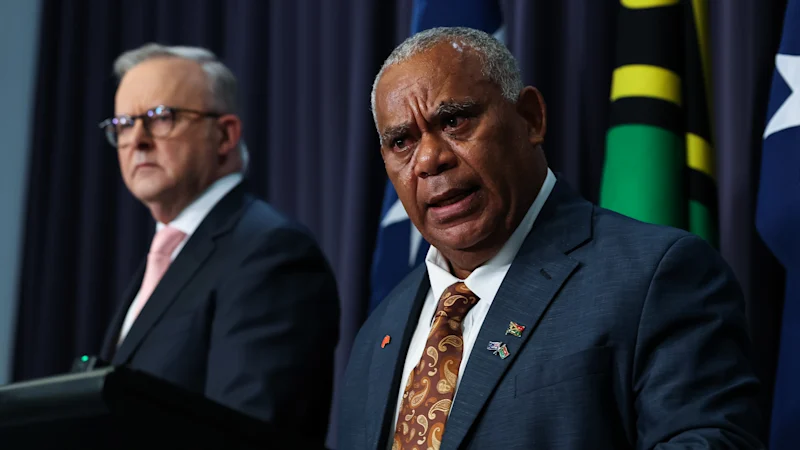
June 29, 2026 — 2:45pmChina will be blocked from establishing a military base in Vanuatu as part of the terms of a $500 million treaty with Australia that was watered down because of fears it would limit the Pacific nation’s economic ties with Beijing.Prime Minister Anthony Albanese and counterpart Jotham Napat signed the Nakamal Agreement on Monday in Canberra, almost 10 months after they originally planned to strike the pact.Prime Minister Anthony Albanese and Prime Minister of Vanuatu Jotham Napat signed a new agreement. Alex EllinghausenNapat, who has also been negotiating a separate agreement with Beijing, said the key sticking point was that the proposed pact with Australia could overly restrict Vanuatu’s ability to partner with other nations on critical infrastructure projects such as ports and airports.The original, more restrictive clause was struck out of the final agreement, but Vanuatu has committed to consult Australia on any proposed third-party engagement in its critical infrastructure.Vanuatu also vowed that its critical infrastructure would be free from militarisation and foreign interference, and that it would not allow its territory to be used for any foreign military base or infrastructure.This masthead revealed in 2018 that China had approached Vanuatu about establishing a permanent military presence on its territory, triggering panic in Canberra.Then prime minister Malcolm Turnbull warned that Australia would view with “great concern” any foreign military bases in the Pacific islands.Albanese is expected to strike a new security deal with Fiji during a visit next month, following previous similar agreements with Papua New Guinea, Nauru and Tuvalu.Government sources, who were not authorised to speak publicly, said the Nakamal Agreement would still cost Australia $500 million, but the money would now be spread out over a longer time-frame, reflecting the softening of the original wording on critical infrastructure.Vanuatu has also pledged to prioritise policing requests to Pacific Islands Forum members such as Australia, a clause intended to limit policing co-operation with China.Albanese declined to reveal the cost of the agreement at a press conference, saying it would be revealed in the mid-year budget update in December.“We respect the right of all nations to make sovereign decisions about their engagement with other countries, but what this does do is to provide certainty for Australia that there will be no foreign military base,” Albanese said after signing the pact.He said the agreement “reflects and confirms Australia’s role as Vanuatu’s largest and most comprehensive economic security and development partner, a responsibility that we take seriously”.“We have concluded a balanced agreement that will protect our collective and individual security and our sovereignty,” he said.Napat promised to release the final text of the proposed Namele Agreement with China “once I get a clearance from Beijing”.“Currently it is not yet signed,” he said. “We will share the agreement – there’s nothing to hide.”As well as making it easier for Vanuatu citizens to work in Australia, the agreement commits Australia to provide support in response to a major natural or humanitarian disaster.Cut through the noise of federal politics with news, views and expert analysis. Subscribers can sign up to our weekly Inside Politics newsletter.From our partners
Vanuatu rules out allowing Chinese military base in $500m Australia pact
Vanuatu’s prime minister vowed to release the text of a similar agreement with China “once I get a clearance from Beijing”.
515 words~2 min read