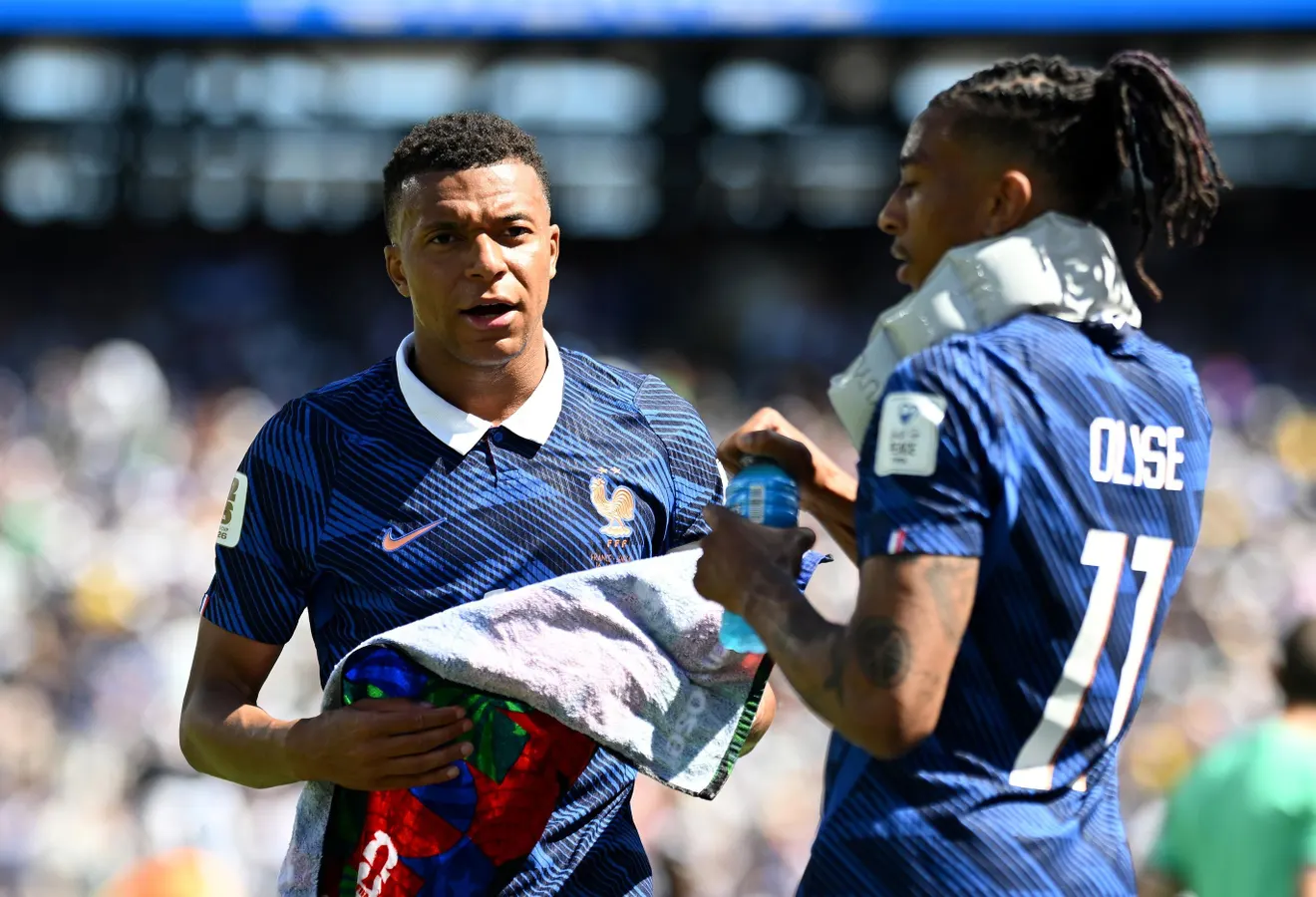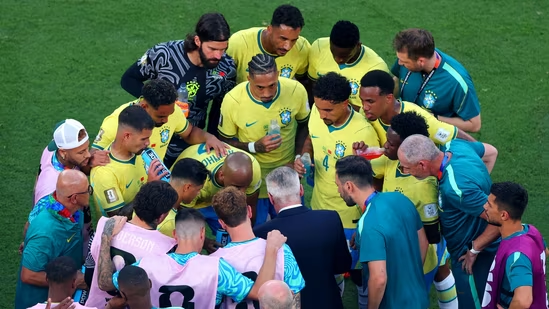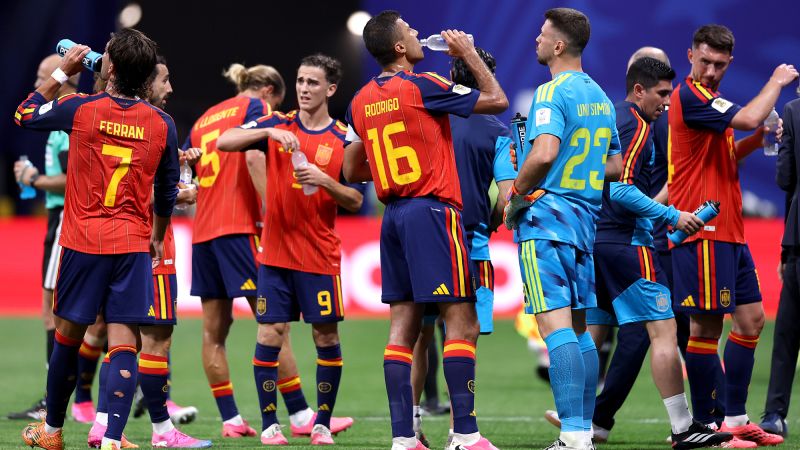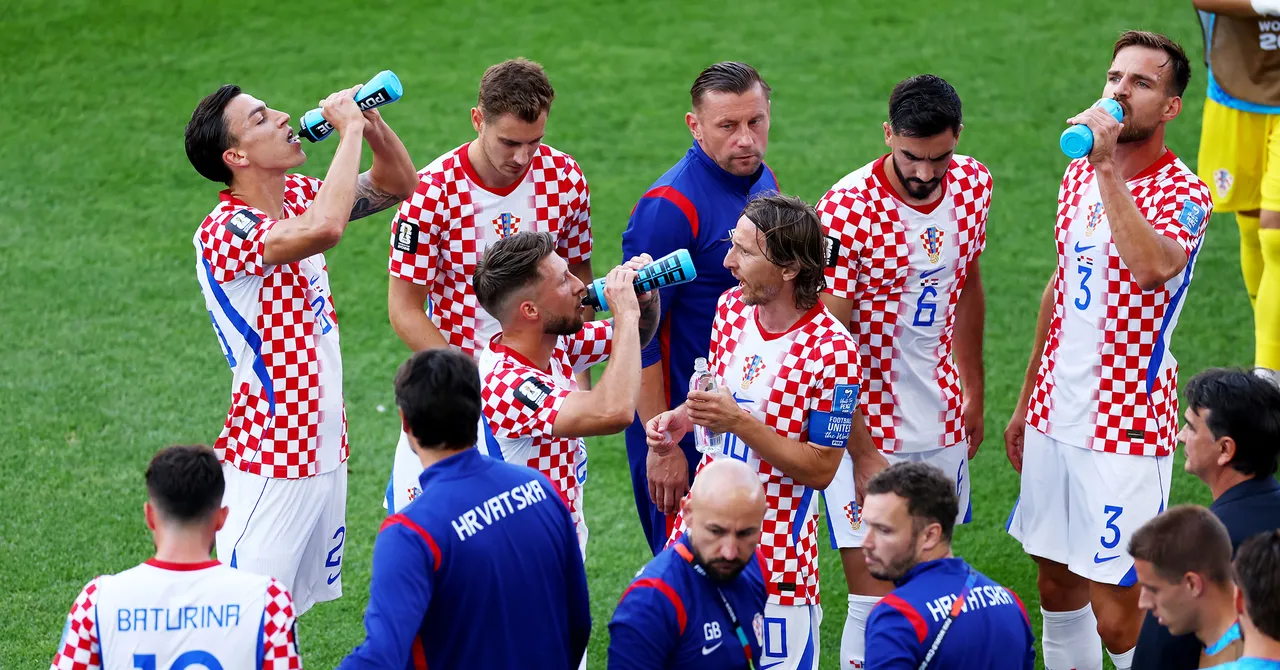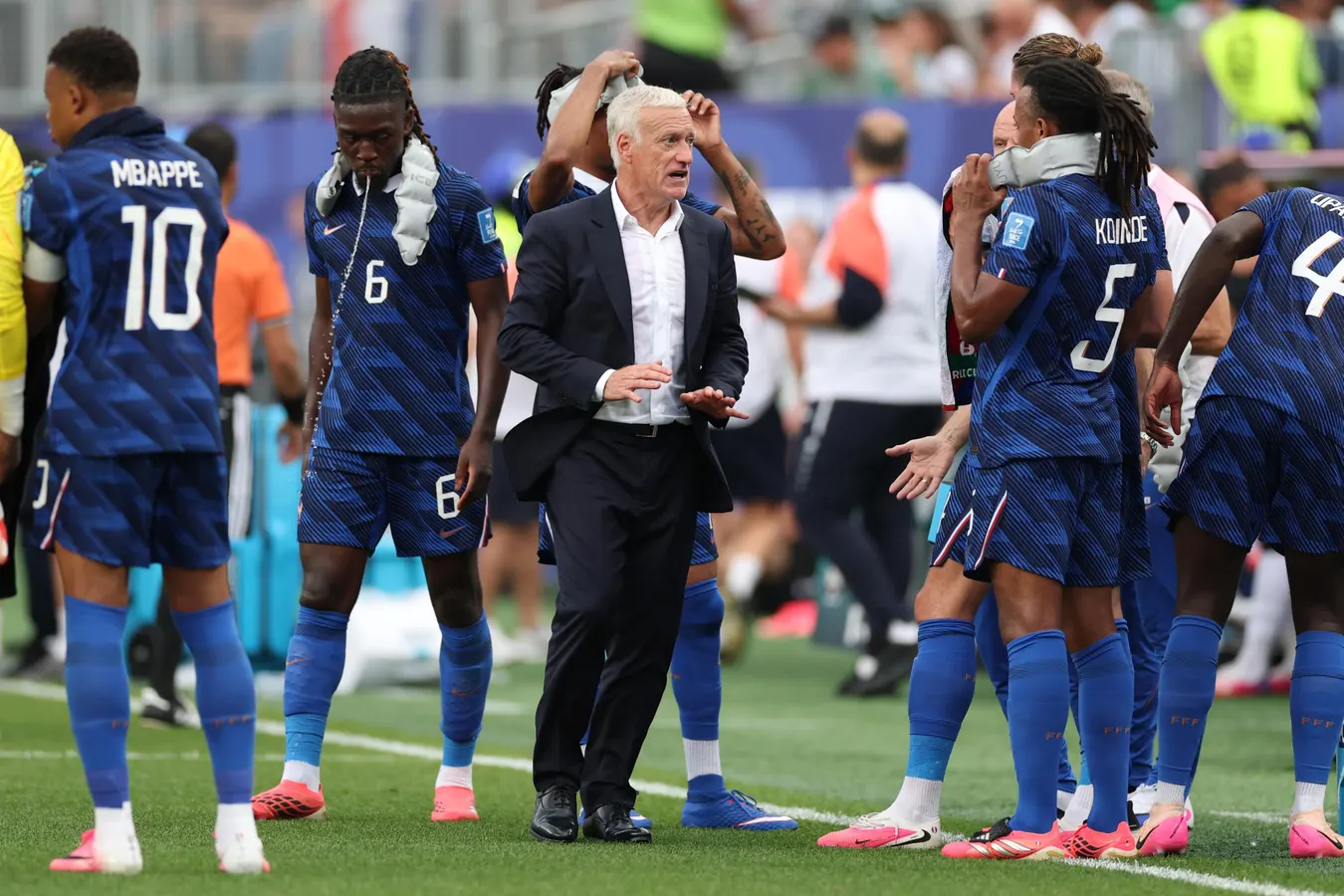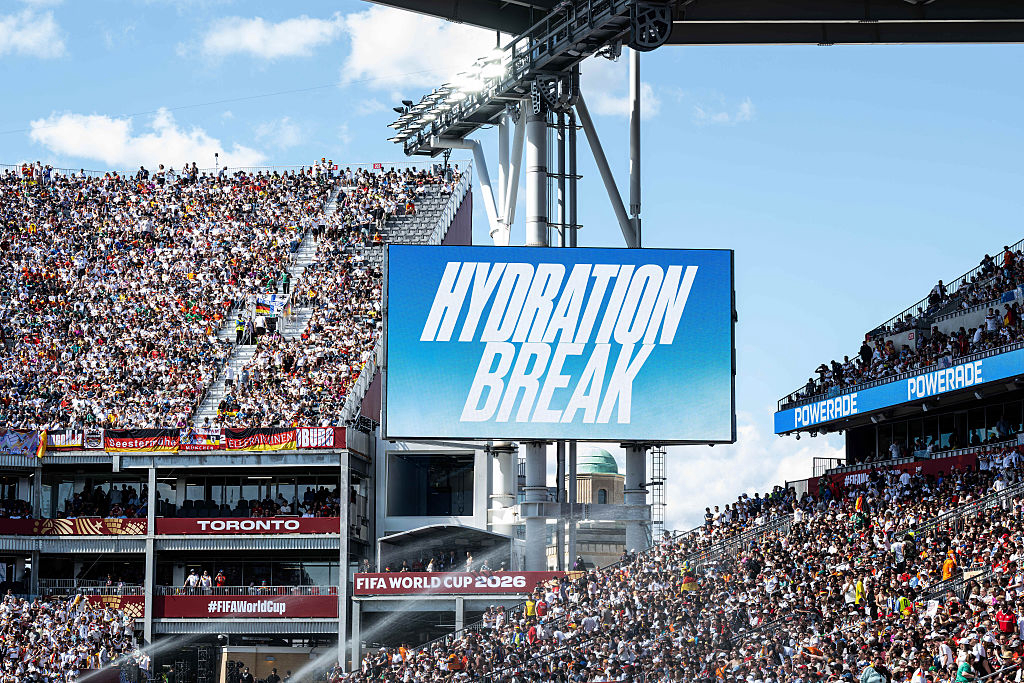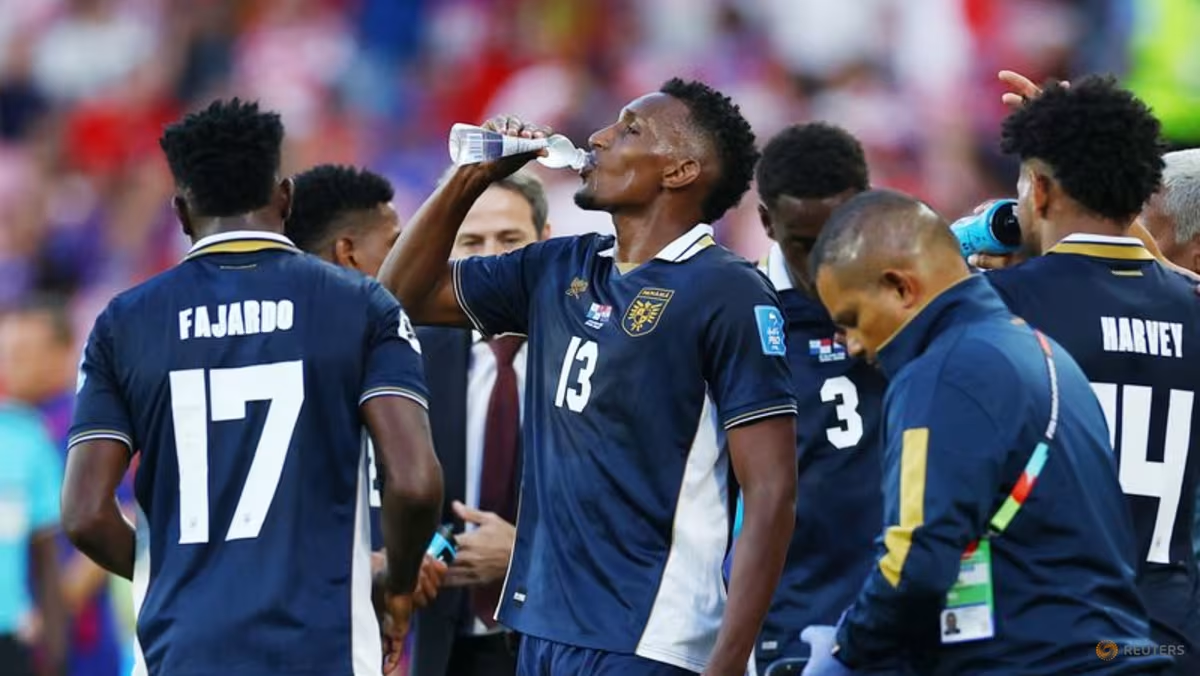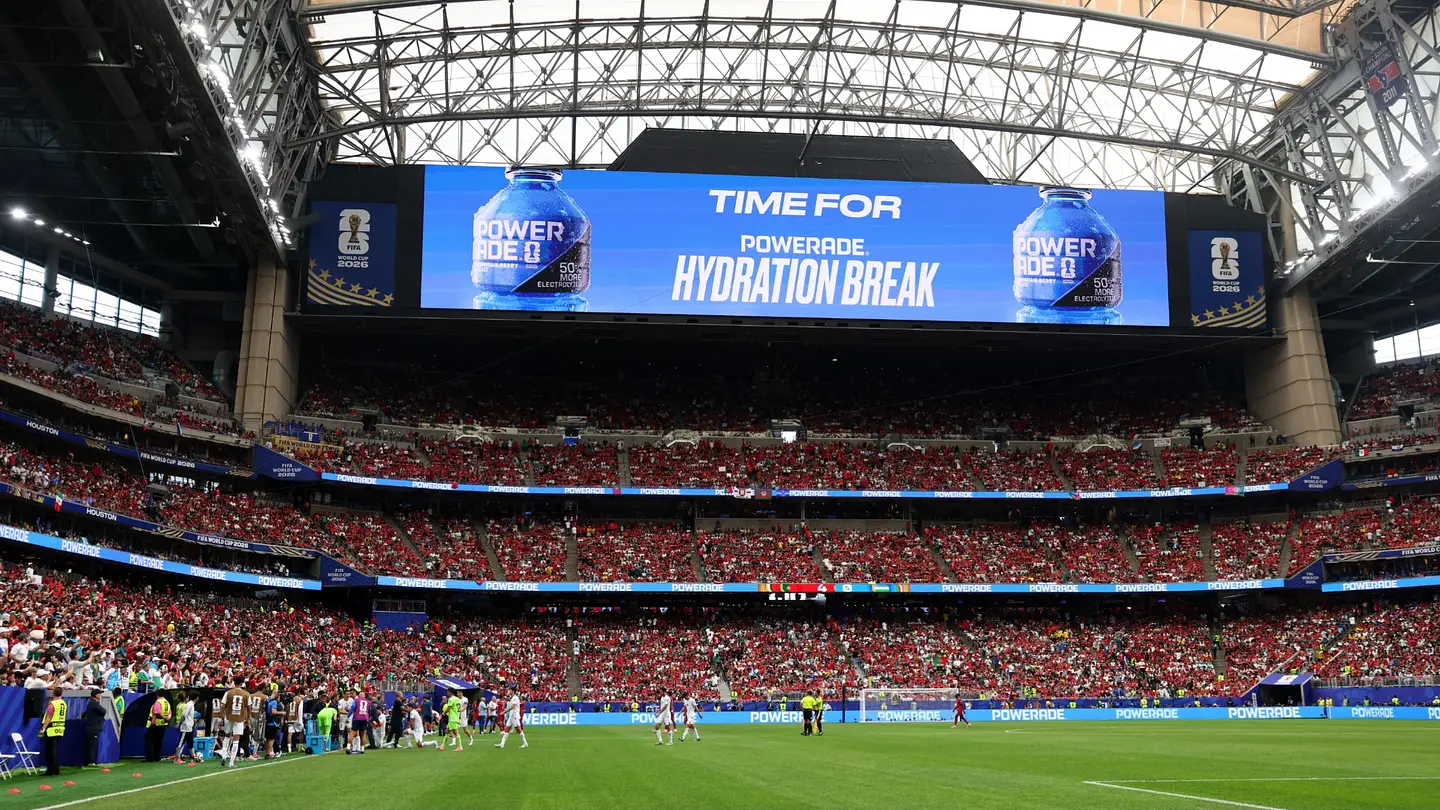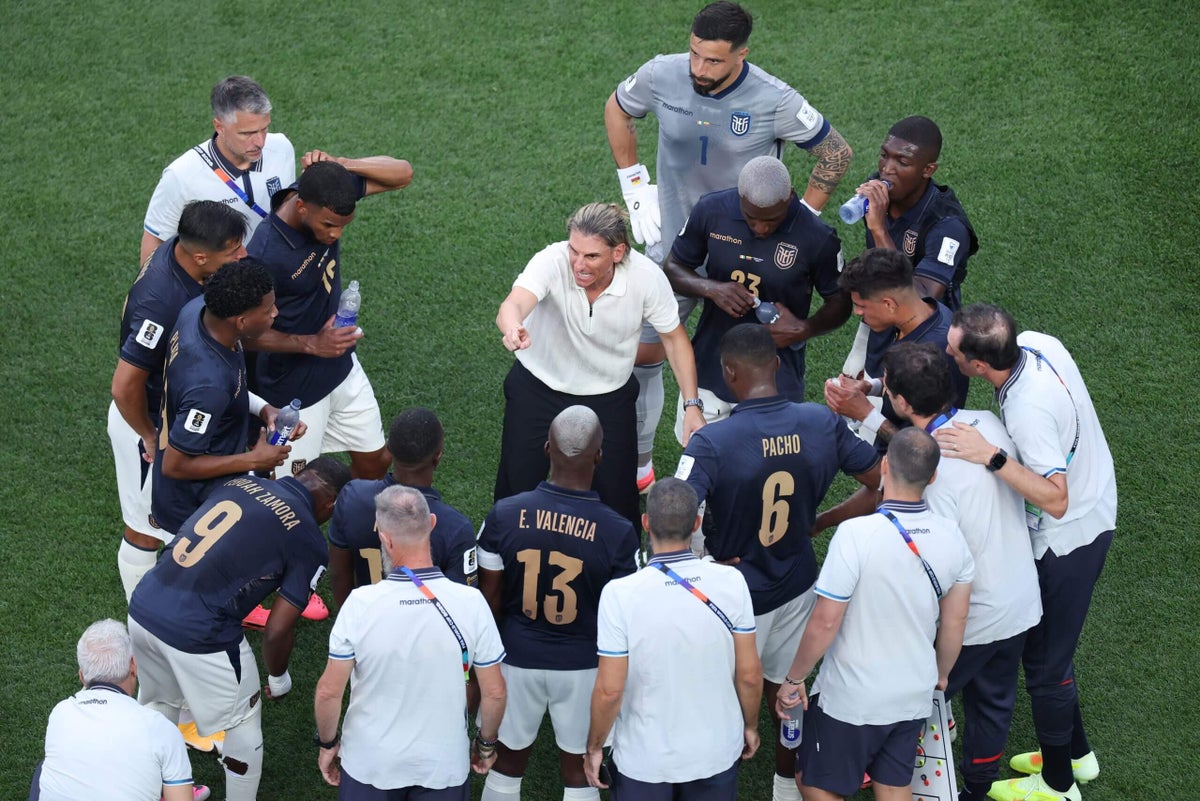
While Gianni Infantino insists that the mid-half hydration breaks are purely for player welfare and not broadcasting purposes, national team coaches are unapologetically trying to use them for tactical advantage.Effectively the matches are spliced into 22-minute quarters with three-minute rest breaks. “It’s a good thing for coaches,” France national team boss Didier Deschamps told reporters during the group stage. He, like others, have pointed out that it all depends on the flow of the game and which side has momentum — a team in the ascendancy does not want a break.“In technical terms this changes how we work, we’re talking about three minutes where we can make adjustments,” said Portugal head coach Roberto Martinez.So how are coaches using them?Mauricio Pochettino had his U.S. players huddled around a laptop in their pre-tournament warm-up win over Senegal. He wanted them to see clips, not just hear words, which is exactly why most club coaches include video as part of their half-time team talk — and that requires their analyst to leave their vantage point a few minutes early to sprint back to the changing room.Players must remain on the field during the breaks, so the coaching staff come to them with drinks, ice and tactical instruction.There’s also the chance to sneak a substitute on before play resumes, potentially rendering useless whatever discussion the opposition just had.Switzerland head coach Murat Yakin did exactly that in the 4-1 win over Bosnia and Herzegovina, changing both wingers — Johan Manzambi and Ruben Vargas came on for Dan Ndoye and Fabian Rieder — and replacing midfielder Michel Aebischer with Djibril Sow.“After the second hydration break, we would change a few things, because then the opponent can’t react immediately,“ Yakin explained in his post-match press conference, speaking through an interpreter. ”Maybe that was the edge. We brought in very fast players, and our opponent couldn’t run. It opened up gaps on the edge.“Take this move on 61 minutes, just before the break. Ndoye and Rieder try to break through the back five, but Amar Dedic spots and tracks his run for the return pass, and clears the danger for a corner.Switzerland were struggling against a physical opponent. Bosnia pressed them man-to-man as Yakin’s team built up with four defenders and a box midfield. That meant plenty of rotations and Ndoye playing high, alongside No 9 Breel Embolo, but direct passes into the forward line failed to catalyse attacks — they had just seven shots worth 0.25 expected goals in the opening 60 minutes.Then came the changes and the flurry of goals. It was only the second World Cup match ever, and first since 1982, to have four substitute goals: two for Manzambi, one for Vargas, plus Bosnia’s Ermin Mahmic with a consolation strike.The opening goal came about because Manzambi showed energy in midfield, sweeping up a loose ball when Embolo lost an aerial duel from Gregor Kobel’s long ball. Immediately Vargas ran down the wing, and Manzambi found him after some smart footwork to evade two Bosnia defenders — note how high Dedic is, and how quickly they worked the ball into the space before the wing-back could recover.From here, the sequence is a little scrappy. Vargas has two goes at the cross. The first is blocked back to him by Ivan Sunjic and, on his second try, a looping back-post ball for right-back Silvan Widmer is headed away by Sead Kolasinac — but only as far as Manzambi, who rifles in, only three minutes after his introduction.The third Switzerland goal came from a near-identical move to the one Ndoye and Rieder tried unsuccessfully just before being subbed. This time, with Vargas up against a tired Dedic and captain Granit Xhaka’s disguised passing from the edge of the box, they got the winger in-behind.He picked out Manzambi, one of three red shirts, and the substitute netted his second.Another good example came in Sweden’s 5-1 defeat to the Netherlands. Head coach Graham Potter had been caught out by the selection of Brian Brobbey at striker, and his side were 2-0 down inside 17 minutes to a Brobbey brace.Sweden were trying to mix between a 5-3-2 mid-block and a high press.The problem was that they were light on the wings against a typically Dutch 4-3-3. Committing their wing-backs high against the Dutch full-backs left them exposed for the first goal. Bart Verbruggen’s long ball over the press found Brobbey, who held off Isak Hien and set the ball to midfielder Tijjani Reijnders.
World Cup ‘hydration breaks’ have changed how soccer is played
This new format changes the sport significantly — and takes it further away from club football
1,521 words~7 min read