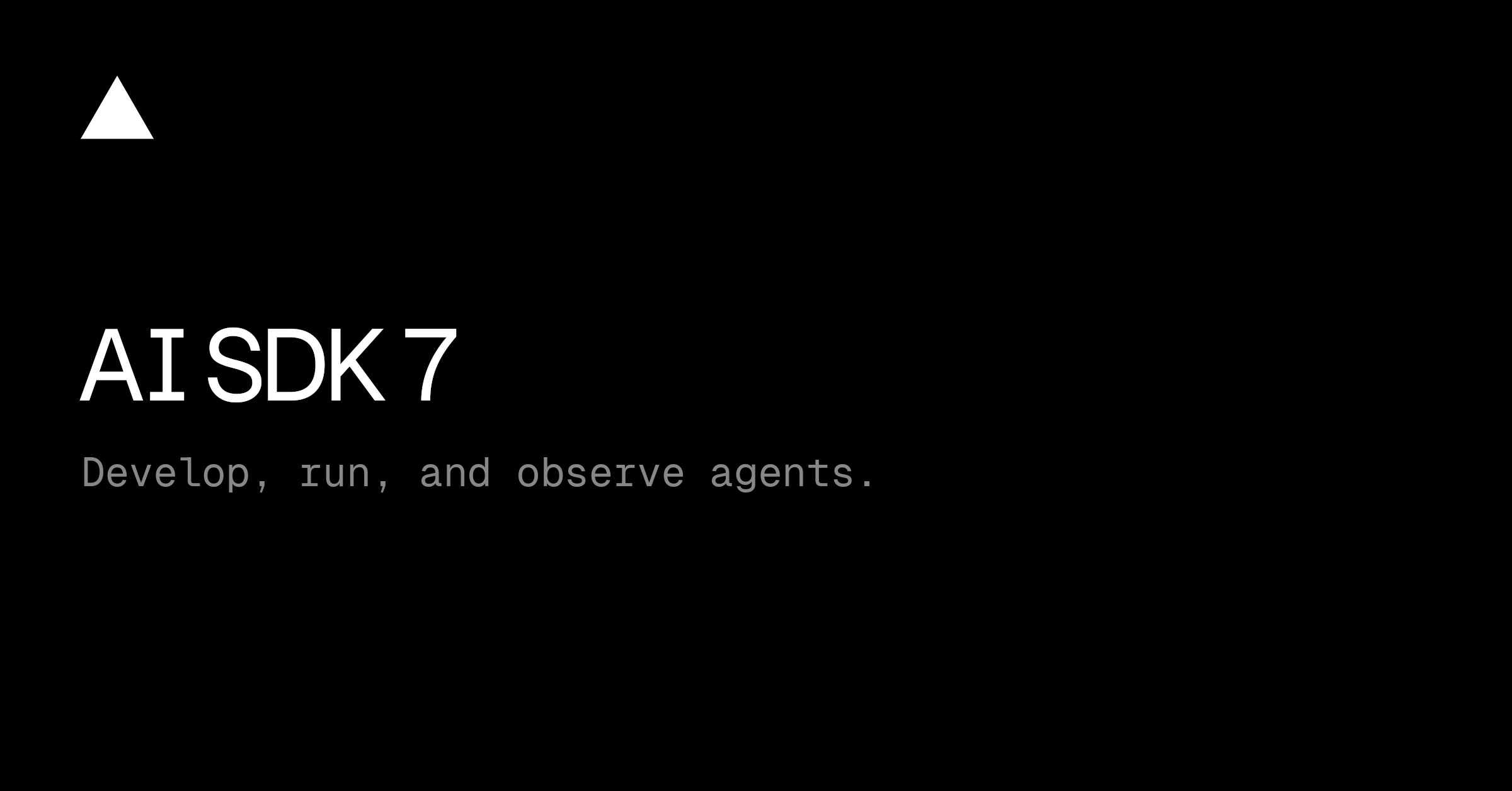
The theme this week is consolidation: AI SDK 7 ships a provider-agnostic foundation for production agents, LangSmith closes the loop on observability with a purpose-built database and on-call triage automation, and Deno 2.9 quietly removes two more reasons to reach for heavier runtimes. If you've been duct-taping agent workflows together with custom adapters and scattered orchestration logic, the tooling is finally catching up.
AI SDK 7 standardizes agent development across providers
AI SDK 7 introduces four primitives that eliminate the per-provider boilerplate that's been accumulating in production agent codebases: typed tool context, runtime context, file/skill uploads, and MCP Apps. Typed tool context means your tools now carry scoped, typed state without you threading globals through every handler. Runtime context lets you pass execution-scoped data down the call stack without coupling tools to request infrastructure. File and skill uploads give agents a native pattern for passing binary inputs and reusable capabilities across providers. MCP Apps extend this further if you're already building on Model Context Protocol.
The practical payoff is reducing context-switching overhead when you swap providers or scale multi-tool workflows. Instead of rewriting adapter logic every time a new model lands, you write once against the SDK primitives.