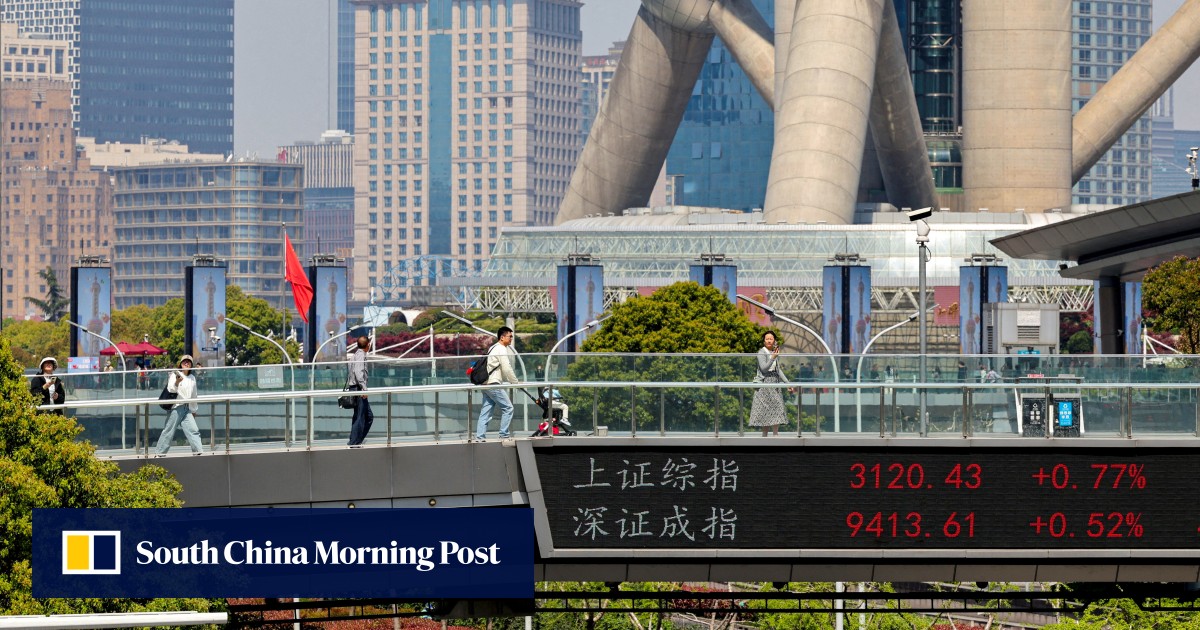
The dominant narrative surrounding China remains largely unchanged. Investors continue to focus on slowing economic growth, a struggling property sector, weak consumer confidence, adverse demographics and rising geopolitical tensions. Taken together, these challenges have left many investors questioning whether to invest in China at all. However, our recent trip to Shanghai, Shenzhen and Hong Kong left us asking whether the prevailing narrative isn’t blinding investors to both potential Chinese opportunities and obscured global risks.Over two weeks, we met company management teams, policymakers and industry leaders at the JP Morgan Global China Summit and UBS Asian Investment Conference. We visited businesses operating at the forefront of automation, robotics, AI and advanced manufacturing.China’s challenges are real and should not be dismissed. However, we came away with a growing conviction that many investors may be focusing on the wrong issues. Paradoxically, some of the forces investors view as weaknesses — excess competition, weak consumption and industrial overcapacity — may be accelerating the creation of China’s next generation of globally competitive companies.One of the most important lessons from the trip was that understanding China requires taking into account the country’s strategic priorities. China has been executing on a well-thought-out plan for many years, and the structural fruits are clearly visible. In the Nature index 2026 (a global indicator of high-quality scientific research), Chinese universities dominate the top 10. China has built an enviable foundation for scientific and industrial productivity. China’s 15th five-year plan (2026-2030) seeks to localise critical technology supply chains, deploy AI throughout the economy, build integrated computing and communications networks, expand renewable and nuclear energy infrastructure, and strengthen strategic transport and logistics networks. The implications for investors are significant. Companies operating in these areas are likely to benefit from policy support, infrastructure investment and improved access to capital. Perhaps the most striking observation from our trip was the intensity of competition within China. Overcapacity and weak demand have acted as catalysts for industrial evolution. The electric vehicle (EV) industry provides a useful example. Companies operating in these areas are likely to benefit from policy support, infrastructure investment and improved access to capital. China has more than 100 EV brands, of which only two are profitable due to overcapacity and fierce price competition. This intense competitive process is forcing companies to improve quality, lower costs, innovate faster and gain scale just to survive. These survivors, who are looking beyond their borders to expand margins and generate growth, are very well positioned to compete globally. BYD illustrates this dynamic particularly well. Having survived one of the most competitive automotive markets in history, the company is expanding internationally. This is a business capable of competing not merely on price, but also on technology, manufacturing expertise and sophisticated charging infrastructure.The same pattern is evident across a growing number of industries. Domestic competition is acting as a proving ground, creating companies that emerge stronger, more efficient and capable of competing internationally.Across sectors ranging from manufacturing and healthcare to consumer products and industrial technology, management teams view international expansion as a strategic priority. We encountered numerous examples. Sany Heavy Industry has transformed from a predominantly domestic construction equipment manufacturer into a global industrial business. Softcare has leveraged manufacturing capabilities developed in China to build strong positions across emerging markets. JD.com is expanding its logistics and fulfilment infrastructure into international markets. In healthcare and industrial automation, SBT Ultrasonic and Shenzhen New Industries Biomedical Engineering view international markets as a key avenue for growth. We were struck by the consistency of the pattern. Many Chinese firms are competing successfully on technology, innovation, product quality and service delivery while retaining meaningful cost advantages.Investors who view Chinese companies solely through a domestic lens may therefore underestimate their future addressable markets. Rather than waiting for Chinese consumer confidence to recover, many management teams are using the current environment as a catalyst to pursue opportunities abroad. The implication is that China’s future winners may derive their growth from markets beyond China’s borders.The geopolitical discussions were equally instructive. The consensus among many policymakers and former diplomats (including current and former ambassadors) was that the US and China are moving towards “constructive strategic stability” — a multipolar system characterised by strategic competition and selective cooperation. Several speakers argued that, while strategic rivalry is likely to remain a defining feature over the next decade, neither side can afford a complete breakdown in economic relations. The challenge for both countries is finding a way to compete without allowing that competition to become destructive.With Chinese companies moving into global markets, investors should be asking which global incumbents may face mounting competitive pressure. Across numerous industries we are seeing Chinese entrants force international competitors to retreat towards premium market segments where brand and technology remain differentiators. Many established global leaders face competition from Chinese manufacturers that have built scale, improved quality, increased speed of R&D and product development, and lowered costs within their domestic market before expanding internationally.‘Very different league’This disruptive combination of hyper-speed and structural cost advantage has global CEOs sounding the alarm. As Pfizer’s CEO noted, Chinese firms are operating in a “very different league”, for example, developing early-stage oncology treatments at half the cost and three times the speed of Western peers.His warning is stark: China is positioned to excel in medicine like it did in EVs, solar panels and batteries. Global peers have a narrow window to structurally transform through technology or risk being outcompeted. Discussions with Bridgestone management also revealed they are similarly facing intense pressure from Chinese manufacturers. One of the broader lessons from the trip is that China’s future influence on global markets may be felt as much through rising competitive pressure on global incumbents as through the success of Chinese companies themselves.Our meetings reinforced the importance of distinguishing between attractive themes and attractive investments. Several companies continue to face policy uncertainty or operate in industries where extreme competition makes profits elusive. Our objective is to identify situations where market perceptions (and hence valuations) diverge materially from underlying reality. We uncovered a number of businesses that warrant further investigation and that could ultimately meet our investment criteria and be included in our portfolios. We also gained valuable insight into which global sectors and shares to treat with greater caution.• Gilchrist is CIO, and Gavin Rabbolini is senior analyst at PSG Asset Management.
JOHN GILCHRIST AND GAVIN RABBOLINI | China’s overlooked strengths could reshape global investing
China’s competitive edge may offer investors overlooked opportunities and global risks
TL;DRAI
Chinese firms (BYD, JD.com) survive intense domestic competition to expand globally with superior tech and costs, disrupting incumbents. Tech leaders must reassess infrastructure and sourcing as Chinese competitors challenge vendors beyond price in premium niches.
1,049 words~5 min read