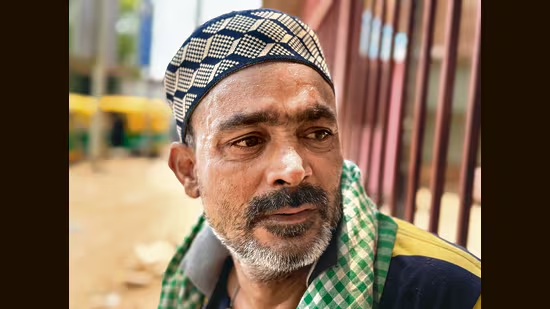
The afternoon heat is oppressive, the humidity makes it doubly oppressive. In such a hostile weather, a citizen is sitting on the roadside. A pair of crutches rests beside him. Whenever someone walks past, he quietly raises his arm, gesturing for alms. He introduces himself as Asghar and, after a few minutes of friendly chitchat, settles down to explain how he reached this point in his life.Delhiwale: His biography, so farAsghar is from Godda district in Jharkhand. He came to Delhi when he was 12 years old in search of work. His first job was washing dishes in a small eatery. He stayed there for some years. As his body gradually acquired strength, he switched professions, becoming a rickshaw puller. Later, he found work hauling loaded handcarts for wholesale bazar merchants. He says most stages of his life were built on physical labour. Eventually, he learned welding. This skilled work enabled him to earn several thousand rupees every month, he says.Last year he moved north to Chandigarh. While working as a welder on a construction site, he says he met with a “haadsa” (accident). He was brought to a government hospital in Delhi for treatment. He fondly remembers the doctor who treated him, referring to her respectfully as Ma’am. She told him that his right leg had to be amputated to save his life.When he was discharged from the hospital at the beginning of this year, he was given a pair of “baisakhi”(crutches) free of cost. Unable to return to work, he planned to stay in the city only briefly before returning to his village. For the time being, he started to beg and began sleeping on pavements. One night, while he was asleep, someone stole his crutches along with his PAN card and Aadhaar card, but not his mobile phone. He called his family in the village, where his four sons and daughter live. They sent him a photograph of his Aadhaar card on his phone. He also received a new pair of crutches from the same hospital.He says he is about to get a “joota” for his amputated leg, referring to an artificial limb. Once he receives it, he says he will board the first train to his village. “I will find some work there, maybe I will open a small dukaan (shop).”Suddenly, his voice falters. “My wife… Tabassum Khatoon died last year… appendix.” Tears run down his cheeks.
Delhiwale: His biography, so far
Asghar, a disabled man from Jharkhand, resorted to begging after losing his leg in an accident. He hopes to return home to start a small shop. | Latest News Delhi
401 words~2 min read