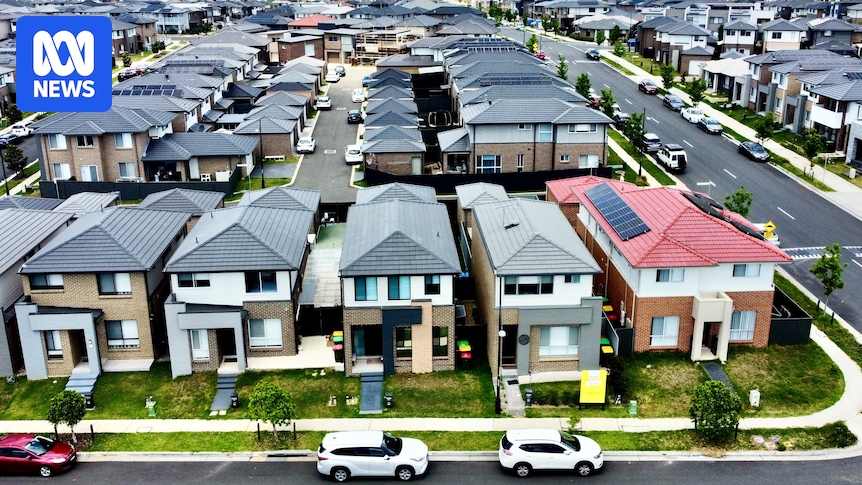
Criminal gangs using dirty cash to buy homes will find it harder from July 1 because the real estate industry and others have been drafted into the fight against money laundering.So-called Tranche 2 laws mean real estate agents, conveyancers, lawyers, accountants, gem dealers and precious metal brokers must verify their customers in a similar way that banks and casinos do, bringing Australia in line with the rest of the world.They'll need to know who the customers are and where the money is coming from."We're looking forward to the laws making it much harder for organised crime gangs and criminals to exploit our economy, to launder money and also fund terrorism," said Clancy Moore of Transparency International Australia, which has been pushing for the laws for more than a decade.Clancy Moore says lawyers and agents will have to report "when they think something's a bit fishy" in a transaction. (Four Corners: Craig Hansen)While the start of the laws is not expected to substantially lower the overall price of property in Australia, it will have an impact."When a bunch of Russian crooks rock up to an auction in the Gold Coast with a bag of money and buy the house, that is obviously going to push prices up," Mr Moore said.More than $1 billion a year washing through marketMoney laundering describes the "washing" of cash so that money made by criminal means ends up looking like legitimate profits.Laws against it often use the acronym AML/CTF, which stands for Anti-Money Laundering and Counter-Terrorism Financing.Money laundering describes the "washing" of cash. (Supplied: Queensland Police Service)In a 2015 brief, financial crimes regulator AUSTRAC described its attempts to control criminal misuse in unflattering terms."Compared to other methods, money laundering through real estate — both residential and commercial — can be relatively uncomplicated, requiring little planning or expertise. Large sums of illicit funds can be concealed and integrated into the legitimate economy through real estate."AUSTRAC estimates that, in 2020 alone, criminals linked to China laundered $1 billion through Australian real estate.For most, a simple checkAustralia's largest property franchise, Ray White Group, has more than 12,000 agents.Shaun Doyle is the agency compliance manager and has visited every state and territory twice in the past year, trying to bring agents up to speed."This is one of the most substantial changes to the industry, just because the complexity and the seriousness of it," Mr Doyle said."But when an agent understands their requirements, it's pretty straightforward."When they're meeting a customer at the living room table, that's when they need start the process. They need to understand who they're talking to."Shaun Doyle has visited all 12,000 agents in the group to prepare them for the new laws. (ABC News: Wayne Hammond)Most buyers and sellers will have been in contact with banks, who already require verification of identity.This is generally done by the 100 points system, where customers can present a combination of documents, for example, a valid passport or birth certificate is worth 70 points, licences and bills slightly less, to prove they are who they say they are.Extra part of the processRay White Mt Gravatt operations manager Michelle Romero will be verifying buyers and sellers for a team of sales staff who complete about 200 residential sales a year.Michelle Romero says the changes will be an additional layer of service. (ABC News: Craig Andrews)"I've been in the industry 35 years," Mrs Romero says, "and we take each transaction as it comes. So it is a change, but it's just an additional layer to the service that we offer now."Real estate industry groups fought the imposition of the laws for years. One of the issues for the broader industry is that larger groups have the resources to prepare for the new laws. Smaller agencies may only just be realising the deadline is here."AUSTRAC have got lots of information and resources for standalone agents to access, but I would much prefer to be a part of a large network that is supporting us through this change," Ms Romero said.The extra work is for good reason, she adds."We're just one industry in a group of many who are now part of making sure property transactions are more transparent and that our industry isn't used to fund criminal and illegal activity," she said.Others see more problems.Industries now 'gatekeepers' for illicit cashWestern Sydney lawyer Renee Roumanos completes transactions and teaches conveyancing, the legal process of transferring the ownership of a property asset."Honestly, our industry is not ready," she said."All of a sudden, we have become gatekeepers to AML".Renee Roumanos says the July 1 deadline will be a shock.
New laws aim to make it harder to launder ill-gotten gains through property
Anti-money laundering laws mean that for the first time, real estate agents, lawyers, accountants and others must report suspicious transactions.
TL;DRAI
Australia's Tranche 2 law requires real estate agents and lawyers to verify customers and report suspicious transactions, targeting $1B+ annual laundering. Tech signal: stricter AML/CTF compliance spreading. Leaders face rising governance, data infrastructure demands, reporting complexity in transaction-heavy business.
1,032 words~5 min read