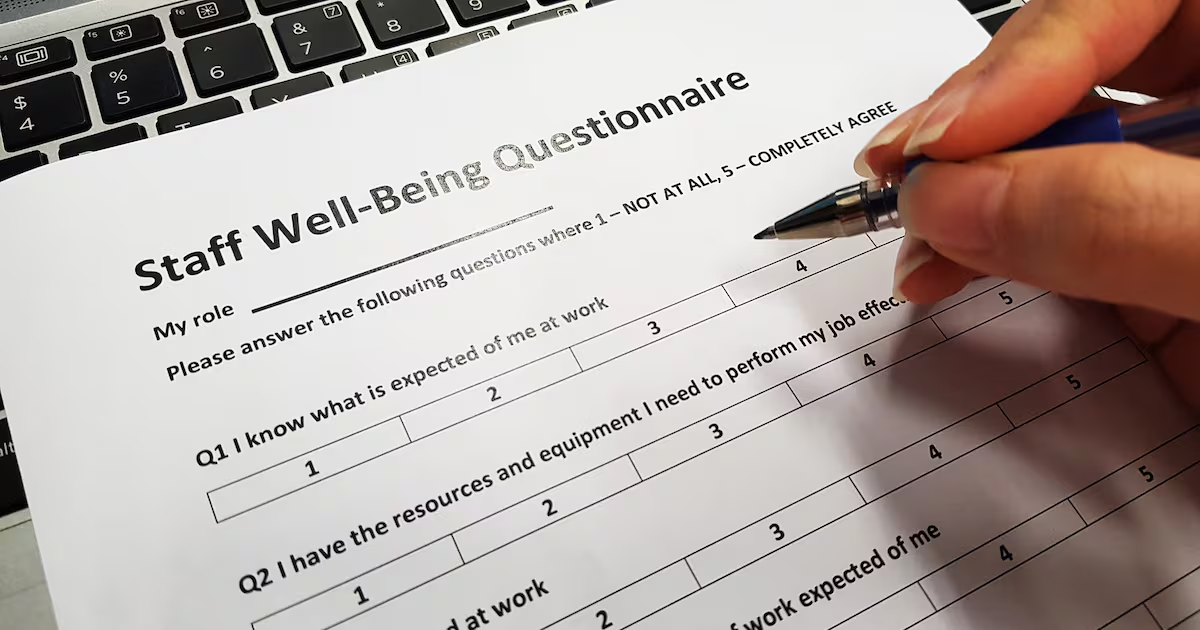
Businesses are spending more than ever on workplace wellbeing initiatives, but a damning new report claims the effort is largely failing staff, exposing what experts warn is a fundamentally 'broken' system.The study, published by Optimism Consulting in partnership with the Parliamentary Policy Liaison Group on Workplace Wellbeing, analysed 23 organisations employing more than 130,000 workers across the public, private and third sectors.It found that despite massive investment in wellbeing initiatives, the majority of businesses have 'almost nothing to show for it'.The core problem lies not in a lack of intent, but in how staff are being managed, with researchers warning the entire structure is 'upside down'. Businesses are said to be operating without meaningful insight into wellbeing, highlighting a clear imbalance in how different areas of performance is monitored. For example, while departments such as finance have clear, real-time insight, employers are usually relying on outdated information on staff wellbeing.By the time information from annual surveys is reviewed, conditions on the ground have already changed, meaning businesses are unable to respond effectively.This so-called 'intelligence gap' is one of several structural failures identified in the study, which found that not a single organisation assessed reached the highest level of maturity in any key area of people management. Businesses are spending more than ever on workplace wellbeing initiatives, but a damning new report claims the effort is largely failing staff (stock image)Employees' struggles are often invisible until they manifest as extended sick leave, falling performance or sudden resignations, the report found. Middle managers, widely regarded as the link between staff and leadership, are described by the report as being 'set up to fail', as they lack both the authority and the data needed to intervene early.At the same time, a workplace culture that rewards stoicism over honesty is said to deepen the issue, with many employees reluctant to disclose stress or burnout, creating what the report calls a 'brave face gap'.The findings also reveal growing frustration within HR departments, where staff who are aware of workplace problems are struggling to persuade leaders to act.This creates a cycle in which wellbeing programmes are repeatedly rolled out and renewed, despite little evidence of any meaningful impact, the report said.Maria Paviour, occupational psychologist and principal of Optimism Consulting, said the findings revealed a mismatch between good intentions and real-world outcomes.'Organisations genuinely care about their people,' she said. 'The question is whether the system they're using allows that intent to translate into impact.''What we've found, consistently and across every sector and scale, is that it doesn't - not because of a lack of will, but because the architecture was built upside down.' Businesses are said to be operating without meaningful insight into wellbeing, highlighting a clear imbalance in how different areas of performance is monitored (stock image)Paviour explained that the way information and support currently flow within organisations fails to address the reality of everyday wellbeing. 'Data flows upward, programmes flow downward, and the place where performance and wellbeing are actually generated - the relationship between a person and their manager - is the most neglected point in the whole system,' she said.The report argues that this is particularly damaging given evidence that managers are responsible for team wellbeing, but most times receive the least amount of support. Experts behind the study say meaningful change will require a complete overhaul of how organisations approach workforce wellbeing. They recommend managers stop asking employees to fill out retrospective wellbeing surveys and towards real-time data that allows early intervention.Rather than increasing spending, companies should instead focus on using better intelligence to direct support where it is needed. One organisation included in the study found success by using live data to identify and assist struggling teams before issues escalated. Without fundamental reform, employers risk continuing to invest heavily in wellbeing initiatives that offer little tangible benefit, the report warns, leaving workers unsupported and businesses no closer to solving the problem.
Businesses spending a fortune on wellbeing but still failing staff
Businesses in the UK are pouring record sums into workplace wellbeing, but new research suggests staff are seeing little real benefit.
TL;DRAI
Optimism Consulting study across 23 organizations (130k employees) finds that wellbeing investment yields minimal results because architecture is upside-down (retrospective surveys vs real-time finance data, managers lack data/authority). For tech leaders: without real-time intelligence and early intervention, no organizational program succeeds regardless of budget.
650 words~3 min read