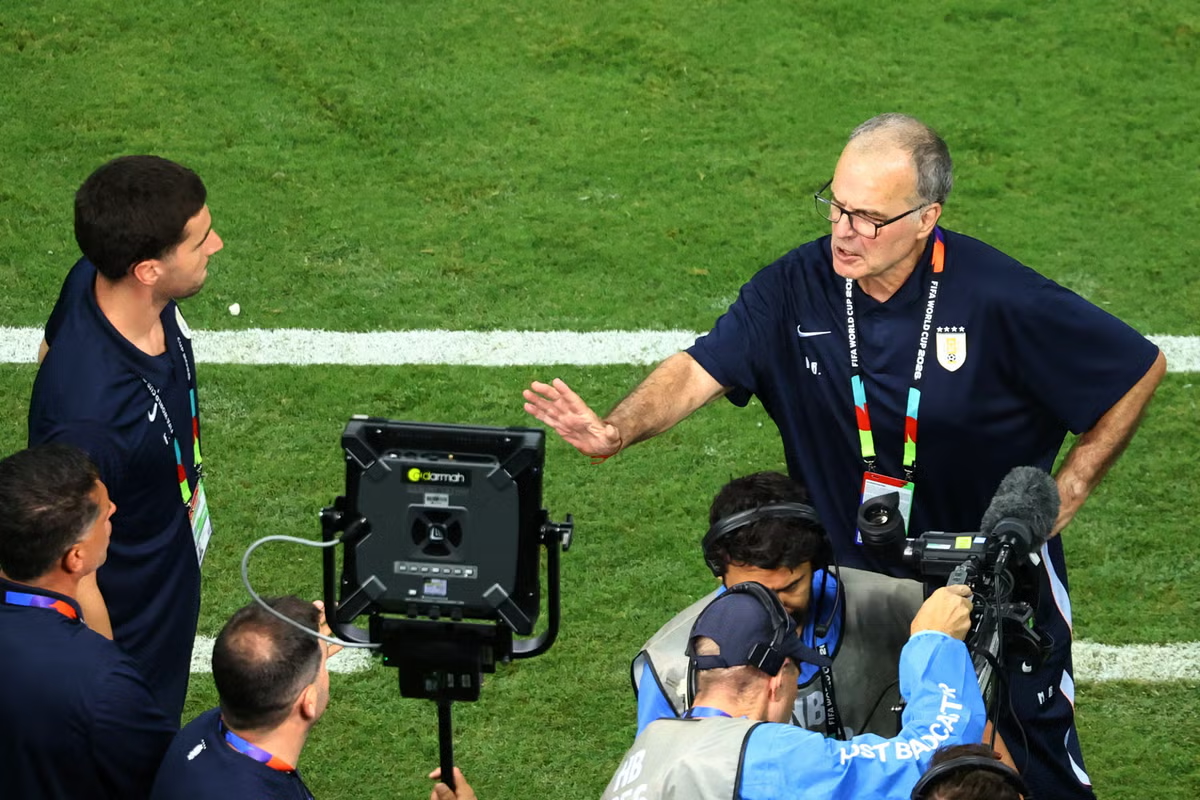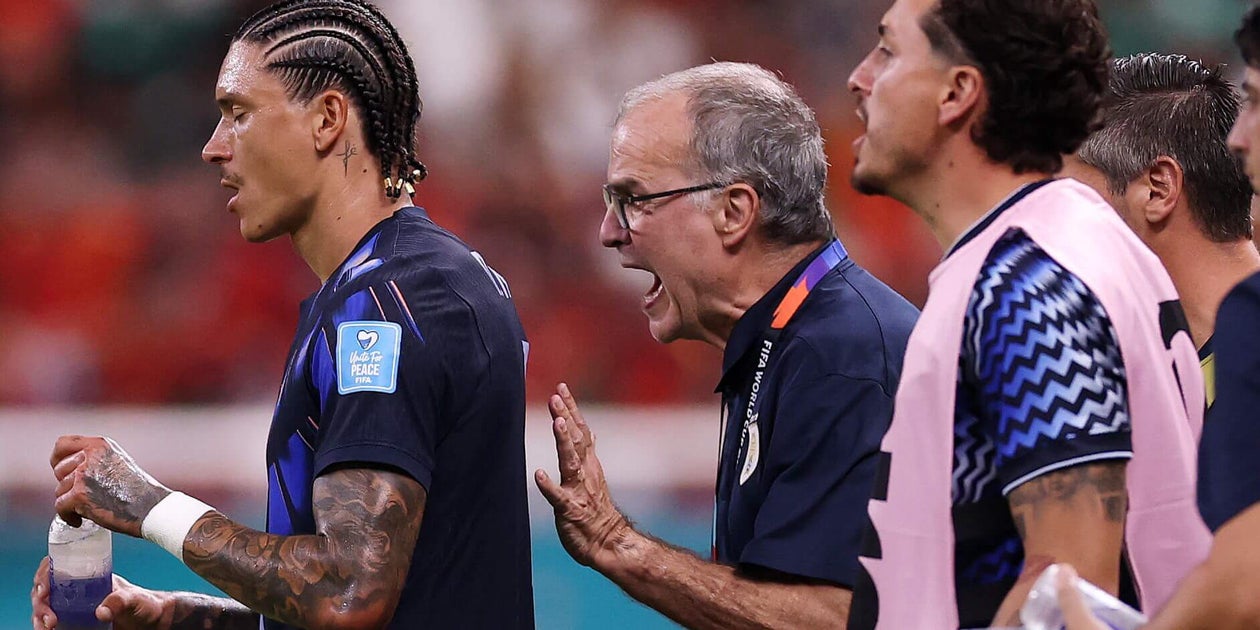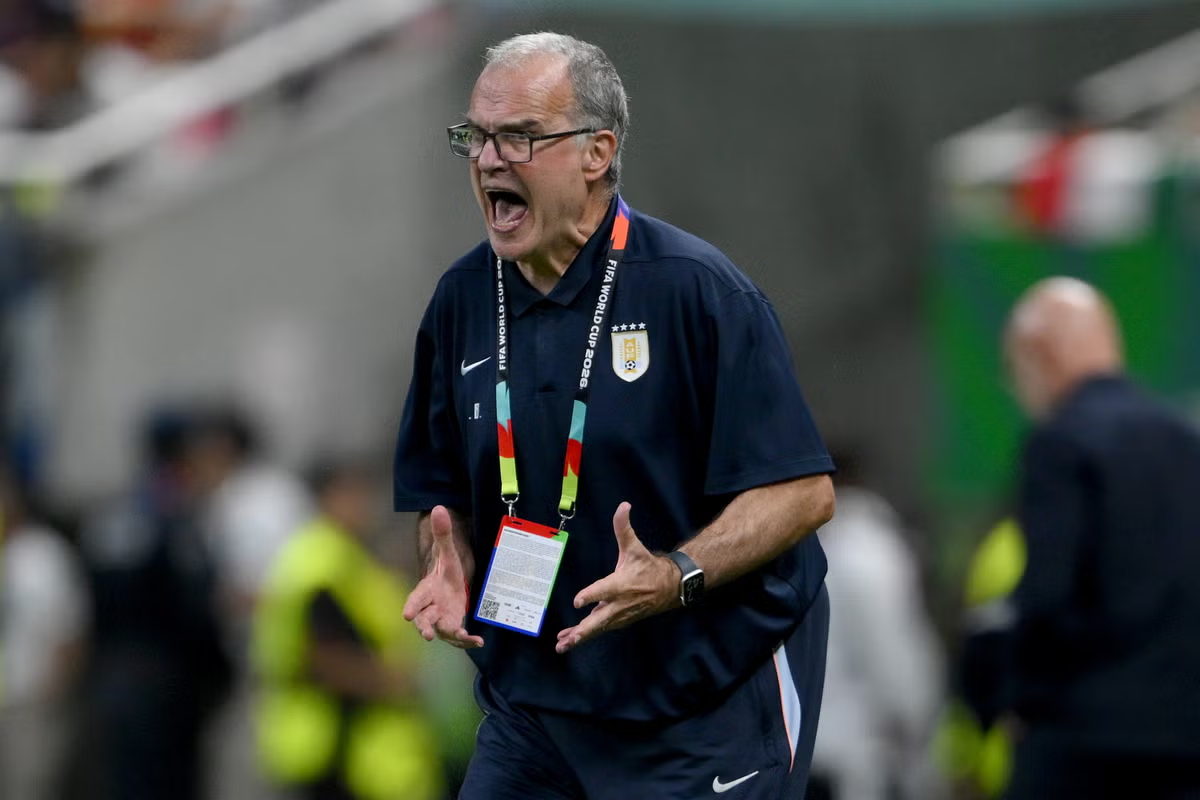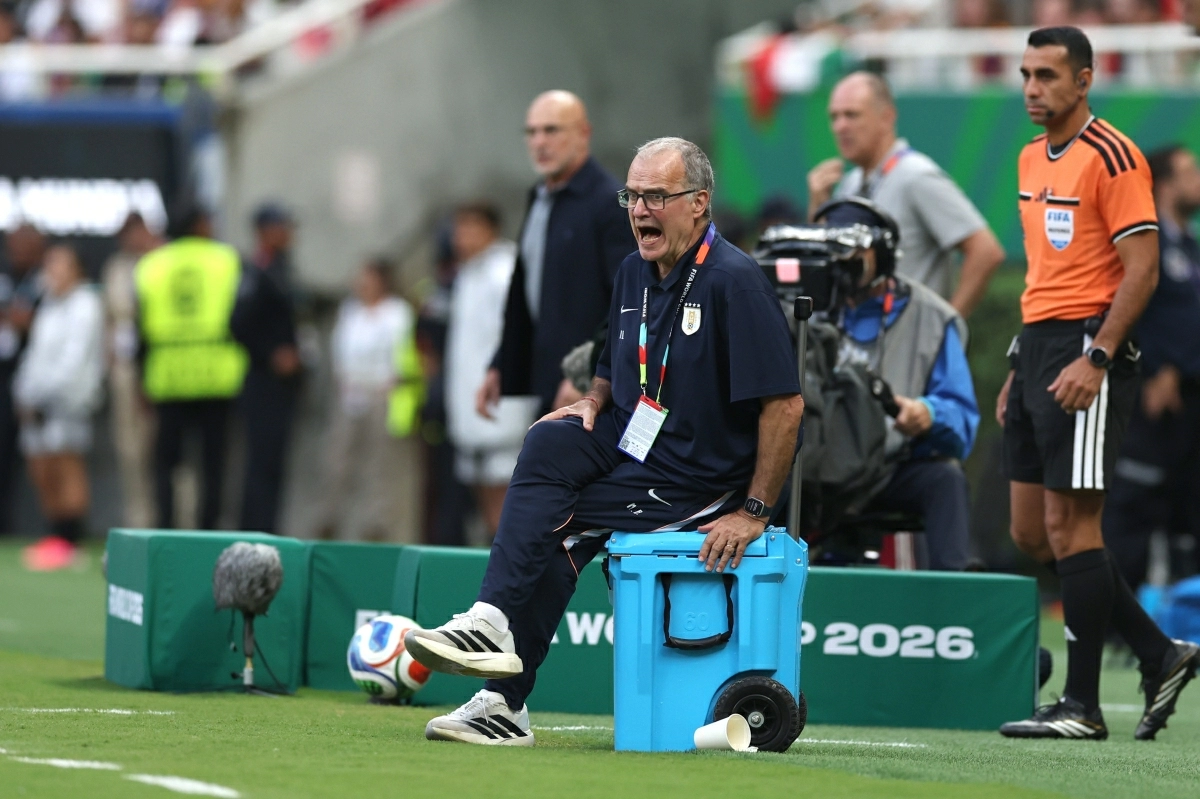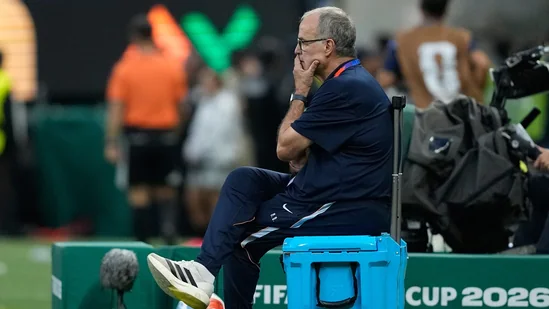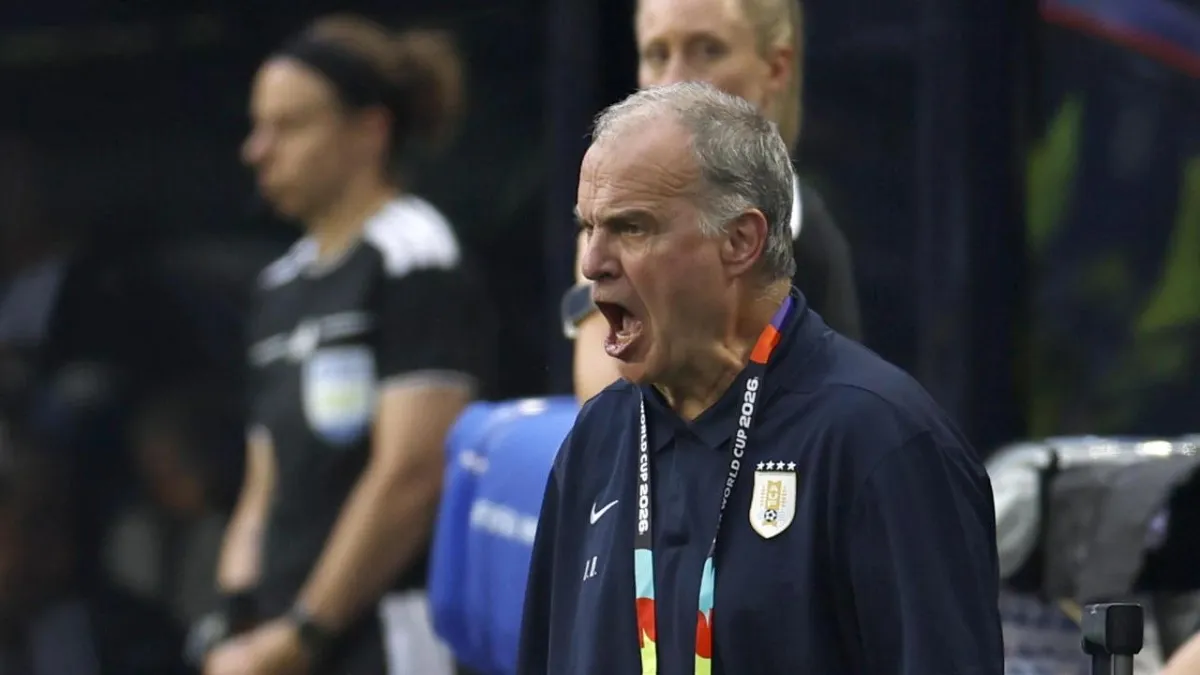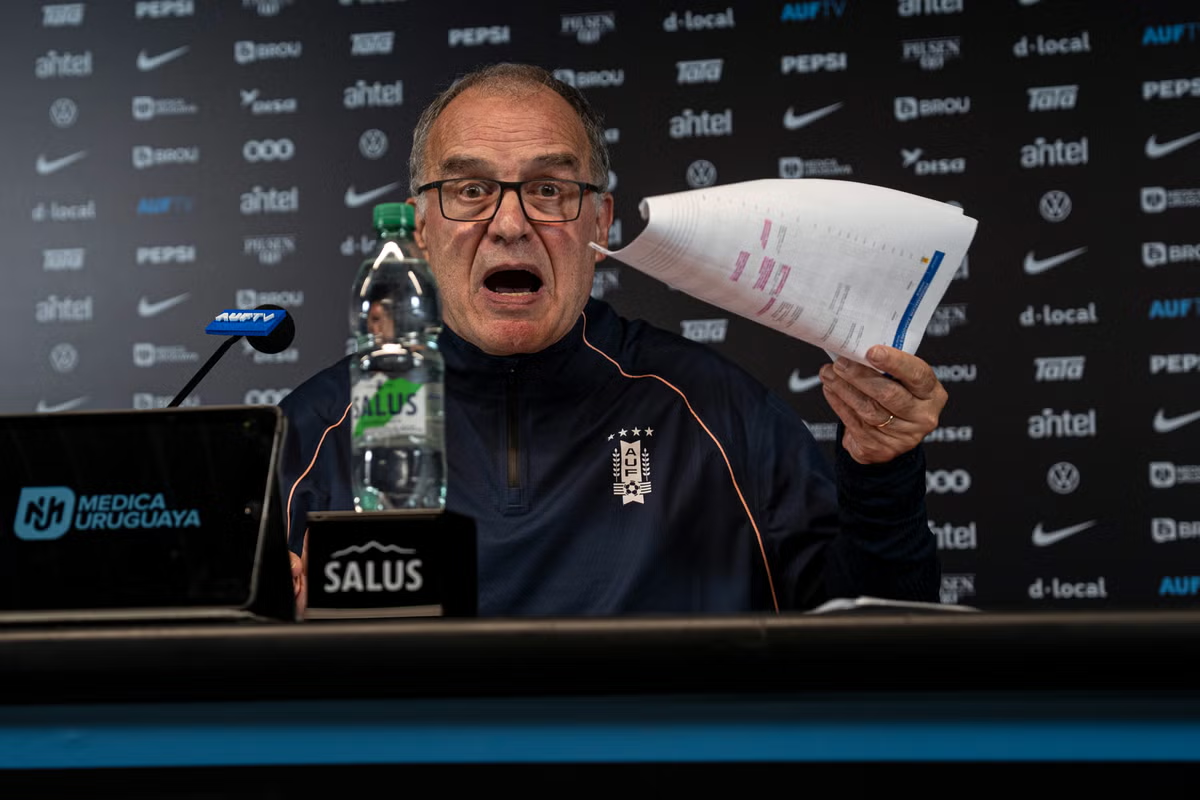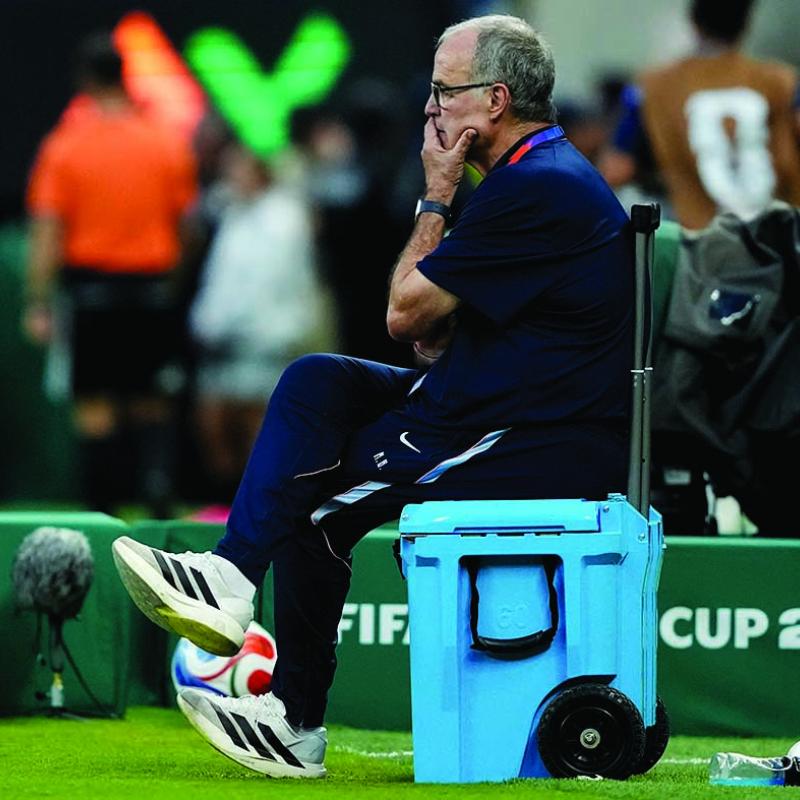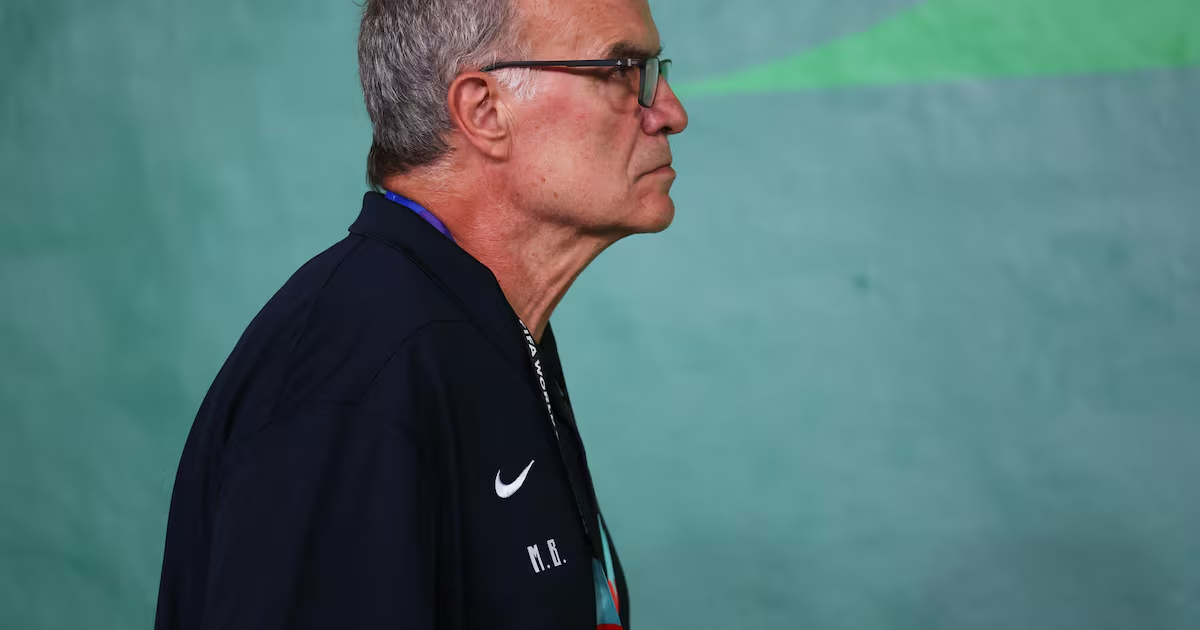
In the last few minutes of their match against Spain, Uruguay gave up hope of staying in the World Cup and decided to go out kicking and screaming. Nicolás de la Cruz fouled Nico Williams, who was later ruled out for the remainder of the World Cup, while Agustín Canobbio was sent off for a vicious lunge on Pau Cubarsí. Then the final whistle blew and most of the Uruguayan players burst into tears. In Uruguay this is considered a dignified exit because the boys showed they really cared.It has been fascinating to observe the fury and venom that has since surrounded the team and particularly the departing coach, Marcelo Bielsa.Bielsa is admired around the world by those who see in him a figure of passion, sincerity and integrity, but he has also accumulated plenty of enemies who are now revelling in his downfall.On the political right – currently ascendant in much of South America, including his native Argentina – he is seen as a leftist media-darling fraud, another millionaire communist failure (Bielsa is not a communist). Most of the criticism, however, targets his personality rather than his politics.The general reason why Uruguay failed at the World Cup is that they no longer have forwards of the calibre of Luis Suárez, Edinson Cavani and Diego Forlán, who for the last 25 years have given their battling teams a cutting edge.The particular reasons have much to do with Suárez, who fell out with Bielsa at the 2024 Copa América and retired from international football, then went on TV to hammer him.MONTEVIDEO, URUGUAY - NOVEMBER 21: Luis Suarez (L) and Giorgian de Arrascaeta (R) of Uruguay talk with Marcelo Bielsa coach of Uruguay during the FIFA World Cup 2026 Qualifier match between Uruguay and Bolivia at Centenario Stadium on November 21, 2023 in Montevideo, Uruguay. (Photo by Ernesto Ryan/Getty Images) Suárez’s basic message was that Bielsa’s cold and remote personality and authoritarian way of working had destroyed the special team spirit that had always distinguished Uruguay. Maybe this was true, maybe it was a self-serving diatribe from a declining 37-year-old angry at being phased out. It didn’t really matter. Bielsa now found himself in a position a bit like that of Mick McCarthy in 2002 after Roy Keane had told the world he was a terrible manager, a clown etc.When the country’s greatest player turns on you, sections of the public and the media will follow him. Even Bielsa’s captain, Fede Valverde, did not dare to publicly disagree with Suárez.There’s no need to relitigate the details of their dispute. Suffice it to mention one story told by Suárez. One night during the 2024 Copa, Uruguay arrived at their hotel and saw some fans had gathered outside to greet them. Bielsa sent word through an assistant that the players were not to stop and talk to the fans on their way in to the hotel. Led by Suárez, the players disobeyed and greeted the fans.The next day Bielsa did a team talk where he discussed the sources of motivation. Suárez: “[Bielsa] said, ‘For whom does the Uruguayan player compete? For the people.’ And we were all just looking at each other – ‘The people? Yesterday you told us not to speak to them!’”So, he loves the people in the abstract and not in the particular, Bielsa’s right-wing critics cackle. It does seem generally true that, for Bielsa, principles come first, then people. If the people at your disposal can’t or won’t carry out the principles, then you find new people – because the principles, being correct, will never change.The way some talk about Bielsa, you’re reminded of Stanley Kubrick, the perfectionist who demanded his actors reshoot the same scene over and over. He supposedly made Shelley Duvall do the “baseball bat” scene in The Shining 127 times.Needless to say, many actors hated being treated this way. Few put it more starkly than the late Robert Duvall (no relation to Shelley). “To me, the great Stanley Kubrick was an actor’s enemy,” said Duvall, by this point in his 80s and not inclined to pull punches.American director and screenwriter Stanley Kubrick on the set of his movie Barry Lyndon. (Photo by Sunset Boulevard/Corbis via Getty Images) “He was an actor’s enemy. I can point to movies he’s done, the worst performances I’ve ever seen in movies: The Shining, A Clockwork Orange. Terrible performances, maybe great movies but they’re terrible performances. How does he know the difference between the first take and the 70th take? I mean, what is that about?”So what is it about? Kubrick fans might say, actually, Stanley was deliberately looking for the sort of lifeless, dead-eyed performances you only get when you make an actor repeat a scene so many times that you break their spirit. Kubrick sceptics would see the repetition as an obsessive-compulsive symptom.Either way, Kubrick’s is a way of making films in which the actors are entirely subordinate to the authority and will (maybe the genius) of the auteur. They are instruments, not agents – paid professionals who are expected to carry out their tasks without question or complaint.That’s also what Bielsa expects from his players. Looking at his career, you find that he never makes any special effort to build relationships with individual members of the group or actively to foster team spirit.His method assumes that spirit emerges naturally from the virtuous circle of the team working hard, following the plan and getting results. And he has built some teams with superb, indomitable spirit: the Leeds side that won promotion, the Athletic Bilbao side that stormed Old Trafford, and so on.But there are also counter-examples, such as Uruguay 2026, or his Argentina squad that failed at the group stage of the 2002 World Cup – 23 terrified and lonely individuals. And even Bielsa’s happy teams tend to blow up after a while, exhausted by the relentless demands. As he admitted himself, answering the criticism from Suárez: “I am toxic.”[ Marcelo Bielsa era over as Leeds sack head coachOpens in new window ]As Bielsa was making his name as a coach in the 1990s and 2000s, people were fascinated by his obsessive working habits – watching thousands of videos of old football matches and recording his analysis in thousands of pages of notes, neatly handwritten in different-coloured pens.You imagine he must regard the advances in information technology with a certain bitterness. All that time he put in – all that work – and the edge he thought he had built up is dissolved in a few years by the internet and statistics. Some of today’s leading analysts say that actually watching the game distracts them from the real essence of it, which is best expressed through strings of numbers.Meanwhile, Bielsa is left with a giant handwritten archive that isn’t even searchable. After this terrible World Cup, his style of man-management is looking even less fashionable than his methods of research.
Uruguay exit World Cup in tears, but will they cry for departing coach Marcelo Bielsa?
Bielsa’s man-management style is akin that of Stanley Kubrick – the players are subordinate to the auteur’s vision
TL;DRAI
Bielsa's cold, authoritarian leadership destroyed Uruguay's team cohesion; Luis Suárez publicly blamed his people-second approach. For tech leaders: principle-first governance without relationship-building fractures teams—Bielsa's 'toxic' admission is a cautionary parallel.
1,151 words~5 min read