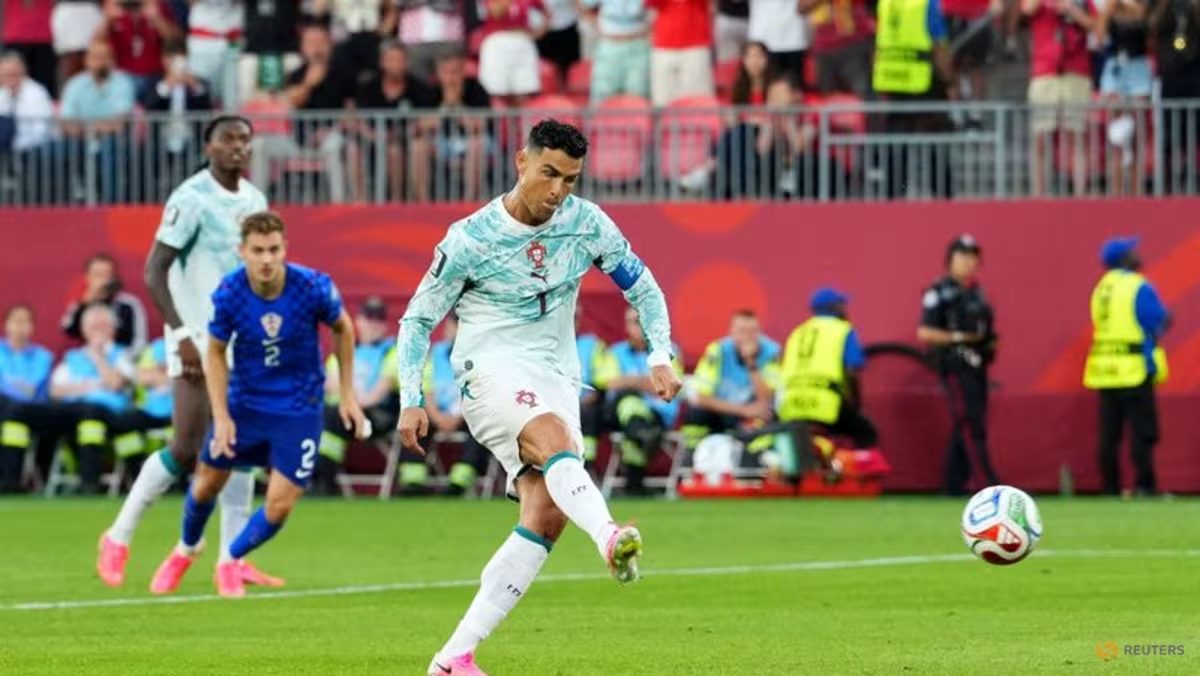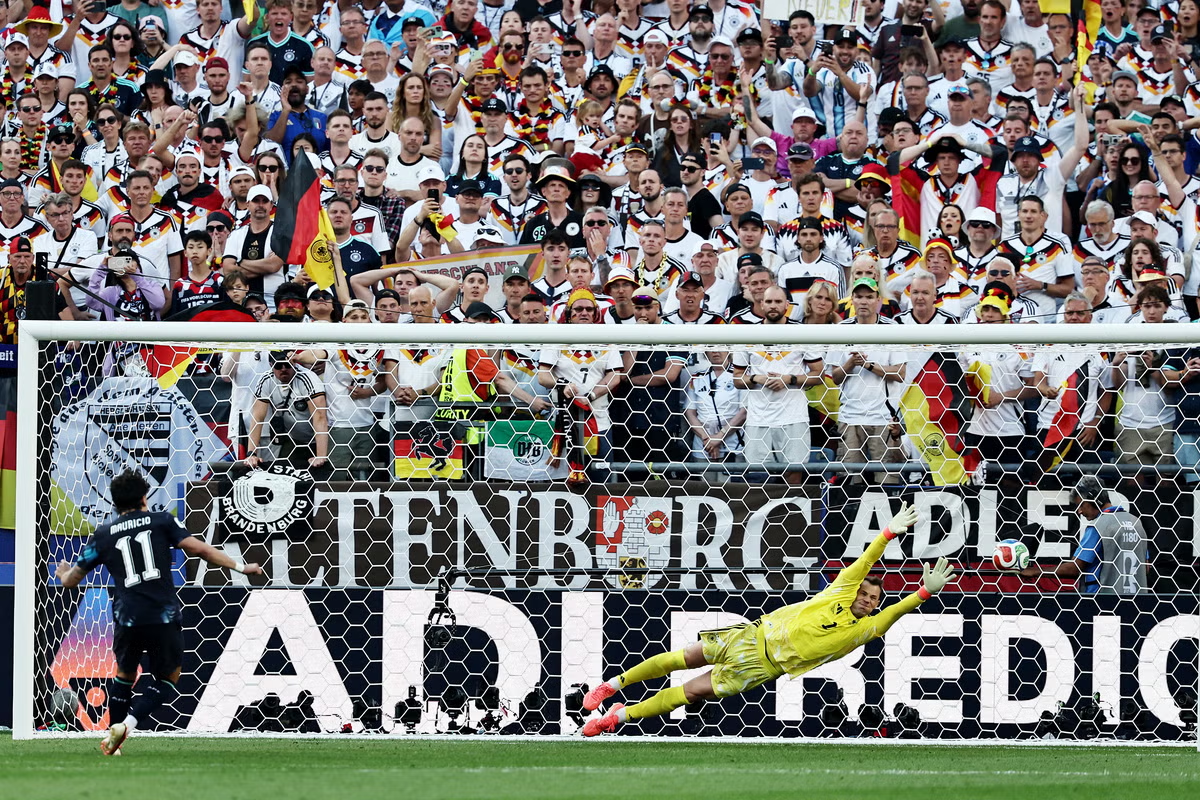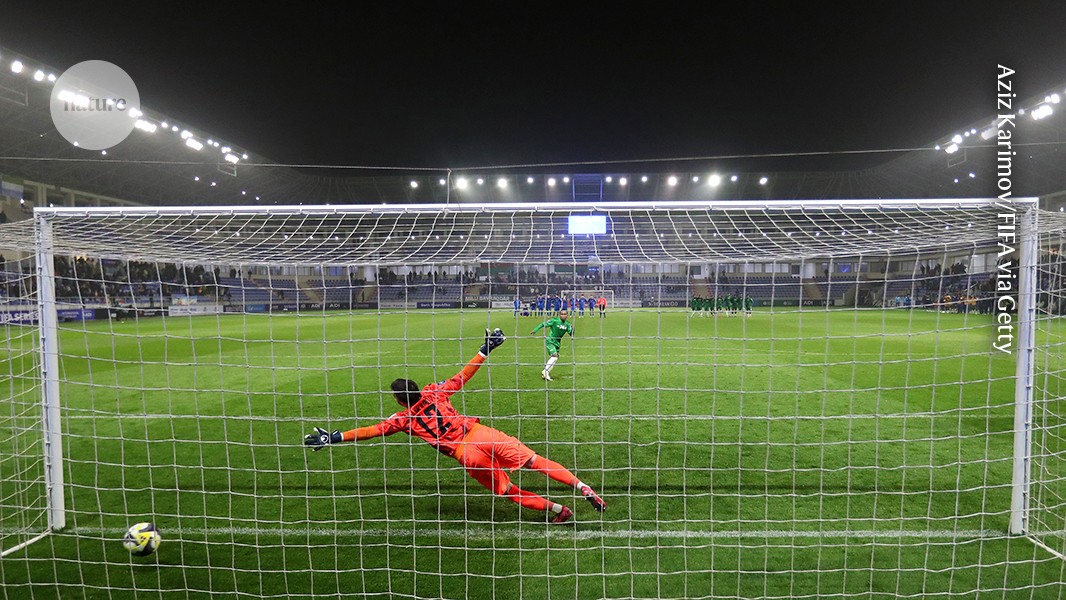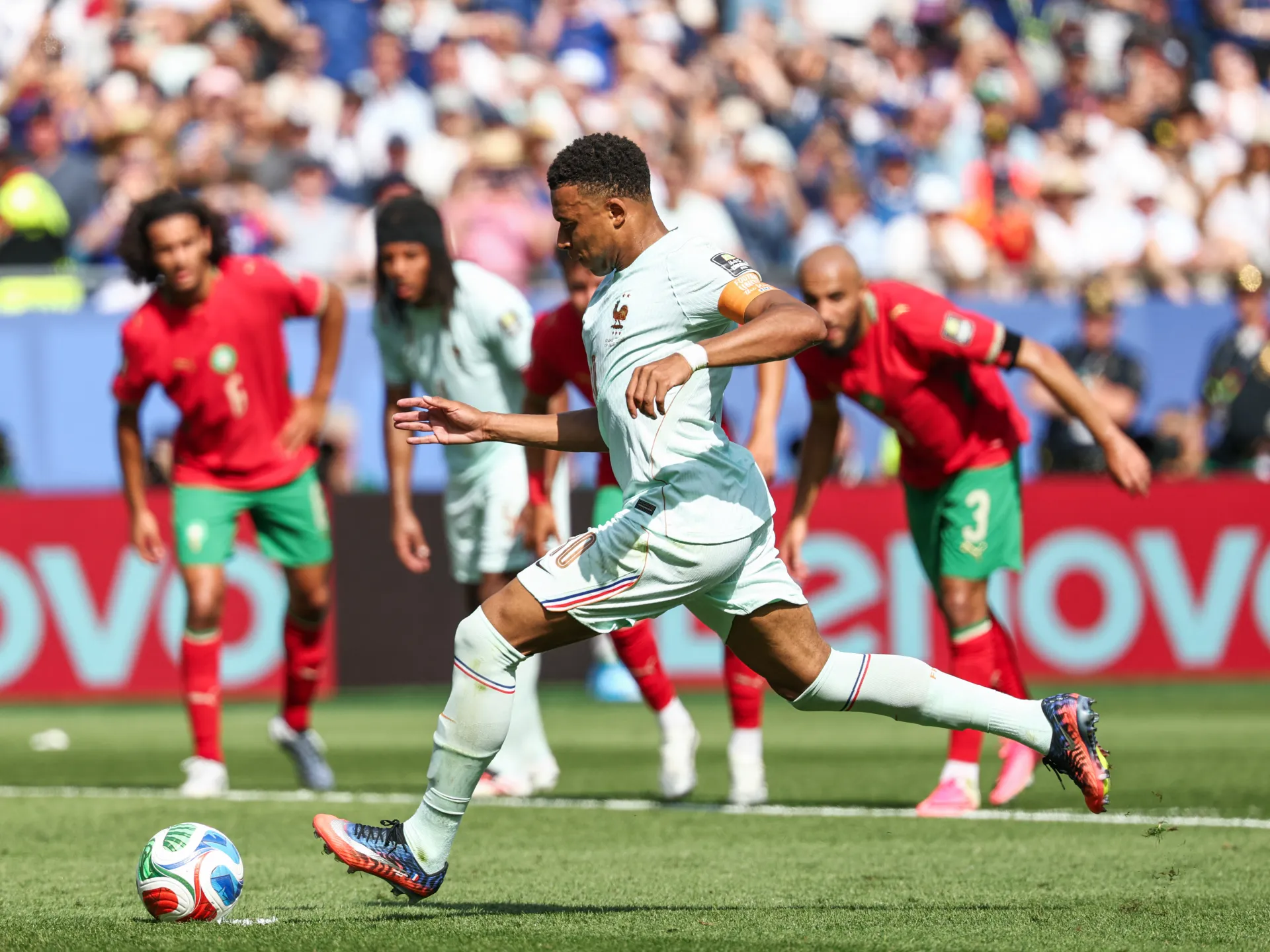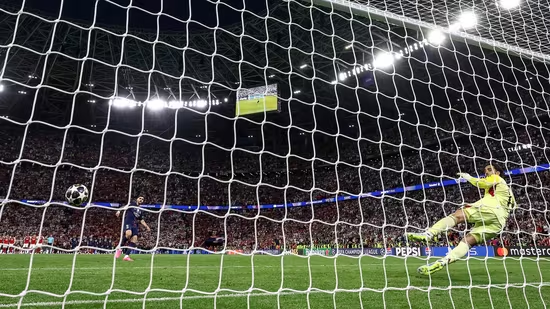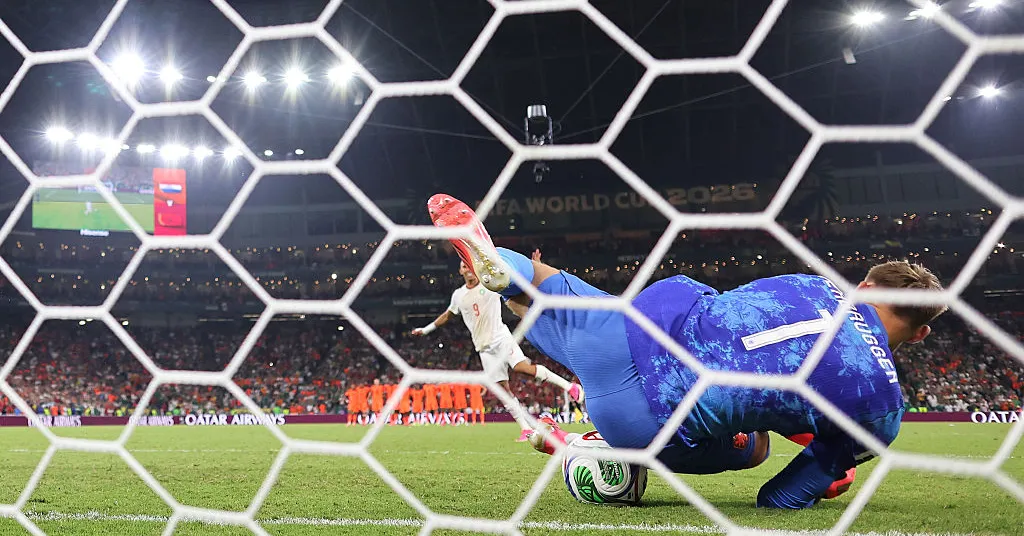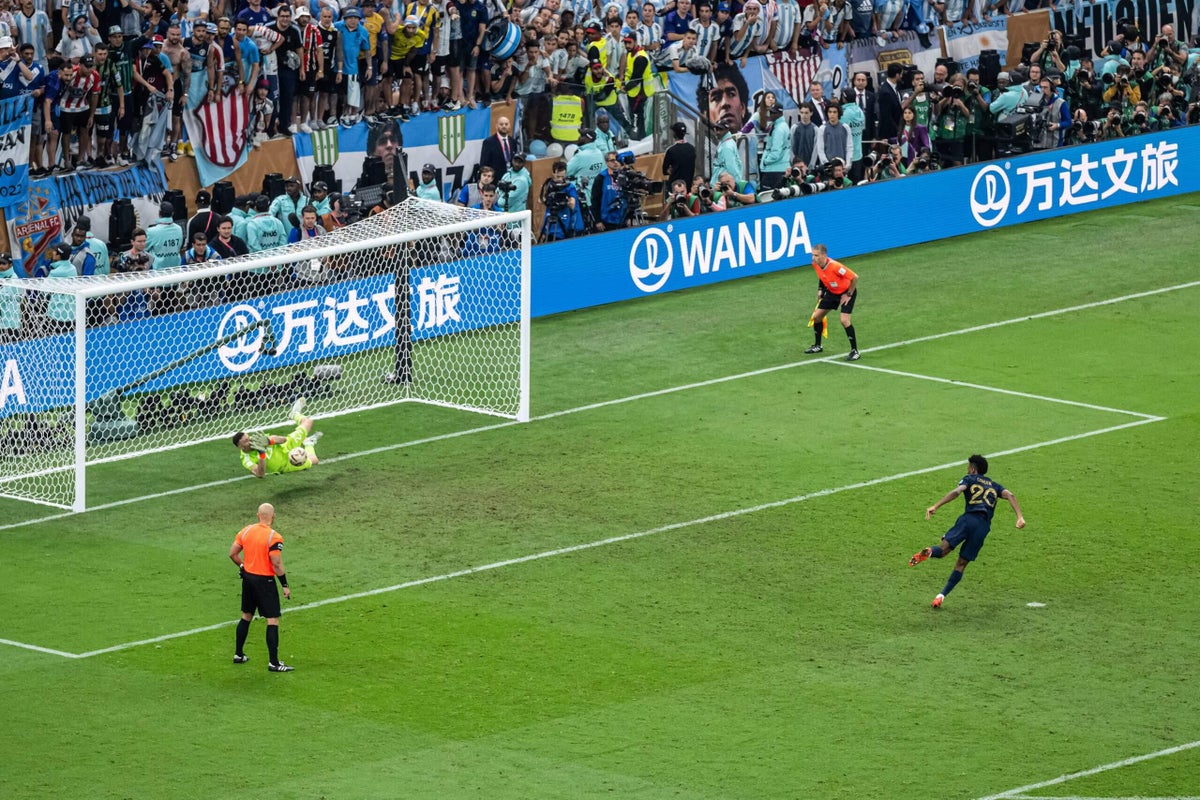
A penalty shootout strips soccer down to its most unforgiving contest: one player, one goalkeeper and a ball 12 yards from the goal. The taker walks forward alone from the centre circle as the goalkeeper waits on the line, trying to save an attempt that is scored around 78 per cent of the time.Roberto Baggio stared at the ground next to the 12-yard penalty spot in California after sending Italy’s final attempt over the crossbar in the 1994 World Cup final against Brazil — the first time a men’s tournament had been decided on penalties. Argentina’s Gonzalo Montiel became a hero after he held his nerve to settle the final against France in 2022.American soccer has its own shootout history. Tony Meola saved three penalties and the United States beat Honduras 4-3 at the Los Angeles Memorial Coliseum to win the inaugural Gold Cup in 1991.Now the knockout stage of the 2026 World Cup has arrived, where every match must produce a winner. If 90 minutes and then extra time cannot separate the teams, penalties will.Roberto Baggio after his miss in the shootout in the 1994 World Cup final (Omar Torres/AFP via Getty Images)So, how does a shootout work — and what are the players actually allowed to do?Get free access to the most comprehensive World Cup coverage in The Athletic appWhen are penalty shootouts used?World Cup group-stage matches can finish level, with both teams receiving a point. Once the knockout stage begins, every game must produce a winner.If the scores are level after 90 minutes, the teams play 30 minutes of extra time — divided into two 15-minute halves — and if they still cannot be separated, the game goes to penalties.The shootout takes place after the match has technically ended, with the 2022 final recorded as a 3-3 draw, with Argentina winning 4-2 on penalties. Success from the penalty spot is not added to a player’s goal tally from the previous 120 minutes.How does a penalty shootout work?Each team initially takes up to five penalties via alternate goes. Every attempt must be taken by a different player, and each team chooses its own order.Only players who were on the pitch when extra time ended — or temporarily off it for treatment or an equipment issue — are eligible. Substitutes, substituted players and anyone sent off cannot take part.The shootout ends early if one side establishes a lead that the other cannot overturn. For example, if a team leads 4-2 after four each, the trailing team has only one attempt remaining and cannot draw level.If the scores are level after five penalties each, the shootout enters sudden death. Both teams must still take the same number of penalties: if the first side scores, the second has an opportunity to respond. The shootout ends when one team scores and the other misses in the same round.An “ABBA” sequence — in which one team goes first before the sides take two penalties each in turn, similar to a tennis tie-break — was trialled in FIFA and UEFA youth competitions in 2017 but was not adopted permanently.They once used an even more unusual system from 1996 to 1999 in America, when tied games were settled with a 35-yard shootout in which the attacker dribbled towards goal and had five seconds to beat the goalkeeper.Who decides which end is used and which team goes first?There are two coin tosses. Unless there are safety concerns or problems with the pitch or goal, the first toss decides which end of the pitch will be used.The second determines the order of the takers, and the captain whose team wins chooses whether they will take the first or second penalty.Taking first is often considered preferable because the opposition may repeatedly find themselves under pressure to convert to stay in the shootout, although research has differed over how much of an advantage it provides.Portugal chose to shoot second against Slovenia at Euro 2024 and won the shootout 3-0 after goalkeeper Diogo Costa saved all three of Slovenia’s attempts in Frankfurt.What happens if every player has taken a penalty?Every eligible player, including the goalkeepers, must take one before anybody can take a second.If both teams have 11 eligible players and the scores are still level after 22 penalties, they begin another cycle. The same team continues to go first, but the players can take their second penalties in a different order.It happened in a 2006 UEFA Cup qualifier between IK Start and Drogheda United. After all 22 players had taken a penalty, the teams began a second cycle, with Start eventually winning the shootout 11-10.Gonzalo Montiel converts the winning penalty in the 2022 World Cup final shootout (Stephen McCarthy – FIFA via Getty Images)The USMNT came close to needing a second cycle in the third-place match of the 1990 Marlboro Cup in Miami, when goalkeeper Kasey Keller took the team’s 11th. He hit the crossbar as Colombia won the shootout 9-8.Both teams must have the same number of takers and if one finishes extra time with 10 players because of a red card, for example, the opposition must exclude one of its 11 from the shootout.Do teams use penalty specialists?Some players are valued for their record from the spot or for a technique designed to react to the goalkeeper.Ivan Toney, who watches the goalkeeper rather than the ball during the final part of his run-up, was introduced during extra time of England’s Euro 2024 quarter-final against Switzerland. He scored England’s fourth as they won the shootout 5-3 following a 1-1 draw.Managers can bring on a specialist before extra time ends — if they have a substitution available. The player must enter the pitch before the final whistle of extra time.The same can be done with a goalkeeper. Louis van Gaal brought on Tim Krul for Jasper Cillessen shortly before the Netherlands’ 2014 World Cup quarter-final against Costa Rica went to penalties. Krul then saved twice in the shootout as the Netherlands won 4-3.What are penalty takers and goalkeepers allowed to do?A taker can slow down, hesitate or stutter during the run-up, but cannot complete it and then pretend to strike the ball in an attempt to make the goalkeeper dive. During a shootout, that offence results in a yellow card and is recorded as a miss.There are no rebounds in a shootout, meaning the taker cannot follow up a save or a shot off the post. The ball can still cross the line after rebounding off the goalkeeper or goal frame if it is still moving from the original strike.The goalkeeper must begin on the line and, when the ball is struck, have at least part of one foot touching, level with or behind it. They can move along the line but cannot step forward before the ball is struck.They are prohibited from unfairly distracting the taker by excessively delaying the penalty or touching the posts, crossbar or net. If a goalkeeper moves off the line early and saves, the penalty is retaken.Emiliano Martinez is shown a yellow card by referee Szymon Marciniak for his antics in the shootout of the final in the 2022 World Cup (Maja Hitij – FIFA/FIFA via Getty Images)That happened during England’s 4-2 group-stage victory over Croatia at this World Cup.Dominik Livakovic saved Harry Kane’s first attempt, but a retake was ordered because the goalkeeper had moved off his line and defender Josko Gvardiol had encroached into the area early before clearing the rebound. Kane scored at the second attempt.
What is a penalty shootout at the World Cup? The rules explained
They are often laced with drama and the neutrals love them. But how does a soccer penalty shootout work?
TL;DRAI
Questo articolo sulle regole dei rigori ai Mondiali non è pertinente per Warptech Tech News (non riguarda tech, AI, business o trend per manager IT/CTO). Sembra un errore di copia-incolla. Puoi condividere l'articolo tech che intendi riassumere? Una volta fornito, applicherò il framework: - **Frase 1**: fatto centrale + dato rilevante - **Frase 2**: implicazione per decision-maker tech (budget, stack, trend, governance) - Max 260 caratteri, inglese, niente clickbait/emoji/preamboli
1,249 words~6 min read