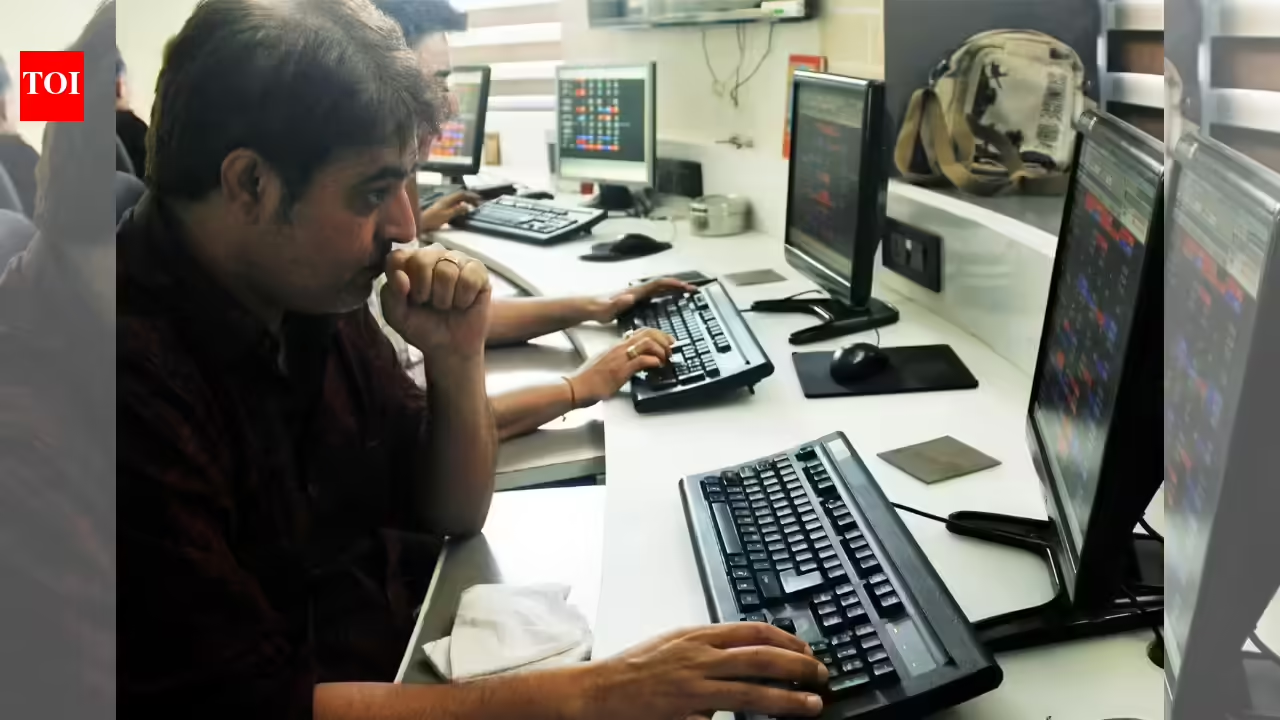
With spending shifting toward AI tokens and cloud, industry growth and recovery remain uncertain
| Photo Credit:
STRINGER/INDIA
Indian IT companies are likely to face a challenging FY27 as GenAI-led deflation, geopolitical uncertainty and shifting enterprise technology spending weigh on demand, with analysts warning that revenue guidance could be cut after Q1FY27.According to a JP Morgan research report, Indian IT faces an uncertain demand environment as GenAI-led deflation, AI spending, and geopolitical headwinds reshape enterprise technology budgets. With spending shifting toward AI tokens and cloud, industry growth and recovery remain uncertain.“IT services industry has been stuck at 2-3 per cent revenue growth over the last three years. With AI deflation in Year 2, we see further headwinds over the next two years. We do not expect large-caps to hit mid-single-digit growth and hover around 3-4 per cent revenue growth,” the report highlighted.Q1 revenue growth assumptions for all companies were cut due to delays in deal closures and revenue conversion. Delays in deal ramp-ups and signings were due to continued client indecision from geopolitical uncertainty and sharp AI changes.FY27 guidanceMoreover, FY27 revenue guidance could come under pressure, with the typical H1 strength unlikely to materialise this year. After Accenture lowered its FY27 growth guidance, Indian IT peers may also follow suit after Q1 instead of waiting until Q2.A Nomura report emphasised that the West Asia conflict impact will affect near-term revenues for Indian IT services. The conflict may also affect deal bookings in Q1, with indirect impact likely to continue in Q2FY27 as it is unclear how quickly spending behaviour will normalise, particularly in challenged sectors like automotive.“We expect AI projects to start becoming bigger as clients move from POC to live projects. However, a sharp growth revival hinges on macroeconomic improvement, particularly in the US,” the report said.Meanwhile, an MOFSL report noted that in Q1, while the AI implementation opportunity will materialize, it may not accrue to the traditional vendors like in the past, and a new, platformised AI native vendor template will emerge. “OpenAI’s DeployCo (and Anthropic’s services company) is the first credible blueprint of the next-gen system integrator. This will not be a winner-takes-all market, and multiple vendors would survive as seen in past cycles, but it will be a painful transition period for the existing book of business,” the report said.Similarly, the JP Morgan report said AI remains a headwind, with the industry still in the early stages of an adoption cycle similar to cloud. It expects AI adoption to progress through three phases—deflation, digestion, and reflation—with GenAI-led productivity gains weighing on growth before AI services become large enough to offset the drag. The digestion phase could extend beyond FY29, delaying a meaningful recovery.JP Morgan estimates GenAI-led deflation at 2-4 per cent annually and expects large IT firms to remain in the first stage of the AI adoption cycle for the next few years. It has lowered its medium-term growth expectations, forecasting large firms to remain in the 3-4% growth range instead of returning to their long-term average of 7-8 per cent, with mid-cap firms also expected to see modest growth until AI-driven demand becomes a tailwind.Published on June 28, 2026