JavaScript runs on something like 98% of websites you visited today, and every modern browser ships with an engine built specifically to execute it. That is the short version. The longer version, and the one worth reading if you actually want to learn the language or decide whether to learn it, takes a few more paragraphs. So what is JavaScript, really? It is a scripting language that started life inside the browser in 1995, got a standards body wrapped around it, and now powers everything from Netflix's UI to PayPal's backend to the chat widget you ignored on a SaaS landing page this morning.
I have shipped production code in JavaScript for years. I have also been burned by it, which I will get to. Here is the explainer I wish someone had handed me when I started.
The Short JavaScript Definition (Without the Fluff)
JavaScript is a high-level, dynamically typed, interpreted programming language that was originally designed to make web pages do things after they loaded. Click a button, fetch some data, update part of the page without a full reload. That was the original job.
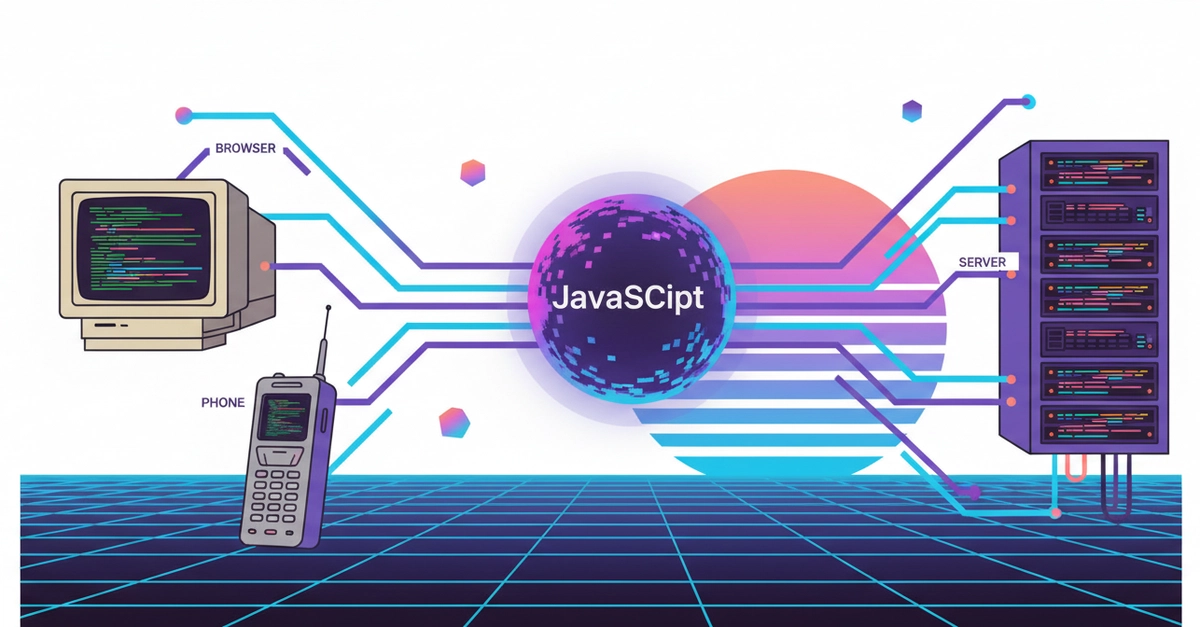
It has grown well past that. The same language now runs on servers (through Node.js), on phones (via React Native), on desktops (Electron apps like VS Code and Slack), and on tiny IoT devices. The language itself follows a specification called ECMAScript, maintained by a committee called TC39 under Ecma International. When someone says "ES6" or "ES2015," they are talking about a version of that spec.