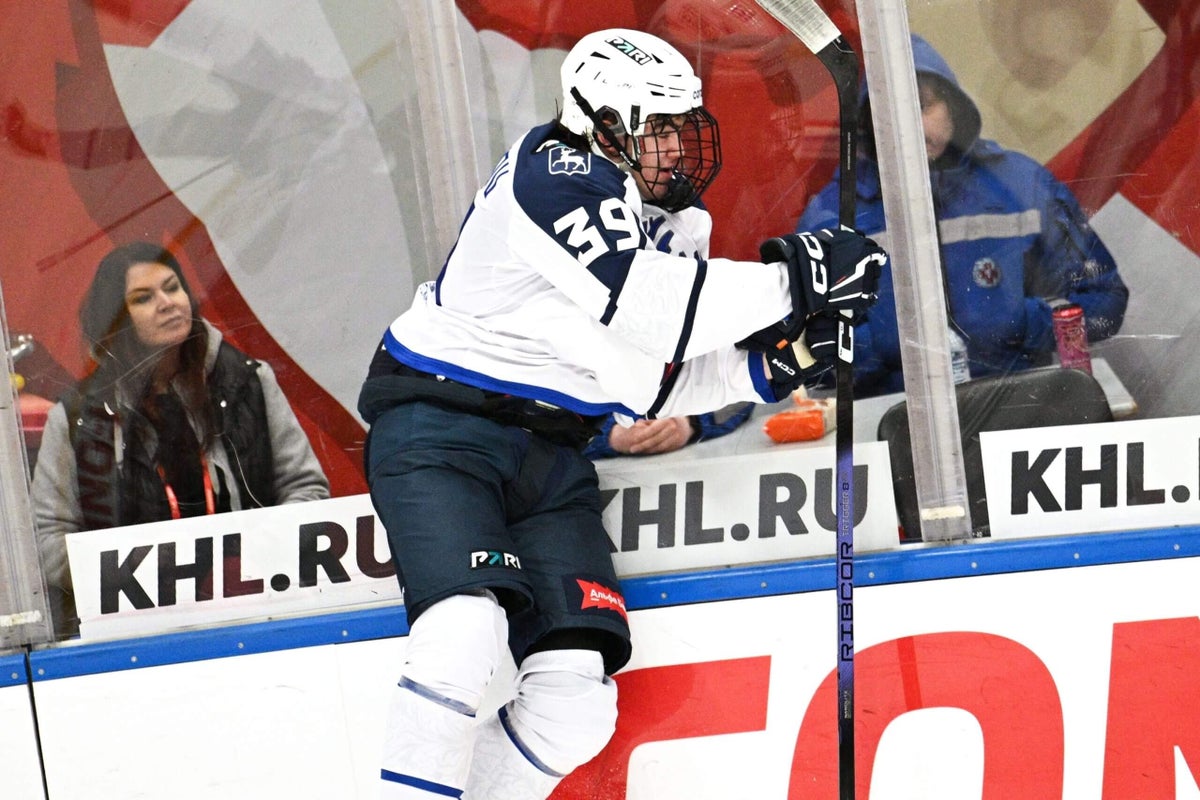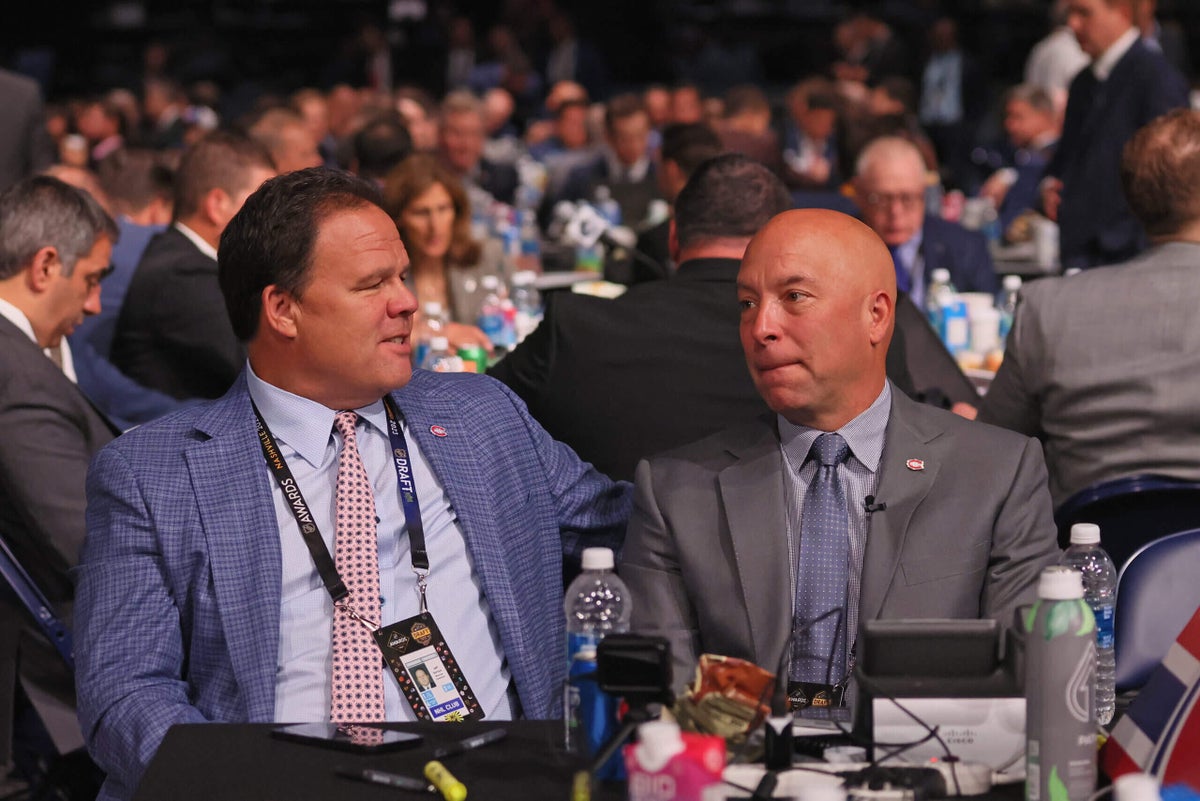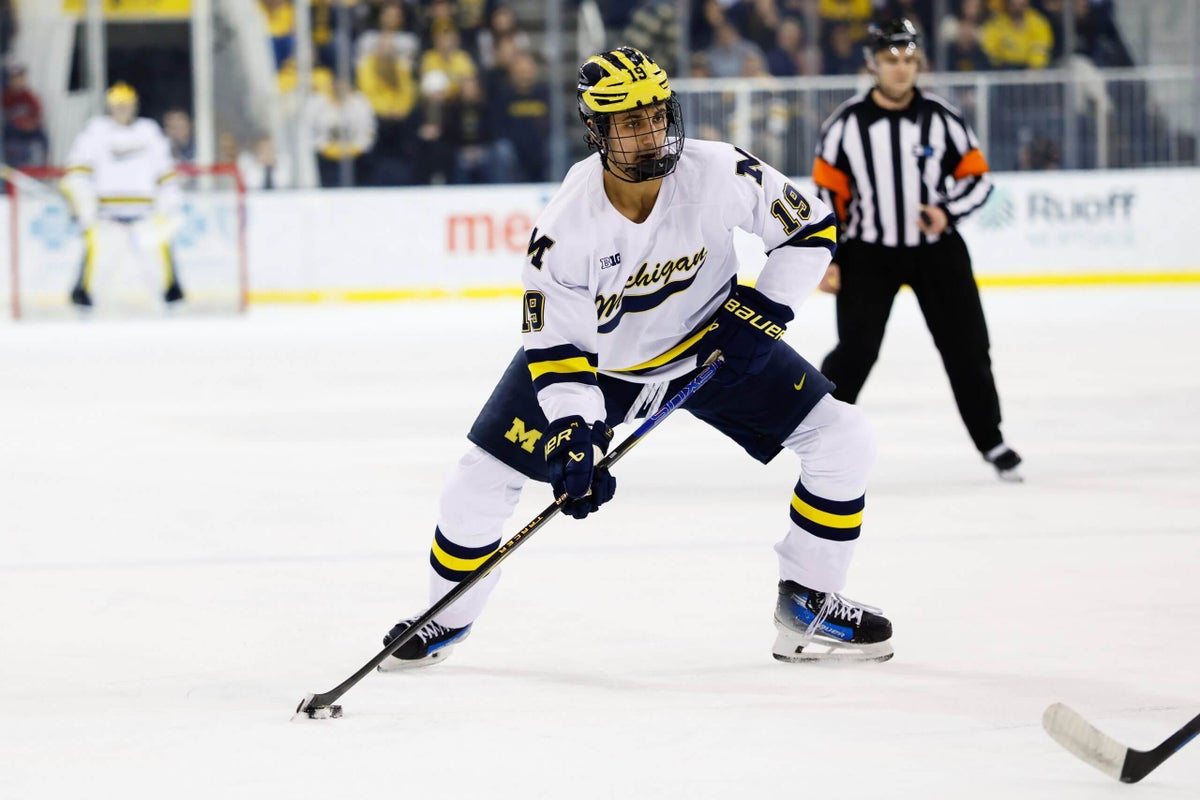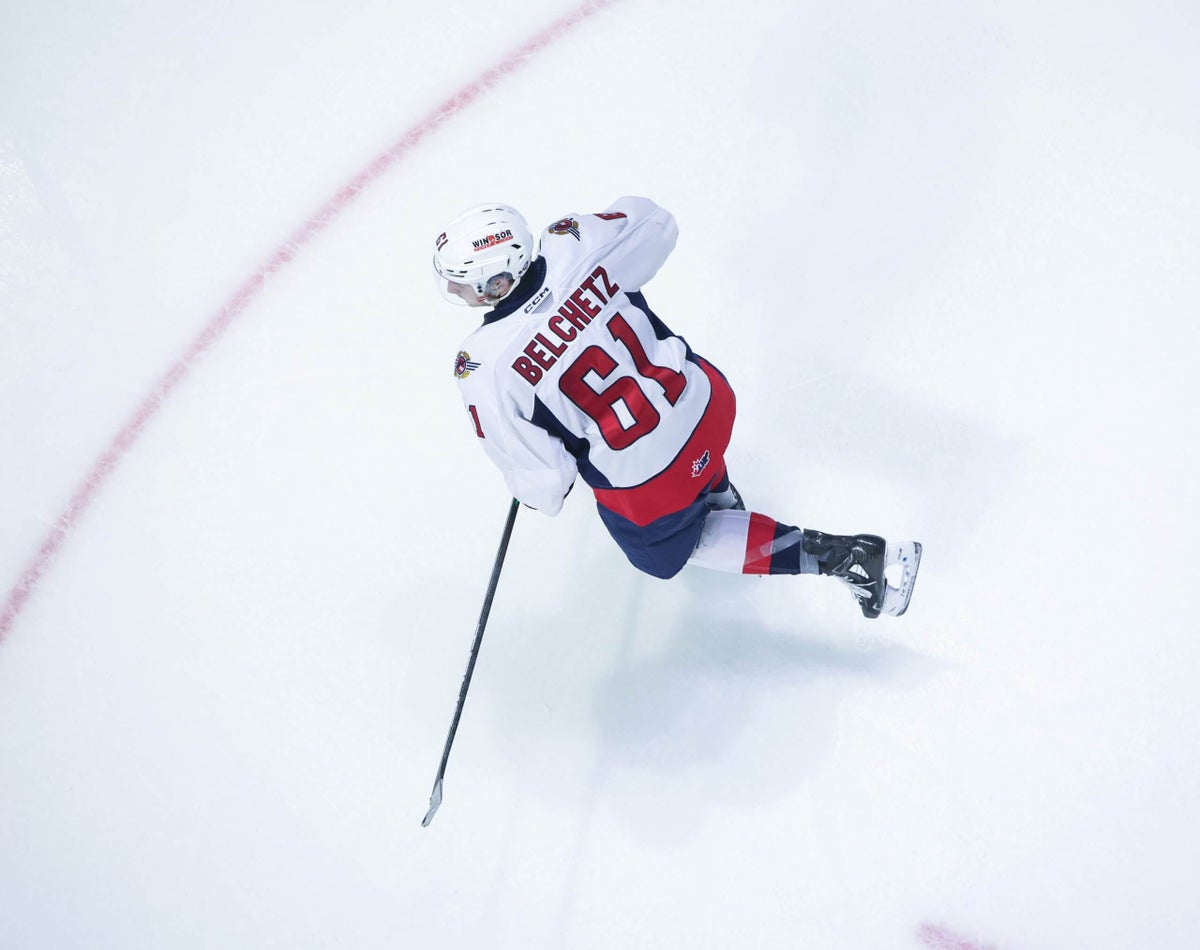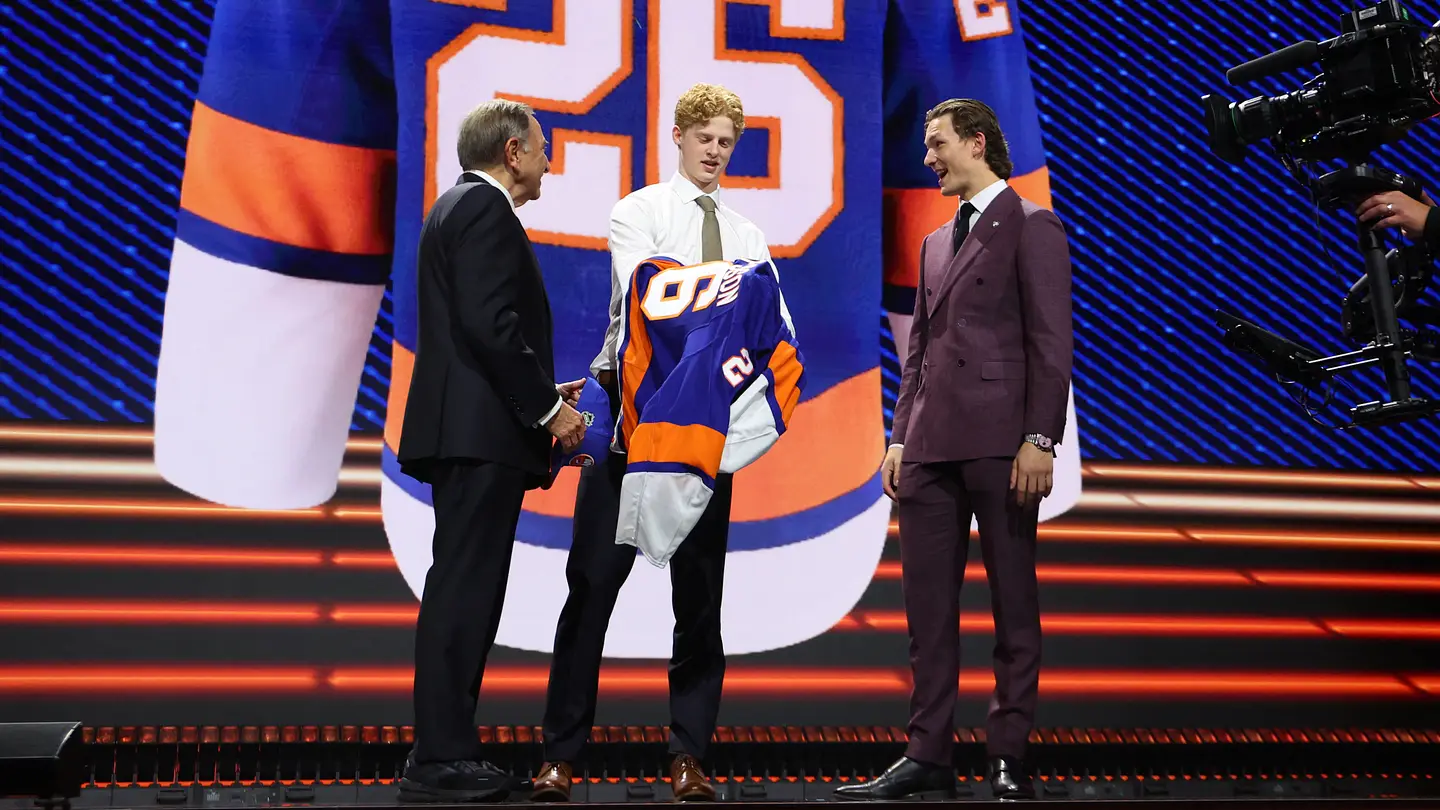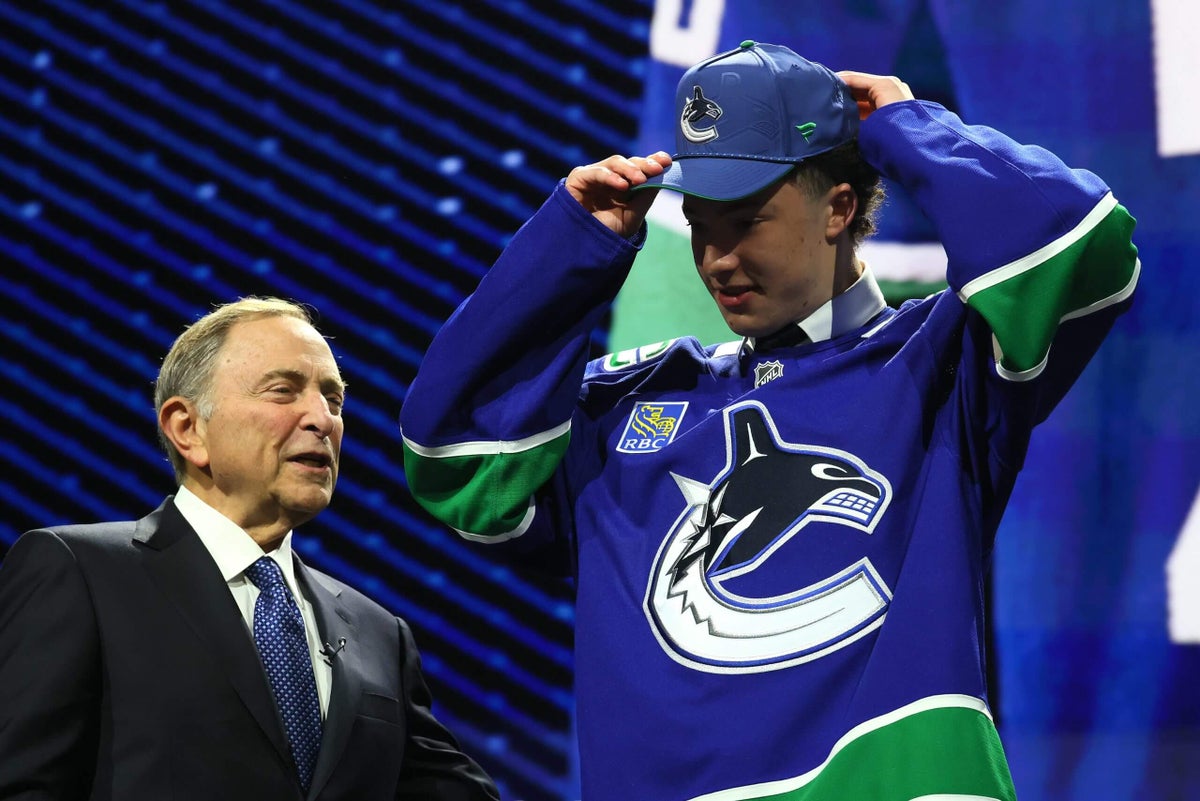
BROSSARD, Quebec – The first time Gleb Pugachyov spoke to anyone from the Montreal Canadiens was last weekend in Miami at his agent Dan Milstein’s Gold Star camp, which is also when he was officially measured by NHL Central Scouting at 6 feet 2 3/4 and 224 pounds.Less than a week later, Pugachyov was the Canadiens’ first-round draft pick.But despite Pugachyov never meeting with them during his draft year playing for Nizhny Novgorod in the junior KHL, second-tier pro league VHL and the big club in the KHL, the Canadiens did indeed have a moment with him. It came in November when co-director of amateur scouting Nick Bobrov and goalie/pro Russia scout Vincent Riendeau traveled to St. Petersburg to watch the Future Cup, where Pugachyov was captain of the Russia U18 team that faced the Russia U20 team in the first game.Pugachyov was already on the Canadiens’ radar at that point because of his strong 2025 playoffs for Torpedo’s MHL team, where he put up 11 points in 14 games as a 16-year-old, nearly matching his regular-season total of 17 points in 42 games. The Canadiens had also seen him at Milstein’s camp that year, where they met with Alexander Zharovsky, their first pick in 2025.But this tournament was the first and only live viewing the Canadiens got on Pugachyov in his draft year. According to Bobrov, they were the only two NHL scouts in attendance that day in early November.“It was kind of a luxury to be there,” Bobrov said Saturday at the conclusion of the NHL Draft. “Kind of throw Vinny under the bus here, but the first shift we saw him, he said, ‘This is our guy.’”Here is that first shift, with Pugachyov in white arriving at the red line and turning an opponent into a bowling ball.It left an impression.“He set the tone,” Bobrov said. “He lined up a guy and almost put him in the 10th row and then just did it over and over and over again. He was hard to miss. As a team captain, you know how they play U-18, U-20, plus Belarus, so he was playing against older kids, setting the tone all the time. And so we saw three games live, and at that point, given the situation, you don’t want to cross any lines and start interviewing kids. And that was the first emotion, first reaction that he gives you with his energy and his power.”That energy and power represents the dimension Pugachyov brings, and the scarcity of that dimension is what drew the Canadiens to him. It is one thing to draft size, but what Pugachyov does requires more than size. It requires a mindset, and it is that mindset that appears to be disappearing slowly at the lower levels despite becoming more and more valued in the NHL because of the nature of Stanley Cup playoff hockey.“Well, those of us with kids playing minor hockey kind of see it, we all see what’s happening,” Bobrov said. “The game is all about skill camps and doing Michigans, right? So all these kids can do all these trick shots at 10, 11, 12, and nobody wants to do the heavy lifting anymore. So the way minor hockey is going, it’s becoming more and more rare to see players like that, and not just in North America, but everywhere else.“So when we see something that looks completely different from 99 percent of the hockey world at every level, going all the way down to minor, we get excited. It doesn’t happen that often anymore.”The draft is primarily where teams can add talent and skill most easily, because once that talent and skill pop at the highest level, teams generally don’t let players like that go. But looked at more generally, what the draft allows teams to do is acquire player profiles that are scarce. When the Canadiens drafted Juraj Slafkovský, it was the combination of his size and skill that appealed to them more than his pure talent. Consider the scarcity of defencemen like Lane Hutson, or even of big, mobile right-shot defencemen who can eat a lot of minutes like David Reinbacher.The scarcity of Ivan Demidov is more obvious because he oozes skill. But building a hockey team requires more than just skill, and some of those other elements can be exceptionally hard to find.The skill element in Pugachyov remains to be determined; whether he can score consistently in the NHL is still unknown. But his player profile is rare. His mindset is rare, and that’s not limited to his physicality. The defensive habits in his game were praised by Bobrov and director of player personnel/amateur scouting Martin Lapointe, with Bobrov pointing out Pugachyov played defence as a kid. In other words, he cares defensively, which speaks to hockey sense, but more generally speaks to his competitiveness, because competitors hate getting scored on almost more than they love scoring.And perhaps most importantly, Pugachyov’s mindset is more easily translatable to the NHL than scoring or skill at lower levels. If Pugachyov reaches his full potential and proves he can score in the NHL, the Canadiens could have an exceptionally rare top-six winger. But even if he uses that mindset to impose his will physically, defend and check as a bottom-six forward, he will still be a very useful player perfectly justifiable using No. 26 to draft, because he is exactly the kind of player who helps you win in the playoffs.“This guy’s a unicorn. We love the way he plays shift in, shift out,” Lapointe said. “The details in his game at his age is rare. So to be playing in the KHL and blocking shots, diving to block shots, backchecking hard, finishing these checks on the forecheck, bringing pucks to the net, I mean, that’s what you wish for in a player. We feel that this guy was the guy that we needed, and he was there. I feel lucky to have him.”As Bobrov explained, when evaluating a prospect’s skill, you are sometimes splitting hairs between players who are both very skilled, but one simply has more preferable skill than the other. What Pugachyov brings, however, is a different evaluation.“It’s infectious,” Bobrov said. “We don’t have a lot of kids nowadays who are infectious and who have instant identity and you don’t have to guess. You see it, you feel it. You feel it in the building, you feel it in the locker room. We were in Florida and observed the way he interacts with his peers, and it’s impressive. So yes, shooting, passing, skill, all that, it’s on the margins. They’re all plus/minus 5, 10 percent.“But it’s the oomph that the player brings. And we like the oomph.”Winners and losers from the 2026 NHL DraftScott WheelerFilling bucketsThe Canadiens used their next three picks on defencemen: an offensive defenceman in the second round in Timofei Runtso, a more stay-at-home, physical type in the third round in Cooper Cleaves and another offensive type in the fourth round in Brayden Klimpke. They are perhaps indicative of a reality that is about to hit the Canadiens.There is still a decent amount of organizational depth on the blue line with Reinbacher, Adam Engström and Bryce Pickford yet to reach the NHL, and on the big club Arber Xhekaj and Jayden Struble are still young depth options. But as the Canadiens continue to scour the trade market, that depth risks being purged in an effort to make an impact acquisition, likely at forward. Adding Runtso (in particular), Cleaves and Klimpke appeared to be an attempt to mitigate that.“The (defencemen) are always in demand,” Bobrov said. “We always talk about different buckets, and which ones are full, and which ones are becoming more empty. So, where the best fishing holes are, as we say, and it’s different from draft to draft. Sometimes, a bucket of big forwards might be fuller than on the D side.“So in this case, it just so happened that the D’s were the best players in particular spots. And obviously, you want to create more depth, organizational depth at each position. And we approached it in a way that every organization needs that depth. And we happen to have pretty good depth right now, so it never hurts to have a deeper pool.”This is indicative of another reality of drafting. Sometimes you can address an NHL need, as the Pugachyov pick clearly did, but sometimes you can also try to make sure you have assets who can either play for you one day or perhaps be useful in a trade.In that sense, picking Runtso in the second round is not all that dissimilar to the third-round pick the Canadiens used on Engström in 2022. Today, four years later, Engström is probably the Canadiens’ most valuable trade chip. There’s no telling what Runtso will be in four years, but the possible departure of Engström makes trading up to get him make that much more sense.Overager trend not on purposeAnother thing Runtso and Cleaves have in common is they are overagers, with this being Runtso’s second year of draft eligibility and Cleaves’ third. The Canadiens drafted Pickford as an overager last year, Tyler Thorpe the year before and Florian Xhekaj the year before that, among others.Bobrov has long had an analytical mind when it comes to the draft and finding inefficiencies to exploit, but he says this is not one of them.“I wouldn’t say it’s data driven per se, but it’s circumstantial,” he said. “Sometimes you have a September (birthday) and it’s great to get a kid who is on the youngest side of it. But sometimes you don’t have that. So, it’s purely circumstantial and there’s no serious method to … get the older kid because it’s a known commodity and all. In fact, sometimes we prefer August, September birthdays. They have so much more runway. But it’s case-by-case.”Based on how the other overage picks are trending, maybe this is in fact an inefficiency the Canadiens should exploit on purpose. Perhaps they already are and Bobrov simply didn’t want to say so.Montreal would like a return to a centralized draftThis was the second year of the decentralized draft format, where teams stay in their home cities and only the prospects go to the draft city, and the Canadiens remain steadfast in their opposition to it.The format repeated this year after a vote of the 32 teams showed overwhelming support for it, but Hughes would like to see it go back to the full draft floor with the teams huddled together making picks.“I always liked it better being in person,” Hughes said. “I made my vote. I find it’s easier for us to do our business. The agents are all there, and you get a chance to talk to them. Sometimes it’s not easy to get back when the draft is close to July 1, so I understand the reasons why certain teams want to stay local, but I’ve always preferred being in person. But no one listens to me.”That is a general manager’s perspective, but Bobrov and Lapointe raised interesting points from a scout’s perspective. And in Lapointe’s case, it was actually from a prospect’s perspective.“All that walking up to the stage, I’m OK not doing that,” Lapointe said. “But for the kids, live is the way to go, right? The scouts, it’s their Game 7, they want to be there. But for the kids, live is the way to go. There’s no other way.”Aside from the experience for the prospects, the scouts actually used to get important work done at an in-person draft that they can’t get done remotely. For instance, Canadiens president Jeff Gorton and Hughes skipped the Milstein camp in 2024 despite Demidov being there, knowing they would get a chance to interview him in Las Vegas ahead of the draft. They skipped the camp because they did not want to tip off their extreme interest, a tactical decision made possible by having an in-person draft.In 2022, Canadiens owner Geoff Molson met with Slafkovský briefly on the morning of the draft in Montreal.“I would add that often – not oftentimes, every time there are last-minute movements and you have to interview two kids on draft day or the night before. You’re splitting atoms here and it’s the personality that’s going to differentiate. You don’t have that remotely, so we don’t get to sit down with Slaf and others the day of the draft and have the final exam. So we kind of missed that portion of it,” Lapointe said.“Obviously for the kids, I think they did a much better job this time with the kids having that experience than last year. But for us, it’s the feel and the touch and the final interview that’s lacking.”A centralized draft is what made the NHL draft fun and unique. This two-year experiment has gone on two years too long.
Canadiens draft notes: More than physicality, scarcity made Gleb Pugachyov the top pick
Canadiens see a dwindling number of players who define themselves with their physicality, and that made Pugachyov more attractive.
TL;DRAI
⚠️ **Mismatch di contesto**: questo è un articolo di hockey (Montreal Canadiens draft), non di tech. Non è pertinente a Warptech Tech News. Se è stato un copia-incolla errato, fornisci l'articolo tech corretto e farò il riassunto secondo le tue specifiche (2 frasi, vocabolario tech in inglese, tono Bloomberg/HBR per manager IT). Se invece vuoi il riassunto dell'articolo di hockey "così com'è" per un'altra testata, confermalo e procedo.
2,148 words~10 min read