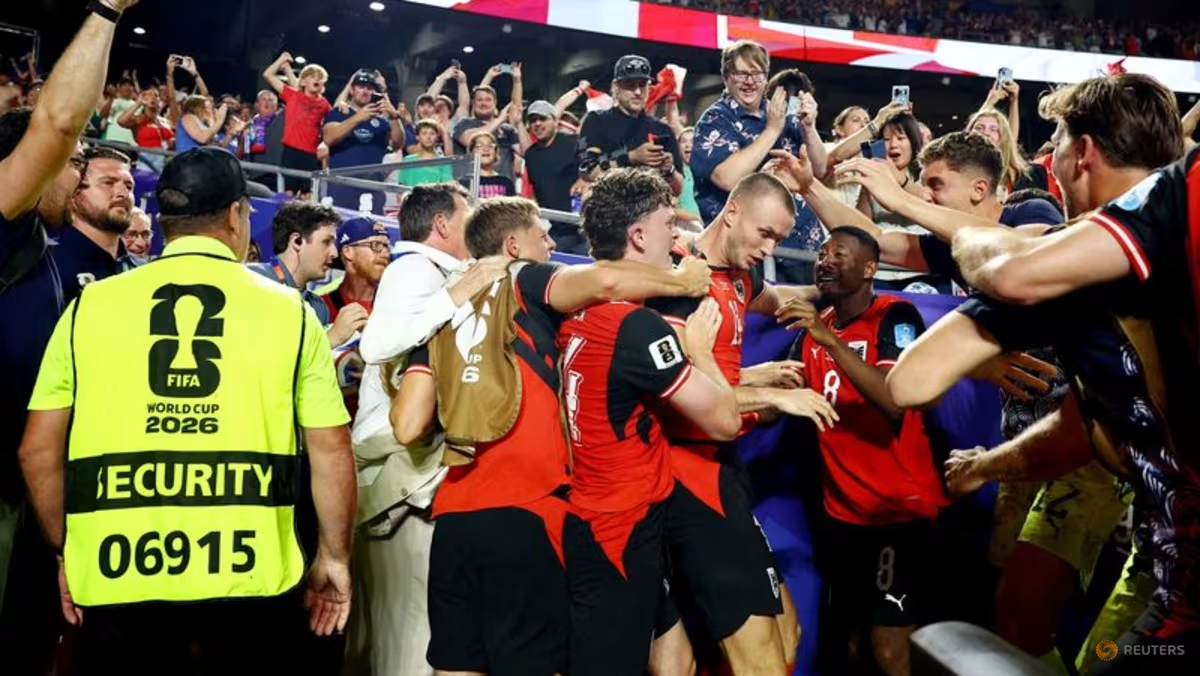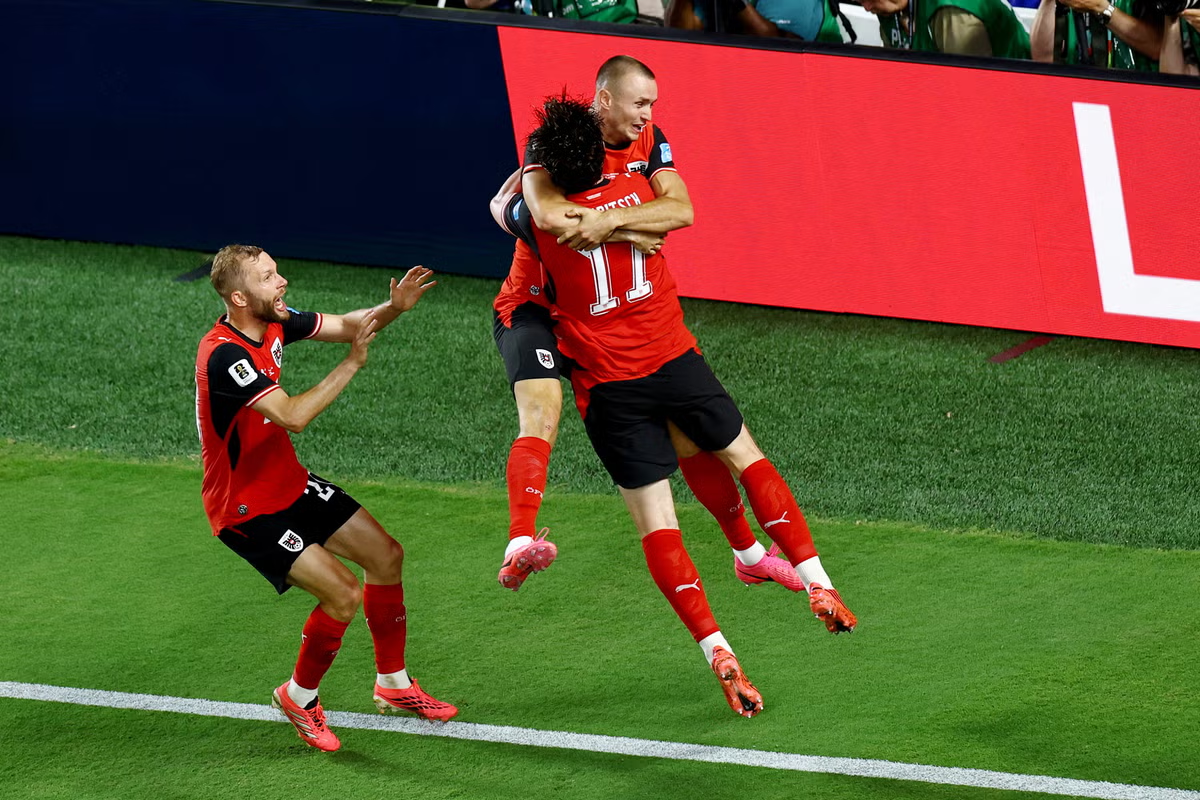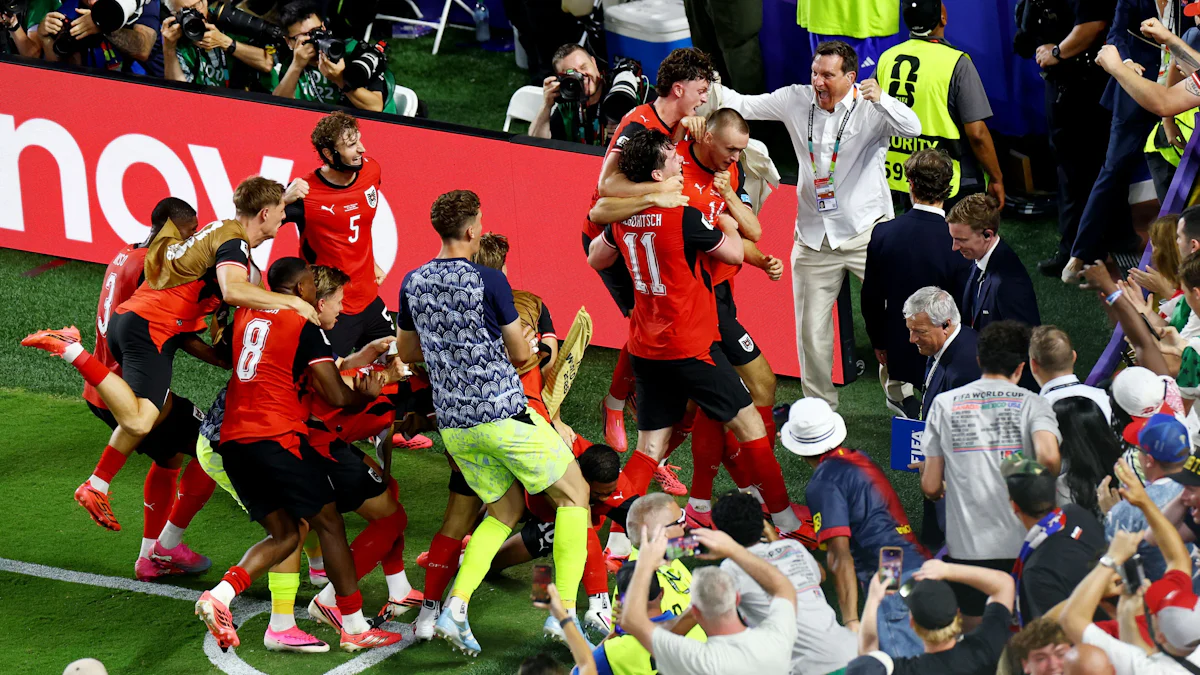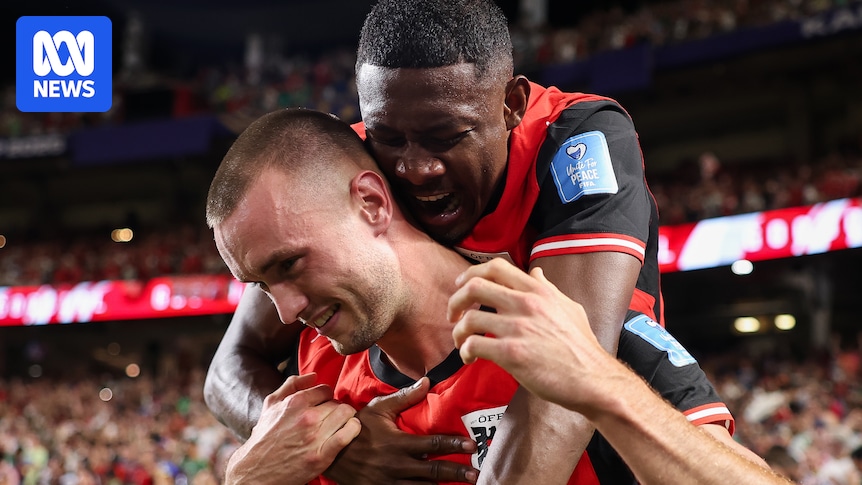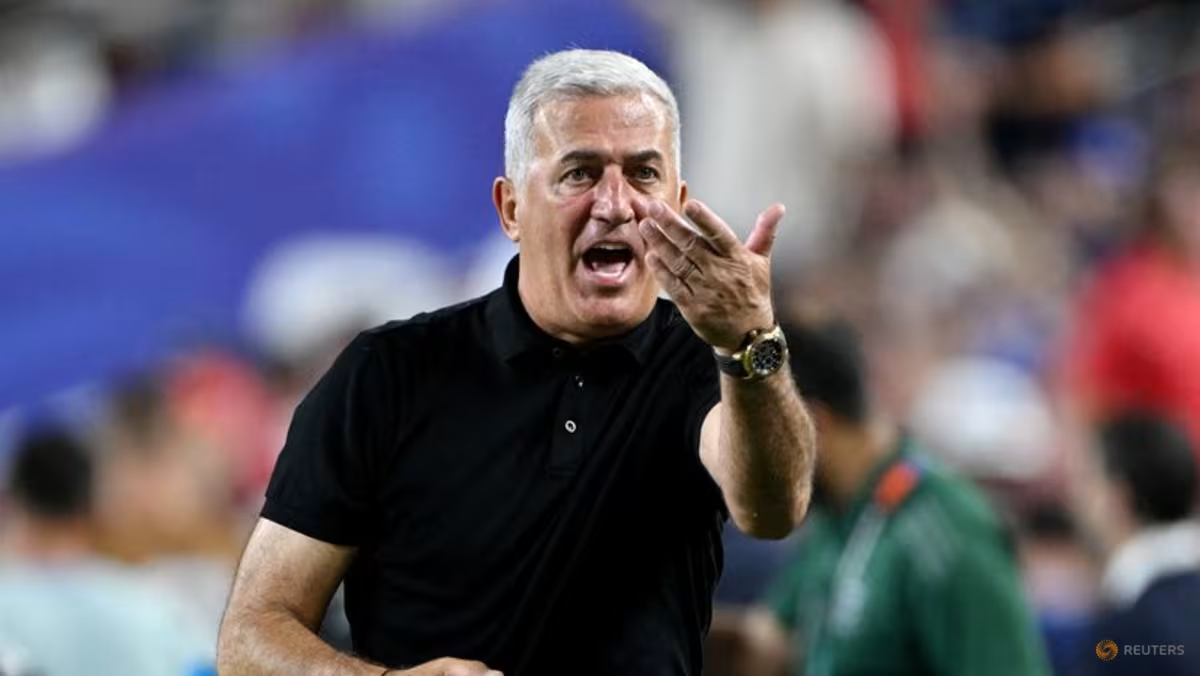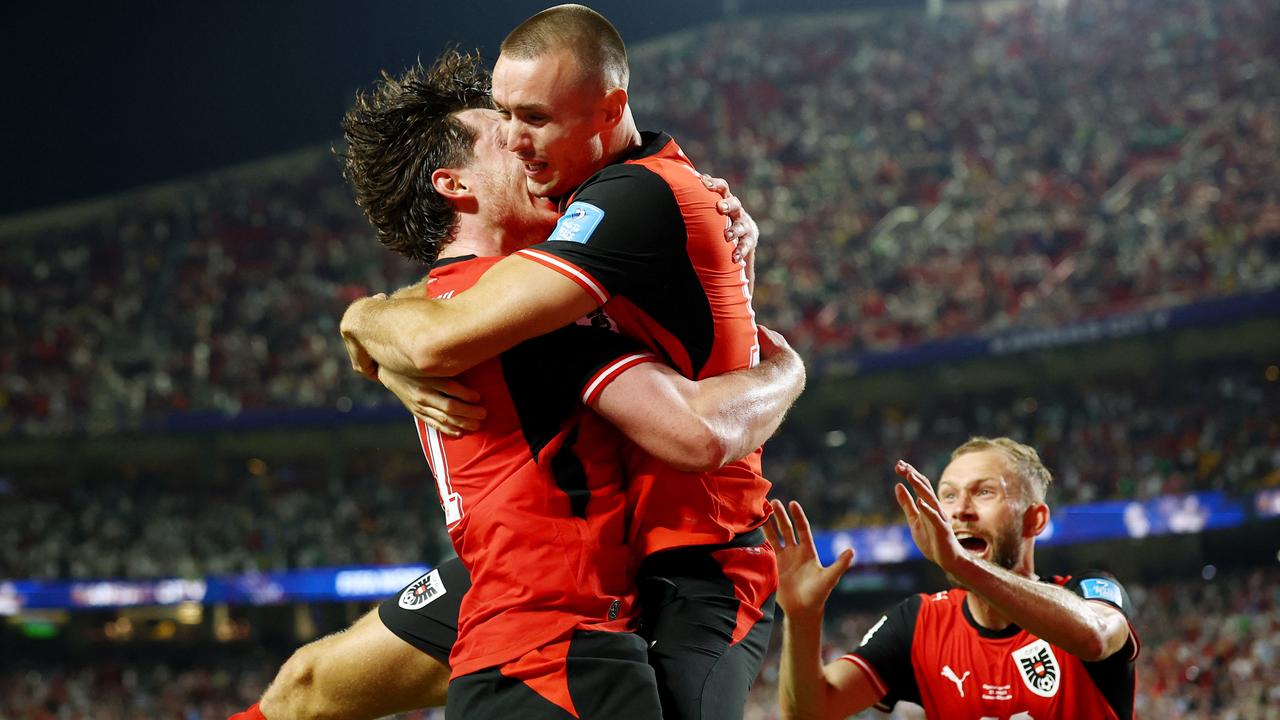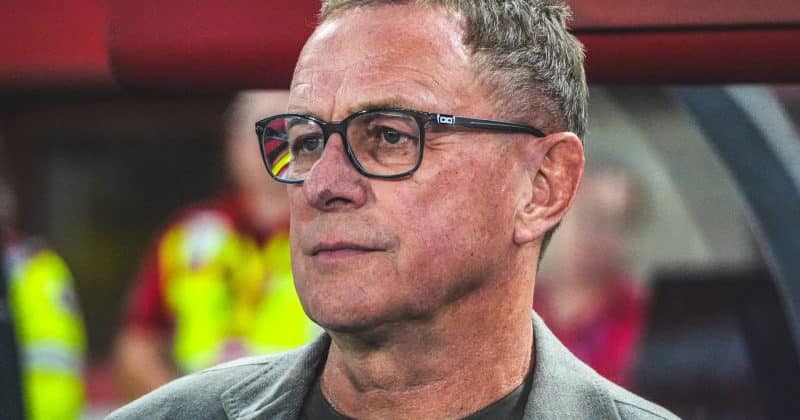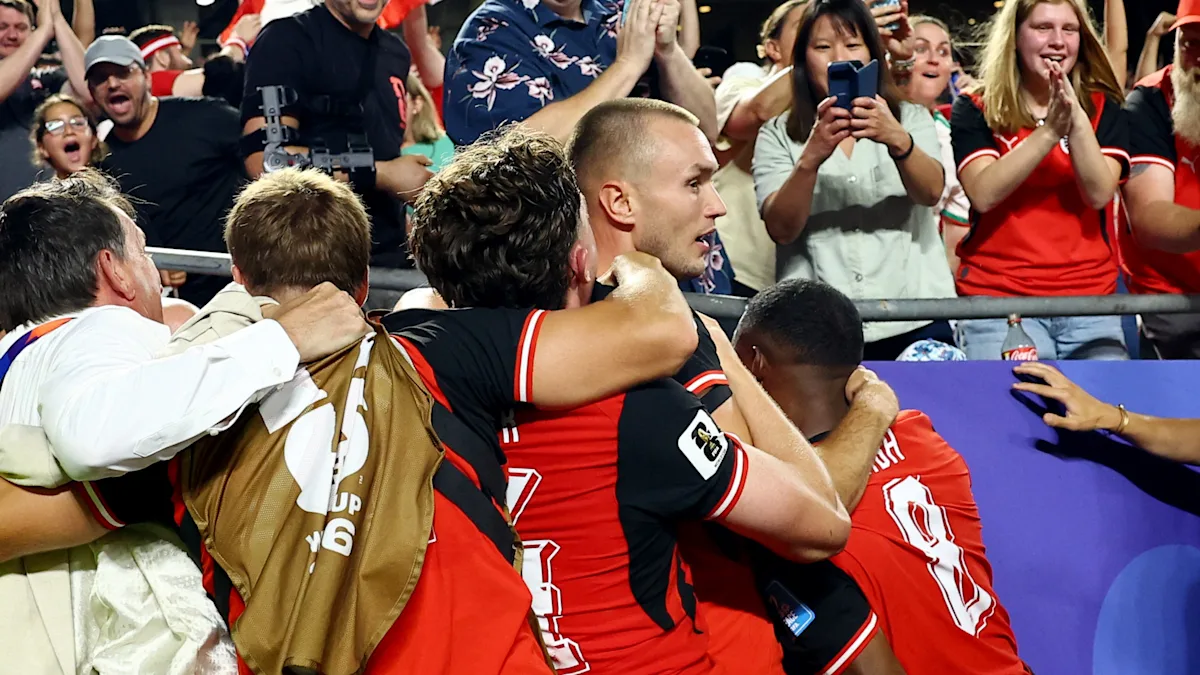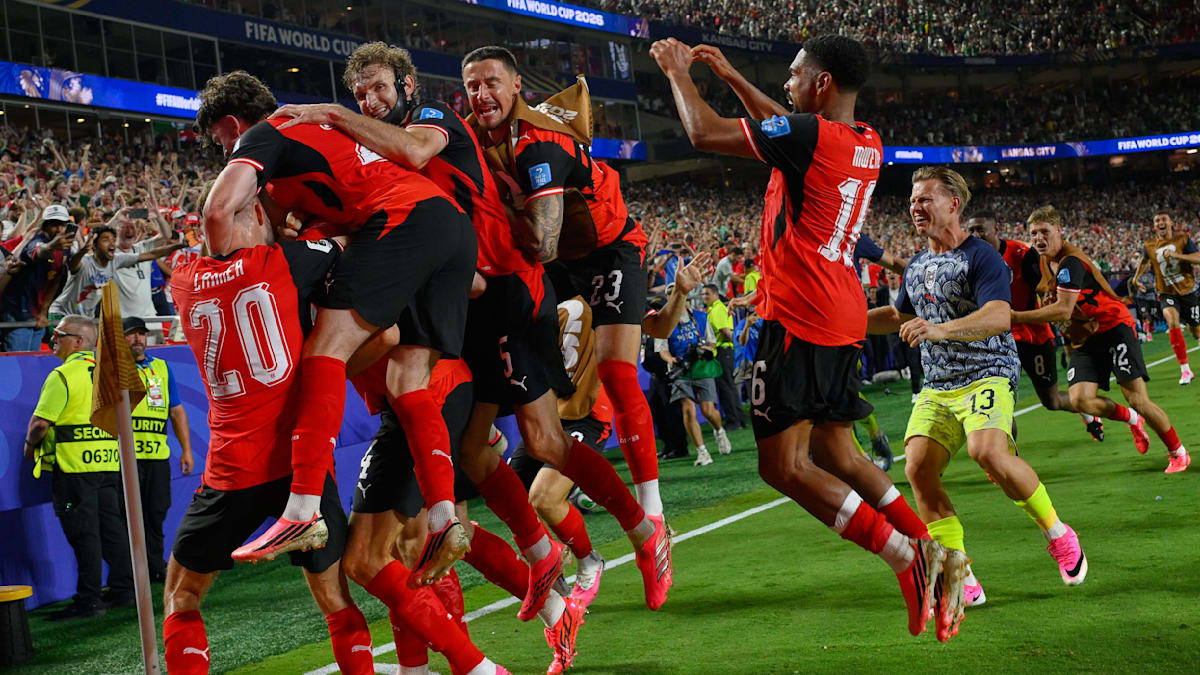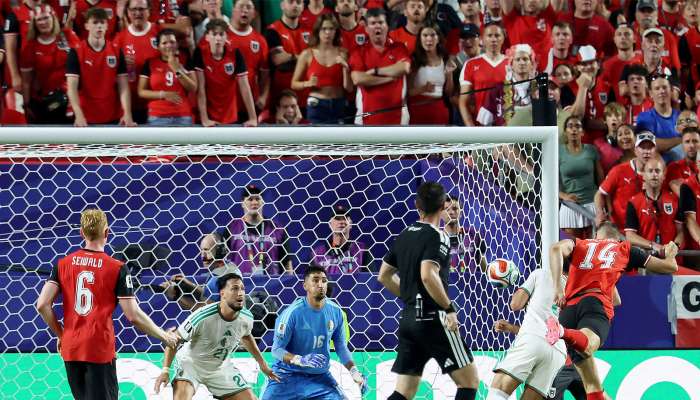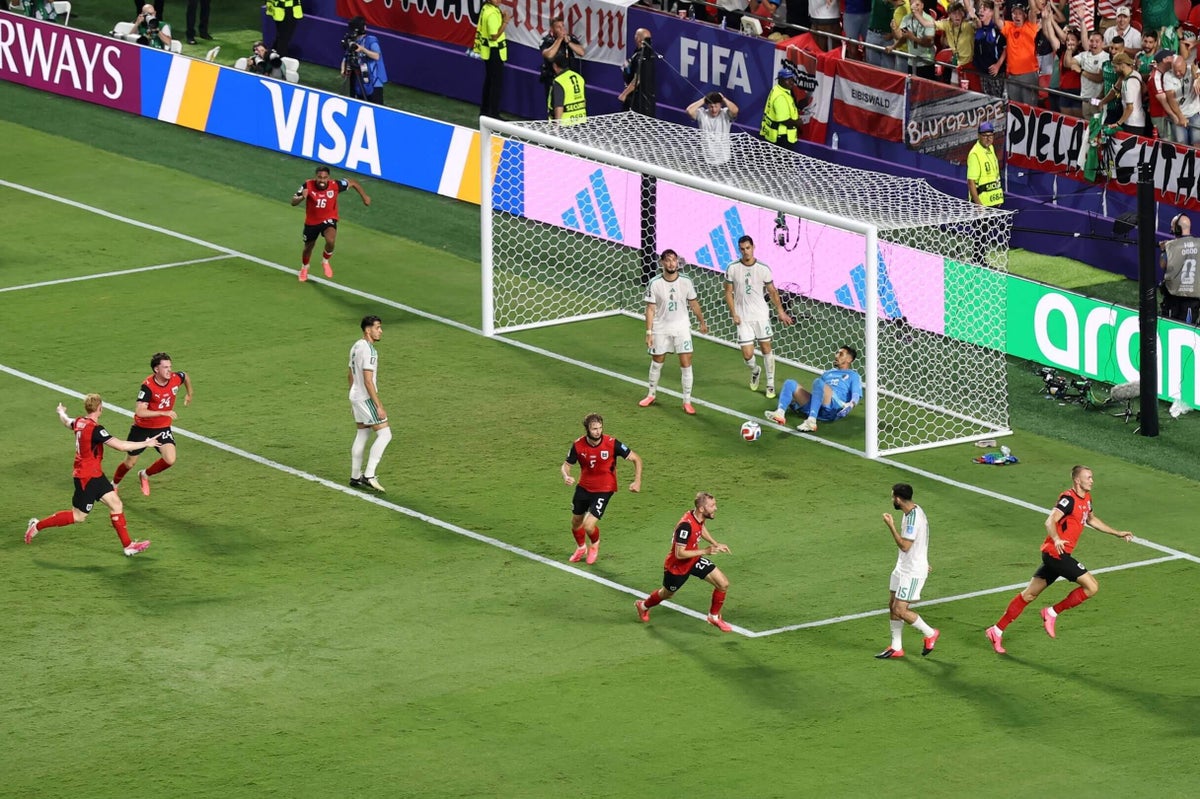
The crowd had lost patience. For an hour, it had been an enthralling contest, but then both sides were happy to retreat. For the next half-hour, nothing happened. At 2-2, Algeria and Austria might as well have shaken hands on a draw and walked off.From the 65th minute to the 91st, Algeria, under minimal pressure, completed a remarkable 279 out of 282 passes. Austria completed 80 of 85. Only two shots were attempted. A draw would secure both teams’ passage to the World Cup’s knockout phase and, with an apparent ceasefire in operation, it looked like the most sterile, insipid, cynical period of play seen at the tournament since the so-called Disgrace of Gijon 44 years earlier. This one had already been mooted as the Second Missouri Compromise.And then, in stoppage time, things went mad.Get free access to the most comprehensive World Cup coverage in The Athletic appAlgeria had been passing the ball uninterrupted for what felt like an age, like it was a training exercise, until Houssem Aouar and Riyad Mahrez took matters into their own hands. Aouar flicked the ball through a passive defence and Mahrez, for the second time in the evening, showed no mercy, a dramatic late twist to send Austria to the brink of elimination, revenge at last for Gijon and a story etched in the heart of every Algerian football fan.But then, just as Algeria’s supporters were celebrating the sweetest of wins, came the counter-twist, Austria surging forward one last time and substitute Sasa Kalajdzic heading home, in the sixth minute of stoppage time, with his first touch of the ball. Algeria and Austria had their draw and they were both going through, with Iran eliminated as a consequence. It was the outcome everyone, not least the Iranians, expected… but, ultimately, the crazy game nobody saw coming.Riyad Mahrez scored twice as Algeria progressed to the knockout stages (Michael Steele/Getty Images)“It was a Hollywood ending,” Austria manager Ralf Rangnick said. “I have been a coach for more than 40 years and I don’t remember a game that had such a dramatic course and such an unexpected trajectory. If Alfred Hitchcock… well, he didn’t have anything to do with football, but if he had, if he had written such a drama, I would have said he was completely mad.”It felt like an entirely appropriate ending to a World Cup group stage that has showcased both a) the drama that is intrinsic to the tournament’s appeal and b) the flaws in a new 48-team format that has lessened the sense of jeopardy and raised the possibility of teams playing towards mutually convenient outcomes.That is just what happened in 1982, when a 1-0 win for West Germany over Austria, almost devoid of incident, enabled both nations to qualify for the next round at the expense of Algeria — prompting FIFA to ensure that, thereafter, the final games in each group would be played simultaneously to minimise the threat of collusion.As the referee that day in the Spanish city of Gijon, Bob Valentine, told The Athletic in 2022, “We were about 20 minutes in before I started getting a bad feeling. I started thinking, ‘There’s not much tackling taking place here, you know’.”Rangnick and Algeria counterpart Vladimir Petkovic were eager to point out what transpired in Kansas City on Saturday night was nothing like that; that, rather than the non-aggression pact many had speculated about, this was an entertaining and unpredictable game, end to end, with thrills and spills at both.“I’m extremely happy that, at the end of the day, it was football that won and prevailed,” Petkovic said.It did. Kind of. For an hour, in which Marko Arnautovic’s goal was cancelled out by Rafik Belghali, and Marcel Sabitzer’s by Mahrez, both teams were going for it. And the drama that followed in added time was indeed wild.But that half-hour period between Mahrez’s goals was grim. It was understandable from both teams’ perspectives, but it was grim nonetheless.“I think it’s very logical after such an exciting and extreme match, going back and forth, where it could have been 6-6,” Rangnick said, when asked about the lack of attacking intent on both sides once Mahrez had made it 2-2.Petkovic said similar: not that his team had played for a draw but that, at two-each midway through the second half, “for about 15 minutes, there was a time where both teams were a little bit passive”.“My idea is always to play in order to win,” the Algeria coach continued. “But it helps to win with your brain, with intelligence, being smart about it. I think certain behaviours are quite natural. It happens in football. It’s part of football. But there was a strong will to win.”Sasa Kalajdzic leads the Austrian celebrations after his last-gasp equaliser (Michael Steele/Getty Images)For Austria, a win or a draw guaranteed second place in Group J and the dubious reward of a meeting with European champions Spain in the round of 32, whereas losing and finishing third would have seen them eliminated. For Algeria, it was win and face Spain, or draw and play Switzerland. This presented a scenario where, arguably, for the North Africans, a draw might be preferable to a victory.Rangnick proposed as much afterwards.“I don’t know how it came about,” he said of Algeria’s third goal. “Nobody can tell me at minute 75 that, in minute 93, someone would plan, ‘Oh yes, let’s score another goal’. Maybe it was the thought of one or two players of Algeria, but (…) at that point, I don’t imagine that most of the (Algeria) team would have preferred to play against Spain than against Switzerland.”The beauty of the second Mahrez goal was that Austria’s players looked stunned by it, given the way the previous half-hour had transpired.Mahrez, the Algeria captain, looked happy to face Spain if that was the price to pay for sending Austria home. It looked like the most delicious revenge act: spend half an hour lulling the opposition into a false sense of security, pass the ball back and forth without the slightest attacking threat… and then, at what seems like the final moment, inflict what looks like the knockout blow. “And that’s for Gijon.”But in the post-match mixed zone, Mahrez suggested it was nothing like that. On the contrary, he hinted at a discomfort at having challenged the status quo.“It was a bit awkward, to be honest,” he said. “We were playing wide and they were sitting, but in the last minute someone plays a ball, he turns and I have to make the run. I have to respect football. The ball arrives in front of the keeper and I have to score. I have to try to score. I know it’s an awkward situation, but it’s football and I have to respect it.“And the good thing is — well, the good thing for them (Austria) — is that they score and they qualify. We both qualify and that’s the most important thing today.”Sabitzer said he and his Austria team-mates felt “emotionally broken” by that second Mahrez goal. “In the 95th minute, you hardly believe that anything is still possible,” he said.What ensued was chaos, Kalajdzic coming off the bench to equalise for Austria with the game’s last meaningful act. The Austrian players and supporters celebrated wildly and, at the final whistle a few seconds later, their Algerian counterparts did likewise. It was a confusing evening, an emotional rollercoaster, but it had ended up right back where it started, as rollercoasters invariably do.
The Disgrace of Kansas City? A crazy game nobody saw coming, with the outcome they did
For 30 minutes, it looked as though Algeria and Austria were happy to play for a convenient draw - then came a wild period of added time
TL;DRAI
**Non rientra nel perimetro editoriale di Warptech News.** Questo articolo è una cronaca sportiva (Coppa del Mondo, Algeria vs Austria). Warptech copre tecnologia, business, AI e startup per manager IT italiani — non sport. Se invece l'articolo è un test e contiene contenuto tech, business o AI nascosto nel corpo, condividilo di nuovo e lo analizzerò.
1,250 words~6 min read