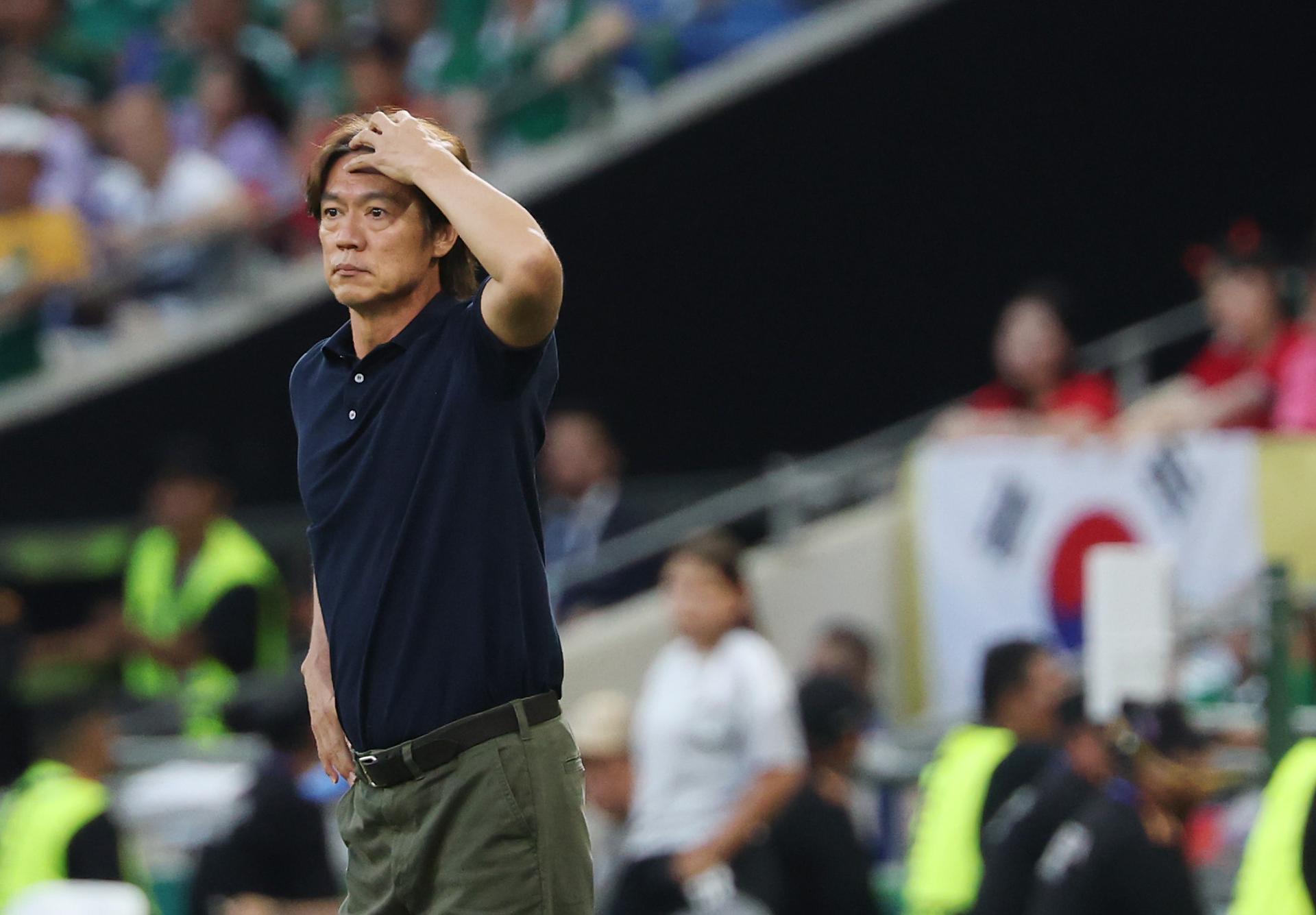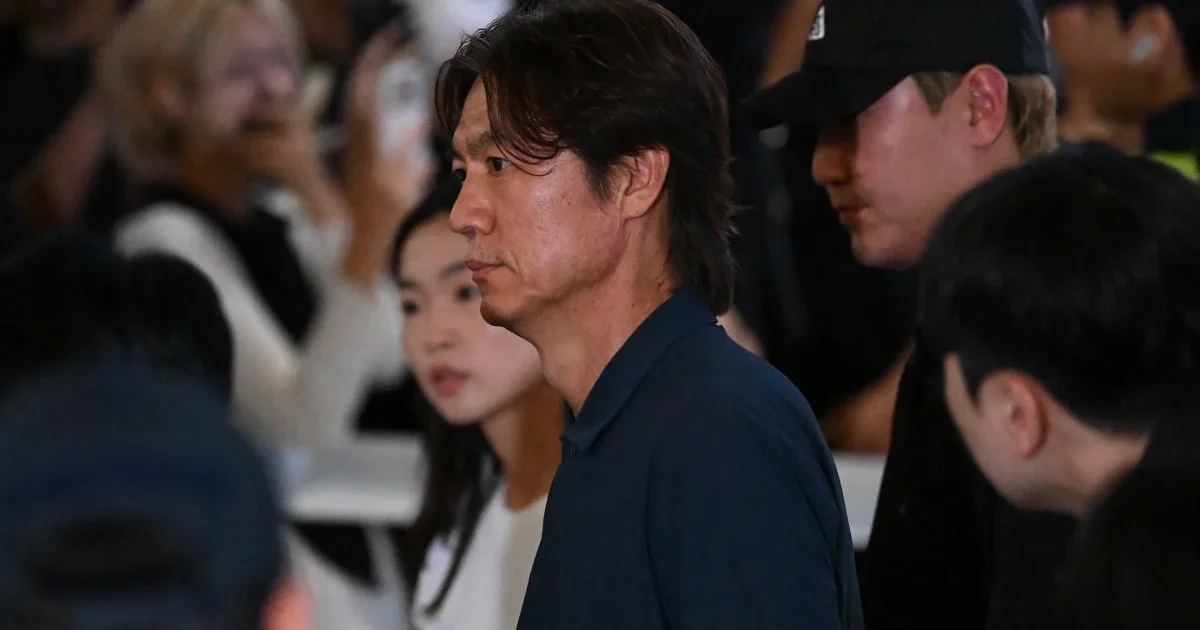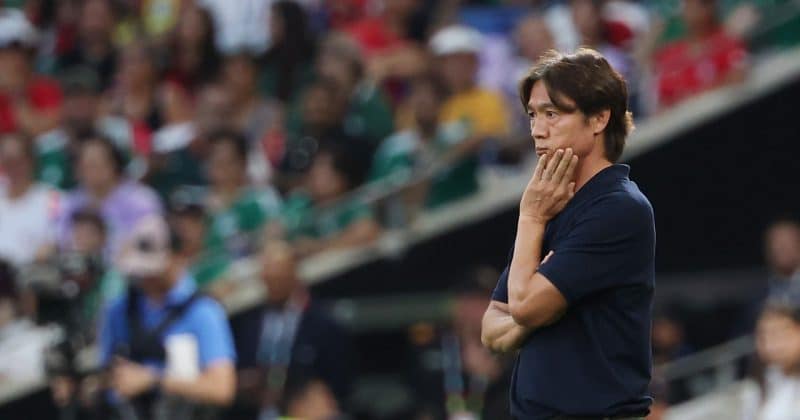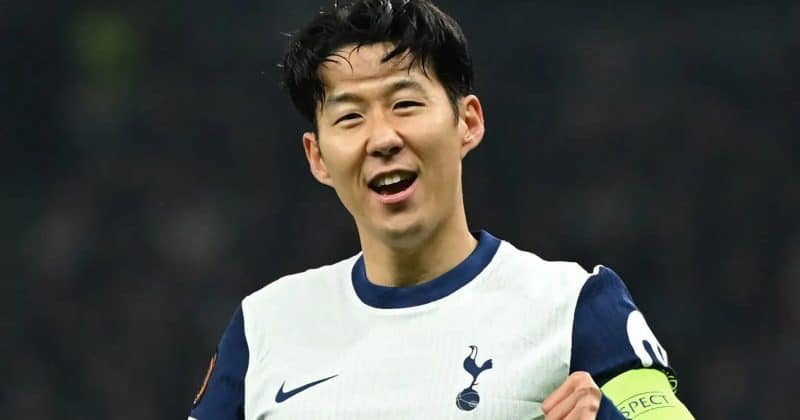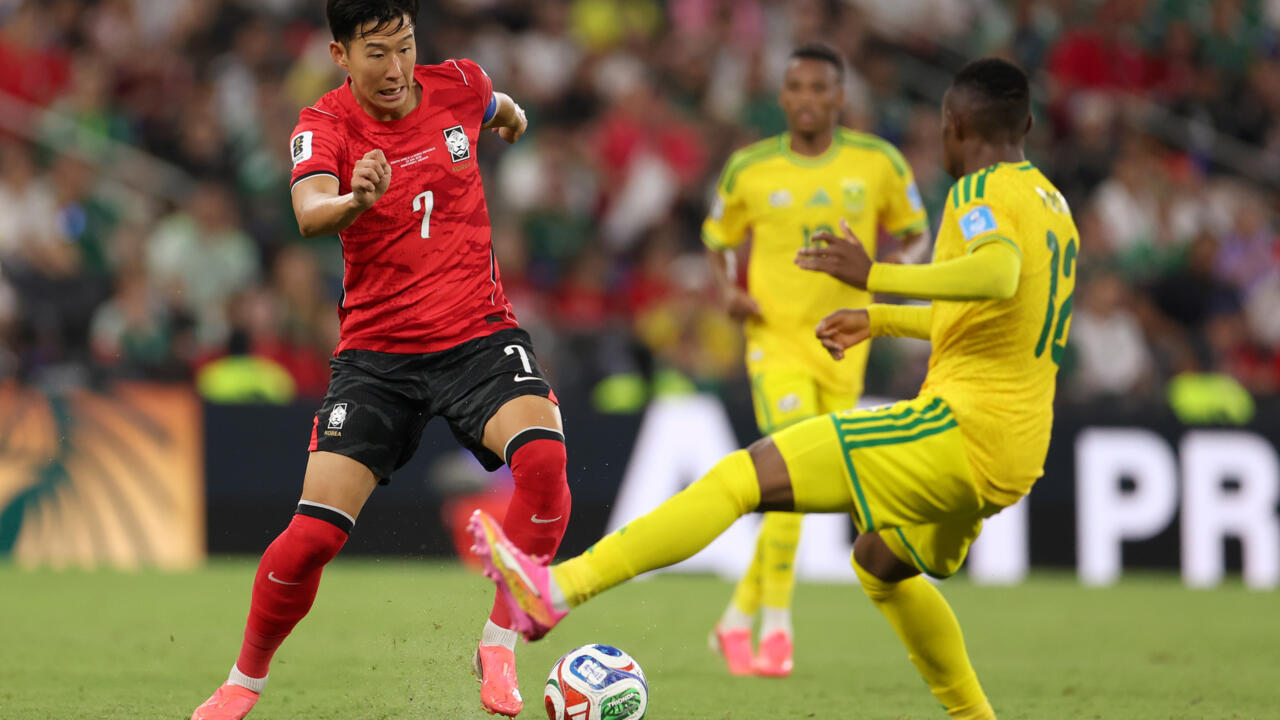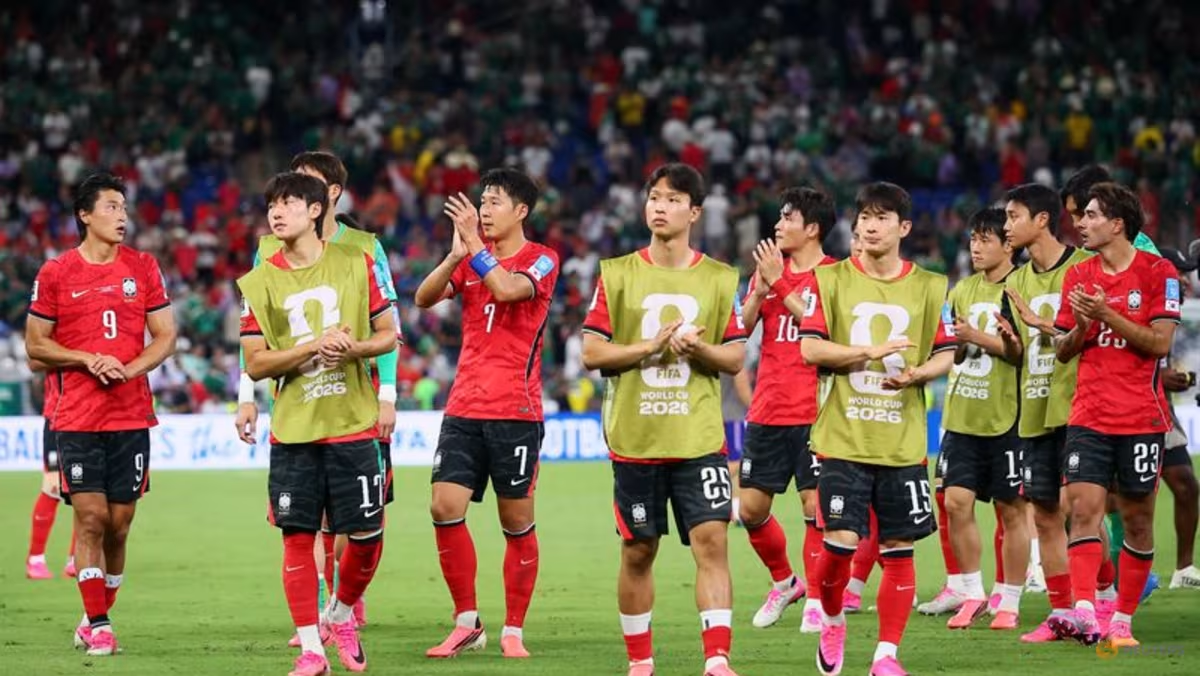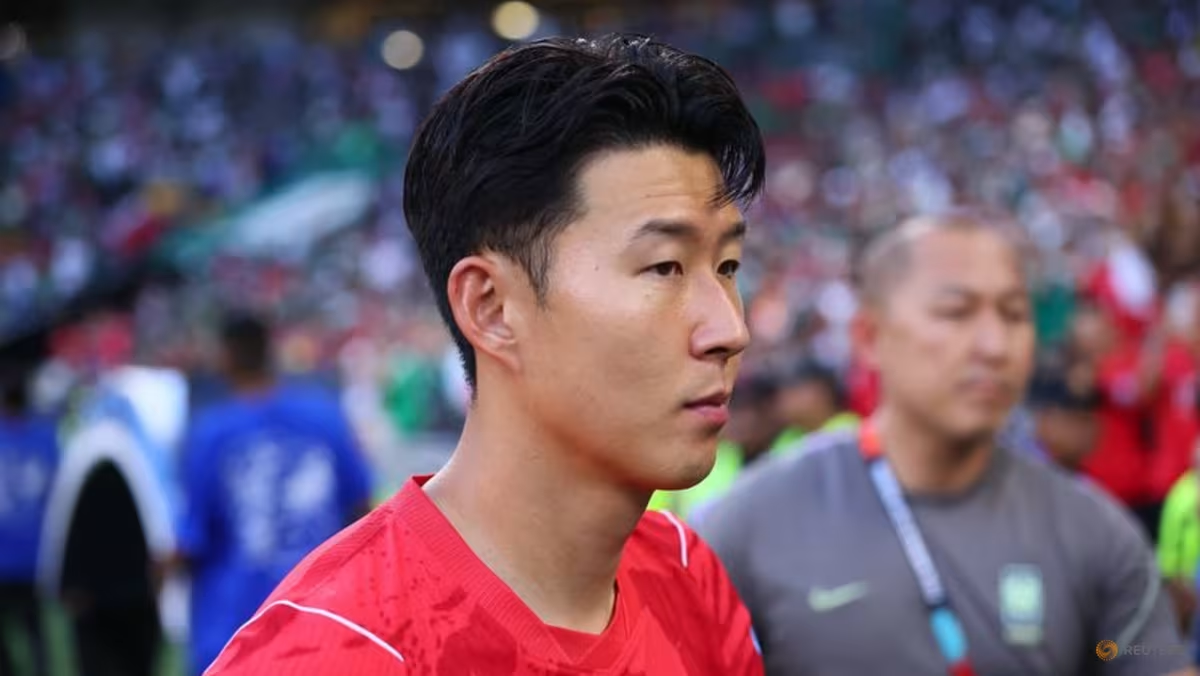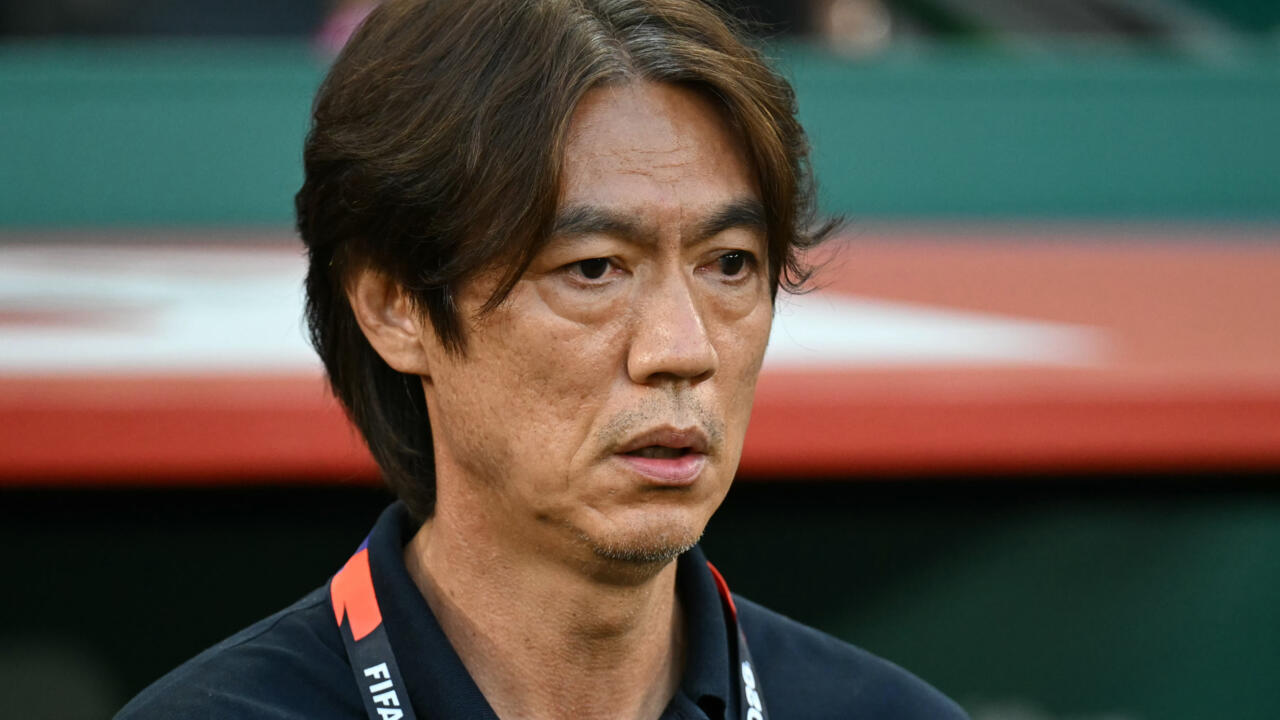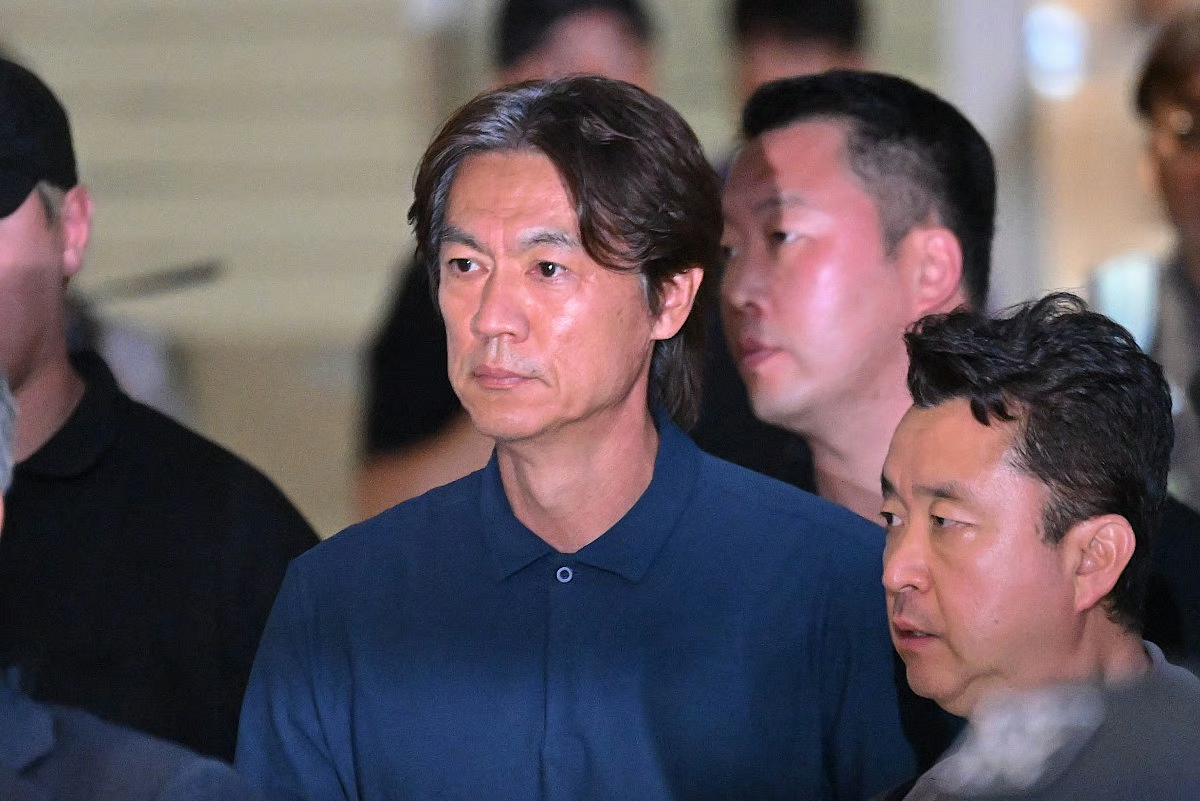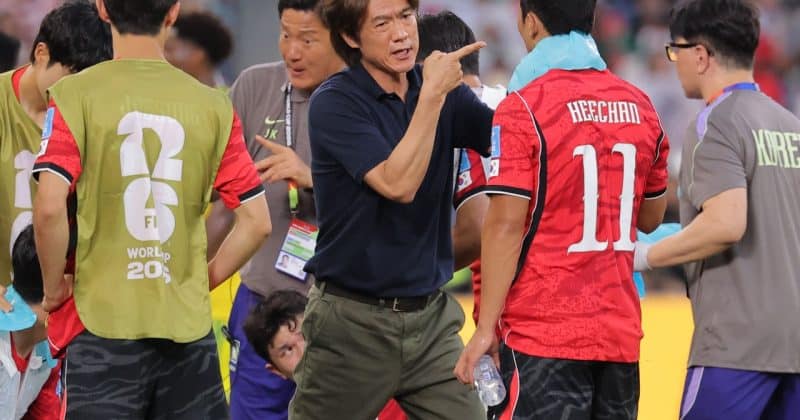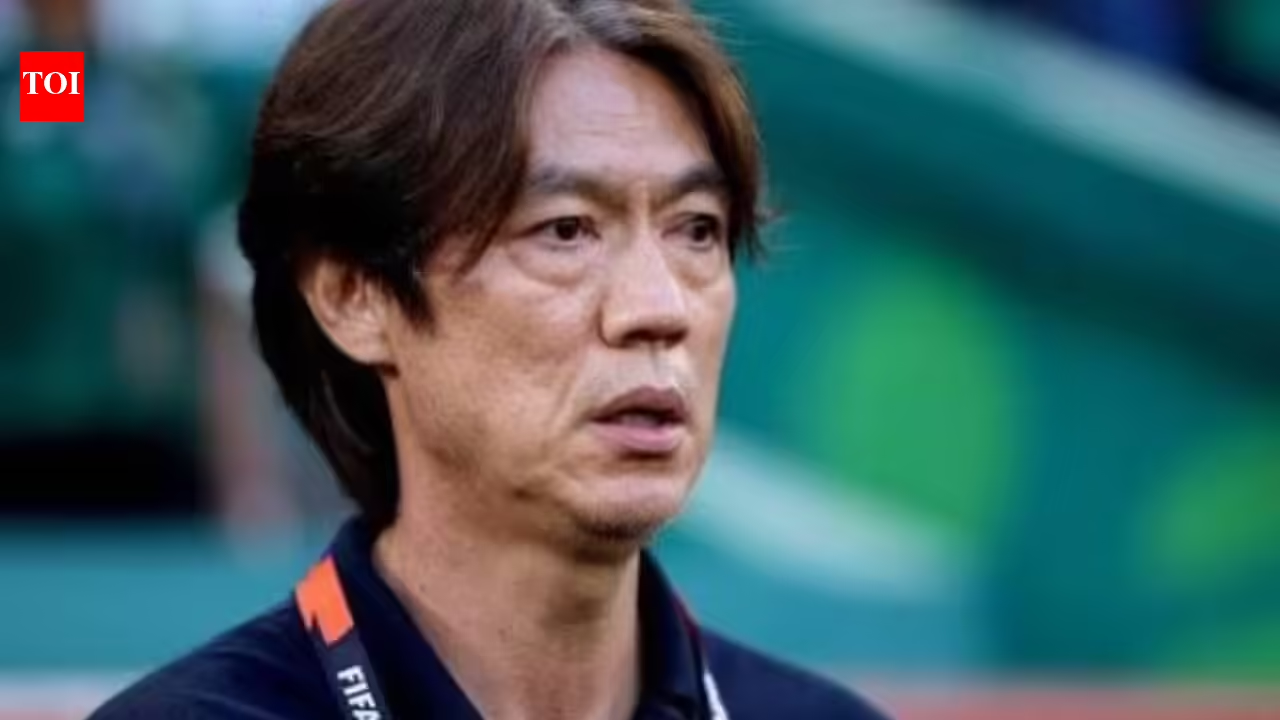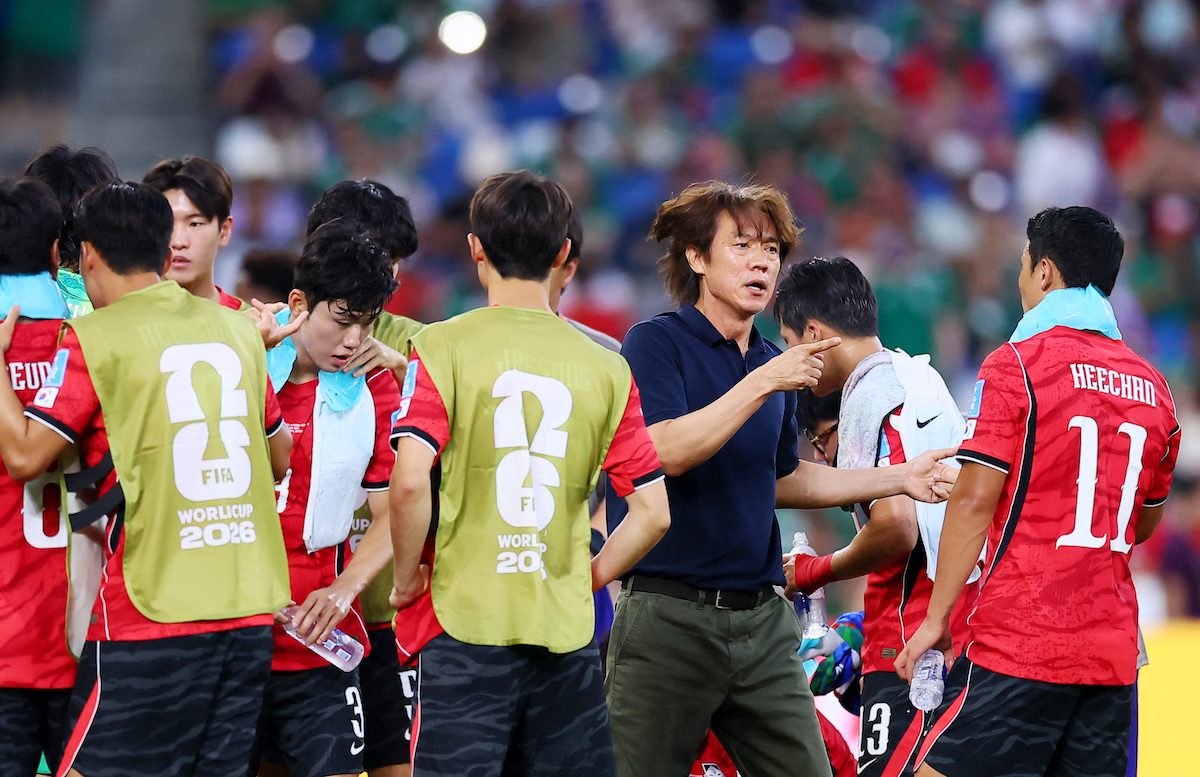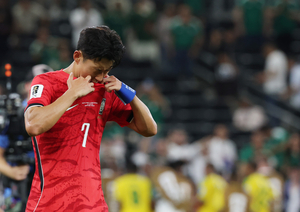
Questions over S. Korean coach resurface as national team records among worst-ever FIFA World Cup results South Korea's captain Son Heung-min covers his face with his uniform after a 0-1 defeat against South Africa in Mexico on Wednesday. (Yonhap) South Korea's early exit from the 2026 FIFA World Cup confirmed for many fans widespread concerns that have followed throughout head coach Hong Myung-bo’s second run leading the national team: questions over what appears to be a lack of tactics, his dubious appointment process that bypassed interview and presentations and the unwarranted trust in him by the national soccer association that was already facing accusations of poor governance and weak accountability.These doubts began to brew long before the team officially failed to qualify for the knockout stage of the 2026 FIFA World Cup, a fate that was only decided Sunday. It was ultimately determined not by the three matches the team played, but by the results of games played by third-place teams in other groups.The expanded 48-team World Cup had given third-place teams a second chance to avoid elimination from the knockout round, but in the end it only prolonged uncertainty and aggravated disappointment for South Korean fans.The hope that South Korea's single win, three points and a minus-one goal difference would allow the team into the Round of 32 evaporated when Democratic Republic of Congo came from behind to beat Uzbekistan 3-1.South Korea ranking 34th in the World Cup left Hong and the Korea Football Association facing a fierce backlash that was not only about its three games in this World Cup.Questions over Hong’s tactics Hong Myung-bo (second from left), manager of South Korea's national soccer team, walks past players on Saturday at Guadalajara, Mexico, during a training session following the country's defeat against South Africa on Wednesday evening. (Newsis) Korea opened the 2026 FIFA World Cup with a 2-1 win over the Czech Republic, but consecutive 0-1 losses to Mexico and South Africa left the team clinging to third-place calculations.Fans were skeptical when Hong started captain Son Heung-min on the bench during the game against South Africa in Mexico on Wednesday, explaining in a press briefing afterward that he had planned to use the soccer star in the second half to exploit tired South African players.The plan failed. Korea struggled to establish a rhythm and failed to score.South Africa manager Hugo Broos said afterward that his side had been "better tactically" than Korea, adding that Korea’s playing style had been predictable.Similar criticism was echoed back home."It was a difficult match where it was even hard to tell what the tactical direction was," said commentator Lee Young-pyo, who played alongside Hong in the 2002 World Cup."There was no promised play when a player held the ball. There was no attacking pattern, no tactic, and they just stood there," said veteran commentator Park Moon-sung.Hong's response to a reporter's postmatch question also fueled anger."The coaches and I are also dumbfounded as to why we performed so weakly," Hong said Friday. "The players seemed to get impatient as things did not work out."Speculation that Hong lacked a clear tactical plan had surfaced even before the tournament.Ahead of the tournament, Park Ji-sung, a former Manchester United player and one of the country’s most respected soccer figures, criticized the team’s performances and warned of a repeat of the disappointment of the 2014 World Cup.That criticism cut deeply because this Korean squad was not viewed as lacking talent.With Son, Lee Kang-in, Kim Min-jae and several Europe-based players, Korea entered the tournament with enough quality to expect progression from Group A.The total value of Korea’s squad was estimated at 256 billion won ($167 million), according to soccer market website Transfermarkt. The team also had Group A’s highest-valued player in Paris Saint-Germain midfielder Lee Kang-in, whose market value stood at approximately 49.5 billion won.The issue was not whether Korea had stars. It was whether the team had a coherent structure around them.Against Mexico, Korea failed to turn possession and attacking talent into goals. The team scored twice in its opener over the Czech Republic, but did not score again. In the must-win match against South Africa, Korea focused on defense, stubbornly sticking to a three-back system.Hong’s controversial appointment South Korean manager Hong Myung-bo holds a press conference on Thursday in Mexico, after a 0-1 defeat against South Africa on Wednesday. (Yonhap) The anger surrounding Hong did not begin at the World Cup. His appointment in 2024 was controversial from the outset.After the dismissal of Jurgen Klinsmann, the KFA had promised a well-established foreign manager. Instead, fans got Hong, who had already overseen Korea’s worst World Cup result since 1986 when he led the team in 2014.The Ministry of Culture, Sports and Tourism later found procedural problems in the appointment process, saying parts of the selection had been opaque.The ministry recommended punitive measures against KFA President Chung Mong-gyu, who led the association for 13 years. The KFA refused to accept the recommendations and filed an administrative suit, which it lost.In 2024, the National Assembly summoned both Hong and Chung to answer questions over allegations of corruption.The government also sought to investigate Hong's hiring process in 2024, but FIFA warned that the government must meet its obligation to not influence KFA's internal affairs.Chung eventually said in May that he would step down after this year’s tournament, regardless of the results.Hong had also initially denied that he was interested in the role. He later said he accepted the position as his "last volunteer work" for the development of Korean soccer.However, later reports revealed that Hong earned 3.8 billion won annually, ranking 16th among all coaches participating in the 2026 tournament and more than double the salary of his Japanese counterpart Hajime Moriyasu.This history made Hong uniquely vulnerable. Other coaches might have been judged mainly on results. Hong was also judged on legitimacy.The World Cup exit has reopened a broader question surrounding a deeper issue with Korea's soccer governance.Six-term Rep. Song Young-gil of the Democratic Party of Korea on Sunday called for a complete restructuring of the KFA, which he labeled "the greatest enemy of South Korean soccer.""Tragedies do not repeat by chance. They repeat when a flawed system is left neglected," Song said, pointing to criticisms surrounding the KFA's opacity.Fans vent anger South Korean coaches comfort Paris Saint Germain attacking midfielder Lee Kang-in (left) and Besiktas forward Oh Hyun-gyu after a 0-1 defeat against South Africa, in Mexico on Wednesday. (Yonhap) South Korea’s national team is set to return to Seoul on Tuesday via Incheon Airport.Some fans expressed anger online after Korea’s elimination was confirmed, with several posts calling for protests at the airport."Make sure Hong Myung-bo stands at the front when they return," one user wrote on X, claiming they would throw eggs.South Korea's 34th place finish is its worst-ever finish on paper at the World Cup. It was dead last in the 16-team 1954 event and failed to even qualify for the world's biggest soccer event on multiple occasions, but the team never finished so low with such star-studded roster.The team was also the only team among those that reached the knockout stage in the previous World Cup to fail to advance this year.The KFA said it would not hold an event to welcome home the team this year. It marks the first time since 2002 that the national team will return from a World Cup without an official arrival ceremony.The decision recalls the team’s return from the 2014 World Cup in Brazil, when Hong was also in charge. At the time, angry fans threw Korean malt candy, or "yeot," at Hong and the players at the airport. The word is a homonym of a Korean expletive.
Early World Cup exit reopens old wounds on Hong, KFA leadership
South Korea's early exit from the 2026 FIFA World Cup confirmed for many fans widespread concerns that have followed throughout head coach Hong Myung-bo’s secon
1,279 words~6 min read