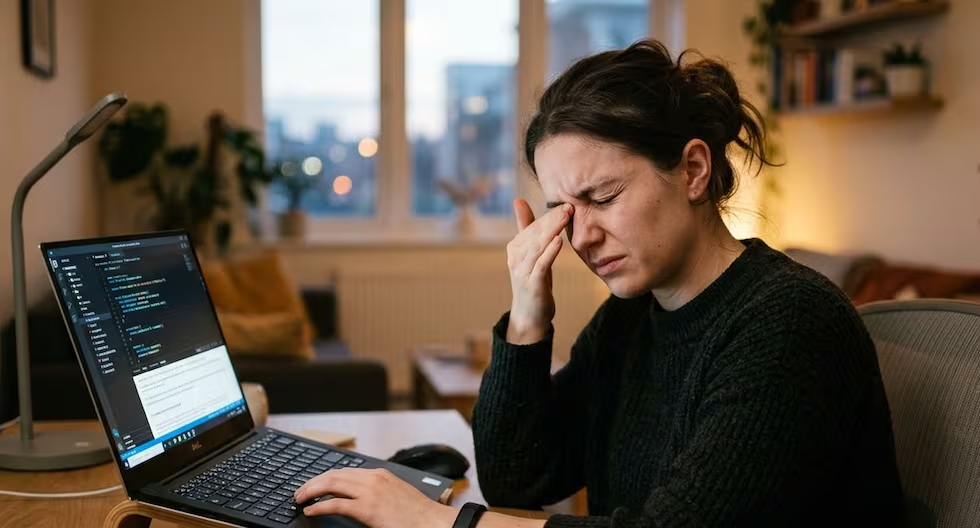
Do your eyes feel tired after screen time? Find out when your eye discomfort can be serious in nature. Vision discomfort has become normalised lately, something people either put up with or expect to resolve on its own. This is largely driven by constant screen exposure, from morning to night, screens in various shapes. So, after spending hours in front of a laptop at work, or scrolling late at night in the dark, tired and stressed eyes are overlooked without a second thought, believing a good sleep will fix it. But when so much of this vision discomfort is already normalised, one may miss a more serious warning sign, mistaking it for routine eye fatigue.ALSO READ: Do you really need blue light glasses? Ophthalmologist explains what actually helps your eyesKnow which common eye problem signs may overlap with serious ones. (Picture credit: Freepik)Let's look at some of the common mistakes people may be making when dealing with eye fatigue. An expert has simplified the science behind it.Dr Srikanth R, paediatric ophthalmology at Apollo Spectra Hospital, Chennai, explained in an interview to HT Lifestyle that the condition of digital eye strain is common and is usually caused by prolonged screen exposure and continuous strain on the eyes' focusing muscles.What is the difference between common eye fatigue and vision disorders?Visit an eye doctor when you experience vision discomfort which does not go away after rest. (Unsplash)Eye fatigue is a common complaint. The doctor mentioned that patients often report symptoms such as dryness, itchiness, mild blurry vision, burning, a heavy feeling in the eyelids, and a dull ache around the eyebrow areas. But the main difference, which Dr Srikanth highlighted, is that these symptoms usually go away with rest. This means that after a long day of screen time at work, the discomfort improves after coming back home and getting proper sleep. However, signs of serious eye problems actually do not go away with rest and require medical attention.Addressing some of the serious eye problems, the doctor mentioned signs which severely affect your vision, not solely tiredness or heaviness.“Eye problems such as glaucoma and retinal issues require medical attention as they affect areas within the eye. Blurry vision, inability to focus on objects at varying distances, or experiencing double vision may be symptoms of eye problems. Another significant eye problem symptom is asymmetry. While eye fatigue affects both eyes equally, eye problems such as blurred vision, shadows, or impaired vision in one eye may be a sign of eye clinical problems. Also, be careful of visual disturbances, which can mean retinal complications, like sudden flashes of light, a noticeable increase in dark floating spots (floaters), or wavy or distorted lines in the field of vision," he described.When you come across the aforementioned signs, it is highly recommended to visit a doctor promptly.How to manage eye strain?Even if serious eye problems are ruled out, regular eye strain can still cause discomfort, which is why it is important to follow certain practices that help relieve the strain and protect your eyes. Here are some which the ophthalmologist recommended:Follow the 20-20-20 rule: Every 20 minutes, look at an object at least 20 feet away for 20 seconds.Use computer glasses if needed: Glasses that filter blue light may help reduce discomfort caused by prolonged screen exposure.Set up your workspace properly: Keep the screen around 20–28 inches away from your eyes.Adjust screen height: Place the screen slightly below eye level to reduce strain.Improve lighting: Avoid using screens in very dark rooms or under harsh lighting, as both can worsen eye fatigue.Note to readers: This article is for informational purposes only and not a substitute for professional medical advice. Always seek the advice of your doctor with any questions about a medical condition.Adrija Dey’s proclivity for observation fuels her storytelling instinct. As a lifestyle journalist, she crafts compelling, relatable narratives across diverse touchpoints of the human experience, including wellness, mental health, relationships, interior design, home decor, food, travel, and fashion that gently nudge readers toward living a little better. For her, stories exist in flesh and bones, carried by human vessels and shaped through everyday endeavours. It is the small stories we live and share that make us human. After all, humans and their lores are the most natural and raw repositories of stories, and uncovering them, for her, is akin to peeling an orange under a winter afternoon sun. Always up for a chat, she believes the best stories come from unfiltered yapping, where "too much information" is kind of the point. A graduate of Indraprastha College for Women, University of Delhi, and an alumna of the Indian Institute of Mass Communication (IIMC), Delhi, Adrija spends her idle hours cocooned with herbal tea and a gripping thriller, scribbling inner monologues she loosely calls poetic pieces, often with her succulents in attendance. On lazier days, she can be found binge-watching, for the nth time, one from her comfort-show holy trinity: The Office (US), Brooklyn Nine-Nine, or Modern Family. Dancing by herself to her peppy playlists, however, is an everyday ritual she swears by religiously.Read MoreScreen TimeCatch every big hit, every wicket with Crick-it, a one stop destination for Live Scores, Match Stats, Quizzes, Polls & much more. Explore now!.Catch your daily dose of Fashion, Taylor Swift, Health, Festivals, Travel, Relationship, Recipe and all the other Latest Lifestyle News on Hindustan Times Website and APPs.See Less
Regular eye strain from screens vs serious vision problems: Ophthalmologist explains how to tell the difference
Do your eyes feel tired after screen time? Find out when your eye discomfort can be serious in nature. | Health
896 words~4 min read