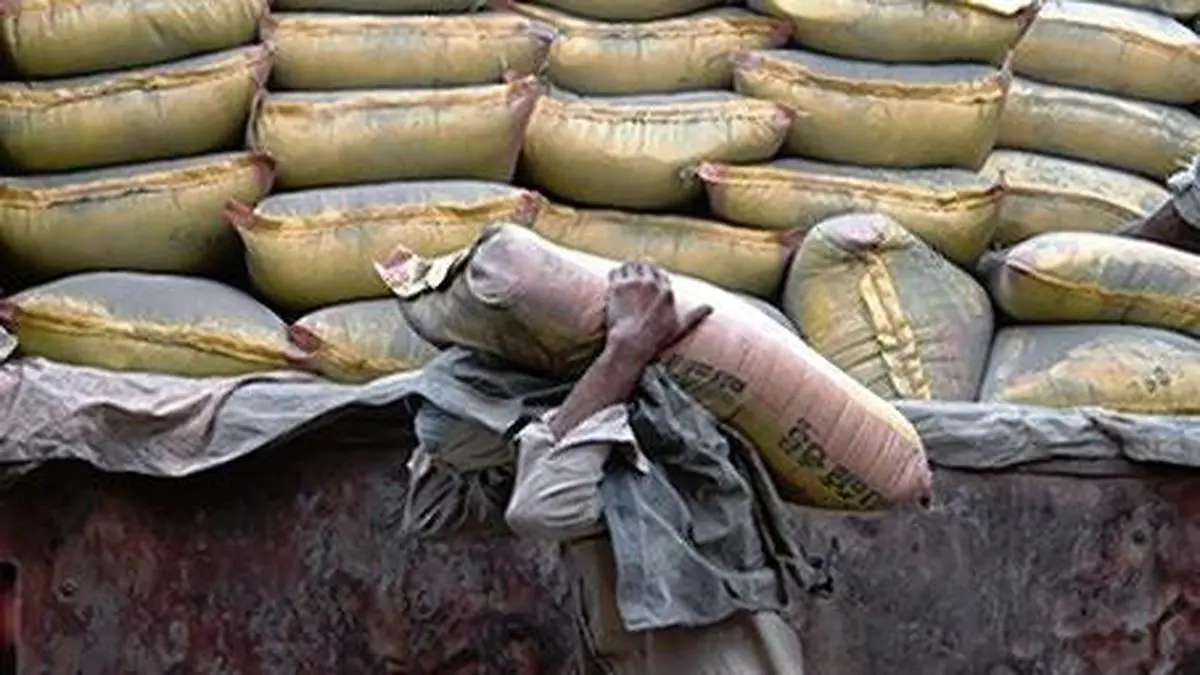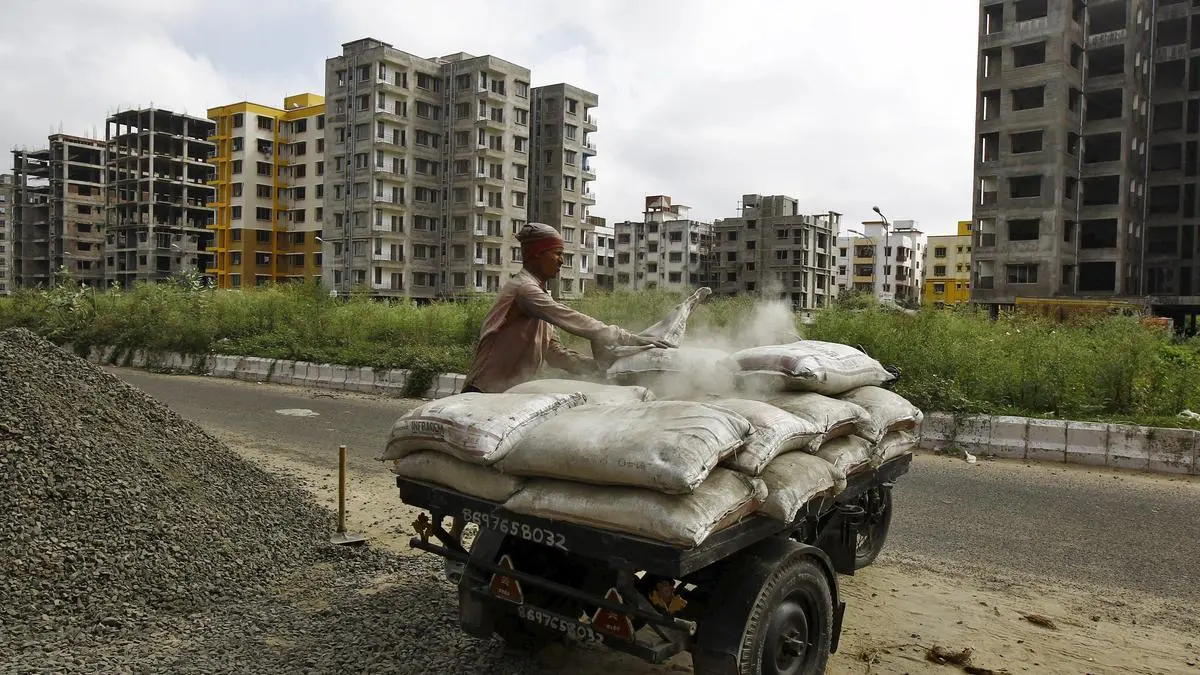
A labourer loads cement bags onto an improvised motorized rickshaw at the construction site of a residential complex on the outskirts of Kolkata
| Photo Credit:
REUTERS/RUPAK DE CHOWDHURI
The onset of south-west monsoon coupled with a slowdown in real estate activity and labour shortages, has damped cement demand and prices, even as rising operational cost continue to weigh on the sector.The recent rise in petrol and diesel prices by ₹7.5 per litre is expected to significantly impact cement companies, as the industry relies heavily on road transport for the movement of raw material and finished goods.Despite a slight delay in monsoon, construction labourers have returned to their villages to prepare agricultural fields for the upcoming season, leading to workforce shortages at construction sites.Following a price hike of ₹12 per 50 kg bag in April, the all-India cement prices declined by ₹3-5 a bag to ₹356, led by a fall of ₹5 per bag in the East, ₹4 in the South and ₹3 in the North, according to industry sources. In the Central and Western regions remained largely stable despite weak demand..Manish Valecha, Co-head of Research, Anand Rathi Institutional Equity, said, “Though monsoon was little late this time, cement demand is expected to remain seasonally weak due to monsoon-related disruptions in housing and infrastructure construction.”He added that price continue to face downward pressure amid weak demand, driven by labour shortages, poor agricultural output, a slowdown in real estate and subdued consumer sentiment influenced by geopolitical tension.Ashutosh Murarka, Cement Analyst, Choice Institutional Equities, said, “Margin pressure is expected to persist through June and September quarter with the industry facing an estimated cost increase of ₹350–400 a tonne, driven by higher fuel, freight and packaging expenses.”In the absence of meaningful price hikes, this elevated cost base is expected to compress EBITDA per tonne and weigh on profitability over the near term, he added.While FY27 industry volumes are expected to grow 6–7 per cent year-on-year, supported by infrastructure and housing demand, near-term profitability remains under pressure due to capacity addition of 40 MTPA and persistent cost inflation of ₹350–400/tonne, he said.Saurabh Jain, Head of Fundamental Research, SMC Global Securities Cement, said, “Demand is likely to remain subdued during the next two months due to monsoon-led disruptions, though the slowdown is not structural.”On the cost front, logistics expenses may rise temporarily due to weather-related disruptions, while fuel and raw material costs are expected to remain largely stable, offering some relief to margins, he added.Ravi Sodah, Research Analyst, Elara Capital said, “The industry has entered its seasonally weak phase amid a volatile operating environment with the monsoon emerging as a key headwind for construction activity and cement offtake.”He added, a meaningful recovery in demand is likely only in the post -monsoon period, with pricing power expected to remain constrained in the near term.Published on June 28, 2026