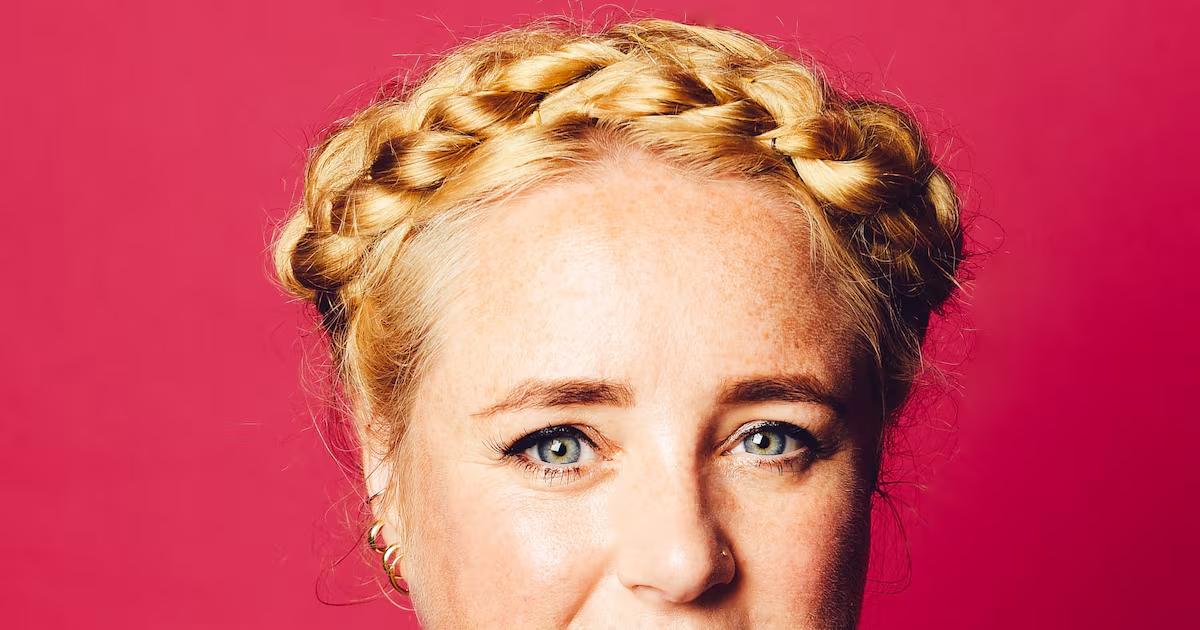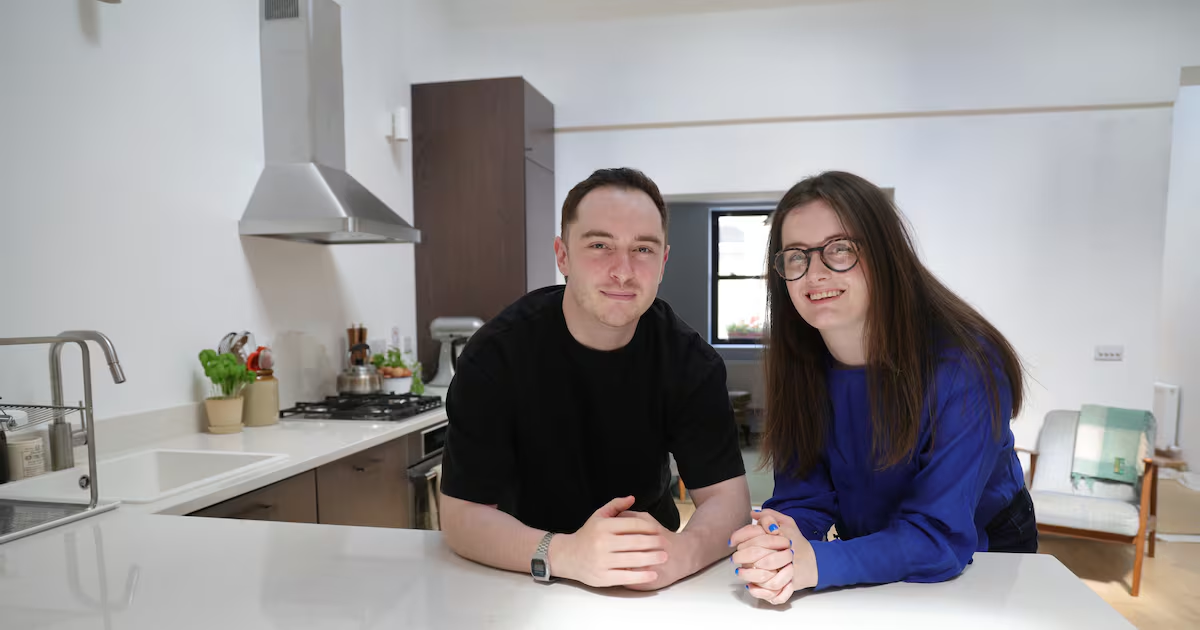
When Aileen Brilly got engaged last August, she forgot the notion of marriage was even “on the table”, she says.The 33-year-old had finally moved in to her first home in the North Strand, Dublin, with her fiance, Tim Carley, some five years after they bought it.Having met in New York while he was on a J1 visa and she was on holiday in 2015, they spent almost half of their relationship living in Carley’s childhood bedroom.“My football posters are still on the wall,” says Carley, a 32-year-old from Raheny, north Dublin.A sense of “hopelessness” is common among his age group due to Ireland’s housing crisis, he believes.“It’s definitely stunted a lot of us,” he says, adding that none of his friends have had children yet, “which is very unusual at this age, I think.“When [Dad] was my age, him and my mum already had five kids and were probably in their second or third house.”Although they secured the keys to their North Strand home in 2021, having rented in Dublin for years, they discovered significant structural defects, with an engineer deeming it an “unsafe building”, Brilly says.[ Counting the eye-watering cost of being singleOpens in new window ]The house cost €277,000, though that would ultimately climb by a further €200,000 or so for renovations, which they pay for monthly, alongside mortgage repayments.“We knocked everything except for the front wall,” Brilly says. “It’s kind of a roundabout way of how the housing crisis has delayed us, because we were only able to buy a house that was in such disrepair.”Having moved into Carley’s childhood bedroom at the age of 27 and leaving at 32, Brilly recalls feeling they were “losing time in our lives”.“We were excited to get married and have kids,” she says, noting that in her “original plans”, they envisaged being married and trying for children by 31.“Now we’re engaged and plan to get married in 2028, but at that point, I’ll be nearly 36.“I have a lot of anxieties around that now because I’m much older and I don’t know how that’s going to play out,” she says.Earlier this month, Bishop Denis Nulty, president of Catholic marriage agency Accord, told the Irish Catholic newspaper that Ireland’s housing crisis is the “biggest obstacle to couples getting married today”.Brilly and Carley’s experience, international research, and mortgage advisers seeing the issue play out on the ground, would suggest he is not wrong.The number of marriages in the Republic has dropped by about 10 per cent over the last decade, from 22,025 in 2015 to 19,898 last year.People are getting married older. Last year, the average age of a bride was 36, up from 33 in 2015, while grooms had an average age of 38 in 2025, up from 35 a decade prior.At the same time, the average age of a first-time buyer increased from 34 in 2016, according to the earliest available data from the Central Bank of Ireland, to 35 last year.The median age of all homebuyers has increased from 35 in 2010 to 40 in 2024, according to the Central Statistics Office.Recent Ireland-specific research on the correlation between the declining marriage rate and housing costs is largely limited to surveys carried out by Accord.One such survey of 1,000 participants last year saw 48 per cent of respondents aged 25-34 who planned to marry saying they would have married by then only for the housing crisis.[ ‘We knew that Ireland had a housing problem, but we did not know the extent of it before we came’Opens in new window ]Tony Shanahan, director of Accord, accepts that changing attitudes towards marriage are also contributing to the declining rate, but believes the housing crisis is a big cause.“Whether you want to get married or you want to have children, housing is getting in the way of both aspirations,” he says.A study published earlier this year in the peer-reviewed journal Human Settlements and Sustainability looked specifically at the link between house prices and declining marriage rates worldwide.It examined the issue across 52 countries, including Organisation for Economic Co-operation and Development (OECD) countries, which include Ireland, from 2009 and 2018, finding that higher housing costs are “significantly associated” with lower marriage rates.Looking at the cost of a house relative to income and the marriage rate across those countries, it found that as the average price-to-income ratio increased, the average crude marriage rate fell.The study, carried out by a group of international researchers based in Switzerland, Hong Kong and Bangladesh, argues that housing costs influence how individuals judge their “readiness” for marriage, “particularly in societies where home ownership serves as a marker of financial maturity and adult independence”.[ Are renovation costs finally putting a brake on mid-market house prices? Opens in new window ]Mortgage brokers say they are seeing this play out across the country, with couples opting to prioritise housing over marriage.“In a lot of cases the deposit for a home is taking precedence over other major life events, including weddings,” says Joanna Fitzpatrick, head of lending and client services at LHK Group.“Given the level of house prices and the size of deposits required, many couples feel they need to focus on securing a home first and then consider a wedding once they are more financially established.”Fitzpatrick says the housing market has caused home ownership to be viewed as the more “urgent milestone”.Similarly, Aisling McNamara, a mortgage broker with Mortgage123, says the wedding has not necessarily disappeared, “it has just been pushed behind the house”.“It is not that marriage is unimportant to them, but the financial reality is that saving for a deposit, legal fees, stamp duty, furnishing a home, or funding a one-off build can absorb almost all of their available savings,” she says.Lorcan Sirr, a senior lecturer in housing at Technological University Dublin, says couples naturally want security in the form of home ownership before settling down.“The more unobtainable housing becomes, obviously that’s going to delay people,” he says.“Maybe for some people, it is a choice between having a grand wedding and having a deposit for a house.”
‘It’s definitely stunted a lot of us’: Is the housing crisis pushing marriage down the priority list?
Earlier this month, Bishop Denis Nulty claimed Ireland’s housing crisis was the ‘biggest obstacle to couples getting married today’
TL;DRAI
Ireland's marriage rate dropped 10% as housing costs rise; a study across 52 countries confirms higher house prices correlate with fewer marriages. Tech impact: delayed family formation among core talent pools challenges long-term workforce planning and future demand.
1,006 words~5 min read