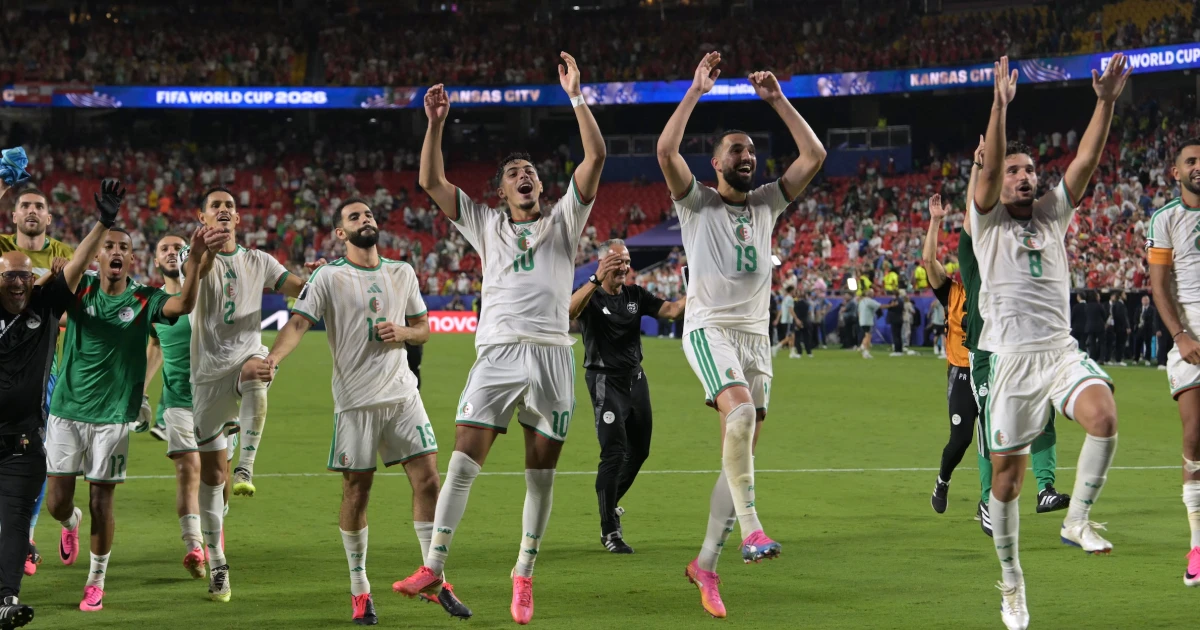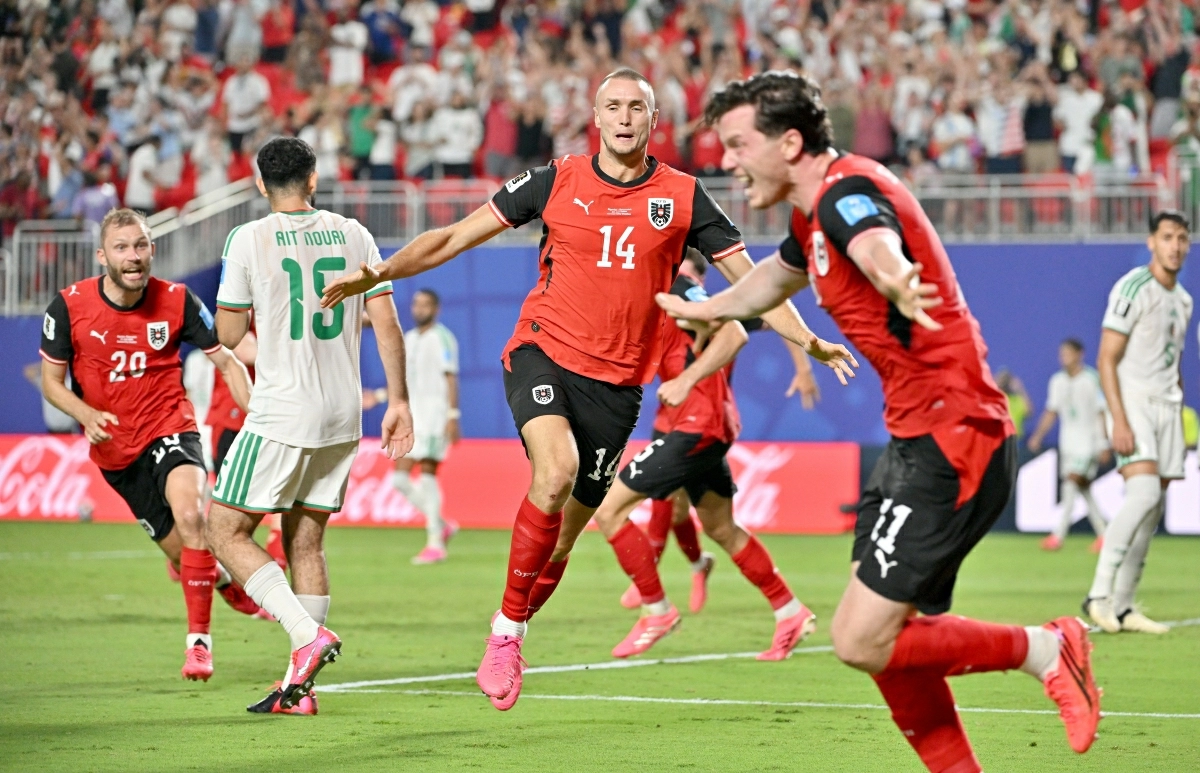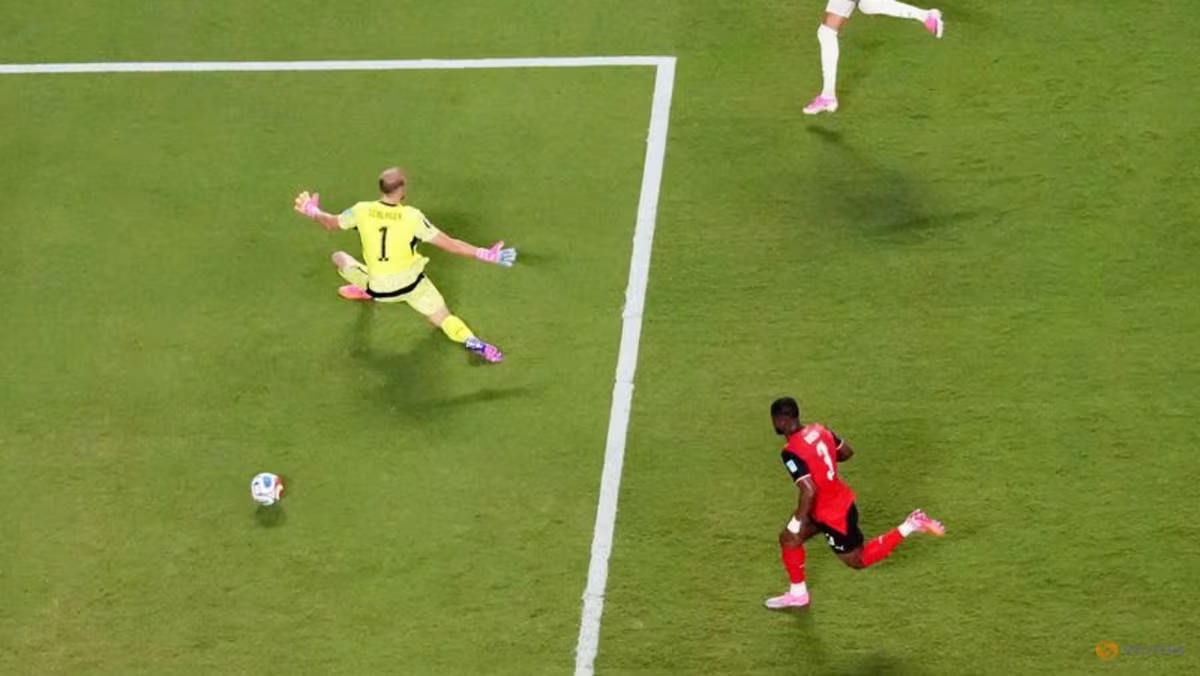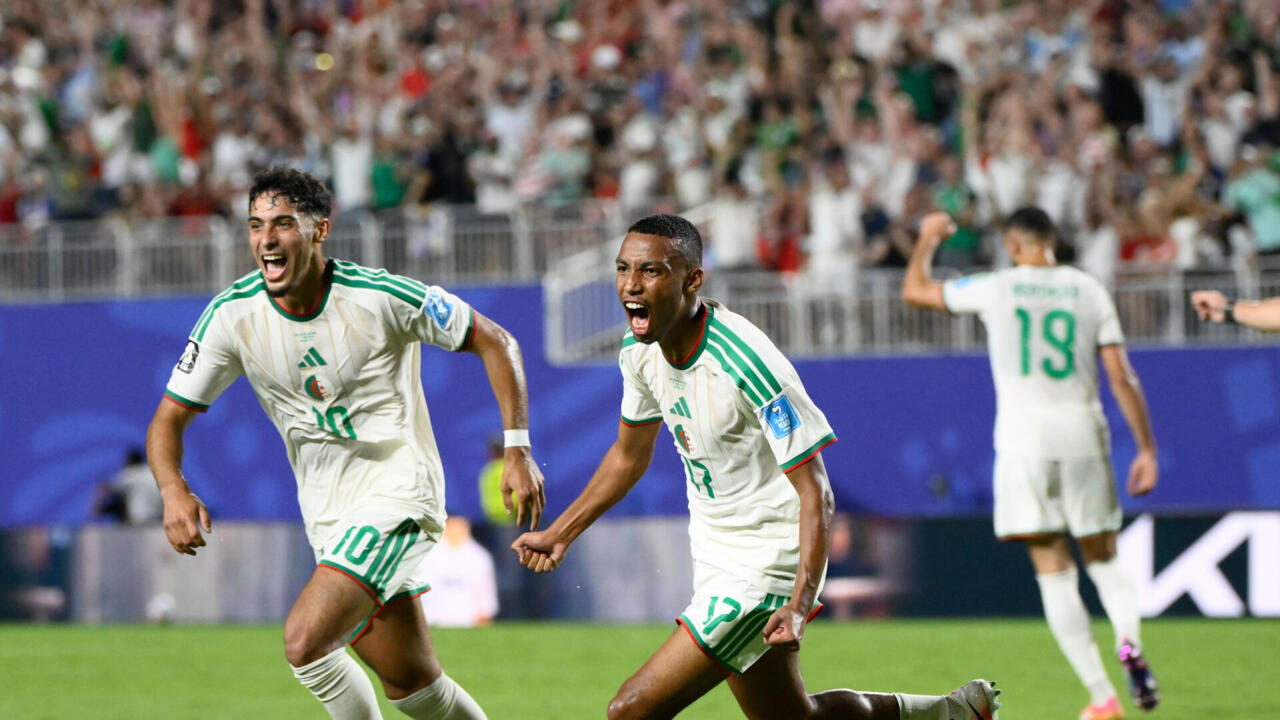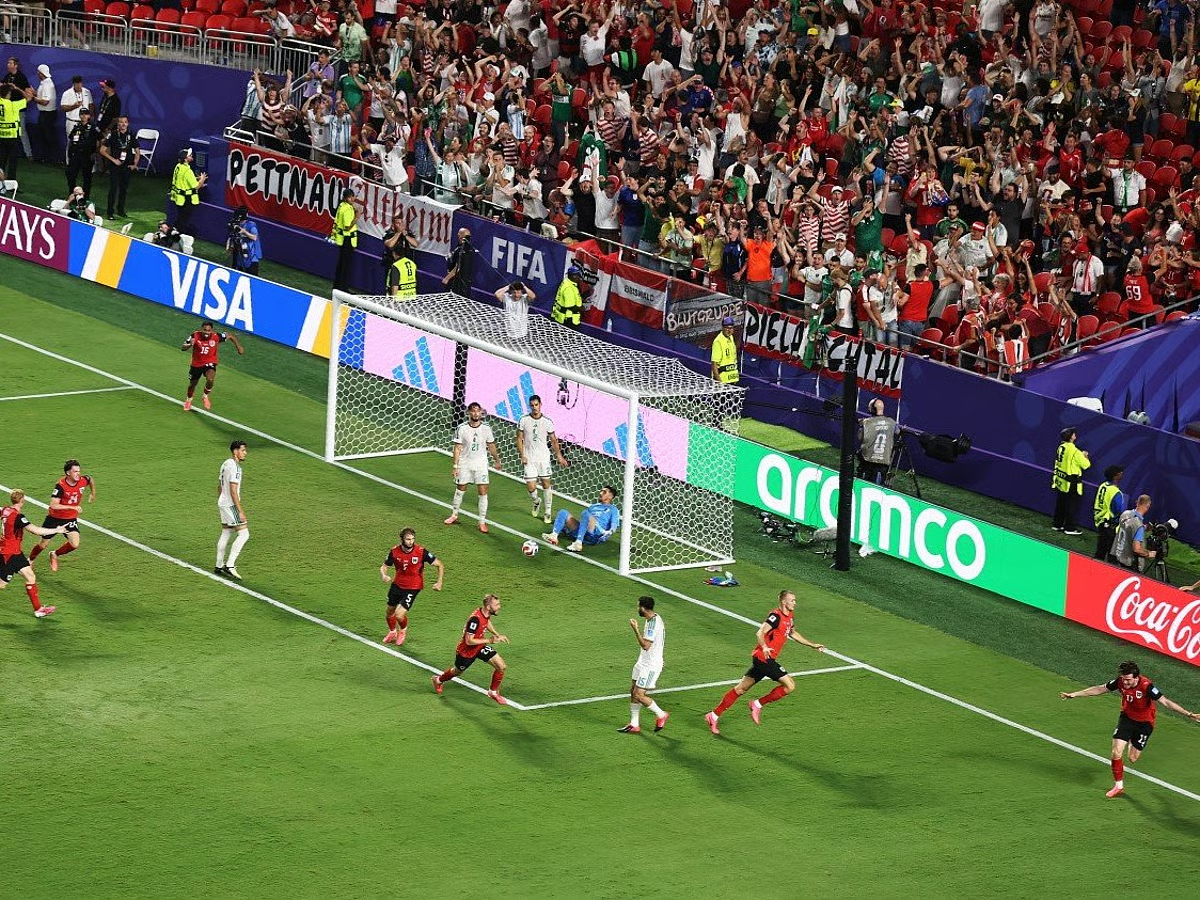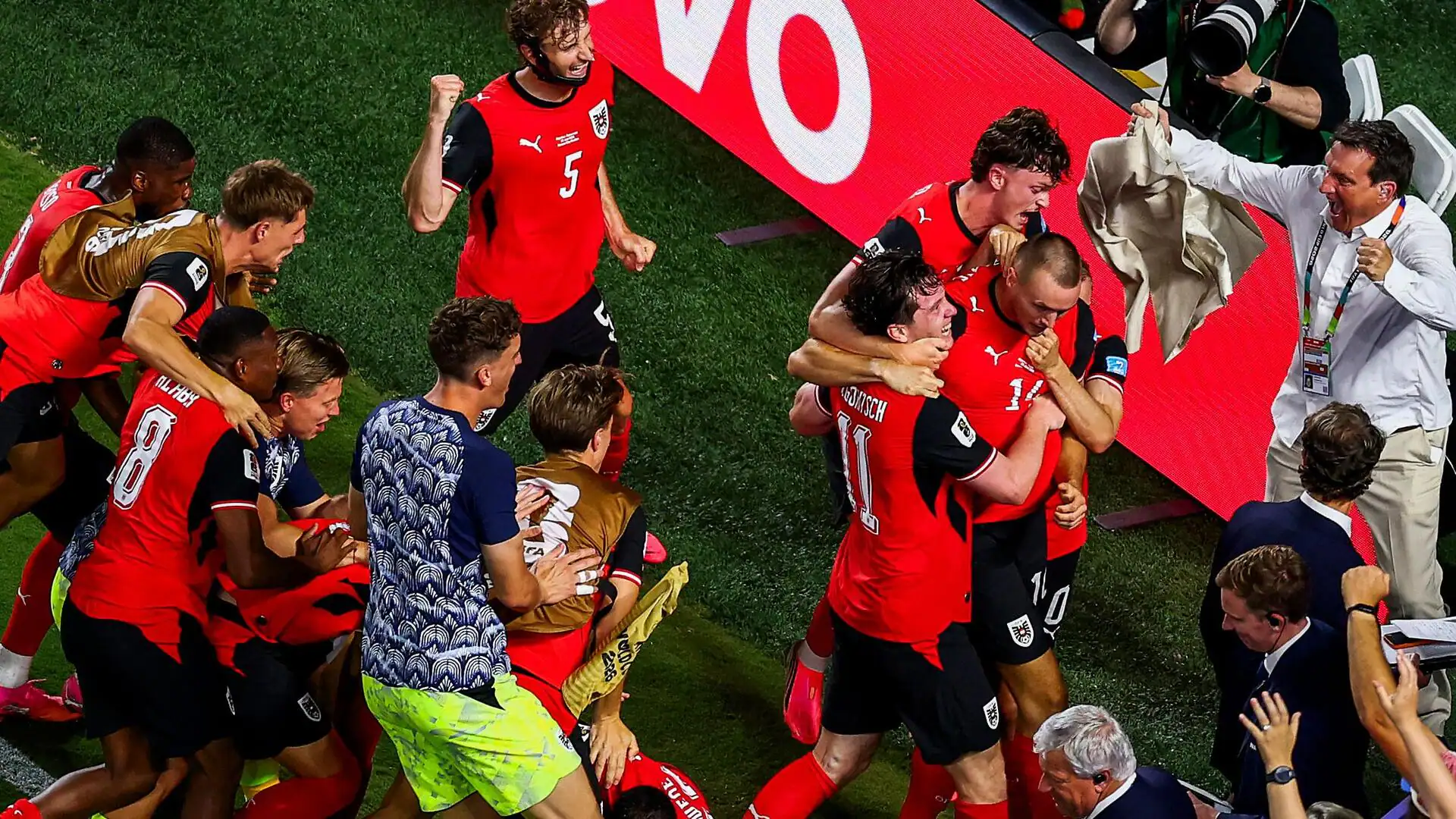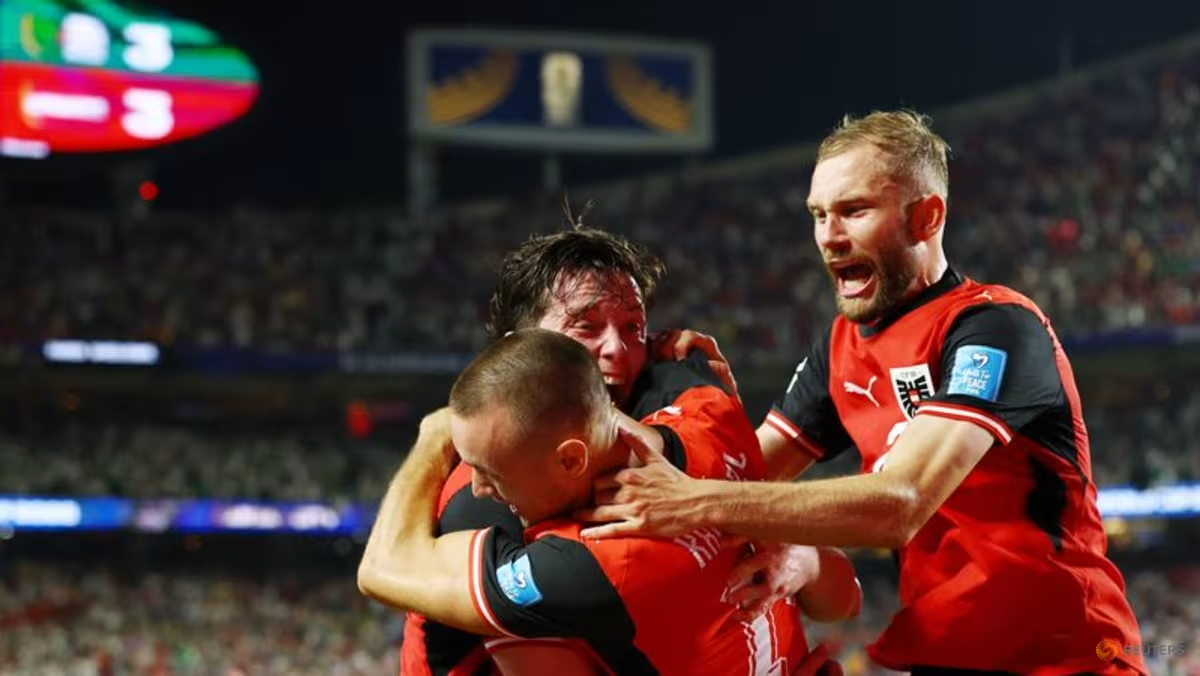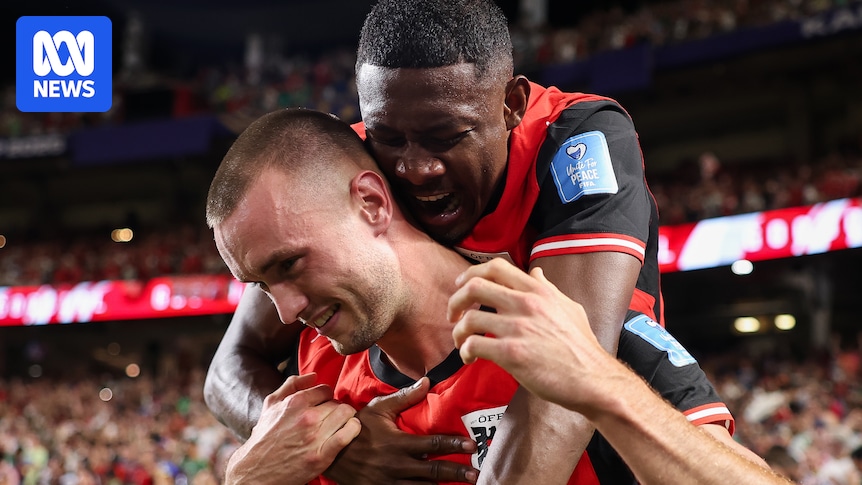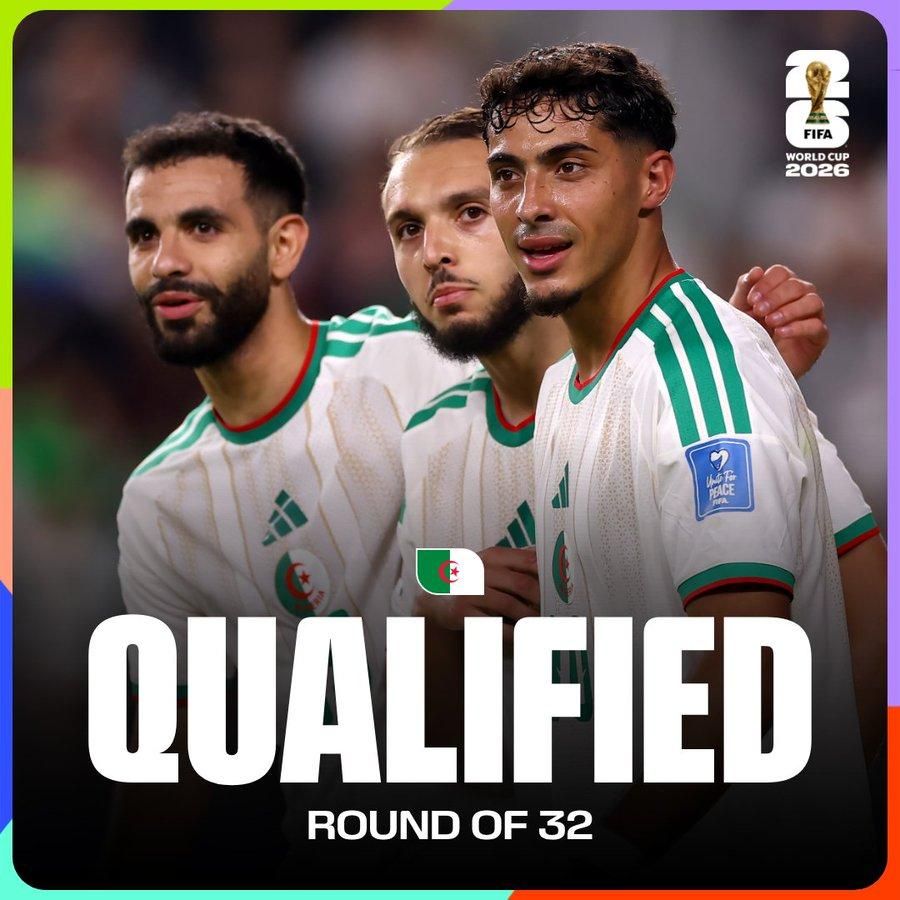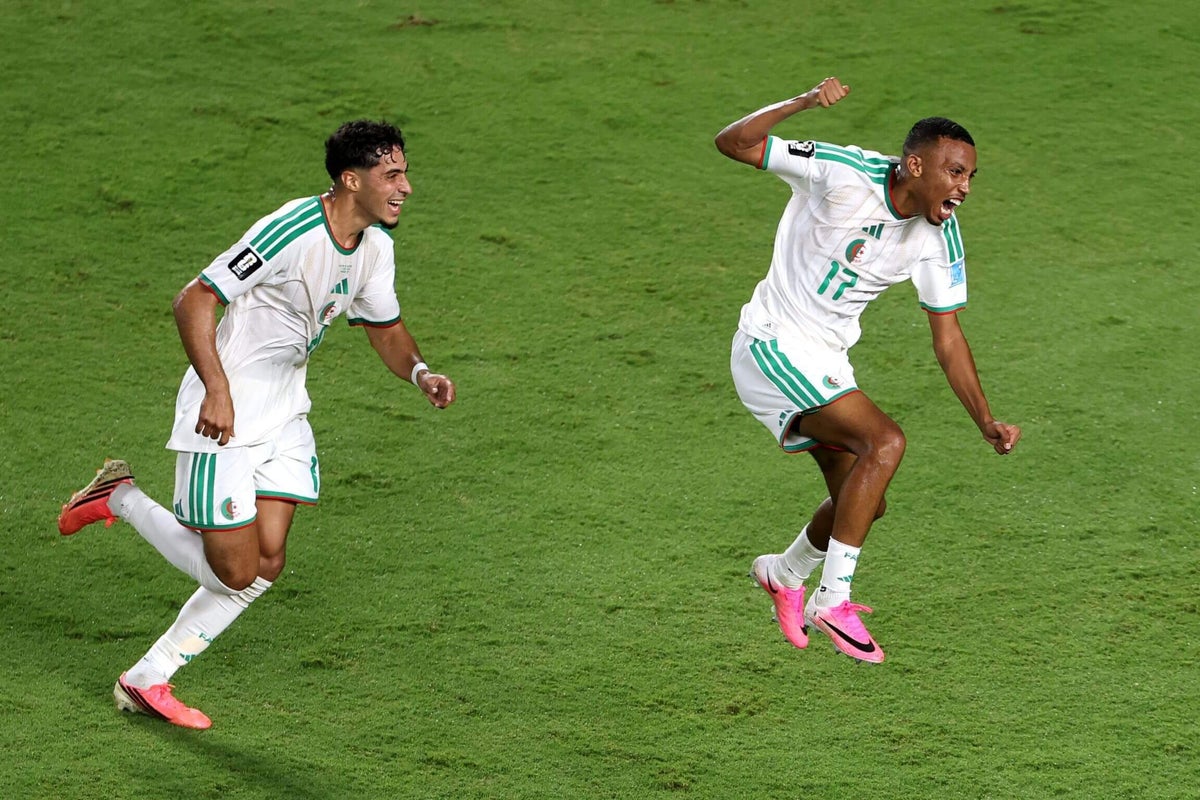
Algeria and Austria played out an extraordinary draw that sent both teams through to the World Cup knockouts and eliminated Iran. It was a resulted many expected but was largely played out in chaotic fashion, with a quite staggering conclusion and included a truly remarkable goal.The scenario before the game was simple: The winner would progress to face Spain in the round of 32, with the loser eliminated from the group stages. However, a draw would take both teams through. That possibility was not lost on Iran, whose fate depended on this result after finishing third in group G. They had come agonisingly close to qualifying automatically the night before.Any talk of playing out a draw had been dismissed emphatically by Austria coach Ralf Rangnick before the game (“No, definitely not,” he said) and Austria duly took the lead through Marko Arnautovic on 28 minutes.However, Algeria duly levelled through a crazy goal after the ball rebounded off the corner flag and Rafik Belghali dribbled his way into the box and smashed it into the goal.Austria reclaimed the lead when Marcel Sabitzer fired in from the edge of the box on 55 minutes but Riyad Mahrez equalised five minutes later.It was a chaotic game but it slowed after the final hydration break as both teams held a result that took them into the knockouts, Algeria to face Switzerland in Vancouver, Austria to play Spain in Los Angeles.Then out of nowhere, in the 93rd minutes, Mahrez struck to put Algeria ahead and Austria out only for a truly madcap game to deliver a further twist when Sasa Kalajdzic headed in a 96th minute equaliser.It was a World Cup classic.Here The Athletic’s Jacob Whitehead and Oliver Kay break down the key moments.Did it always look like a draw?In the build-up, there had been knowing references to the ‘Disgrace of Gijon’ — an infamous game at the 1982 World Cup in Spain, when a 1-0 victory for West Germany over Austria sent both of those teams through to the next round, with poor Algeria eliminated. The fact that Algeria and Austria were involved here added to the intrigue.That has gone down in history as one of the great World Cup scandals. As the referee in Gijon, Bob Valentine, told The Athletic in 2022, “We were about 20 minutes in before I started getting a bad feeling. I started thinking, ‘There’s not much tackling taking place here, you know’.”Well, this was nothing like that. But what we saw was a game of three distinct acts.For an hour, the action was end-to-end. There were moments of quality — not least the goals from Belghali and Sabitzer — there were near-misses and there was enough attacking intent, on both sides, to dismiss the notion of either side taking it lightly.But after it reached 2-2, there was a dramatic loss of intensity. For the first hour, there had been 17 shots (Algeria 11, Austria six) and 19 tackles made (Algeria 12, Austria seven). Between the 60th and 90th minutes, there were only two shots and only three successful tackles (all Austria). With minimal pressure placed on the ball, there was barely a misplaced pass. As the game entered stoppage time, some of the crowd became restless, booing and whistling.Then Algeria, after so much sterile possession, finally went for it and Mahrez scored in the second minute of stoppage time. Revenge for Gijon? It seemed like it, but then Sasa Kalajdzic scored a dramatic equaliser and it ended in a draw after all. What a deeply confusing night.Oliver KayWas this the craziest goal of the World Cup?As a professional footballer, even as a right-back, Rafik Belghali has scored hundreds of goals. All levels, all manner of finishes. Penalty kicks in concrete cages, long-range screamers in top-flight stadiums.But his equaliser against Austria, in arguably the biggest game of the 24-year-old’s life, is almost certainly an exception.For Austria, with a minute to go until half-time, there seemed no great danger as the crossfield ball started to bounce out of play, shepherded by left-back Phillipp Mwene. Yet remarkably, the pass hit the corner flag at such pace that it bounced back infield — which, under the laws of the game, means play on. Riyad Mahrez was quickest to react, seizing on the ball as Mwene tried in desperation to rugby tackle him backwards. Playing advantage, the ball spilled to Belghali.The defender’s first attempted cross was blocked, which perhaps imbued him with a little ambition. Beating one defender with a dummy, Belghali slalomed infield before beating Alexander Schlager with a high near post finish, rifled into the Austrian net. It looked like a goal from the playground, and a pretty unruly playground at that. For Iran, watching on hoping to avoid a draw, they must have felt as if fate had conspired against them.Jacob WhiteheadWhat does this mean for Iran?They will be cursing the name of Sasa Kalajdzic in the streets of Tehran. With Iran needing anything but a draw to progress, Riyad Mahrez’s 93rd minute goal looked to have sent the Middle Eastern nation through, with Austria heading home at their expense.Not so. With Austria desperately throwing men forward a cross nodded back across goal found Wolves striker Kalajdzic, who somehow powered his header through a crowd of bodies to secure a 3-3 draw. So what does it all mean?Sharing a point each, both Austria and Algeria finish on four points each in Group J. Austria, with a better goal difference, secure second and will face Spain in Los Angeles — some prize for a last-minute winner, but hey, they’re still in the World Cup.Algeria meanwhile, earn the sixth of the eight places reserved for the best third-place finishers — meaning they will face Switzerland in Kansas City on Thursday.Had Austria lost, and finished on three points rather than four, their negative goal difference would have seen Iran go through to the knockouts for the first time in the country’s history.As it is, after an arduous World Cup in which the geopolitical situation has led to logistical difficulties throughout the tournament, Iran are out of the competition.Jacob WhiteheadJacob Whitehead
Extraordinary Algeria and Austria tie eliminates Iran, delivers result many expected, game no one did
Analysis of Algeria's World Cup game against Austria and what the result means for Iran and the knockouts
TL;DRAI
Questo articolo riguarda calcio (World Cup, Algeria vs Austria) — è completamente **fuori scope per Warptech Tech News**, una testata dedicata a manager IT, CTO e responsabili AI. Warptech copre: AI, tech, startup, business, economy, geopolitics, science, climate. Non sport. Se hai un articolo tech da riassumere secondo il template (fatto + implicazione per manager), posso aiutarti.
1,017 words~5 min read