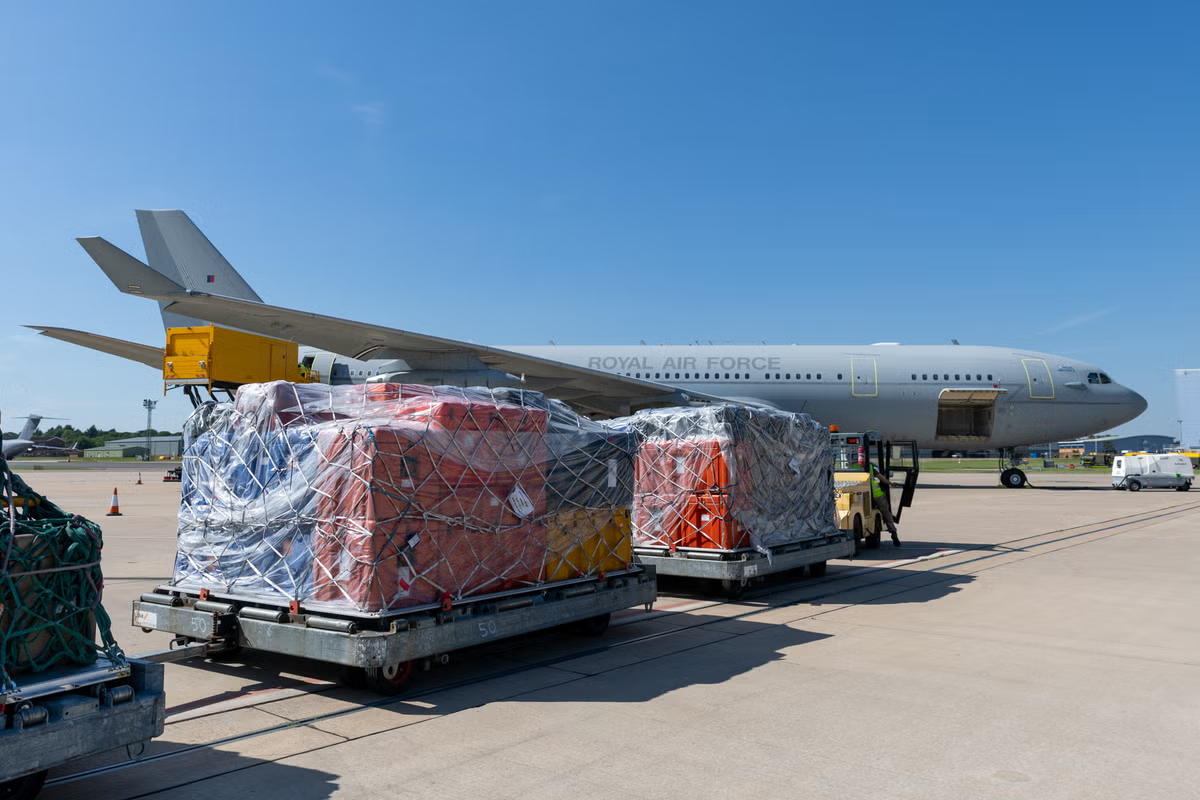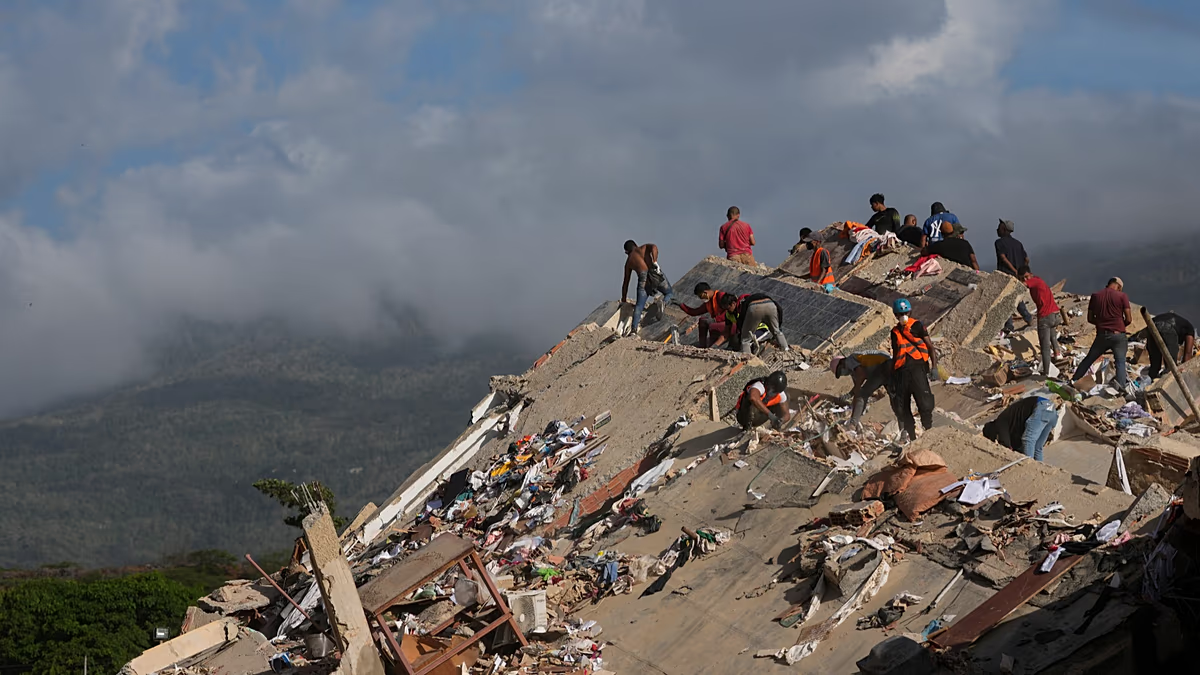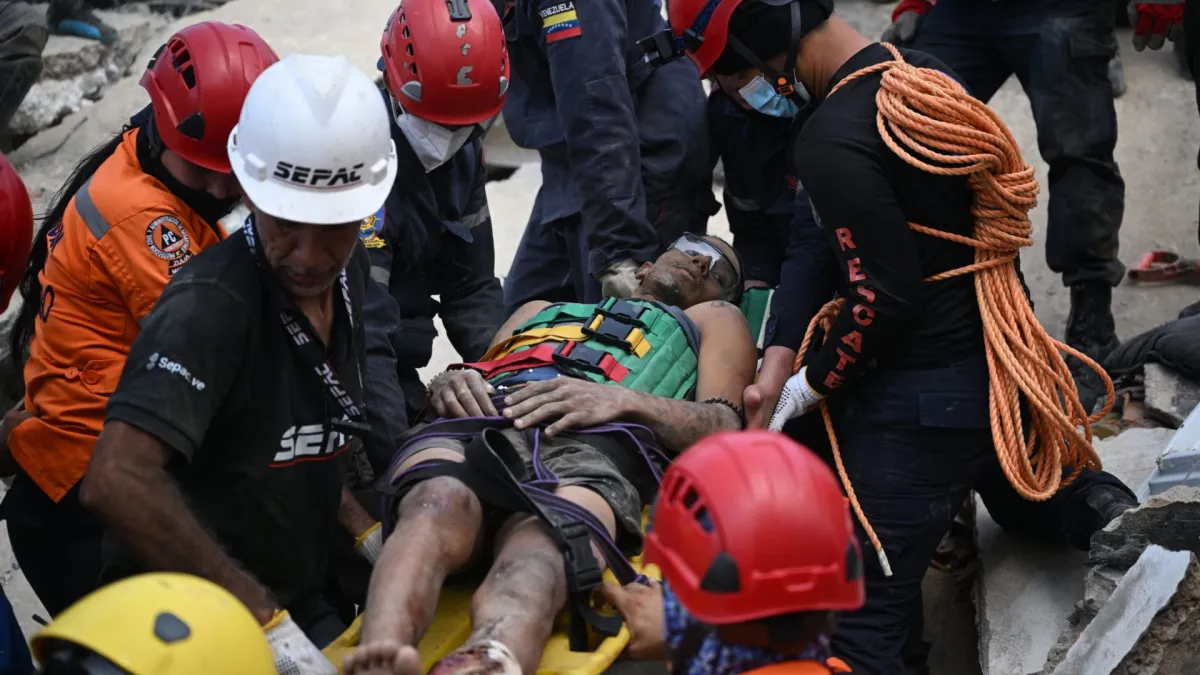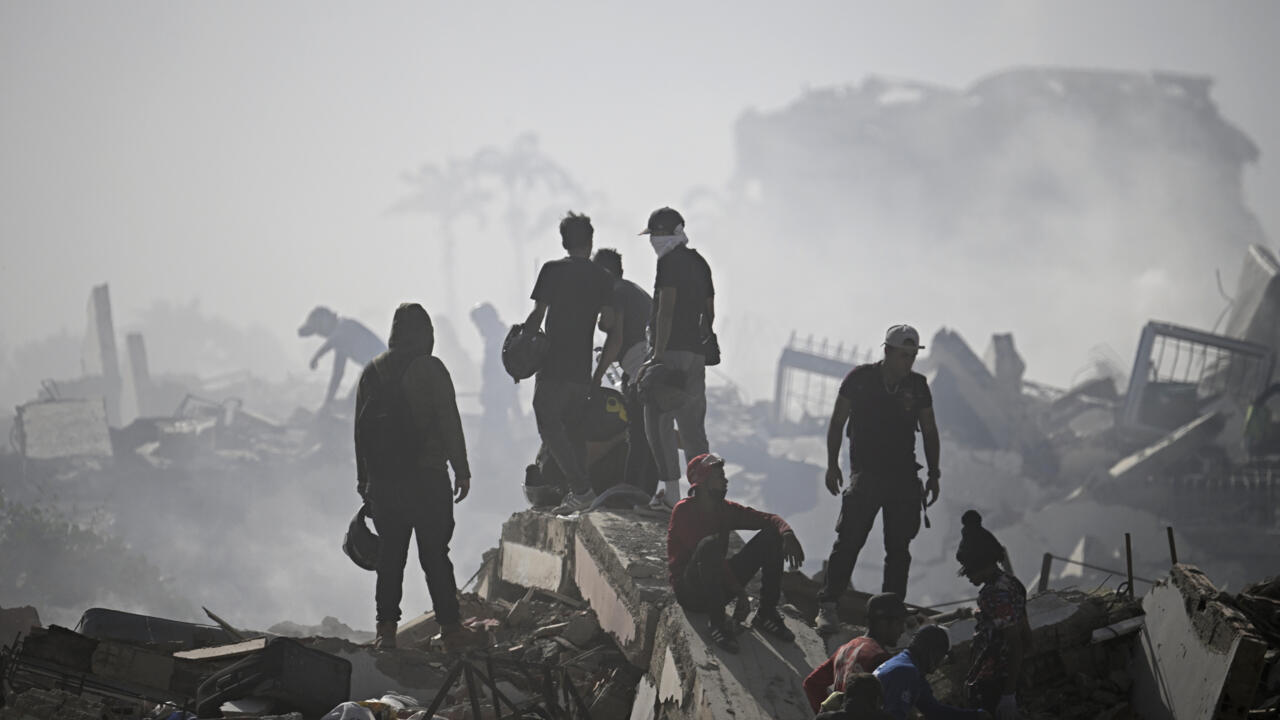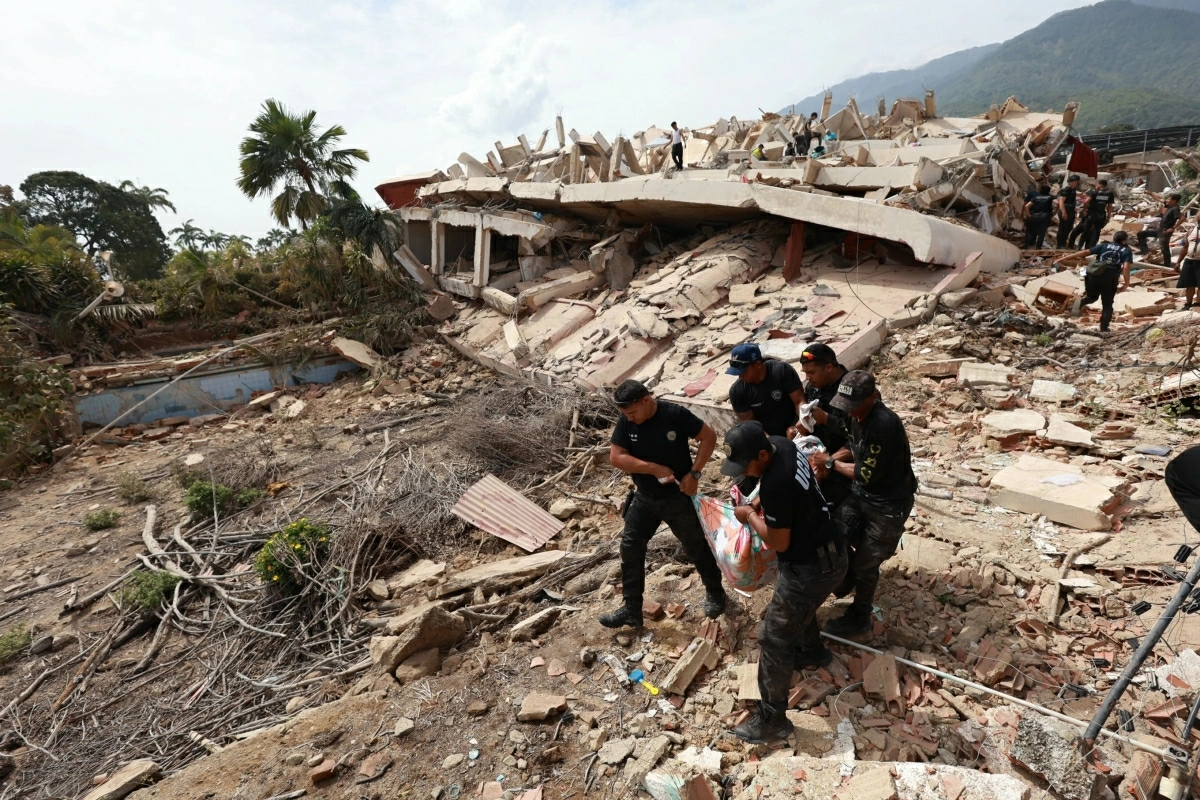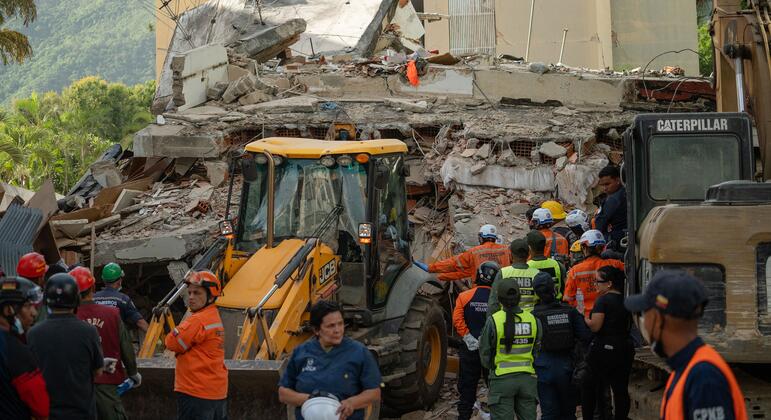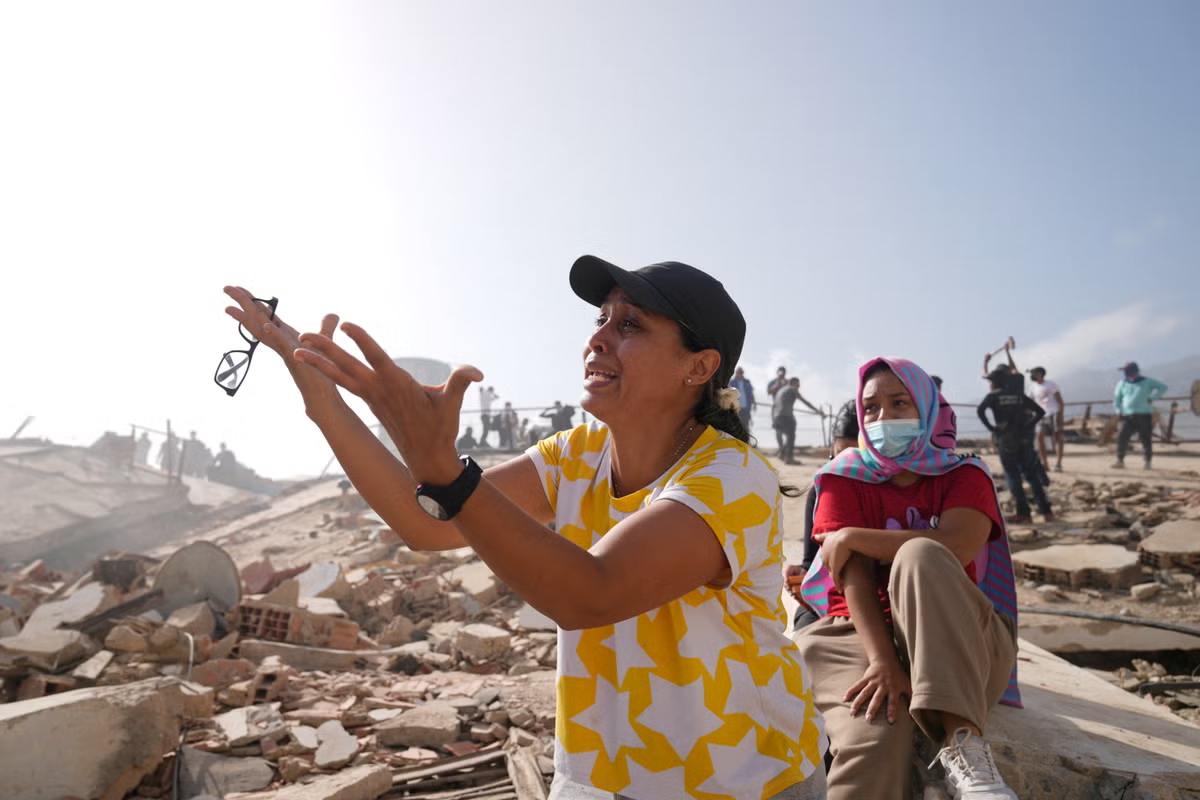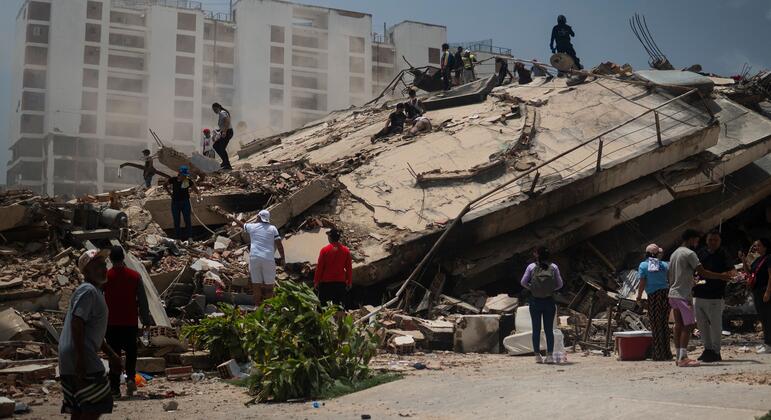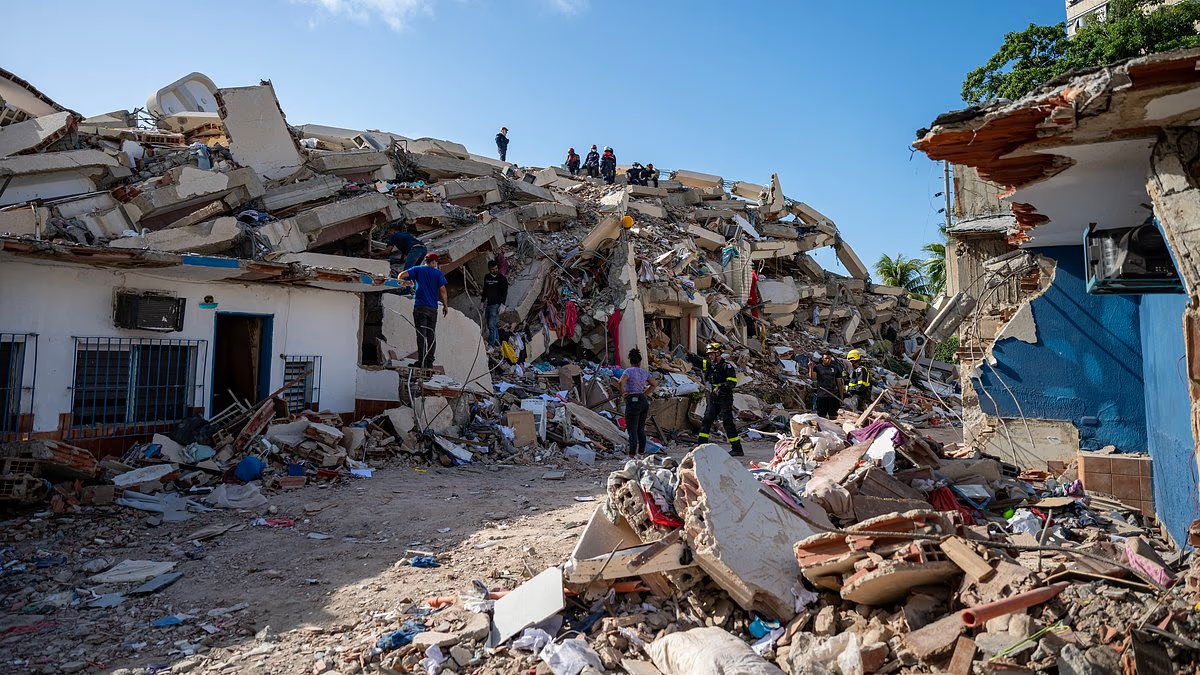
A rescue team of volunteers from Britain headed to Venezuela after earthquakes that killed over 1,400 people have been left stranded at a Spanish airport for more than 24 hours. UK-based charity Serve On has been attempting to travel to Venezuela's capital, Caracas, after the city was devastated by back-to-back high magnitude earthquakes on Wednesday evening. The team, comprised of 11 people and one dog, say they are desperate to reach the South American country 'as soon as possible,' however, have been stuck in Madrid Airport since 9pm on Friday due to ongoing travel disruption. At present, there are no direct flights from Britain to Venezuela. Flights from Madrid - where the team redirected after flights from Istanbul ceased - have also been cancelled, leaving the group stranded due to their reliance on civilian transport. The only international airport that serves Caracas, Simon Bolivar International Airport, has also been ravaged by the 7.2 and 7.5 magnitude quakes, leaving travel to and from the country 'severely affected.' Serve On team leader Vernon Young, who has previously responded to disasters in the British Virgin Islands, Turkey and Syria, said assisting in Caracas is 'time critical'.He said: 'We're a light team and can move quickly. The sooner you get there, the more chance you have of saving lives.'Every situation is different, in Turkey they were pulling live victims out 14 days after the earthquake. We hope we can get out there and make a difference.' British volunteer team Serve On have been stranded at Madrid Airport for over 24 hours attempting to reach Venezuela Serve On has been attempting to travel to Venezuela's capital Caracas after the city was devastated by back-to-back high magnitude earthquakes on Wednesday evening The team, comprised of 11 people and one dog, say they are desperate to reach the South American country 'as soon as possible' Entire neighbourhoods were reduced to rubble after the strongest earthquakes to strike Venezuela in a century Search and rescue operations continue amid collapsed buildings and widespread devastation across affected areasOn Saturday, the death toll from the twin quakes surpassed 1,400, with 3,238 people confirmed injured and approximately 68,900 others reported as missing. Serve On has specialist seismic and acoustic equipment that can sense movement in deeply buried victims. This apparatus, Mr Young said, will aid the recovery of more missing persons if employed at pace. He said: 'We're a technical rescue team and can potentially find deeply entombed victims just by their movement. 'We still believe we will make a decent contribution if we get there in the next day or two.'The British Government Fire Service Team are en route now, they're a heavy team with 68 people and we've got links with them. 'But we don't hear much (from Venezuela), we don't know how they're doing.'Mr Young, who has volunteered with Serve On for 14 years, added that the group has attempted to reach Venezuela by alternative methods following flight cancellations. He said: 'We've been reaching out to any other type of flights, military flights and lots of different ways. A British search and rescue team has been deployed to Venezuela Rescue workers stand on the slab of a collapsed building amid twisted rebar and debris during search operations'We have 11 out in deployment but twice that back in the UK working really hard to try to help us get there. We're not alone – there's a French team and two Spanish teams facing the same problems.'We've been in contact with the Government and we know they're doing all they can, we have evidence of that. They're out to help us.'We all understand that things are difficult, we're frustrated and we want to be out there now.'Wednesday's quakes were among the strongest to hit Venezuela for more than a century and could be felt throughout the region. The 7.2 and 7.5 magnitude earthquakes struck within only one minute of each other and unleashed hundreds of aftershocks, destroying buildings and homes across the north of the country. Residents said buildings and infrastructure like bridges and roads collapsed within seconds.Survivor Graciela Mora said: 'My friend standing beside me was killed when part of our building collapsed. It happened within seconds. 'I held onto the doorframe with everything I had. I broke my fingers but stayed alive.' A woman was pulled alive from rubble after two powerful earthquakes shook Venezuela Volunteers search for possible victims in a collapsed building in Caraballeda A volunteer carries a rescued dog across the rubble of a collapsed building following twin earthquakes in Caraballeda, La Guaira stateForeign rescue teams have poured into Venezuela as the death toll has reached 1,430, while the authorities continue to search for survivors in the hardest hit coastal areas. The updated death toll came as rescuers searched Caracas and La Guaira - a region north of the capital - where families and volunteers have spent days pulling survivors and bodies from the rubble.According to officials, more than 1,600 foreign rescue teams have arrived into Venezuela, with the international response still growing. On Saturday, a senior United States administration official confirmed a funding package worth hundreds of millions of dollars is expected to be announced for Venezuela in the next day or so, in addition to $150million the Trump administration has already committed.Search teams and foreign aid has also arrived from across South and Central America, including Brazil, El Salvador and Mexico, as well as further afield in France.On Saturday, Mexican rescue teams scrambled over collapsed buildings and pushed their heads into holes in the pancaked concrete to search for signs of life.One of La Guaira's hardest-hit areas, Caraballeda, had helicopters from the United States ferry rescue teams into a dusty landing zone, dropping off crews before flying off again. Among the hundreds of volunteers in the city was 33-year-old industrial engineer Alejandro Serrano, who came from San Cristobal in western Venezuela in search of his 24-year-old sister, Ana Serrano, who lived in a building in Caraballeda destroyed by the quakes. French officers of the 7e Regiment d'Instruction et d'Intervention de la Securite Civile (7e RIISC - The 7th Civil Security Training and Response Regiment) prepare their shipment before flying to Venezuela to provide help A view shows a heavily damaged apartment building following an earthquake in Catia La Mar, La Guaira state This building in Caraballeda was destroyed in the twin quakesMr Serrano said he searched Caracas' Perez Carreno Hospital on Thursday evening for his sister, but did not find her. He told Reuters that he passed on his sister's details and address to rescue teams from El Salvador and Argentina. He said he hopes 'they don't find' his sister in the rubble, meaning he hoped she was still alive. Yet despite the increase foreign aid, tensions have risen throughout the state of La Guaira over what many Venezuelans view as an inadequate response by their government in the aftermath the disaster. Many residents expressed concern that the country's soldiers, firefighters, police and military cadets were underprepared to respond to the scope of the tragedy. That frustration was only amplified by the government's efforts to project the image of a robust state response.Mileidy Romero, who was among those searching for bodies in Caraballeda, said: 'There's a pile of bodies over there from last night. Newborn babies.'At 8pm (yesterday) there were people alive down there, and they haven't bothered to rescue them. We've located several bodies, and they haven't helped us recover them either. What are they waiting for?'Aid agencies consider the first 48 to 72 hours after a natural disaster as crucial for retrieving people alive - however, this can be extended if they have access to food and water. President Delcy Rodriguez (centre) and Venezuela's National Assembly President Jorge Rodriguez visiting the area strongly affected by the earthquake in La Guaira Rodriguez visited a quake-damaged area where rescue workers are searching for survivors in CaracasActing President Delcy Rodríguez said on Venezuelan television that more than 14,000 members of the military and police are on patrol in disaster zones, where access is now blocked and special permits are required to enter. However, civilians said they have seen little government intervention. Yeison Marcano, among those searching in La Guaira, said they had received some assistance from an investigations unit, but the police or National Guard did not help. He said: 'They came to eat arepas and take pictures to make it look like they were working. They didn't even get their uniforms dirty like we have. We've been here for three days.'On Friday, interim leader Rodríguez was greeted with angry chants from a crowd of residents in one of Caracas's most badly affected areas whose loved ones were trapped under rubble. 'The government isn't doing anything for the people', they yelled from behind cordons next to a pulverised building.The disaster poses a huge challenge for Rodríguez, the former vice president who took office in January after the US capture and removal of then-President Nicolás Maduro. Venezuela has been facing economic disarray for more than a decade, and many people reject the legitimacy of the political movement Rodríguez represents.A spokesperson for Delcy Rodriguez said: 'We are in a race against time to find survivors. There are still 50,000 unaccounted for. 'Keep Venezuela in your prayers.'
UK team off to Venezuela after quakes stranded at airport for 24 hours
UK-based charity Serve On has been attempting to travel to Caracas since last week after the city was devastated by back-to-back high magnitude earthquakes on Wednesday evening.
1,539 words~7 min read