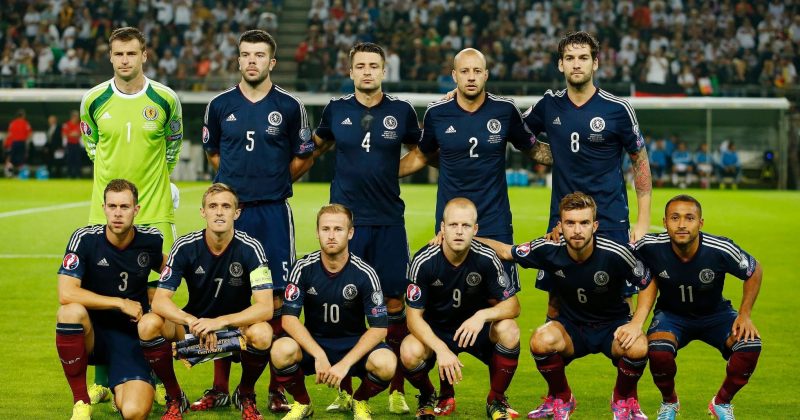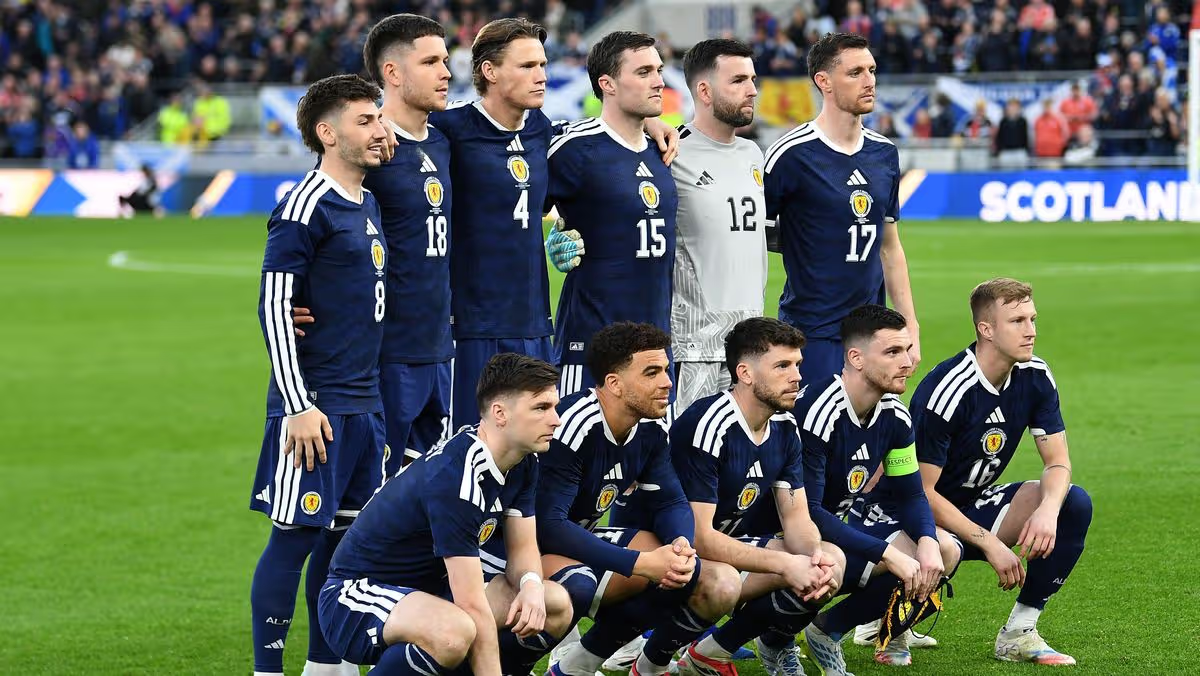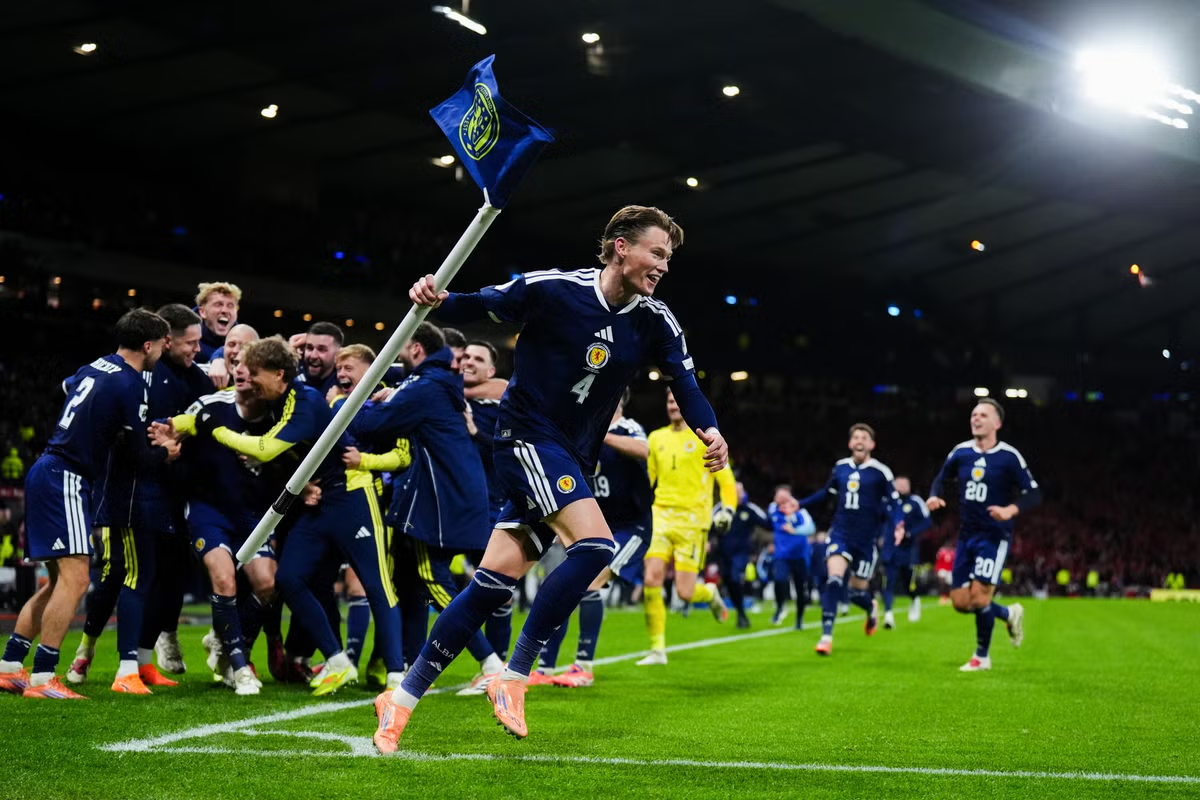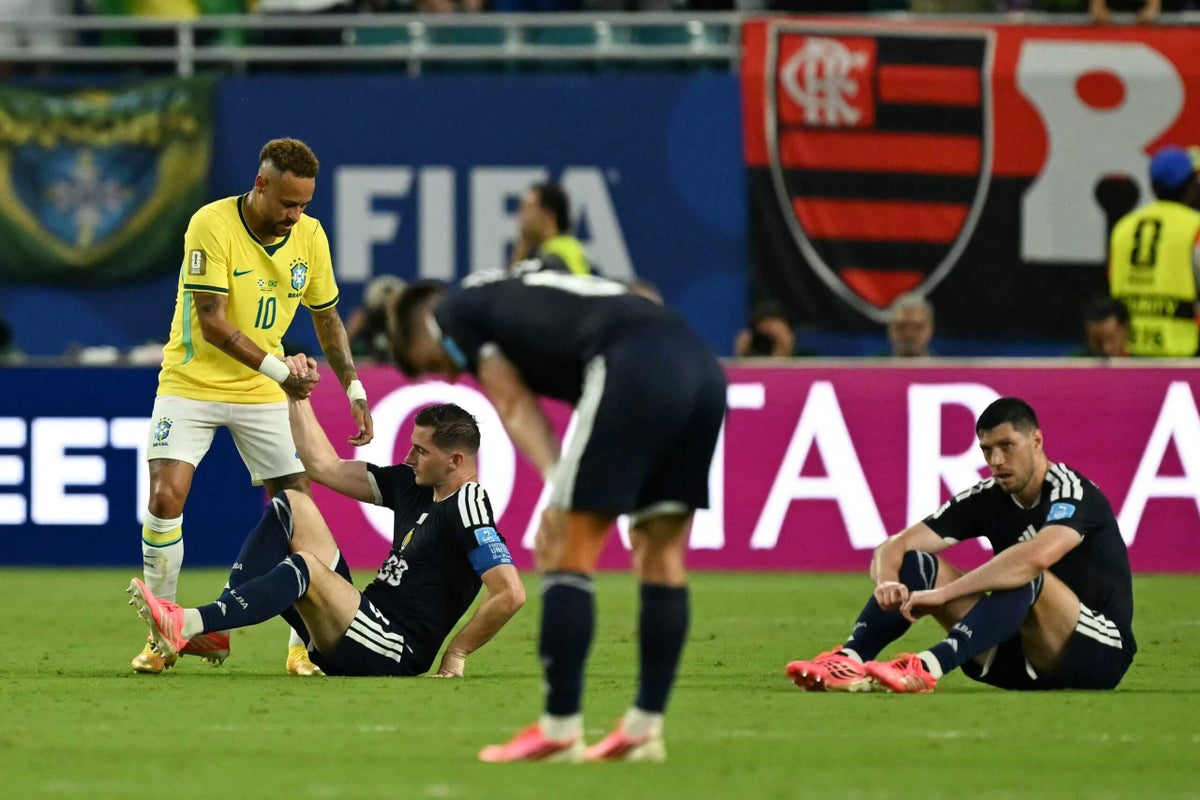
Scotland’s early elimination from World Cup 2026 isn’t surprising to those who watched their qualification matches, where they struggled to play cohesive football but sealed their place thanks to a thrilling, almost unbelievable, 4-2 victory over Denmark courtesy of some impossible-to-repeat goals.But it’s even less surprising considering Scotland’s tournament history. Scotland have come to be regarded as serial failures, inevitable disappointments, to the point where this has become the nation’s footballing identity. Qualification is met with a “Maybe… this time?” vibe, eternally referencing past disappointments.This is a great pity, because Scotland are genuinely among the most significant nations in football history.Scotland figured out how to play football sooner than anyone, including England; the passing game we take for granted was perfected north of the border in the late 19th century when English sides were still committed to dribbling.Get free access to the most comprehensive World Cup coverage in The Athletic appScotland have also produced — in one sense — as many top-class players as any other nation. The Ballon d’Or, awarded to the best player in the world, has been officially awarded since 1960, and for a long time, it applied only to European players.But had the award been in operation since the formation of association football in the 1860s and always global, it would be a three-way race between Scotland, Brazil and Argentina for the most wins over the years. The likes of Nick Ross and Alex James mean little to modern supporters, but these were among the best players in world football in the late 19th or early 20th century.This is a country which has produced a disproportionate number of leading managers. 13 managers have won the English Football League four times or more, and five of them were Scots: George Ramsey, Matt Busby, Bill Shankly, Sir Kenny Dalglish and Sir Alex Ferguson.Sir Alex Ferguson, a Scot, is the most successful manager in English club history (Alex Livesey/Getty Images)And this is also a nation that has produced one of the most famous European Cup-winning sides: in 1967, Celtic’s Lisbon Lions were crowned the best side in Europe, with a starting XI comprising 11 players all born within 30 miles of Glasgow. At the club level, Scotland could conquer Europe.They got the strategy right. They produced players. They produced managers. But among all this, Scotland has consistently failed to produce an international side capable of challenging the best. This is Scotland’s identity. And it stems from a combination of two factors: their overwhelming obsession with England, and ignorance of the Scottish Football Association. This has consistently put the nation on the back foot and resulted in a default approach that is a mixture of negativity and isolationism.In the early meetings between Scotland and England, the original rivalry in international football, Scotland generally came out on top. In fact, it took until the 1970s for England to surpass Scotland in terms of victories in head-to-head clashes. Where they suffered, however, was that England organised themselves domestically more quickly. Professionalism was permitted in England from 1885, but Scotland repeatedly failed to follow suit in votes over the next eight years, resisting until 1893. This eight-year period did a great deal of damage to Scottish football, as more and more Scots travelled south to earn a living. These ‘traitors’ were, for a period, banned from representing the national side.When Hearts and Sunderland — champions of Scotland and England respectively — contested a match billed as the football ‘World Championship’ in 1895, all 22 players were Scottish. Sunderland won 5-3. Scotland completely dominated the sport, but they’d let much of their elite talent drift south.English football actually made several attempts to embrace the Scottish game. Queen’s Park, the leading Scottish side of the time, competed in the English FA Cup and made two finals in the 1880s, but were eventually banned from competing by the SFA.Similarly, the originator of the Football League, Aston Villa director William McGregor, was a Scot and keen to expand his idea to incorporate Scottish clubs. Again, they were banned from competing south of the border.Now, you can argue that those decisions were about protecting the Scottish game and, in theory, Scottish football’s constant attempts to distance itself from English football could have worked in its favour. Tactically, English football was arrogant and self-indulgent throughout the first half of the 20th century, refusing to realise the progression of the game elsewhere and evolve its methods. If Scotland had underlined its anti-England stance by taking a more internationalist approach, it might have been better prepared than England for international competition. Instead, Scotland became even more isolationist than England and fell dramatically behind.Scotland taking to the field at Wembley in April 1924 — they were unbeaten against England between 1921 and 1927 (MacGregor/Topical Press Agency/Getty Images)Neither England nor Scotland entered the first three World Cups in the interwar years because they weren’t part of FIFA. But they rejoined after the Second World War, and FIFA were desperate for both to compete at the World Cup. Generously, FIFA allocated two places at the 1950 World Cup to the top two in the Home Nations Championship, meaning England and Scotland only had to finish above Wales and Ireland to earn a trip to Brazil. But Scotland bizarrely announced they would only enter if they finished top, considering finishing behind England such a failure that the World Cup wasn’t worth bothering with.England made no such promise; there was no reason to. Sure enough, England’s 1-0 win in Glasgow meant they finished ahead of Scotland, and the Scots refused to travel. England did — and while they were famously humbled in a 1-0 defeat to the United States, at least they were learning lessons. The Scots stayed at home and learned nothing.Four years later, Scotland entered and qualified for the tournament in Switzerland, but decided only to take 13 players — including two goalkeepers — rather than the permitted 22. The SFA seemed keener to take plenty of committee members — and their wives — rather than the full complement of players. Manager Andy Beattie, furious at the SFA’s unprofessionalism, resigned after the first game. Four years later, they competed in Sweden but lost all three games to Yugoslavia, France, and, most surprisingly, Paraguay.They weren’t the only nation not to enter the first European Championship in 1960. But while England, Wales, Ireland and Northern Ireland saw the success of the first edition and entered in 1964, the Scots didn’t bother. It was only one tournament — and was played largely as a qualification process with just a four-team final stage — but it was further evidence of Scotland failing to get involved in proper international competition. Again, they fell further behind and failed to qualify for World Cups in 1962, 1966 and 1970, while England caught up with the rest of the world, won the tournament on home soil, and had a decent stab at retaining their title in Mexico.Scotland in the process of losing 7-0 to Uruguay at the 1954 World Cup — only 13 Scottish players travelled to the tournament (Edward Miller/Keystone/Getty Images)Scotland did, however, qualify for the next five World Cups — the first two in tournaments where England missed out — but were consistently weaker than the sum of their parts. There were particularly high hopes heading into World Cup 1978, partly thanks to the presence of Graeme Souness and Kenny Dalglish of Liverpool, who had just won the European Cup. Again, poor organisation was partly to blame for their performance: their hotel was a disaster and they barely had a training ground worthy of the name. Their performances were largely terrible and they exited, as always, at the group stage. World Soccer magazine called them the ‘biggest disappointment’ of the tournament.All of these experiences led Scotland into a downward spiral. It seems fairly clear that they developed a mentality problem, in that they simply didn’t believe they could compete with the best nations. But more disappointing has been the stylistic decline. As late as the 1950s, club teams playing free-flowing passing football were said to be playing the ‘Scottish style’. But as Scotland became more withdrawn and less confident, they started playing physical, attritional, defensive football. The lack of technical players capable of playing an attractive style of football is, of course, a chicken-and-egg debate.One of the curious things about the Scotland side is how many excellent England-based Scottish footballers played so few games for the national side, for various reasons. Alan Hansen was arguably Europe’s leading defender for a period, but won just 26 caps. Charlie Nicholas was a legendary figure at Arsenal, but won only 20, as did Andy Gray, who won the PFA Player of the Year award in his Aston Villa days. It’s often said they didn’t play well enough for the national side, but the fact that the pattern exists, in itself, says something.Steve Clarke’s side scored just one goal in three group games at the 2026 World Cup (Buda Mendes/Getty Images)In the 21st century, when standards have been somewhat lower, the likes of Charlie Adam, James McArthur and Matt Ritchie have been genuinely good Premier League midfielders, capable of dictating or deciding games. They won only 26, 32 and 16 caps respectively. These are surely not worse players than the likes of — with respect — Scott Brown (55), Kenny McLean (61) or Callum McGregor (63). Sometimes you wonder precisely what the Scotland national side is all about; what they are actually trying to achieve.There is no shame in being defeated by Brazil and Morocco and ending on three points; a better draw and Scotland might well have advanced to the knockout stage. But there is a sadness that Scotland have declined to this extent. Scotland are now just plucky underdogs, eternally hoping things might fall their way. Their population is relatively small (5.5m), but in an alternative history, Scotland would be the equivalent of Uruguay (3.4m) in terms of historic success, or Croatia (3.8m) in terms of style. This should be a leading football nation; Scotland should be to football what New Zealand (5.3m) are to rugby union.Two years ago at Euro 2024, Scotland fans — as always — took huge numbers of supporters to Germany and made many friends in Munich, Cologne and Stuttgart, just as they did this time around in Boston. At that tournament, their supporters spent much of the trip singing about Diego Maradona, celebrating his handball goal against England in 1986.Then, when they exited after a 1-0 loss to Hungary, which featured decisions from referee Facundo Tello (an Argentine who was part of an officiating exchange agreement involving CONMEBOL and UEFA) that angered manager Steve Clarke, he brought up Tello’s nationality in a post-match interview.“He’s from Argentina, why would I ask him?” Clarke said. “He probably doesn’t speak the language. Why is he here? Why isn’t it a European referee?”It felt somewhat ironic after the supporters had spent two weeks chanting about an Argentine. But this was a perfect microcosm of the Scottish national side over the past 150 years: run into the ground by a damaging obsession with England, and a reluctance to engage in the increasing internationalism of the game.
Scotland are the biggest underachievers in world football
Scottish football once shaped the sport but an obsession with England and not engaging with the game's internationalism has cost them dearly
1,864 words~8 min read