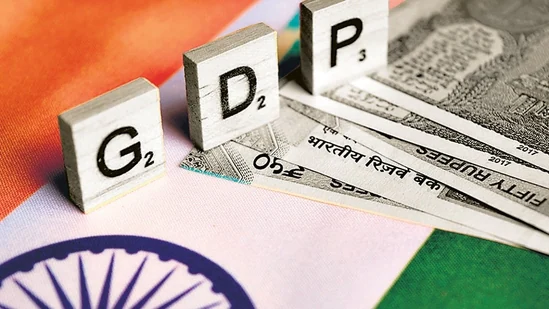
International trade contributes to economic development, employment generation, industrial growth, and infrastructure expansion. This is especially true for emerging economies such as India, whose bilateral trade with the US, its largest trading partner, is valued at $ 41.2 billion. Recent US tariff hikes have adversely affected key Indian industries, including electronics and electricals, gems and jewellery, mineral fuels, and chemicals. This brief analyses the challenges arising from these tariffs, the associated vulnerabilities in the financial sector, and emerging strategic opportunities. It argues that Indian banks can strengthen trade resilience through risk-based lending, innovative risk management and hedging instruments, ECGC-backed credit, and diversification finance. Such strategic moves can also advance the vision of ‘Viksit Bharat @2047’ through financial innovation, market diversification, and policy synergy.GDP (Shutterstock)Economic development can be achieved through exports, which create jobs, improve foreign exchange reserves, and boost industrial and infrastructural development. In the fiscal year 2024-25, India achieved total merchandise and service exports of $ 820.93 billion, of which merchandise exports accounted for $ 437.42 billion. One of India’s largest trade relationships is with the US.This paper can be accessed here.This paper is authored by Ashutosh Kashyap and Bimlesh Sah, ORF, New Delhi.
Navigating tariff turbulence: Role of banks in export resilience
This paper is authored by Ashutosh Kashyap and Bimlesh Sah, ORF, New Delhi.
195 words~1 min read