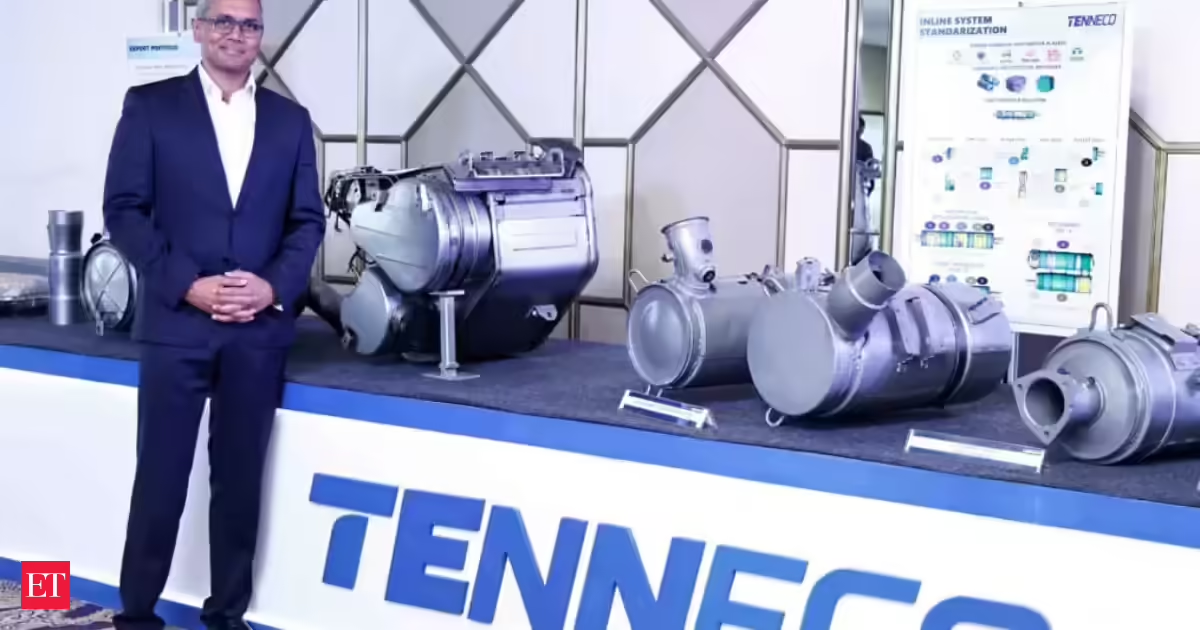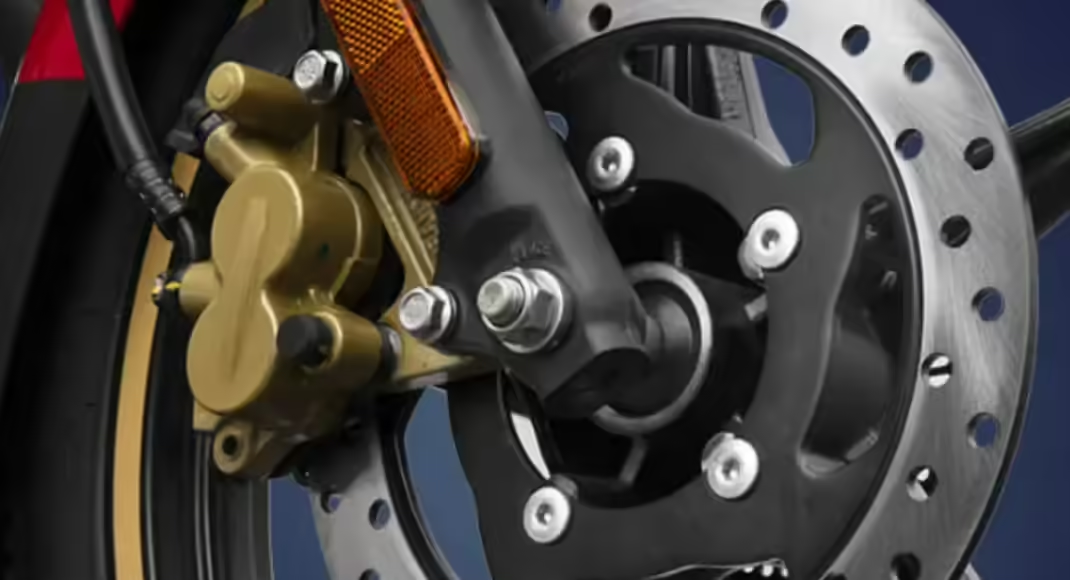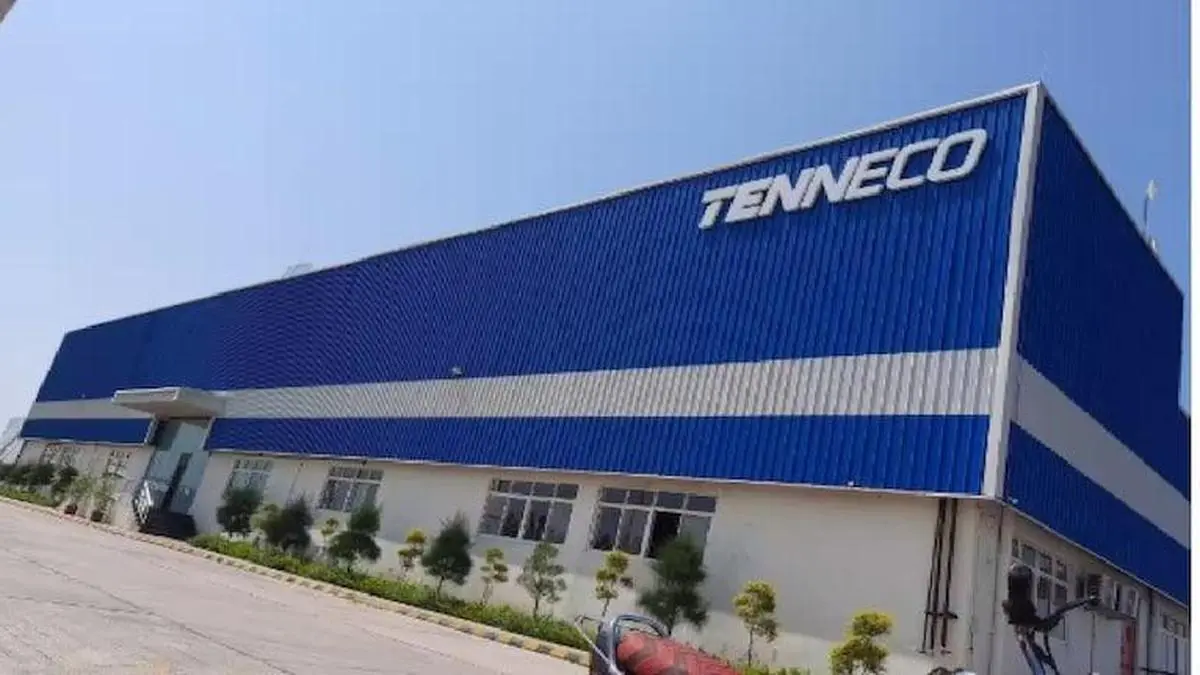
We had recommended investors subscribe to the IPO of tier-I automotive parts supplier Tenneco Clean Air India (TCAIL) in November 2025. The issue price then was ₹397 per share. TCAIL’s shares have since had a good rally, marking an all-time high of ₹657 in early May to trade at ₹579 now — about 12 per cent below the said high.Fundamentally, the company has had a decent year in FY26, with revenue, value-added revenue (refer footnote of chart) and net income (adjusted for one-offs) growing 10.5 per cent, 12.3 per cent and 13.1 per cent respectively. While that may not have been the reason behind the market’s exuberance, the street seems to be more cheerful about the company’s prospects in the medium term.TCAIL, which supplies exhaust systems for passenger vehicles (PVs) and commercial vehicles (CVs), stands to gain from the next generation of emission norms namely, CAFE III (from FY28) and BS-VII (date to be notified) in India and Euro 7 (from November 2026) in the EU. Besides, as a market leader in suspension parts, TCAIL is also a beneficiary of a premiumisation trend occurring in PV suspension systems. Consequently, the order-book has swollen to ₹12,400 crore, lending earnings visibility. This is about 2.3x FY26 revenue.The stock trades at 33x the likely earnings in FY27. In the last two years, the company’s earnings have grown at a CAGR of a little over 20 per cent and is likely to remain decent going forward. Our analysis indicates that TCAIL can sustain this growth rate for the next two years as well. This implies a PEG (price-earnings-growth) ratio of around 1.5-1.75x, which is reasonable. However, accumulating on dips offers better margin of safety given cyclicality and current volatile markets.Business in briefTCAIL is part of the US-based Tenneco Group, which operates in 28 countries with a revenue of over $17 billion.The company operates two verticals: A) Clean air and powertrain solutions and B) Advanced ride technologies. Under A, it manufactures products such as diesel oxidation catalyst, diesel particulate filter, mufflers and resonators that fall under ‘clean air’ or exhaust solutions, and products such as spark plugs, ignition coils, head gaskets and bearings falling under powertrain solutions.Under B, it produces shock absorbers and strut assemblies. TCAIL makes about 49 per cent and 51 per cent of revenue from A and B respectively. The end-use wise revenue split is as follows: PVs 65 per cent, CVs 21 per cent, industrials 7 per cent, aftermarket 4 per cent and others 3 per cent. Exports account for about 6 per cent of value-added revenue.TCAIL is a market leader with over 50 per cent market share in key product offerings. Clients tend to stick around for long, owing to highly-customised products and long approval cycles — offering some degree of ‘moat’ to TCAIL.Business is run quite efficiently at TCAIL. It has generated sizeable return on equity between 38 per cent and 43 per cent in the last three years and is also net-debt free. Its manufacturing lines are modular and flexible to support production of more than one kind of product, resulting in a fixed asset turnover ratio that has ranged between 8-10x in the last three years. Working capital-wise, it enjoys negative cash conversion cycle days which implies high efficiency.Order-book deep diveAs of March 2026, TCAIL’s order-book stands at ₹12,400 crore. This is an estimate of incremental cumulative revenue that can be recognised from orders that are yet to see the start of production. In FY26, the company has won multiple orders, which include supply of bearings systems and gasoline particulate filters (for CAFE-III compliance) to a leading Japanese PV OEM (appears to be Maruti Suzuki based on contextual understanding). This marks the first order-win from this OEM under the clean air vertical and opens up volume advantages owing to the OEM’s market share.Exports (largely to Europe) are also part of the order-book. TCAIL will export products to Tenneco’s group companies in Europe and the US, and such companies will serve the clients there. The company has secured an aftertreatment (exhaust) programme from a leading European CV OEM. It has also completed a Euro-7 compliant proof-of-concept for a European CV OEM (not clear whether the two European OEMs are the same). Content per vehicle (CPV) tends to be 3-4x higher for CVs versus that for PVs.Per the management, exports represent 14-20 per cent of the order-book. Export margins are expected to be on par with domestic, if not higher.TailwindsWith a new generation of emission regulations round the corner, OEMs need to work with component suppliers such as TCAIL to develop compliant exhaust parts. Stringent regulations typically translate to a higher number of parts or a higher complexity of the technology used in those parts — in turn translating to higher content per vehicle and revenue for TCAIL. For instance, in case of PV powertrains based on gasoline direct injection technology (commonplace in turbocharged engines), there is increased emission of particulate matter, which would need the addition of a gasoline particulate filter in the exhaust system, to be compliant with the new CAFE-III norms. TCAIL is incurring a capex of about ₹70 crore in a greenfield capacity in Haryana to support vertical ‘A’.When it comes to suspension systems, cars in the entry to premium segment have, so far, largely been equipped with passive suspension — meaning the suspension is not tuned differently for different surfaces; it does not differentiate whether the vehicle is on a well-paved highway or a pothole-ridden uneven road. If a car is tuned to handle corners well at high speed, it typically has a harsh ride on an uneven road.This, however, is beginning to change. Tenneco has piloted its DaVinci DCx suspension system on Mahindra’s recently-launched XUV 7XO. The system uses specially-engineered discs, known as shim stacks, to regulate the flow of hydraulic fluid and deliver adaptive damping — a solution for the above problem. According to the management, DaVinci DCx can offer comfort levels close to those of more expensive control valve semi-active (CVSA) systems, while avoiding the electronics and software complexity that CVSA entails. In the Q4 earnings call, the management disclosed that three-four OEMs had enquired about the system following its success in the XUV 7XO. TCAIL is adding capacity under vertical ‘B’ in Maharashtra, at a cost of ₹70 crore.Published on June 27, 2026
What should investors do about Tenneco Clean Air after its post IPO rally?
TCAIL, which supplies exhaust systems for passenger vehicles and commercial vehicles, stands to gain from the next generation of stringent emission norms
1,053 words~5 min read